
Crystal Cleansing and Care Complete Guide
A How-To hub article organizing crystal care into three stages: "daily cleaning, cleansing, and storage." This guide serves as an entry point for care, linking to individual pages for each stone.
Table of Contents (Tap to toggle)
Introduction
"I want to keep my favorite crystal beautiful for longer." "I understand cleansing methods, but what about daily care and storage?" — These are practical questions that inevitably arise when you have a long-term relationship with crystals.
This article was created as a How-To hub article that organizes "care" into three stages (daily cleaning / cleansing / long-term storage). It brings together practical steps for 8 cleansing methods, a useful suitability chart for over 35 types of stones, safety considerations, and guidelines for repair and replacement all in one page.
For detailed information on "10 types of cleansing methods" and "cleansing frequency and timing," please refer to our Complete Guide to Crystal Cleansing Methods. This article will focus on explaining the "three-stage approach of daily maintenance, cleansing, and storage" and the "stone-specific suitability chart."
Note: The "cleansing effects" of crystals are cultural and symbolic in nature. This article does not guarantee specific increases in luck or restoration of a stone's abilities. Please read this guide with the understanding that the purpose of care is to physically preserve the stone's beauty for a long time and to serve as a ritual for the owner to clear their own mind.
Table of Contents
- Three Stages of Care: Daily Cleaning, Cleansing, and Long-Term Storage
- ① Daily Cleaning | Essential Care After Wearing
- ② Cleansing | Method-Specific Steps
- ③ Long-Term Storage | Preventing Physical Deterioration
- ★ Stone-by-Stone Suitability Chart (Over 35 Types)
- Safety Considerations | What to Be Careful Of During Care
- Guidelines for Repair and Replacement
- Frequently Asked Questions (FAQ)
- Editor's Note
- Related Articles You Might Also Like
Three Stages of Care: Daily Cleaning, Cleansing, and Long-Term Storage
Crystal care combines three distinct actions. Being aware that each has a different purpose and frequency will help reduce confusion:
| Stage | Purpose | Frequency Guideline |
|---|---|---|
| ① Daily Cleaning | Removes physical dirt like sweat, sebum, and cosmetics | Every time you wear it, at the end of the day |
| ② Cleansing | Cultural and symbolic "resetting of feelings" | Once to several times a month (depends on the stone) |
| ③ Long-Term Storage | Prevents physical deterioration and contact with other stones | In a dedicated case when not being worn |
You don't need to do "all three" stages. The reality of crystals is that "daily cleaning alone is often enough to keep them long-lasting," and cleansing can be approached with the attitude of "those who want to perform it as a ritual do so." There's no problem with that.
① Daily Cleaning | Essential Care After Wearing
The most important and practical aspect is "daily cleaning." By also caring for the metal settings (metal parts) and not just the stone itself, your entire piece of jewelry will last longer.
3 Basic Steps
- Gently wipe the surface with a soft cloth: To remove sweat, sebum, and cosmetic residue.
- Rinse quickly with lukewarm water if necessary (only for water-friendly stones / refer to the suitability chart).
- Store only after completely drying: Remaining moisture can lead to deterioration and mold.
What Not to Do
- ❌ Strong or acidic detergents: These will deteriorate both the stone and the metal fittings.
- ❌ Ultrasonic cleaners: For stones with many inclusions or delicate stones, this can expand existing cracks.
- ❌ Sudden changes in hot or cold water: Stones sensitive to temperature changes can crack.
- ❌ Storing while wet: Moisture can penetrate the crystalline structure of some stones.
Simply by forming the habit of "wiping after wearing," the beauty of your crystal 5 to 10 years later will be significantly different — this is the most crucial point in crystal care.
② Cleansing | Method-Specific Steps
Cleansing is an act traditionally performed as a "ritual for resetting one's feelings." While it is not scientifically proven to have "effects," the very act of "consciously caring for your stone" is believed to deepen your connection with it as an amulet.
Method 1: Quartz Cluster and Gemstone Chips (Most Recommended, All-Purpose)
Steps:
- Prepare a quartz cluster (raw stone) or gemstone chips on a clean dish.
- Place your crystal on top.
- Leave it there for 6 to 12 hours (overnight).
- The next morning, pick it up with gratitude.
Characteristics: Safe for almost all stones and can be used for those sensitive to water, salt, or sunlight. This is the most recommended and classic method.
Method 2: White Sage Smoke
Steps:
- Light a white sage leaf on a heat-resistant dish.
- Immediately blow out the flame, allowing only smoke to emanate.
- Gently rotate the stone in the smoke for 1 to 2 minutes.
- Ensure sufficient ventilation and completely extinguish the fire.
Characteristics: Suitable for almost all stones. Since no water is used, it is safe for water-sensitive stones.
Safety Considerations: As fire is involved, always perform on a heat-resistant dish. Ensure adequate ventilation, and confirm the flame is completely extinguished before leaving. Do not perform near curtains or paper products.
Method 3: Moonlight Bath
Steps:
- The three days before and after a full moon are traditionally recommended.
- Place the crystal in a location where direct moonlight falls, such as a windowsill or balcony.
- Leave it there overnight (6 to 12 hours).
- The next morning, pick it up with gratitude.
Characteristics: Suitable for almost all stones. Especially recommended for stones deeply associated with the moon (Moonstone, Selenite, Pearl).
Caution: Place it in a location where it will not get wet from rain. Moonlight can still reach through a window indoors, so safe indoor placement is recommended.
Method 4: Sunlight Bath (Short Duration)
Steps:
- Place the crystal where it receives morning sun (soft light from the morning).
- Remove it after a maximum of 1 to 2 hours.
- Do not leave it in direct sunlight for an extended period.
Characteristics: Suitable for solar-affiliated stones such as Citrine, Carnelian, Tiger's Eye, and Quartz.
Important NO: Purple stones (Amethyst), pink stones (Rose Quartz, Kunzite), and blue stones (Aquamarine, Turquoise) are absolutely NOT suitable as they will fade in direct sunlight. Refer to the suitability chart for details.
Method 5: Running Water
Steps:
- Turn on room temperature to lukewarm water at a low flow rate.
- Expose the crystal to the water for 30 seconds to 1 minute.
- Completely wipe away all moisture with a dry, soft cloth.
Characteristics: Suitable for water-friendly stones such as Quartz, Amethyst, and Citrine. Short duration is the general rule.
Important NO: Stones such as Lapis Lazuli, Turquoise, Pearl, Selenite, Angelite, Aragonite, and Malachite will deteriorate with water, so they are absolutely NOT suitable.
Method 6: Salt
Steps:
- Place natural salt (coarse salt) in a clean small dish.
- Do NOT directly bury the crystal in the salt (NG) — instead, use an indirect method: place it on a small dish, with another small dish of salt placed nearby.
- Leave it there for 6 to 12 hours.
- After completion, discard the salt (do not reuse).
Characteristics: Considered a powerful cleansing method, but poses a risk of deterioration for many stones.
Important NO: Directly burying the stone is NOT suitable for many stones. It can cause corrosion of metal settings, surface scratches, and deterioration due to salt and moisture. Not recommended for beginners.
Method 7: Tuning Fork and Crystal Bowl
Steps:
- Strike the tuning fork against metal to produce a sound (or gently tap a crystal bowl).
- Allow the sound to resonate near the crystal (10 to 30 cm away).
- Perform a sound bath for 1 to 3 minutes.
Characteristics: Suitable for all stones. It is the safest method as it does not use water, salt, or fire. The only caution is not to touch metal parts directly.
Method 8: Intention (Meditation-Based)
Steps:
- Hold the crystal cupped in both hands.
- Take several deep breaths — calming your mind.
- Express feelings of gratitude, such as "Thank you for always being by my side."
- Hold it for 1 to 5 minutes.
Characteristics: Zero physical impact on the stone and no tools required, making it the closest method to "cleansing as a ritual." Many users find this alone sufficient in terms of deepening their connection with the amulet.
③ Long-Term Storage | Preventing Physical Deterioration
How you store your stones when not wearing them is also a crucial factor that affects their beauty.
5 Basic Principles of Storage
- Avoid humidity: Store with a desiccant like silica gel. Hematite, Pyrite, Aragonite, Selenite, and Howlite are especially vulnerable to moisture.
- Avoid direct sunlight: Store in a dark place to prevent fading. Pay special attention to purple, pink, and blue-toned stones.
- Avoid stone-to-stone contact: Do not place stones of different hardness in the same compartment. Soft stones (Pearl, Selenite, Howlite) should be kept in individual cloth pouches.
- Avoid contact with metal: Rubbing against the metal fittings or chains of other jewelry can cause scratches. Utilize jewelry box dividers.
- Avoid temperature fluctuations: Do not store near heating appliances or in fluctuating temperatures by a window. A drawer with a stable room temperature is ideal.
Common Storage Items
- Jewelry box (with dividers): Types that allow individual storage.
- Silk or soft cloth pouches: For individual storage, especially suitable for Pearl and Selenite.
- Silica gel desiccant: For moisture control.
- Light-blocking case: For protection against direct sunlight.
★ Stone-by-Stone Suitability Chart (Over 35 Types)
This is the most important section. We've organized the suitability of each stone for running water, salt, sunlight, humidity, ultrasound, and acid. Please note that Water OK/NG and Sunlight OK/NG are not absolute rules but traditional and practical guidelines for your reference.
Group A: All-Purpose (Compatible with most cleansing methods)
| Stone | Running Water | Sunlight | Moonlight | Salt | Sage | Link |
|---|---|---|---|---|---|---|
| Quartz | ◎ | ○ | ◎ | △ | ◎ | 詳細 |
| Tiger's Eye | ○ | ○ | ◎ | △ | ◎ | 詳細 |
| Citrine | ○ | ◎ | ◎ | △ | ◎ | 詳細 |
| Carnelian | ○ | ○ | ◎ | △ | ◎ | 詳細 |
| Garnet | ○ | ◎ | ◎ | △ | ◎ | 詳細 |
| Ruby | ○ | ○ | ◎ | △ | ◎ | 詳細 |
| Sapphire | ○ | ○ | ◎ | △ | ◎ | 詳細 |
| Diamond | ○ | ○ | ◎ | △ | ◎ | 詳細 |
Group B: Sunlight NG (Fades with UV Light)
| Stone | Running Water | Sunlight | Moonlight | Salt | Sage | Link |
|---|---|---|---|---|---|---|
| Amethyst | ○ | × | ◎ | × | ◎ | 詳細 |
| Rose Quartz | ○ | × | ◎ | × | ◎ | 詳細 |
| Kunzite | △ | × | ◎ | × | ◎ | 詳細 |
| Aquamarine | ○ | × | ◎ | × | ◎ | 詳細 |
| Aventurine | ○ | × | ◎ | × | ◎ | 詳細 |
| Amazonite | ○ | × | ◎ | × | ◎ | 詳細 |
| Morganite | ○ | × | ◎ | × | ◎ | 詳細 |
| Morion | ○ | × | ◎ | × | ◎ | 詳細 |
| Sodalite | ○ | × | ◎ | × | ◎ | 詳細 |
Group C: Water and Salt NG (Deteriorates with Moisture and Salt)
| Stone | Running Water | Sunlight | Moonlight | Salt | Sage | Link |
|---|---|---|---|---|---|---|
| Lapis Lazuli | × | △ | ◎ | × | ◎ | 詳細 |
| Turquoise | × | △ | ◎ | × | ◎ | 詳細 |
| Malachite | × | △ | ◎ | × | ◎ | 詳細 |
| Chrysocolla | × | △ | ◎ | × | ◎ | 詳細 |
| Howlite | × | △ | ◎ | × | ◎ | 詳細 |
| Azurite | × | × | ◎ | × | ◎ | 詳細 |
Group D: Critically Vulnerable to Water (Dissolves or Disintegrates in Water)
| Stone | Running Water | Sunlight | Moonlight | Salt | Sage | Link |
|---|---|---|---|---|---|---|
| Selenite | × | △ | ◎ | × | ◎ | 詳細 |
| Angelite | × | × | ◎ | × | ◎ | 詳細 |
| Aragonite | × | △ | ◎ | × | ◎ | 詳細 |
Group E: Vulnerable to Humidity and Acid
| Stone | Running Water | Sunlight | Moonlight | Salt | Sage | Link |
|---|---|---|---|---|---|---|
| Hematite | △ | ○ | ◎ | × | ◎ | 詳細 |
| Pyrite | × | △ | ◎ | × | ◎ | 詳細 |
| Pearl | × | × | ◎ | × | △ | 詳細 |
Group F: Other Delicate Stones
| Stone | Running Water | Sunlight | Moonlight | Salt | Sage | Link |
|---|---|---|---|---|---|---|
| Opal | △ | × | ◎ | × | ◎ | 詳細 |
| Moonstone | △ | × | ◎ | × | ◎ | 詳細 |
| Larimar | × | × | ◎ | × | ◎ | 詳細 |
| Amber | △ | × | ◎ | × | ◎ | 詳細 |
| Rhodochrosite | △ | × | ◎ | × | ◎ | 詳細 |
| Emerald | △ | △ | ◎ | × | ◎ | 詳細 |
| Topaz | ○ | △ | ◎ | × | ◎ | 詳細 |
| Alexandrite | ○ | △ | ◎ | × | ◎ | 詳細 |
| Jade | ○ | ○ | ◎ | × | ◎ | 詳細 |
| Labradorite | ○ | × | ◎ | × | ◎ | 詳細 |
Legend: ◎=Recommended / ○=Acceptable / △=OK for short duration, use with caution / ×=Not Recommended (NG)
Tip for using the suitability chart: "If in doubt, use sage or a quartz cluster" — these two are all-purpose methods suitable for almost all stones, making them the classic starting point for beginners.
Safety Considerations | What to Be Careful Of During Care
We've also compiled safety considerations to "protect yourself" during the care process:
① Fire and Ventilation when Using Sage
- ❌ Do not perform in a closed, sealed space with windows shut (can cause choking from smoke, activate smoke alarms).
- ✅ Open windows for ample ventilation / Perform on a heat-resistant dish / Confirm the fire is completely extinguished.
- ⚠️ Individuals with asthma or respiratory conditions should refrain from using sage or choose an alternative cleansing method.
② Metal Corrosion from Salt
- ❌ Do not allow silver or gold metal settings to come into direct contact with salt.
- ⚠️ Plated products are particularly prone to rapid deterioration from salt.
- ✅ Salt cleansing should be limited to the stone itself and is not recommended for stones set in jewelry.
③ Homes with Small Children and Pets
- ⚠️ Small tumbled stones or raw crystals pose a choking hazard (especially for children under 2).
- ✅ Store on a high shelf out of children's reach.
- ⚠️ Do not place stones that are small enough for cats or dogs to ingest in play areas.
- ⚠️ Exercise particular caution with stones containing heavy metals or copper, such as Malachite, Turquoise, and Pyrite.
④ Handling Cleansing Tools
- Confirm complete extinguishment of sage.
- Discard salt used for cleansing without reusing it (tradition states not to return absorbed energy).
- Regularly cleanse quartz clusters with salt water (the cluster itself also needs care).
⑤ Mineral Allergies and Skin Reactions
- ⚠️ Individuals with metal allergies should check the material of the metal setting.
- ⚠️ If stones that directly touch the skin cause itching or a rash, discontinue use.
- ⚠️ For copper-bearing minerals such as Malachite and Azurite, be careful of dust during polishing (normal use is not an issue).
Guidelines for Repair and Replacement
When you've had a stone for a long time, it might chip, crack, or fade. Here are some guidelines for what to do:
| Condition | Action |
|---|---|
| Surface is cloudy or dirty | Often restored with cleaning or repolishing. |
| Small chip | Often can be recut by a specialist (carat weight will decrease). |
| Large crack | Difficult to repair. A tradition is to accept it as having "taken your place" and welcome a new stone. |
| Fading (due to UV, etc.) | Often irreversible. Many enthusiasts perceive this as the stone having "fulfilled its role". |
| Metal setting deterioration or stone dislodged from setting | Can be repaired at a jewelry repair shop. |
| Crack expands | May still be fine for decorative purposes. Decide whether to continue wearing it based on safety. |
"How to part with a broken stone" — traditionally:
- Return it to the earth (in natural, pesticide-free soil, a garden, or within shrine grounds, where permitted).
- Store it carefully in a drawer (to keep as a memento).
- Offer it to a shrine or temple (at locations that accept offerings for ceremonial burning).
Rather than carelessly discarding it as trash, these methods allow you to "send it off with gratitude," which is the traditional way of interacting with crystals.
Frequently Asked Questions (FAQ)
Q1. Is cleansing really necessary?
A. It is not an act scientifically proven to have effects. You don't need to consider it "mandatory," and it's perfectly fine to approach it with the attitude of "those who value it as a ritual do it." Daily cleaning (removing dirt) has a physical purpose, so we recommend making that a habit.
Q2. Will forgetting to cleanse my stone cause it to give "bad influences"?
A. No, it won't."Stones will curse you if you forget to cleanse them," or "Negative energy will accumulate and bring misfortune" — such spiritual assertions are not scientifically or medically proven, and there's no need to feel unnecessary anxiety. Amulets are merely "emotional support," and cleansing is just a "ritual" to deepen that connection.
Q3. What if I want to cleanse many stones all at once?
A. The most efficient way is to prepare a quartz cluster or gemstone chips in a large tray and place multiple stones on it at once. Sage smoke can also be used for multiple stones simultaneously in a larger space. However, the essence of care lies in the feeling of "attending to each one individually," so it's also wonderful to care for them separately when you have time.
Q4. Even if a stone is labeled "Water OK," are hot springs and pools still not allowed?
A. No, they are NOT allowed. While running tap water (for a short duration) is OK, sulfur in hot springs, chlorine in pools, and salt in seawater will accelerate deterioration in almost all stones. Removing your jewelry during bathing or sports is key to making it last longer.
Q5. My stones are touching each other in my jewelry box. Is that okay?
A. Caution is needed if there are differences in hardness. It's ideal to place soft stones (Pearl, Selenite, Howlite, Angelite) in individual cloth pouches. Even stones of similar hardness can get abrasion scratches from prolonged contact, so a jewelry box with dividers is essential equipment for long-term preservation.
Q6. Where can I buy cleansing supplies (sage, quartz clusters)?
A. Crystal specialty stores and healing shops are reliable standard places. You can also purchase online, but make sure to confirm that "white sage is a legal plant (generally available for circulation)." There are also similar-sounding plants like California sage and common sage, so choose products where the intended use is clearly specified.
Editor's Note
The question, "Please tell me how to cleanse crystals," is a topic particularly often asked by beginners in crystal care. Back then, I always used to start by explaining, "Actually, daily cleaning and storage are more important than cleansing."
This is because I've seen many people get exhausted by "anxiety and a sense of obligation regarding cleansing." "I must remember to give it a moonlight bath," "If I don't burn sage, negative energy will accumulate..." — when such "must-do" pressures pile up, the relationship with the amulet itself can become burdensome.
Care should be a "joy," not an "obligation." Wiping your favorite stone with a soft cloth, carefully placing it in a jewelry box, or spontaneously letting it bask in moonlight — these "moments of care for yourself" are, I believe, the true meaning of cleansing. Do it when you feel like it, don't do it when you're busy. That's perfectly fine, and that's my honest opinion after many years of experience.
A Word from Sun-chan☀️
Thanks for reading the cleansing and care guide! ✨
You know, care isn't about "things you have to do," it's about "rewarding time for yourself". The moment you gently wipe your stone with a soft cloth, the quiet calm of a moonlit night — those moments actually help to align your own heart and mind, too! 💛
You don't have to strive for perfection. Just "a little bit of care when you feel like it" — that alone will keep both your stones and you smiling for a long, long time! 🌙
Related Articles You Might Also Like
- Complete Guide to Crystal Cleansing Methods — Details on 10 cleansing methods, frequency, and timing (complementary article)
- Crystal Compatibility and Combination Guide — Understanding combinations, examples of what not to do, and purpose-specific recipes
- Complete Guide to Crystal Combinations — Classic 2-stone and 3-stone combinations
- How to Properly Wear Crystals — Distinguishing between left and right, and the meaning of placement
- Complete Guide to Choosing Crystals — Beginner's guide before choosing your first stone
- Meaning and Effects of Quartz (Crystal) — The versatility of quartz used for cleansing
- Comprehensive Guide to 12-Month Birthstones — Characteristics of each birthstone
- 9 Popular Crystals for Boosting Financial Luck — Purpose-specific hub article ①
- 9 Popular Crystals for Boosting Love Luck — Purpose-specific hub article ②
- 9 Popular Crystals for Boosting Career and Success Luck — Purpose-specific hub article ③
- 9 Popular Crystals for Health Luck — Purpose-specific hub article ④
- 9 Popular Crystals for Interpersonal and Relationship Luck — Purpose-specific hub article ⑤
- 9 Popular Crystals for Warding Off Evil and Protection — Purpose-specific hub article ⑥
Summary
- Crystal care should be organized into three stages: "daily cleaning, cleansing, and long-term storage."
- Daily cleaning is the most important — make a habit of wiping with a soft cloth after wearing.
- Cleansing primarily holds "ritualistic meaning," with no scientific proof of its effects — approach it as enjoyment, not an obligation.
- Always check the stone-by-stone suitability chart for what is NOT allowed with running water, sunlight, and salt.
- Be mindful of safety considerations (fire, ventilation, metal corrosion, ingestion risk) and guidelines for repair and replacement.
- "Send off a broken stone with gratitude" — traditionally, return it to the earth, store it in a drawer, or offer it to a shrine.
You don't need to aim for perfection. Just "a little bit of careful attention when you feel like it" — that alone will keep your crystals beautiful and by your side for a long, long time! ☀️
Tags
この記事をシェアする
この記事が役に立ったら、SNSでシェアしていただけるととても嬉しいです☀️

Thanks so much for reading! I hope this article brought a little sunshine to your day! See you again soon!
You might also like
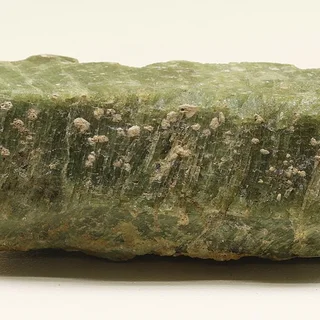

Apatite: Meaning, Stone Lore, and Effects
A comprehensive guide to Apatite: Its meaning, stone lore ('Communication, Academics, Goal Achievement'), effects, who it's recommended for, compatible stones, and purification methods. Discover the basics and practical uses of this 'Blue Guiding Stone' that helps you achieve your goals, all on one page.

How to Properly Wear Crystals
It's believed that the meaning of crystals changes depending on whether you wear them on your left or right hand. This beginner's guide provides a complete explanation of how to properly wear bracelets, pendants, rings, and earrings, how to align them with chakras, where to place them in your home, and even when not to wear them.
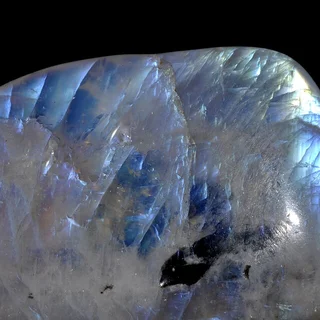

Moonstone Meaning, Stone Properties, and Effects
A comprehensive guide to moonstone's properties, history, lore surrounding femininity, intuition, and new moons, ideal pairings, mineral data, and FAQs. This is your go-to resource for incorporating this milky white stone, revered as the embodiment of the moon from ancient India to Rome, into your life.
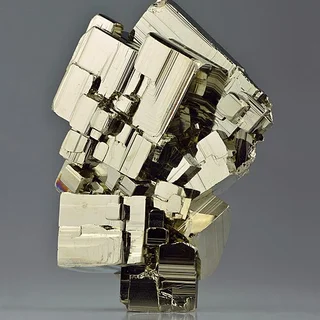
Pyrite (Iron Pyrite): Meaning, Stone Language, and Effects
A comprehensive guide to Pyrite (Iron Pyrite), covering its meaning, 'stone language' (financial luck, willpower, and warding off evil), effects, who it's recommended for, compatible stones, and purification methods. Discover the essentials and practical applications of this symbol of prosperity, famously known as 'Fool's Gold,' all in one place.