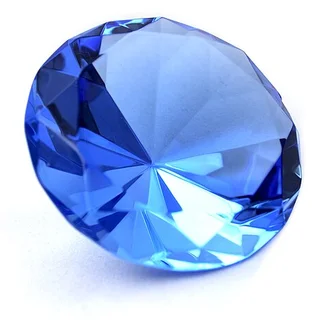

Sapphire Meaning, Gemstone Properties, and Benefits
A comprehensive guide to sapphire, September's birthstone, covering the origins of its meanings 'integrity, wisdom, and compassion,' its characteristics as a corundum mineral, why Royal Blue is considered supreme, its purported benefits, compatible stones, care instructions, and FAQs.
Table of Contents (Tap to toggle)
Introduction
Known as the "Stone of Clergy," sapphire embodies "Integrity, Wisdom, and Compassion" within its deep blue hues, standing as one of the world's four great gemstones (alongside diamonds, emeralds, and rubies). In ancient Persia, it was believed that "the Earth rested on a giant sapphire, and its reflection colored the sky blue," while in European churches, it was chosen for bishops' rings.
This article provides a comprehensive overview, from the origins of its meanings and mineralogical characteristics to why Royal Blue and Cornflower Blue are considered the pinnacle, its purported benefits, care instructions, types of fancy colored sapphires, and frequently asked questions. It's designed to be a definitive guide for those who wish to understand it deeply, not just as a gemstone to admire, but as a stone that supports their wisdom and integrity.
Table of Contents
- Basic Information and Mineral Data
- Gemstone Meanings and Historical/Cultural Background
- Purported Benefits
- How to Enhance Career and Academic Success
- Harmonious Combinations
- Cleansing Methods and Care
- Distinguishing Natural, Synthetic, and Treated Stones
- Frequently Asked Questions (FAQ)
- Editor's Note
- Editorial Team's Perspective
- Related Articles You Might Also Like
Basic Information and Mineral Data
| Item | Content |
|---|---|
| Stone Name | Sapphire |
| Japanese Name | Sōgyoku (蒼玉) / Seigyoku (青玉) (meaning 'blue gem') |
| Mineral Species | Corundum (鋼玉 - steel-hard gem) |
| Crystal System | Trigonal |
| Main Origins | Kashmir (India), Myanmar, Sri Lanka, Madagascar, Australia, Thailand |
| Mohs Hardness | 9 (Second only to diamond) |
| Specific Gravity | 4.00 |
| Refractive Index | 1.762〜1.770 |
| Color | Blue (iron and titanium as coloring agents) / Also various colors like pink, yellow, Padparadscha |
Sapphire is a corundum mineral, just like ruby. It obtains its blue color from trace amounts of iron and titanium in aluminum oxide (Al₂O₃). If chromium is present, it turns red and is called a ruby, making ruby and sapphire color-variant siblings of the same stone.
With a Mohs hardness of 9, it is the second hardest natural mineral after diamond, and it also lacks cleavage, making it highly practical for engagement and wedding rings. The "blue" color of sapphire has two major peaks of perfection: Royal Blue (a deep bluish-violet) and Cornflower Blue (a clear blue resembling a cornflower), with evaluations varying by origin.
All corundum colors other than red are called "fancy colored sapphires," and they exist in diverse variations such as pink, yellow, Padparadscha (lotus flower color), purple, and green.
Gemstone Meanings and Historical/Cultural Background
Sapphire's meanings are "Integrity, Wisdom, Compassion, and Truth." Its etymology is said to come from the Latin word "sapphirus" (meaning 'blue stone') or the Hebrew word "sappir" (meaning 'the most beautiful thing').
In ancient Persia, it was believed that "the Earth rested on a giant sapphire, and its reflection colored the sky blue," and it was treated as a sacred stone connecting the Earth and sky. In ancient Greece and Rome, it was passed down that pilgrims seeking oracles brought it to the Temple of Delphi as a stone dedicated to Apollo, the god of the sun.
In medieval Europe, it was used in church rituals as the "Stone of Clergy" and was believed to "keep the wearer pure." The tradition of choosing sapphires for bishops' rings is based on this. In the British Royal Family, the oval-cut Ceylon sapphire engagement ring passed down from Prince Charles (now King) to Princess Diana, and subsequently from Prince William to Princess Catherine, is world-famous, maintaining its status as a "stone of faithful love" to this day.
Sources: GIA (Gemological Institute of America) sapphire overview, Gübelin Gem Lab mineralogical data, and more.
Recommended for:
- Those wishing to cultivate wisdom, judgment, and composure
- Those desiring honest relationships (business partners, long-term partnerships)
- Those preparing for academics, entrance exams, or certification tests
- Those wanting to exercise leadership with a "calm perspective"
- Those seeking a gift for themselves, family, or partner born in September
Purported Benefits
Note: The "benefits" of crystals are cultural and symbolic. They are not medically or scientifically guaranteed, and the perception of effects may vary individually.
- Support for Wisdom and Judgment — Believed to grant the ability to calmly discern matters.
- Symbol of Integrity and Trust — Said to dispel lies and deceit, attracting genuine relationships.
- Academic Achievement and Concentration — As a scholar's and clergy's stone, it's traditionally believed to support the pursuit of knowledge.
- Compassion and Forgiveness — Said to foster an attitude of honesty towards oneself and others.
- Eye Strain Relief and Mental Purification — An old saying suggests that gazing at its deep blue calms the mind.
Regardless of whether one believes in these traditional "benefits," the fact that gazing at deep blue calms the mind is also supported by color psychology. Blue is known to stimulate the parasympathetic nervous system and regulate heart rate, and sapphire, as its symbolic representation, is cherished as a charm for when you need to calm down.
How to Enhance Career and Academic Success
- As a pendant around the throat (near the throat chakra) Believed to be compatible with the 5th chakra (throat chakra), this is a classic way to wear it that supports communication and the expression of truth. Many people wear it before presentations, speeches, or classes.
- As a ring on the left ring finger (engagement or wedding ring) As a symbol of "faithful love," an increasing number of couples are choosing sapphire instead of diamond. Princess Diana's and Princess Catherine's engagement rings were sapphires.
- Placed on a desk or in a study A traditional way to utilize its aspect as a "scholar's stone." Placing it on the desk of students, researchers, or professionals (lawyers, accountants) visually calms the mind.
- Carried as a charm on exam or interview days A lightweight method of keeping a tumbled stone in your pocket or pencil case. Ideal for days when you want to maintain concentration and composure.
- Gifted to a loved one or passed down as a family heirloom A Mohs hardness of 9 provides durability that can be passed down through generations. Many choose it as heirloom jewelry to be passed from grandmother to mother to daughter, where the stone weaves together the "integrity and wisdom" of the family line.
Harmonious Combinations
| Combination | Expected Meaning |
|---|---|
| Sapphire and Diamond | Integrity and Indomitable Spirit. A classic royal wedding combination. |
| Sapphire and Quartz (Crystal) | Purification and Amplification. Crystal enhances sapphire's purity. |
| Sapphire and Lapis Lazuli | Shared blue wisdom. Double enhancement of scholarship and spirituality. |
| Sapphire and Aquamarine | Harmonious blend of gentle blues. Balancing marriage and wisdom. |
| Sapphire and Amethyst | Collaboration of spirituality and intellect. Balance of intuition and logical reasoning. |
It is said that increasing the number of combinations too much may cause the energy of each stone to become dispersed. Sapphire is a complete stone even on its own, so a simple approach of adding just one or two stones, rather than stacking many, is a style that lasts.
Cleansing Methods and Care
Sapphire is extremely robust with a Mohs hardness of 9, and is a versatile stone compatible with almost all cleansing methods.
- Running Water: A brief rinse with lukewarm water is fine.
- Crystal Cluster or Tumbled Stones: A classic overnight cleansing.
- White Sage Smoke: 1 to 2 minutes is sufficient.
- Moonlight Bath or Sunlight Bath: Place it by a window for 3 days around the full or new moon. It's also resistant to sunlight.
- Sound Bath with Tuning Fork or Crystal Tuner: Within a range that doesn't damage metal settings.
Cleansing methods to avoid:
- Burying in coarse salt for extended periods (may cause discoloration of metal settings or plated parts).
- Ultrasonic cleaners (may cause color loss in sapphires that have undergone diffusion heating or beryllium diffusion treatment. Confirm the presence or absence of treatment at the time of purchase).
- Strong impacts (corundum is hard, but there are limits even for untreated stones).
For daily care, simply soak it in lukewarm water with diluted mild detergent for 5 minutes, gently brush the entire piece including the back of the setting with a soft brush, rinse thoroughly, and then dry with a soft cloth. If left with skin oil residue, the beautiful deep blue may appear dull, so making it a monthly habit will ensure its brilliance lasts a lifetime.
Distinguishing Natural, Synthetic, and Treated Stones
- Natural sapphires often show internal silk (needle-like rutile inclusions). The presence of these can sometimes indicate a high-quality "Kashmir" or "Myanmar" origin.
- Synthetic sapphires (flux method and Verneuil method) have the same chemical composition as natural ones, but can be identified by bubbles or curved growth lines. They will be clearly stated as "Synthetic" on the gemological certificate.
- Heat treatment is a standard treatment performed on the vast majority of commercial sapphires. Its impact on value is limited.
- Diffusion heating and beryllium diffusion treatment only alter the color near the surface. These significantly reduce the value, so always confirm their presence at the time of purchase.
- Similar stones: Tanzanite (blue to violet trichroism), Iolite (a distinct stone colloquially known as "water sapphire"), Blue Topaz, and others.
- Opting for stones with gemological certificates (from GIA, CGL, Gübelin, etc.) is the most reliable way to ensure authenticity.
Synthetic sapphires are not "fake" but rather "legitimate synthetic gemstones grown in a laboratory using the same material as natural stone." They are widely circulated in the jewelry market as a reasonable option for enjoying vibrant blue at a lower price.
Frequently Asked Questions (FAQ)
Q1. How long can sapphire be worn?
A. With a Mohs hardness of 9, it is the second hardest natural mineral after diamond. It has the durability to be passed down through generations. The platinum and gold settings may wear down after 10-20 years, but if the setting is regularly re-set or re-polished, the stone itself can be enjoyed virtually forever. The fact that Princess Diana's and Princess Catherine's engagement rings are still in use is a testament to sapphire's durability.
Q2. Is it okay to wear it in the bath, pool, or during sports?
A. Untreated or only heat-treated sapphires are generally fine for short periods in the bath. However, chlorine in pools and sulfur in hot springs can discolor the metal settings. Sapphires that have undergone diffusion heating or beryllium diffusion treatment may risk color loss due to heat, so it is safest to remove all jewelry in such cases. Always confirm the presence or absence of treatment at the time of purchase.
Q3. What is the difference between Royal Blue and Cornflower Blue?
A. Royal Blue is a "deep blue with a slightly violet tint," known as the pinnacle from Myanmar. Cornflower Blue is a "clear, medium-toned blue resembling a cornflower," legendary as the ultimate quality from Kashmir. Both are certified by authoritative gemological laboratories such as Gübelin and SSEF only for stones that meet specific color standards. Their prices can be 3 to 10 times or more than regular sapphires, classifying them as top-tier investment class.
Q4. What are pink sapphire and Padparadscha sapphire?
A. Sapphire refers to "all colors of corundum except red," so various colors other than blue exist. Pink sapphire is a stone at the boundary that contains a small amount of chromium (a larger amount would make it a ruby), while Padparadscha sapphire is an extremely rare "lotus flower color (orangey-pink)", boasting top-tier rarity among gemstones. Sri Lanka and Madagascar are the main origins.
Q5. Can I wear sapphire even if I'm not born in September?
A. Of course! Birthstones are merely "particularly compatible stones," and there's absolutely no problem for those born in other months who wish to resonate with sapphire's meanings of "integrity and wisdom." It is a stone well-suited for individuals in professions requiring calmness and integrity, such as scholars, educators, legal professionals, and counselors, regardless of their birth month.
Q6. What if my sapphire accessory falls out of its setting?
A. In the world of crystals, it's traditionally believed that the stone "took its place for you" or "sacrificed itself for you." Corundum is very hard, so it's rare for the stone itself to break. If it has only fallen out of its setting, it is repairable, so first consult the store where you purchased it or a trusted jewelry repair shop.
Editor's Note
Sapphire was a stone whose true beauty I only understood as an adult. During my student days, my eyes were often drawn to the passionate red of rubies or the vibrant green of emeralds, and I even found sapphire's deep blue "plain."
The turning point came during a period when "calm judgment was constantly required" for a certain project, and I wore small sapphire earrings every day. Each time I looked in the mirror, the blue at my ear seemed to softly whisper, "Calm down, don't rush," to me. I believe it was a moment when the known effect of blue stimulating the parasympathetic nervous system in color psychology aligned with its symbolic role as a charm.
I believe sapphire is not a "flashy stone," but rather a "stone of thoughtfulness." It's a unique partner that gains elegance as one ages, embodying the dignity of an "adult" stone.
Editorial Team's Perspective: Understanding the Relationship Between 'Blue Quality' and 'Origin'
For sapphires, their origin significantly impacts their value. Even more so than rubies, "where it was mined" is highly emphasized, and the presence or absence of an origin statement on the gemological certificate can change the price by orders of magnitude.
| Origin | Characteristics and Evaluation |
|---|---|
| Kashmir (India) | ◎ Legendary apex of quality. Birthplace of Cornflower Blue. Major mines depleted in the late 19th century; existing pieces are now museum or collector's items. |
| Myanmar (Mogok region) | ◎ The ultimate quality for Royal Blue. Currently the highest-ranked in circulation. |
| Sri Lanka (Ceylon) | ○ Diverse colors from vibrant blue to Padparadscha. The British Royal Family's engagement ring is from Ceylon. |
| Madagascar | ○ Rapidly gaining prominence in recent years. Also produces pink and Padparadscha. |
| Australia | △ Often darker blue, more affordable. |
| Thailand | △ Source of rough stones primarily for heat treatment. |
In essence, selecting a sapphire hinges on checking the "origin statement on the gemological certificate." A "Madagascar, untreated, Cornflower Blue" stone can be high quality even at an accessible price point, while a genuine "Kashmir" stone is museum-grade.
Common Misconceptions
- ❌ "Sapphire only comes in blue" → ✅ All colors except red exist, including pink, yellow, Padparadscha, and purple.
- ❌ "Heat treatment means it's fake" → ✅ It's a standard treatment performed on the vast majority of commercial sapphires, and it's a legitimate treatment stated on gemological certificates.
- ❌ "I don't care about the origin statement" → ⚠️ The origin statement on a gemological certificate significantly influences price and value. It's essential if you're buying an investment-grade stone.
A Word from Sun-chan☀️
Thank you for choosing sapphire, sweetie! 💙
This little one, you see, is a stone that reminds you of the calmness and kindness already within you. Even on busy days or when you feel lost, just looking at its deep blue will whisper, "It's okay, calm down," to you. ✨
Your wisdom and integrity are already there inside you. Sapphire is just a quiet friend that supports them, so you can lean on it with confidence! 💛
Related Articles You Might Also Like
- September Birthstones | A Complete Guide to Sapphire, Lapis Lazuli, and Iolite — A comprehensive guide to September, including alternative and additional birthstones.
- Comprehensive Guide to 12-Month Birthstones — A comparison and quick reference guide for all 12 months.
- Lapis Lazuli Meaning and Benefits — September's alternative birthstone, a blue stone embodying the heavens.
- Iolite Meaning and Benefits — September's additional birthstone, a stone for direction known as "water sapphire."
- Ruby Meaning and Benefits — Sapphire's sister stone (same corundum mineral).
- Aquamarine Meaning and Benefits — For when you desire harmony and tranquility.
- Crystals to Boost Study Luck — Compares sapphire's position in academic achievement.
- How to Properly Wear Crystals — Guidance on left/right hand usage and placement for maximum effect.
Summary
- Sapphire is the primary birthstone for September, symbolizing "Integrity, Wisdom, and Compassion," and is one of the world's four great gemstones.
- It is a corundum mineral (ruby's sister stone). Its deep blue color comes from iron and titanium, and it has a robust Mohs hardness of 9.
- Royal Blue and Cornflower Blue are the highest grades. Origin statements significantly influence its value.
- As it refers to all colors of corundum except red, it comes in various hues such as pink, yellow, and Padparadscha.
- Almost all cleansing methods are compatible (except prolonged coarse salt exposure and high heat for diffusion-treated stones). It's a versatile stone well-suited for daily wear.
- As the perception of effects varies individually, it's recommended to approach it casually, like a personal charm.
It has been cherished for over 3000 years as the "Stone of Clergy" and remains a unique partner that supports calmness and integrity.
Tags
この記事をシェアする
この記事が役に立ったら、SNSでシェアしていただけるととても嬉しいです☀️

Thanks so much for reading! I hope this article brought a little sunshine to your day! See you again soon!
You might also like

September Birthstones: A Complete Guide to Sapphire, Lapis Lazuli, and Iolite – Meanings, Powers, and How to Choose
Dive deep into September's birthstones: Sapphire, Lapis Lazuli, and Iolite. Discover their profound meanings such as 'sincerity, compassion, and virtue,' their symbolism as one of the world's Big Four gemstones, how to wear and care for them, tips for choosing the perfect birthday gift, fascinating facts, and FAQs.

Autumn Crystals and Seasonal Lucky Stone Guide
A hub article organizing crystals traditionally cherished in autumn.
Apatite: Meaning, Stone Lore, and Effects
A comprehensive guide to Apatite: Its meaning, stone lore ('Communication, Academics, Goal Achievement'), effects, who it's recommended for, compatible stones, and purification methods. Discover the basics and practical uses of this 'Blue Guiding Stone' that helps you achieve your goals, all on one page.

How to Properly Wear Crystals
It's believed that the meaning of crystals changes depending on whether you wear them on your left or right hand. This beginner's guide provides a complete explanation of how to properly wear bracelets, pendants, rings, and earrings, how to align them with chakras, where to place them in your home, and even when not to wear them.