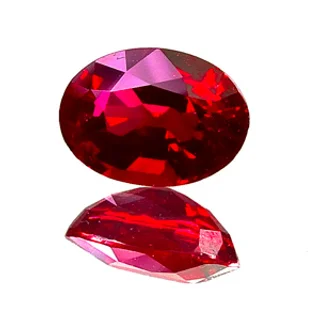

Ruby: Meaning, Stone Lore, and Effects
A comprehensive guide to Ruby, July's birthstone, covering the origins of its stone lore ('Passion, Victory, Blazing Love'), its characteristics as a corundum mineral, why 'Pigeon's Blood' is considered the ultimate, its attributed effects, compatible stones, care tips, and FAQs.
Table of Contents (Tap to toggle)
Introduction
Ruby, celebrated as the "Queen of Gems," is one of the world's Big Four gemstones (alongside diamonds, emeralds, and sapphires), embodying "Passion, Victory, and Blazing Love" in its fiery red hue. In ancient Indian Sanskrit, it was called "Ratnaraj (King of Gems)," and for over 3,000 years, it has been cherished by royalty, nobles, and warriors alike as a "symbol of victory and passion."
This article provides a comprehensive overview, from the origins of its stone lore and its mineralogical characteristics to why "Pigeon's Blood" is considered the pinnacle, its reputed effects, care methods, how to distinguish between natural, synthetic, and treated stones, and frequently asked questions. We've structured it to serve as a valuable resource for anyone who wants to not just admire this coveted gem, but also deeply understand it as "a stone to embrace for life's pivotal moments."
Table of Contents
- Basic Information and Mineral Data
- Stone Lore, History, and Cultural Background
- Attributed Effects
- Ways to Enhance Passion and Victory
- Compatible Combinations
- Cleansing and Care
- How to Distinguish Natural, Synthetic, and Treated Stones
- Frequently Asked Questions (FAQ)
- Editor's Note
- Our Editorial Team's Perspective
- Related Articles You Might Enjoy
Basic Information and Mineral Data
| Item | Content |
|---|---|
| Stone Name | Ruby |
| Japanese Name | Kogyoku (Crimson Gem) |
| Mineral Species | Corundum |
| Crystal System | Trigonal |
| Primary Sources | Myanmar (Mogok region), Mozambique, Thailand, Sri Lanka, Madagascar |
| Mohs Hardness | 9 (Second only to diamond) |
| Specific Gravity | 4.00 |
| Refractive Index | 1.762〜1.770 |
| Color | Vivid Red to Deep Crimson (Chromium is the coloring agent) |
Ruby is the same corundum mineral as sapphire. It gets its red color from trace amounts of chromium within aluminum oxide (Al₂O₃). Corundum has an extremely high Mohs hardness of 9, second only to diamond, making it ideal for daily wear. It also lacks cleavage, which means it's resistant to breaking from impact – another strength of ruby.
The most prized color is known as "Pigeon's Blood," a pure, deep crimson with a slight purplish tinge. Traditionally, rubies from Myanmar's (formerly Burma) Mogok region have been considered the finest, but in recent years, high-quality rubies from Mozambique have also gained high acclaim in the international market.
Stone Lore, History, and Cultural Background
Ruby's stone lore includes "Passion, Victory, Blazing Love, and Vitality." Its etymology comes from the Latin word "rubeus = red," which is the root of names like "Ruby" in English and "Rubis" in French, and other languages across Europe.
In ancient Indian Sanskrit, it was called "Ratnaraj (King of Gems)" and treated as the highest-ranking stone adorning kings' crowns. In Hinduism, it was revered as the stone of the sun god Surya, considered to embody the sun's power, and used for offerings to deities.
In medieval Europe, it was carried into battle as a "warrior's guardian stone," and a widespread legend claimed it would "protect its wearer from harm." It's even said that warriors in the Burmese kingdom would incise their skin and insert rubies to gain protection on the battlefield.
From the 16th century onwards, European royalty and nobility exclusively cherished ruby as "the most noble red." Even today, rubies are frequently used in royal jewelry, such as pieces worn by Queen Elizabeth and the Princess of Monaco.
Source: GIA (Gemological Institute of America) Ruby Overview, Gübelin Gem Lab Mineralogical Data, and more.
Recommended for:
- Those facing pivotal moments or a year of challenges
- Those wanting to rekindle passion or pursue burning goals
- Those seeking to demonstrate leadership (business owners, sales professionals, and managers)
- Those looking for a gift for themselves, family, or a partner born in July
Attributed Effects
Please Note: The "effects" of crystals are cultural and symbolic in nature. They are not medically or scientifically guaranteed, and individual experiences may vary.
- Activation of Passion and Vitality — Its fiery red hue is said to inspire motivation for action.
- Symbol of Victory and Success — Believed to empower in competitive and challenging situations.
- Blazing Love and Enhanced Romantic Fortune — Legend says it attracts passionate romance and intense partnerships.
- Strengthening Leadership — As the "King's Stone," it serves as a mental pillar for those in leadership positions.
- Averting Danger and Ward Off Evil — As a warrior's guardian stone, it has long been said to bestow the ability to sense danger.
Regardless of whether you believe in its traditional "effects," the fact that gazing at a deep crimson color can uplift your spirits is also discussed from the perspective of color psychology. Red is known to stimulate the sympathetic nervous system and encourage action. Ruby, as a symbolic representation of this, is cherished as a talisman to wear on "that special day" when you need a boost.
Ways to Enhance Passion and Victory
- Wear it as a ring or pendant on "game day" Especially on days when you want to maximize your potential, such as presentations, interviews, contract signings, or competitions. The right ring finger is traditionally associated with the energy of "action and expression," making it a classic spot to wear a ruby ring.
- As a ring on the left ring finger (engagement or wedding ring) Increasingly, couples are choosing ruby instead of diamond as a symbol of "passionate love." Queen Elizabeth's engagement ring featured a combination of rubies and diamonds.
- Place it on the back right of your desk or in your study In Feng Shui, the "South" or "back right" direction is believed to accumulate career and success energy. Placing ruby, which corresponds to the fire element, in this spot is a traditional way to maintain focus on achieving goals.
- As a bracelet on your left wrist The left side is said to correspond to "receiving" energy. Ideal for periods when you want to attract victory and success.
- As a gift for a loved one or an heirloom to pass down With a Mohs hardness of 9, it boasts durability that can be passed down through generations. Many choose it as an heirloom jewel from grandmother to mother to daughter, as the stone weaves the family's "indomitable spirit."
Compatible Combinations
| Combination | Expected Meaning |
|---|---|
| Ruby and Diamond | Passion and resilience. A classic royal wedding combination. |
| Ruby and Garnet | Layering similar red stones. Boosts resilience in competition. |
| Ruby and Carnelian | Both July birthstones. Energy for action and achievement. |
| Ruby and Rose Quartz | Harmony of passion and gentleness. Blazing love and peaceful bonds. |
| Ruby and Quartz (Crystal) | Cleansing and amplification. Quartz balances Ruby's strong energy. |
It's said that combining too many stones can disperse their individual energies. Ruby is a very powerful stone on its own, so a lasting style involves not forcing too many combinations, but rather simply accompanying it with one or two other stones.
Cleansing and Care
Ruby has a Mohs hardness of 9, making it extremely robust and a versatile stone that responds well to almost all cleansing methods.
- Running Water: A brief rinse with lukewarm water is fine.
- Placing on Quartz Cluster or Tumbled Stones: A classic overnight cleansing method.
- Smudging with White Sage Smoke: 1 to 2 minutes is sufficient.
- Moonlight Bath and Sunlight Bath: Place by a window 3 days before and after a full or new moon. It is also resistant to sunlight.
- Sound Bath with Tuning Fork or Crystal Tuner: Within a range that doesn't damage metal settings.
Cleansing methods to avoid:
- Burying in coarse salt for extended periods (as it can discolor metal settings or plating).
- Ultrasonic cleaner (Rubies with glass filling treatment may have the internal glass removed. Always confirm the presence of treatment at the time of purchase.)
- Strong impact (While corundum is hard, there are limits even for untreated stones.)
For daily care, simply soak it in lukewarm water with a diluted neutral detergent for 5 minutes, gently brush the entire setting (even the back), rinse thoroughly, and then dry with a soft cloth. If left with sebum stains, its beautiful deep red can appear dull, so making it a monthly habit will ensure its sparkle lasts a lifetime.
How to Distinguish Natural, Synthetic, and Treated Stones
- Natural rubies often show internal "silk" (needle-like rutile inclusions). Even top-tier Pigeon's Blood quality rubies typically exhibit minute inclusions.
- Synthetic rubies (flux method and Verneuil method) have the same chemical composition as natural ones but can be identified by gas bubbles or curved growth lines. They are explicitly labeled "Synthetic" on gemological reports.
- Heat treatment is a standard practice for the majority of rubies in circulation. Its impact on value is limited.
- Glass filling treatment (lead glass filling) is a process used to fill surface fractures. Since it significantly lowers the value, always confirm its presence at the time of purchase.
- Similar stones: Red spinel (same red color but not corundum), red garnet (different refractive index), red tourmaline, and others.
- Choosing rubies with a gemological report (from GIA, CGL, Gübelin, etc.) is the most reliable approach.
Synthetic rubies are not "fakes," but rather "legitimate synthetic gemstones grown in a laboratory from the same materials as natural ones." They are widely available in the jewelry market as a reasonable option for those who want to enjoy a vivid red color at a more affordable price.
Frequently Asked Questions (FAQ)
Q1. How long can a ruby be worn?
A. With a Mohs hardness of 9, it is the second hardest natural mineral after diamond. It boasts durability that can be passed down through generations. While the platinum or gold settings may show wear after 10-20 years, the stone itself can be enjoyed indefinitely with periodic re-setting or polishing of the mounting.
Q2. Is it okay to wear ruby in the bath, pool, or during sports?
A. For untreated or only heat-treated rubies, a short bath is generally okay. However, chlorine in pools and sulfur in hot springs can discolor the metal settings. For glass-filled rubies, heat and detergents can cause the glass to come out, so it's safest to remove them completely. Always confirm the treatment status at the time of purchase.
Q3. What's the difference between Pigeon's Blood ruby and other rubies?
A. "Pigeon's Blood" refers to a pure, deep crimson with a slight purplish tinge. Authoritative gemological laboratories like Gübelin Gem Lab and SSEF (Swiss Gemological Institute) certify only the finest rubies from Myanmar and Mozambique that meet specific color criteria. Prices can be 3 to 10 times higher than regular rubies, making them a top-tier investment class.
Q4. Can I wear ruby even if I'm not born in July?
A. Absolutely! Birthstones are simply "stones that are particularly compatible," and there's no issue for those born in other months who wish to resonate with ruby's stone lore of "passion and victory." For business owners, sales professionals, managers, athletes, and other professions with many competitive moments, ruby is a compatible stone regardless of their birth month.
Q5. What if my ruby accessory comes out of its setting?
A. In the world of crystals, there's a tradition of viewing this as the stone "taking its place for you" or acting as a protector. Since corundum is very hard, the stone itself rarely breaks. If it has merely come out of its setting, it can often be repaired, so first consult the store where you purchased it or a trusted jewelry repair shop.
Q6. Do synthetic rubies have no "effects"?
A. As a mineral, synthetic rubies are the same corundum crystal as natural ones, so the majority of enthusiasts believe their stone lore and symbolic meaning are identical to natural rubies. If you value "the millions of years the Earth took to create it," then natural is for you. If you prioritize "vibrant red and cost-effectiveness," then synthetic is a good choice. The decision comes down to your personal values.
Editor's Note
For me, the editor, ruby was a stone I had always avoided, thinking it was "too flashy" for me. Its deep crimson color is strong and commanding. I thought, "It doesn't suit me," and for years, I only admired it through display cases.
The turning point came on a day when I faced a crucial project and wanted to feel "ready to commit." I bravely bought a tiny 0.1ct ruby ring, and when I wore it that day, I distinctly remember feeling as if the small red glimmer on my finger was telling me, "You've got this."
I believe ruby isn't a "flashy stone" but rather a "stone of resolve." It's not about everyday glamour; it's a stone you can connect with in a way that "helps you believe in yourself on those pivotal days."
Our Editorial Team's Perspective: Differentiating "Color Intensity" and "Color Purity"
A common pitfall when choosing a ruby is assuming "the darker, the better." In reality, the essence of a top-tier Pigeon's Blood ruby is that it's not just intense, but also "pure."
| Color State | Assessment |
|---|---|
| Pigeon's Blood (Pure Deep Crimson) | ◎ Top tier. The key is a slight purplish tinge. |
| Vivid Red (Bright, Clear Red) | ○ Mainstream. Vibrant and suitable for everyday wear. |
| Dark Red (Deep, Dark Red) | △ Value decreases if too dark. |
| Pinkish Red | △ Borderline with pink sapphire. Its classification depends on the gemological report. |
| Brownish Red | △ Value decreases if it has a brownish tint. |
In other words—
- The essence is "vibrant and pure," not merely "intense."
- "Blackish" or "brownish" hues are detracting factors.
- "Too pink" is classified as a different category (pink sapphire), which changes its price range.
Common Misconceptions
- ❌ "All red rubies are highly valuable" → ✅ The essence is purity and vibrancy of color. Too dark or too brownish will lower its value.
- ❌ "Heat treatment means it's fake" → ✅ It's a standard treatment performed on the majority of rubies in circulation. It's a legitimate treatment explicitly stated in gemological reports.
- ❌ "Glass filling treatment is bad" → ⚠️ While it significantly lowers the value, it's acceptable if you treat it purely as a decorative item. However, it's not recommended for high-value purchases.
A Word from Sun-chan☀️
Thanks for choosing ruby! ❤️🔥
This little one, you see, is a stone that reminds you, "There's a burning flame inside you too!" That flame usually sleeps quietly, but on those crucial days, it'll give you a push and say, "You can do it!" ✨
On game days, nervous days, days you really want to believe in yourself—that's when ruby will be your companion, burning gently right by your side 💛
Related Articles You Might Enjoy
- July Birthstones | A Complete Guide to Ruby and Carnelian — A comprehensive guide to July, including alternative birthstones.
- Complete Guide to 12-Month Birthstones — Comparison and quick reference for all 12 months.
- Carnelian: Meaning and Effects — July's alternative birthstone, a vermillion stone for action and achievement.
- Garnet: Meaning and Effects — A similar red "passion stone," a symbol of victory and passion.
- Rose Quartz: Meaning and Effects — For when you desire harmony between passion and gentleness.
- Crystals to Boost Career Luck — Compares ruby's position in the chapter on resilience.
- How to Properly Wear Crystals — Understanding left versus right and maximizing effects.
Summary
- Ruby is the primary July birthstone, symbolizing "Passion, Victory, and Blazing Love," and one of the world's Big Four gemstones.
- A corundum mineral (sapphire's sister stone). Its deep crimson color comes from chromium, and it's a robust stone with a Mohs hardness of 9.
- Pigeon's Blood is the highest grade. Choose based on vibrancy and purity of color, not just intensity.
- Nearly all cleansing methods are fine (be cautious with prolonged coarse salt exposure and high heat for glass-filled items). It's a versatile stone well-suited for daily wear.
- Since individual experiences of its effects vary, it's best to approach it casually as a "talisman."
It has been cherished for over 3,000 years as the "Queen of Gems," an unparalleled partner to support you in life's pivotal moments.
Tags
この記事をシェアする
この記事が役に立ったら、SNSでシェアしていただけるととても嬉しいです☀️

Thanks so much for reading! I hope this article brought a little sunshine to your day! See you again soon!
You might also like

July Birthstones: Meanings, Gemstone Language, Benefits, and Complete Buying Guide for Ruby and Carnelian
Discover July birthstones Ruby and Carnelian. Explore their symbolism of passion, victory, and the flame of love, their status as precious gems, styling and care tips, gift ideas, fun trivia, and FAQs.

Apatite: Meaning, Stone Lore, and Effects
A comprehensive guide to Apatite: Its meaning, stone lore ('Communication, Academics, Goal Achievement'), effects, who it's recommended for, compatible stones, and purification methods. Discover the basics and practical uses of this 'Blue Guiding Stone' that helps you achieve your goals, all on one page.
How to Properly Wear Crystals
It's believed that the meaning of crystals changes depending on whether you wear them on your left or right hand. This beginner's guide provides a complete explanation of how to properly wear bracelets, pendants, rings, and earrings, how to align them with chakras, where to place them in your home, and even when not to wear them.

Moonstone Meaning, Stone Properties, and Effects
A comprehensive guide to moonstone's properties, history, lore surrounding femininity, intuition, and new moons, ideal pairings, mineral data, and FAQs. This is your go-to resource for incorporating this milky white stone, revered as the embodiment of the moon from ancient India to Rome, into your life.