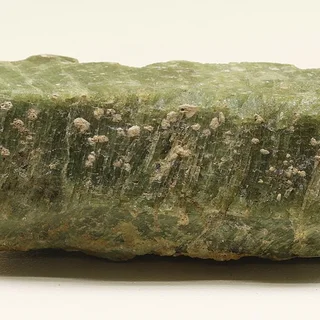

Apatite: Meaning, Stone Lore, and Effects
A comprehensive guide to Apatite: Its meaning, stone lore ('Communication, Academics, Goal Achievement'), effects, who it's recommended for, compatible stones, and purification methods. Discover the basics and practical uses of this 'Blue Guiding Stone' that helps you achieve your goals, all on one page.
Table of Contents (Tap to toggle)
Introduction
The name Apatite is said to originate from the Greek word "apate (to deceive)." When German mineralogist Abraham Gottlob Werner named it in 1786, it was because the stone was often confused with other minerals like tourmaline, beryl, and peridot. While "the stone that deceives people" might sound a bit unsettling, it actually symbolizes versatility with its ever-changing colors.
Among them, the vivid blue apatite, referred to as neon blue to Paraiba blue, is famously sourced from Madagascar and has rapidly gained popularity in the modern jewelry market. It's believed to correspond to the throat chakra and is favored as "the stone that aligns your words and intentions," making it popular for themes such as goal setting, communication, and academics.
Basic Information
| Item | Details |
|---|---|
| Stone Name | Apatite |
| Mineral Species | Phosphate Mineral |
| Main Sources | Madagascar, Brazil, Mexico |
| Mohs Hardness | 5 |
| Colors | Blue, Green, Yellow, and others |
| Corresponding Chakra | 5th (Throat) |
Stone Lore and Meanings
Apatite's stone lore includes "Communication, Academics, and Goal Achievement." It has established its popularity in the modern spiritual market as the "Blue Guiding Stone" that supports goal attainment.
Historically, Apatite has been recognized as an independent stone for a relatively short period. However, as a phosphate, it is widely distributed in the Earth's crust and is actually a main component of our teeth and bones. From the perspective of "a mineral that forms the structure of the body," it is modernly reinterpreted as "a stone that helps organize the 'skeleton' of one's life – that is, one's goals and core principles."
It is said to correspond to the 5th chakra (throat), supporting the theme of moving reality by verbalizing and voicing things.
Recommended for people who...
- Want a clear path to achieve their goals
- Struggle with communication and often find themselves at a loss for words
- Are pursuing academic studies or challenging qualification exams
- Want to express their true self
Effects and What It's Said to Do
Disclaimer: The "effects" of crystals are cultural and symbolic in nature. They are not medically or scientifically guaranteed.
- Enhancing Communication: As a blue stone corresponding to the 5th chakra (throat), it is said to assist with self-expression.
- Supporting Goal Achievement: From its nature as a mineral that "organizes the skeleton," it has been considered a stone that connects will and action.
- Academics and Knowledge Acquisition: As a blue wavelength that clarifies thought, it is said to accelerate learning.
- Self-Expression: Shifting from its origin, "apate (to deceive)," it is said to help you shed external masks and reveal your true self.
Examples of Use
- Wear as a Bracelet: This is a great way for those who want to maintain the habit of "verbalizing their thoughts" daily.
- Wear as a Pendant around the Throat: Placed closest to the 5th chakra, it's favored as a charm before presentations and meetings.
- Place on Your Desk or Study Table: Given its reputation as an "academic stone," many students taking exams or those challenging qualifications place it here as a good luck charm.
- Place Tumbled Stones in Your Planner or Notebook: Keeping it near where you write your goals offers a symbolic way to connect "verbalization and action."
Color Variations
Apatite is a stone whose "personality" is said to change quite a bit depending on its color!
- Neon Blue (Paraiba-like): The most popular color. Madagascar is a representative source. Great for communication and self-expression.
- Blue-Green: A color that calms the mind while refining your words. Good for mending interpersonal relationships.
- Yellow (Golden Apatite): The color of abundance and self-affirmation. Similar themes to Citrine.
- Violet: Intuition and spirituality. Said to be suitable as a companion for meditation.
- Cat's Eye Apatite: A type where a thin line of light moves across the surface. A rare item known as the "eye that sees the future."
If you're unsure which color to choose, you'll be less likely to make a mistake if you work backward from your desired theme by referring to our Complete Guide to Choosing Crystals.
Compatible Combinations
| Combination | Expected Meaning |
|---|---|
| Apatite and Clear Quartz | Amplifies Goal Achievement |
| Apatite and Aquamarine | Enhances Communication |
| Apatite and Citrine | Balancing Success and Abundance |
| Apatite and Sodalite | The Strongest Academic Duo |
| Apatite and Amethyst | Balancing Thought and Intuition |
For more basic combinations, please also check our Complete Guide to Crystal Combinations.
Purification Methods
Recommended Methods:
- Clear Quartz Tumbled Stones
- White Sage
- Moonlight Bath
Methods to Avoid:
- Prolonged direct sunlight (can cause fading)
- Strong impact (low Mohs hardness of 5 makes it prone to breaking)
For detailed steps, please refer to the Complete Guide to Crystal Purification Methods.
Price Range
Estimated market prices for Apatite are as follows (as of 2026, for A to AA grade items):
| Form | Approximate Price |
|---|---|
| Bracelet (approx. 8mm beads) | ¥2,500 to ¥7,000 |
| Tumbled Stones / Chips (50g) | ¥1,000 to ¥3,000 |
Deep neon blue is popular and commands higher prices.
Prices can vary significantly depending on the source, grade, and size. It's recommended to compare prices and quality (e.g., with certification, transparency, and color intensity) at several stores before making a purchase.
How to Spot Fakes and Artificial Stones
- Natural stones naturally exhibit color variations, subtle inclusions, and minor fractures.
- Beads claiming to be "neon blue" that appear extremely uniform in color are likely dyed quartz or glass.
- Apatite has a low hardness of 5, so fine scratches on its surface are natural. If it's mirror-smooth with no imperfections, further verification is advised.
- Purchasing from reputable specialty stores with certification ensures peace of mind. For more details, please see our Guide to Spotting Fake and Artificial Stones.
Frequently Asked Questions (FAQ)
Q. What bead size is recommended for an Apatite bracelet? A. For appreciating its color, 8-10mm is standard. Since its hardness is a low 5, larger beads require more careful handling.
Q. How is it different from Aquamarine or Blue Topaz? A. Aquamarine evokes "the calm blue of the sea," Blue Topaz represents "the clear blue of a sunny sky," and Apatite's key characteristic is its "fluorescent, neon-like blue."
Q. Is it suitable as a good luck charm for exams? A. Yes! As a blue stone symbolizing "academics and goal achievement," it is considered one of the top three popular academic stones, alongside Sodalite and Fluorite.
Q. Does low hardness mean I can't use it daily? A. It's not entirely impossible, but a pendant will generally last longer than a bracelet on your wrist, which is more prone to bumps. Remember to take it off during showers and sports.
Conclusion
- Apatite is a crystal symbolizing "communication, academics, and goal achievement."
- Its origin lies in the Greek word "apate (to deceive)," and it has a history of being confused with other minerals due to its multi-colored nature.
- Madagascar's neon blue is a popular modern color, and it's considered a "stone of words" corresponding to the 5th chakra.
- For purification, clear quartz tumbled stones and white sage are recommended, while prolonged direct sunlight and strong impact should be avoided.
Apatite is a stone you can have a special relationship with—one that reminds you of "communication" every time you wear it.
Editor's Note
I often hear stories of people who struggle to speak up in meetings or freeze in front of others, gradually finding their voice after starting to use an Apatite pendant as a "lucky charm switch." I feel it's a stone where it's not just the stone's power, but the sense of security you feel while wearing it that encourages you to speak up.
Related Articles You Might Enjoy
Tags
この記事をシェアする
この記事が役に立ったら、SNSでシェアしていただけるととても嬉しいです☀️

Thanks so much for reading! I hope this article brought a little sunshine to your day! See you again soon!
You might also like

How to Properly Wear Crystals
It's believed that the meaning of crystals changes depending on whether you wear them on your left or right hand. This beginner's guide provides a complete explanation of how to properly wear bracelets, pendants, rings, and earrings, how to align them with chakras, where to place them in your home, and even when not to wear them.
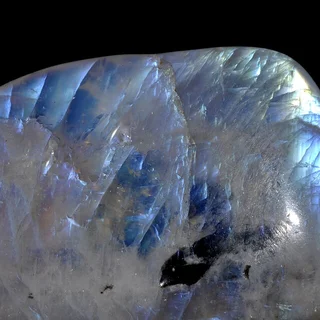

Moonstone Meaning, Stone Properties, and Effects
A comprehensive guide to moonstone's properties, history, lore surrounding femininity, intuition, and new moons, ideal pairings, mineral data, and FAQs. This is your go-to resource for incorporating this milky white stone, revered as the embodiment of the moon from ancient India to Rome, into your life.
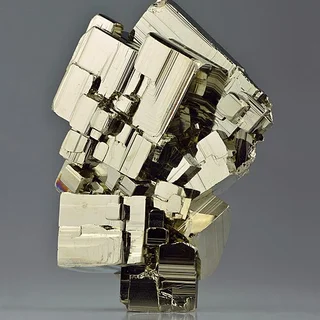

Pyrite (Iron Pyrite): Meaning, Stone Language, and Effects
A comprehensive guide to Pyrite (Iron Pyrite), covering its meaning, 'stone language' (financial luck, willpower, and warding off evil), effects, who it's recommended for, compatible stones, and purification methods. Discover the essentials and practical applications of this symbol of prosperity, famously known as 'Fool's Gold,' all in one place.
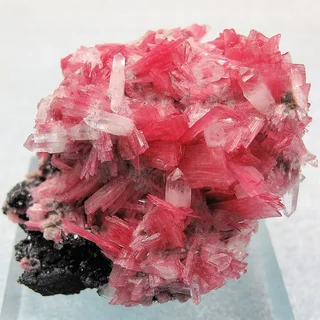
Rhodonite: Meaning, Stone Words, and Effects
A comprehensive guide to Rhodonite's meaning, stone words ('Forgiveness,' 'Brotherly Love,' and 'Renewal'), effects, recommendations, compatible stones, and purification methods. This one-page resource covers the basics and practical uses of the 'Stone of Forgiveness' that renews wounded love.