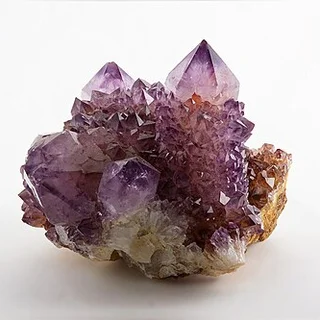
Amethyst (Purple Quartz): Meaning, Gemstone Language, and Effects
A comprehensive guide to Amethyst (Purple Quartz), covering its gemstone language, history, traditional effects, methods for enhancing intuition, harmonious combinations, mineralogical characteristics, and frequently asked questions. This is your definitive guide to incorporating the 'Stone of True Love,' cherished since Ancient Rome, into your life.
Table of Contents (Tap to toggle)
Introduction
When you think of purple gemstones, Amethyst surely comes to mind. Known as the birthstone for February in Japan, it's been cherished globally as the "Stone of True Love" and the "Stone of Sobriety." Ancient Romans used it in goblets as a symbol of temperance, and during the Middle Ages in Europe, it was an indispensable gem for bishops' rings.
In this article, I'll provide a comprehensive overview, including mineralogical data, historical background, traditional effects, and FAQs, all while sharing what I've personally felt from keeping a small Amethyst by my bedside on sleepless nights.
Table of Contents
- Basic Information and Mineralogical Data
- Gemstone Language and Historical/Cultural Background
- Reported Effects and Benefits
- How to Use Amethyst
- Harmonious Combinations
- Cleansing and Care
- Price Range and How to Choose
- How to Spot Fakes and Treated Stones
- Frequently Asked Questions (FAQ)
- Editor's Note
- Related Articles You Might Like
Basic Information and Mineralogical Data
| Item | Content |
|---|---|
| Stone Name | Amethyst / Purple Quartz |
| Japanese Name | Murasaki Suisho (Purple Crystal) |
| Mineral Species | Quartz |
| Chemical Composition | SiO₂ (contains trace amounts of iron) |
| Crystal System | Trigonal |
| Main Origins | Brazil, Uruguay, Zambia, Russia, Madagascar |
| Mohs Hardness | 7 |
| Specific Gravity | 2.65 |
| Color | Pale purple to deep reddish-purple (Violet to Purple) |
| Corresponding Chakras | 6th (Third Eye) / 7th (Crown) |
Amethyst gets its purple color from trace amounts of iron within quartz, which is then exposed to natural radiation underground. This is why prolonged exposure to UV light can cause its color to fade, making it more transparent — this is Amethyst's biggest weakness. Conversely, Citrine is formed when Amethyst is heated, causing a change in the iron's state that turns it yellow (most commercially available Citrine is heat-treated Amethyst).
Gemstone Language and Historical/Cultural Background
Its gemstone language includes "True Love, Intuition, and Healing."
Its name comes from the Greek "a-" (not) + "methystos" (to intoxicate) = meaning "not intoxicated." Greek mythology tells a tale where Dionysus, the god of wine, transformed the maiden Amethyst into a crystal statue, and his tears of wine dyed it purple.
In Ancient Rome, it was crafted into goblets and rings, symbolizing temperance and sincerity. In medieval Europe, it was known as the "Bishop's Stone" and was invariably used in the rings of high-ranking Catholic clergy (a custom that continues today). In Japan, purple has been considered a noble color since ancient times, holding the highest rank in Prince Shotoku's Twelve Level Cap and Rank System.
Source: British Museum "Gems and Their Histories," GIA Amethyst Reference, and others.
Recommended for People Who
- Want to calm their mind or struggle with insomnia
- Wish to sharpen their intuition or see the essence of things
- Want to cut off bad relationships or dependent ties
- Desire a sincere partnership
- Practice meditation or yoga regularly
Reported Effects and Benefits
Note: The "effects" of crystals are cultural and symbolic in nature. They are not medically or scientifically guaranteed, and individual experiences may vary.
- Enhances Intuition — Said to correspond to the Third Eye (6th Chakra)
- Mental Stability and Healing — Known as a stone that soothes irritation and anxiety
- Wards Off Negative Relationships — Believed to protect from harmful connections
- Symbol of True Love — Said to curb fleeting desires and foster sincere affection
- Improves Sleep Quality — Many users feel their dreams become more peaceful when placed by the bedside
Given its historical reputation as a stone to wear at night, placing it in the bedroom or by the bedside is a traditional practice. In fact, for many, gazing at the stone as a 'pre-sleep ritual' can replace the habit of looking at a smartphone before bed, offering a modern benefit.
How to Use Amethyst
- As a Pendant on the Chest or Throat — Around the 5th and 6th Chakras. Useful when focusing on deep breathing.
- Wear it as a Bracelet — Either wrist is fine. 8mm beads are generally good for everyday wear.
- Place it on a Bedside Table — This is the most traditional use. Any raw stone, tumbled stone, or small cluster works.
- Hold it in your Palm During Meditation — A tumbled stone in one hand. Acts as an anchor to regulate your breath.
- Place it on the Left Front of your Desk — Supports concentration during work. A traditional placement for harmonizing energy flow.
Harmonious Combinations
| Combination | Expected Meaning |
|---|---|
| Amethyst and Rose Quartz | Balance of discerning true love and gentleness |
| Amethyst and Clear Quartz | Amplifies spirituality and awareness |
| Amethyst and Moonstone | Harmonizes intuition and femininity |
| Amethyst and Labradorite | Aligns spirituality and inner voice |
| Amethyst and Clear Quartz Cluster | Doubles as a cleansing tool |
The combination of "Clear Quartz and Amethyst" is a classic pairing recommended when you're feeling indecisive. They don't cancel each other out; instead, they complement each other's effects.
Cleansing and Care
Recommended methods:
- Clear Quartz Chips — The safest and suitable for all stones
- White Sage Smoke — 1 to 2 minutes is sufficient
- Moonlight Bath — Place it by a window three days before and after a full moon
Methods to avoid:
- Prolonged Direct Sunlight — Causes fading (especially pale Amethyst can lose color in a few months)
- Directly Burying in Coarse Salt — Can cause surface dullness and scratches
For daily care, simply wipe it gently with a soft cloth. If it gets sweaty or oily, rinse it quickly with lukewarm water and wipe it dry immediately.
Price Range and How to Choose
Approximate market prices for Amethyst (as of 2026, for A to AA grade items):
| Form | Price Range |
|---|---|
| Bracelet (around 8mm beads) | ¥2,000〜¥6,000 |
| Tumbled Stone or Chips (50g) | ¥800〜¥2,000 |
| Small Cluster (5〜10cm) | ¥3,000〜¥12,000 |
| Geode (around 20cm) | ¥10,000〜¥80,000 |
Key points for choosing:
- Color — Deeper purple is more valuable. Russian "Siberian Amethyst" with red-purple flashes is exceptionally prized.
- Origin — Uruguayan (deep purple), Brazilian (somewhat brighter), Zambian (pinkish-purple Rose de France).
- Chevron Pattern — Types with white stripes are called "Chevron Amethyst" and have a distinct charm.
How to Spot Fakes and Treated Stones
- Heat-treated Amethyst turns into Citrine, so "orange-tinted purple" might indicate heating.
- Dyed glass has unnaturally uniform color without variation.
- Stones with extreme transparency and absolutely no inclusions might be synthetic quartz.
- Coldness — Natural stones feel colder than glass.
- Purchasing from a reliable specialty store with an appraisal certificate provides peace of mind.
Frequently Asked Questions (FAQ)
Q1. I've seen stones that are a mix of Amethyst and Citrine. What are those?
A. That's a stone also known as "Ametrine." Famous from Bolivia, it features a purple and yellow gradient. Since Amethyst and Citrine both belong to the quartz family, this combination can occur naturally.
Q2. Is it okay to place Amethyst in the bedroom?
A. Traditionally, it's actually highly recommended. There's a long-standing cultural practice worldwide of placing it by the bedside as a stone that supports peaceful sleep and intuition. However, avoid placing it in a window where morning sun directly shines, as UV light can cause fading.
Q3. What color of Amethyst is best?
A. Culturally, deep reddish-purple is considered the highest quality, but it's best to choose based on your preference. Pale colors are beautiful when light passes through them in the morning, while darker colors show deep richness under artificial lighting.
Q4. Should I start with a cluster (geode) or a bracelet?
A. If you want to carry it with you, go for a bracelet; if you want to place it in a space, choose a cluster. Many people use both, cleansing their bracelet on top of a cluster at night — that's a common way to use them.
Q5. I was born in February, but I already have another birthstone. Should I still get Amethyst?
A. Whether you "should" is a personal decision, but it's indeed considered compatible as a birthstone. If you already have another stone, adding Amethyst as a complementary piece is a natural choice.
Editor's Note
A few years ago, when I (the site operator) was struggling with insomnia, I started placing a small tumbled Amethyst stone by my bedside. I wouldn't claim it 'cured' my sleeplessness. However, what I can say for sure is that my habit of looking at my phone before bed was replaced by those few tens of seconds spent gazing at the stone.
Perhaps the true 'effect' of crystals lies in their ability to trigger such 'habit replacements' — that's what Amethyst taught me.
Editorial Team's Perspective: Don't Underestimate the 'Stone for Sleepless Nights'
Amethyst is often discussed in the context of 'a charm for sleepless nights' and 'mental stability,' but in our editorial team's observation, this way of introducing it only conveys half of Amethyst's true potential.
Its other half of true power lies in its ability to 'help you pause before making a decision.' When you're angry, anxious, or jealous — during those 'moments when you shouldn't trust your own judgment' — those few tens of seconds spent gazing at Amethyst can act as a safety valve, preventing you from being swept away by emotional waves. We believe the tradition of it corresponding to the 6th Chakra (intuition and insight) truly comes alive with this kind of use.
Recommended Usage Scenarios
| Situation | How to Use Amethyst |
|---|---|
| Sleepless night | A small tumbled stone by your bedside. Gaze at it as a bedtime ritual. |
| Impulse buying moment | Hold it in your pocket and count to three. |
| About to write an angry reply | Gaze at the stone before hitting the send button. |
| Important work decision | Place it on the left front of your desk, and pause before deciding. |
| Conversation with a loved one | Keep it in your chest pocket, and remember it before getting emotional. |
Common Misconceptions
- ❌ "Amethyst is for women only" → ✅ Purple has been a noble color for men since ancient times (Prince Shotoku's cap ranks, Catholic bishops' rings). It's a rare stone with a history that transcends gender.
- ❌ "Darker colors have stronger effects" → ✅ Deep colors are rare, but many enthusiasts find pale lavender hues offer a more delicate healing.
- ❌ "Its effects disappear if it turns into Citrine" → ✅ Citrine is also a valid crystal with its own distinct benefits. "Ametrine," which holds the meanings of both stones, also exists.
- ❌ "Placing it in the bedroom causes bad dreams" → ✅ Traditionally, quite the opposite. It's said to promote peaceful dreams, and bedside placement has been recommended since ancient times.
A message from Sun-chan☀️
Amethyst is kind of like a grown-up friend, isn't it?
It doesn't make a flashy statement, but it's the kind of presence that quietly supports you when it really counts. For instance, on a night when someone upsets you, it helps you pause for a beat before you rush to reply. Just doing that can make your morning self feel completely different, you know💛
As you gaze at its calming purple light, tell yourself, "Let's just rest tonight." Because your tomorrow self will surely have the answers🌼
Related Articles You Might Like
- Clear Quartz: Meaning and Effects — The fundamental stone of the same quartz family
- Rose Quartz: Meaning and Effects — A complementary pair for true love
- Comprehensive Guide to Crystals by Zodiac Sign — A leading stone for Virgo and Aquarius
- Comprehensive Guide to 12 Monthly Birthstones — The birthstone for February
- Comprehensive Guide to Crystals by Purpose — Active in chapters for health and interpersonal relationships
Summary
- Amethyst (Purple Quartz) is a stone cherished since ancient times, symbolizing "True Love, Intuition, and Healing."
- It corresponds to the 6th and 7th Chakras, making it highly compatible with meditation and sleep.
- As a member of the quartz family, it's easy to handle and safe for beginners.
- Prolonged direct sunlight is strictly forbidden (it causes fading).
- Combinations with Rose Quartz and Clear Quartz are classic pairings.
Each time you wear it, Amethyst reminds you of 'true love' and 'time to compose yourself' — it's a stone with which you can build such a relationship.
Tags
この記事をシェアする
この記事が役に立ったら、SNSでシェアしていただけるととても嬉しいです☀️

Thanks so much for reading! I hope this article brought a little sunshine to your day! See you again soon!
You might also like
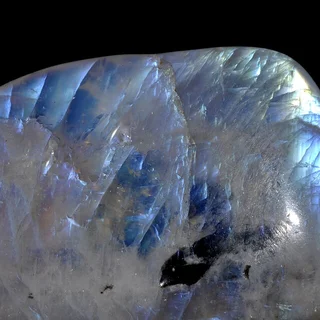
Moonstone Meaning, Stone Properties, and Effects
A comprehensive guide to moonstone's properties, history, lore surrounding femininity, intuition, and new moons, ideal pairings, mineral data, and FAQs. This is your go-to resource for incorporating this milky white stone, revered as the embodiment of the moon from ancient India to Rome, into your life.

Seraphinite: Meaning, Stone Lore, and Effects
A comprehensive guide to Seraphinite, covering its meaning, stone lore ('Angels, High-Vibration Healing, Spirituality'), effects, who it's recommended for, compatible stones, and purification methods. Discover the fundamentals and practical uses of this 'High-Vibration Healing Stone' that carries angelic feathers, all on this single page.
9 Crystals Cherished for Health and Well-being
An introduction to 9 types of crystals cherished since ancient times as talismans for mental and physical well-being. This hub article focuses on how to enjoy them as protective charms, not as substitutes for medical treatment.
Apatite: Meaning, Stone Lore, and Effects
A comprehensive guide to Apatite: Its meaning, stone lore ('Communication, Academics, Goal Achievement'), effects, who it's recommended for, compatible stones, and purification methods. Discover the basics and practical uses of this 'Blue Guiding Stone' that helps you achieve your goals, all on one page.