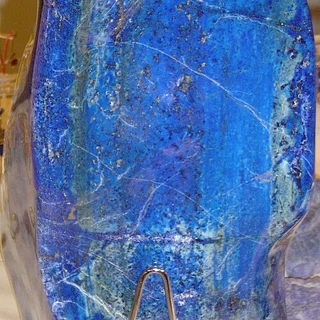

Lapis Lazuli: Meaning, Lore, and Effects
A comprehensive guide to Lapis Lazuli's lore, history, traditional effects, how to use it at life's turning points, suitable combinations, mineralogical characteristics, and frequently asked questions. This is your definitive guide to incorporating the world's oldest crystal, cherished even by Tutankhamun, into your daily life.
Table of Contents (Tap to toggle)
Introduction
Lapis Lazuli is one of the world's oldest crystals. Traces of its use as an adornment have been found in Mesopotamian ruins dating back to around 7000 BCE. In ancient Egypt, it was highly prized as the "stone of the heavens," and Lapis Lazuli was intricately inlaid around the eyes and collar of Tutankhamun's golden mask.
Even in the world of painting, the blue in Vermeer's Renaissance masterpiece, "Girl with a Turban," comes from 'ultramarine' pigment, made by crushing Lapis Lazuli. At the time, it was more expensive than gold, making it an indispensable stone in cultural history.
Table of Contents
- Basic Information and Mineral Data
- Stone Lore, History, and Cultural Background
- Attributed Effects and Properties
- How to Use Lapis Lazuli
- Harmonious Combinations
- Cleansing Methods and Care
- Price Range and How to Choose
- Identifying Fakes and Dyed Stones
- Frequently Asked Questions (FAQ)
- Editor's Note
- Related Articles You Might Enjoy
Basic Information and Mineral Data
| Item | Content |
|---|---|
| Stone Name | Lapis Lazuli |
| Japanese Name | Ruri (瑠璃) |
| Mineral Species | A rock primarily composed of lazurite, including calcite, pyrite, and other minerals |
| Crystal System | Isometric (for its main component, lazurite) |
| Main Production Areas | Afghanistan (Badakhshan Province, Sar-e-Sang Mine), Chile, Russia |
| Mohs Hardness | 5 to 5.5 |
| Specific Gravity | 2.7 to 2.9 |
| Color | Deep blue, sometimes accompanied by golden pyrite and white calcite |
| Corresponding Chakras | 5th (Throat) / 6th (Third Eye) |
Strictly speaking, it's not a single mineral but a unique rock composed of multiple minerals. The golden sparkles are iron sulfide (pyrite), and the white spots are calcite. Afghan Lapis Lazuli is considered the highest quality, and the Sar-e-Sang mine is one of the world's oldest mines, where humanity has been extracting for over 6,000 years.
Stone Lore, History, and Cultural Background
Its lore includes "Truth, Wisdom, and Good Fortune."
In ancient Egypt, it was considered the "symbol of the celestial realm" and used as an amulet for royalty and priests. Lapis Lazuli was also used in scarabs, which were placed in tombs as protective charms. It appears in Homer's epics and was traded in Mesopotamia, the Indus Valley Civilization, and ancient China.
In Europe, it enriched the history of painting as the raw material for "Ultramarine." It was used to paint the blue robes of the Virgin Mary in medieval Christian art and was such an expensive material that the cost of Lapis Lazuli pigment was explicitly stated in church commissions.
In Japan, it arrived with the spread of Buddhism under the name "Ruri" and became a symbol of the 'Eastern Pure Land of Lapis Lazuli Light,' the paradise of Bhaisajyaguru (Medicine Buddha). It is counted as one of the Seven Treasures of Buddhism.
Source: The British Museum 'Egypt: After the Pharaohs,' The Metropolitan Museum of Art 'The Color Blue: Ultramarine,' and others.
Recommended for people who:
- Are at a crossroads in life
- Tend to lose sight of their true self and want to regain their inner balance
- Seek strong protection
- Want to express leadership
- Are interested in ancient and cultural history
Attributed Effects and Properties
Note: The 'effects' of crystals are cultural and symbolic. They are not medically or scientifically guaranteed, and individual experiences may vary.
- Truth-Seeking Power — Said to help you confront your true self.
- Strong Fortune and Good Luck — Believed to help pave your way at life's turning points.
- Intuition and Insight — Said to bestow judgment to see the essence of things.
- Ward Against Evil — Also believed to protect against negative energies.
- Power of Words — Corresponding to the 5th chakra, it is said to support honest and sincere communication.
It's uniquely spoken of as both a "Stone of Good Fortune" and a "Stone of Trials." Rather than simply creating a smooth daily life, it's a stone rich in dramatic lore, said to bring trials and insights at life's turning points, and to grant the strength to overcome them — that's the kind of stone Lapis Lazuli is.
How to Use Lapis Lazuli
- As a pendant near your throat (5th Chakra) — For moments when you want to convey sincerity in your words.
- As a bracelet on your left hand — To attract life's flow by receiving its energy.
- In your pocket before important decisions — A single tumbled stone. Before meetings, negotiations, or interviews.
- Place a raw stone on your desk — A symbolic amulet for leadership roles.
- Near you while reading — As a stone of wisdom, a companion for studying and reading.
Harmonious Combinations
| Combination | Expected Meaning |
|---|---|
| Lapis Lazuli and Clear Quartz | Amplifies truth-seeking insights, adds purification effect |
| Lapis Lazuli and Turquoise | Protection for travel and challenges. An ancient Egyptian classic pair |
| Lapis Lazuli and Amethyst | Harmony of intuition and spirituality |
| Lapis Lazuli and Tiger's Eye | Enhanced decision-making and insight, suitable for business |
| Lapis Lazuli and Hematite | Grounding and resolve for truth |
Lapis Lazuli and Turquoise is a classic combination, one of the oldest in the world, seen in adornments excavated from Tutankhamun's tomb. It's a pair where you can truly feel the weight of history.
Cleansing Methods and Care
Recommended methods:
- Clear quartz chips — The safest and suitable for all stones.
- White sage smoke — 1 to 2 minutes is sufficient.
- Moonlight bath — Place near a window three days before and after the full moon.
Methods to avoid:
- Soaking in water or running water — Lazurite and calcite are vulnerable to water; prolonged exposure can lead to deterioration.
- Directly burying in coarse salt — Risk of surface discoloration due to chemical reactions.
- Prolonged direct sunlight — Can cause fading and cracking.
For daily care, simply wipe gently with a soft cloth. It's a golden rule to wipe away sweat and sebum with a dry cloth.
Price Range and How to Choose
Approximate market price for Lapis Lazuli (as of 2026, A to AA grade items):
| Form | Market Price |
|---|---|
| Bracelet (approx. 8mm beads) | ¥3,000 to ¥10,000 |
| Tumbled stones/chips (50g) | ¥1,500 to ¥4,000 |
| Pendant (cabochon cut) | ¥5,000 to ¥30,000 |
Key points for choosing:
- Color — A deep cobalt blue, known as "royal blue," is considered the highest quality.
- Pyrite — Lapis Lazuli with a moderate scattering of golden pyrite is beautiful and highly valued.
- Calcite (white spots) — Too much can lower its value.
- Origin — Afghan Lapis Lazuli is the highest quality. Chilean Lapis Lazuli often has more calcite and is more affordably priced.
Identifying Fakes and Dyed Stones
- Dyeing treatment — Darkly colored Lapis-like stones are likely dyed. Almost all of these are dyed howlite.
- Acetone wipe test — If a dyed stone is wiped with an acetone-soaked cotton swab, the color will rub off.
- If there are no pyrite sparkles, it might be a different mineral like sodalite.
- Purchasing with a gemological certificate from a reputable specialty store offers peace of mind.
Frequently Asked Questions (FAQ)
Q1. What's the difference between Lapis Lazuli and blue sodalite?
A. While similar in appearance, sodalite does not contain pyrite and is a softer blue stone. Lapis Lazuli is characterized by "blue ground with golden specks," while sodalite has "blue ground with white streaks." Lapis Lazuli is generally more expensive.
Q2. Is it okay to wear Lapis Lazuli during an unlucky year (Yakudoshi)?
A. On the contrary, it is highly recommended. Since ancient times, it has been a stone symbolizing "warding off evil" and "strength to overcome life's turning points," so there's a global tradition of wearing it during unlucky years or times of transition.
Q3. Is extremely cheap Lapis Lazuli suspicious?
A. If a bracelet is priced under ¥2,000 (around $15-20 USD), it's highly likely to be dyed howlite. Genuine Lapis Lazuli rough itself is expensive, so be wary of extremely low prices.
Q4. Can I still get ultramarine pigment made from Lapis Lazuli today?
A. Yes, it's sold as "natural ultramarine" at art supply stores. It's an expensive pigment, costing thousands to tens of thousands of yen per gram, but it offers a deeper, more mystical color than synthetic ultramarine and is cherished by contemporary artists.
Q5. How should I use Lapis Lazuli before an important decision?
A. As you mentally articulate the question you need to decide on, hold the Lapis Lazuli in your left palm for a few tens of seconds. Traditionally, this method doesn't immediately give you an answer, but rather makes it easier for you to realize which direction your true self is leaning towards.
Editor's Note
For me, the operator, Lapis Lazuli is a "stone symbolizing life's turning points." During times when I was considering a career change, started caring for a family member, or decided to become independent—each time I kept a Lapis Lazuli bracelet nearby, it felt like it helped me "voice choices I wasn't quite ready to believe in myself."
It doesn't boast flashy ornamentation nor immediate "effects." Yet, simply gazing at its deep blue and golden shimmer, I feel that "the direction I truly want to go" becomes a little clearer—that's the kind of relationship you can have with this stone.
Editorial Team's Perspective: No Need to Fear the "Stone of Trials"
There's an old saying that Lapis Lazuli is a "stone that calls forth trials," and some people hesitate to acquire it when they hear this. Our editorial team's view is clear: this saying does not mean that "bad changes will occur."
The correct interpretation is this: Lapis Lazuli is a stone that "peels away the false stability that was concealing your true self." In other words, issues you were meant to confront become "visible" the moment you hold the stone—whether you perceive this as a "trial" simply depends on your readiness.
People who have long procrastinated on confronting what they'd rather avoid are more likely to be struck by a "different feeling" immediately after holding Lapis Lazuli. This isn't because the stone called forth a trial, but simply because the time for you to act has genuinely arrived.
When to Consider Lapis Lazuli
- When you're only "thinking about" a career change, starting your own business, or moving, but haven't acted.
- When you haven't been able to say what you truly mean in important relationships (family, partner, and boss).
- When you realize you've been staying too long in an environment that doesn't align with your values.
- When you start feeling a readiness to "answer truthfully if asked about your true feelings."
Conversely, if your mind and body are currently exhausted, Lapis Lazuli's energy might feel heavy. In such cases, we recommend resting with Amethyst or Aventurine first, and then returning to Lapis Lazuli when you feel recharged.
Common Misconceptions
- ❌ "Deeper blue means stronger effects" → ✅ The depth of color relates to its value as an art material. Its significance as an amulet does not depend on color intensity.
- ❌ "More pyrite (golden flecks) means better financial luck" → ✅ Pyrite symbolizes the "radiance of truth." Its properties as a money stone are secondary.
- ❌ "Dyed stones are completely worthless" → ✅ Even inexpensive dyed howlite isn't worthless if you acquire it with awareness and acceptance. However, be cautious of marketing tactics that falsely present it as genuine.
Sun-chan's Little Word☀️
Lapis Lazuli is kind of a mature friend, you know? ✨
It's not the type to gently comfort you. It's more like, "Isn't it time to really face things head-on?" — it asks you directly. That's its kind of presence 💛
So, if you've chosen Lapis Lazuli, it means you're already "ready for a change."
Don't be scared if trials come. That's just proof that you've finally started moving in the direction you truly want to go 🌼
Related Articles You Might Enjoy
- Clear Quartz: Meaning and Effects — The versatile stone that amplifies truth-seeking insights
- Amethyst: Meaning and Effects — A partner for intuition and spirituality
- Comprehensive Guide to Crystals by Zodiac Sign — An affinity stone for Sagittarius, and a September birthstone
- Comprehensive Guide to Crystals by Purpose — Featured for career, study, and relationship luck
- Comprehensive Guide to 12-Month Birthstones — A September alternative birthstone
Summary
- Lapis Lazuli is one of the world's oldest crystals, symbolizing "truth, wisdom, and good fortune."
- A historical stone cherished by humanity for over 6,000 years, from ancient Egypt to the present day.
- It offers strong support when held during life's turning points, transitions, or before important decisions.
- Water, salt, and direct sunlight are strictly forbidden, and there are many dyed fakes, so be cautious when purchasing.
- It is expensive, but it's a lifelong treasure with a rich history and background.
Each time you wear it, it reminds you of "your true self" — Lapis Lazuli is a stone with which you can have such a relationship.
Tags
この記事をシェアする
この記事が役に立ったら、SNSでシェアしていただけるととても嬉しいです☀️

Thanks so much for reading! I hope this article brought a little sunshine to your day! See you again soon!
You might also like
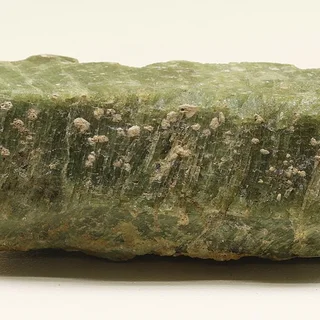

Apatite: Meaning, Stone Lore, and Effects
A comprehensive guide to Apatite: Its meaning, stone lore ('Communication, Academics, Goal Achievement'), effects, who it's recommended for, compatible stones, and purification methods. Discover the basics and practical uses of this 'Blue Guiding Stone' that helps you achieve your goals, all on one page.

How to Properly Wear Crystals
It's believed that the meaning of crystals changes depending on whether you wear them on your left or right hand. This beginner's guide provides a complete explanation of how to properly wear bracelets, pendants, rings, and earrings, how to align them with chakras, where to place them in your home, and even when not to wear them.
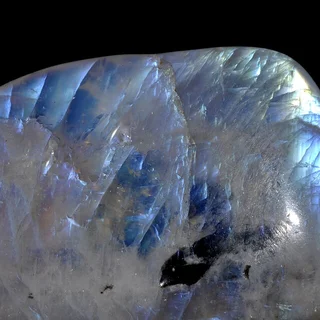

Moonstone Meaning, Stone Properties, and Effects
A comprehensive guide to moonstone's properties, history, lore surrounding femininity, intuition, and new moons, ideal pairings, mineral data, and FAQs. This is your go-to resource for incorporating this milky white stone, revered as the embodiment of the moon from ancient India to Rome, into your life.
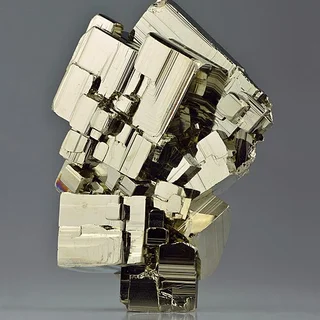

Pyrite (Iron Pyrite): Meaning, Stone Language, and Effects
A comprehensive guide to Pyrite (Iron Pyrite), covering its meaning, 'stone language' (financial luck, willpower, and warding off evil), effects, who it's recommended for, compatible stones, and purification methods. Discover the essentials and practical applications of this symbol of prosperity, famously known as 'Fool's Gold,' all in one place.