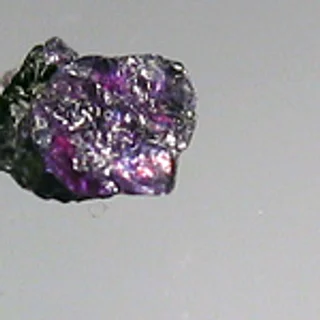

Alexandrite: Meanings, Properties, and Effects
A comprehensive guide to Alexandrite, June's birthstone, covering the origins of its gemstone meanings 'Hidden Passion, Transformation, Premonition,' its characteristics as a chrysoberyl mineral, the reason for its day-to-night color change (green to red), its purported effects, complementary stones, care methods, and frequently asked questions.
Table of Contents (Tap to toggle)
Introduction
Known as the "Emperor's Stone," Alexandrite is a rare gemstone that uniquely changes color from green by day to red by night. It was discovered in Russia's Ural Mountains in 1830 and named after the then-Crown Prince (later Emperor Alexander II). Its colors, "the green and red of the Russian military uniform," led it to be cherished as a special stone by the Russian imperial family.
This article provides a comprehensive overview, from the origins of its gemstone meanings and mineralogical characteristics to the mechanism behind its day-and-night color change, its purported effects, care instructions, how to distinguish natural stones from synthetics and simulants, and frequently asked questions. It's structured to serve as a comprehensive guide for anyone wishing to deeply understand this "stone of change and transformation," which is counted among the world's three rarest gemstones.
Table of Contents
- Basic Information and Mineral Data
- Gemstone Meanings, History, and Cultural Background
- Purported Effects and Benefits
- How to Use Alexandrite for Transformation and Life's Milestones
- Complementary Combinations
- Cleansing Methods and Care
- Distinguishing Natural, Synthetic, and Similar Stones
- Frequently Asked Questions (FAQ)
- Editor's Note
- Our Editorial Team's View
- Related Articles You Might Enjoy
Basic Information and Mineral Data
| Item | Description |
|---|---|
| Stone Name | Alexandrite |
| Japanese Name | Chrome Variety of Chrysoberyl (Kinryokuseki) |
| Mineral Species | Chrysoberyl |
| Crystal System | Orthorhombic |
| Main Producing Regions | Russia (Ural Mountains - largely depleted today), Brazil, Sri Lanka, East Africa |
| Mohs Hardness | 8.5 |
| Specific Gravity | 3.70 to 3.78 |
| Refractive Index | 1.745 to 1.755 |
| Color | Daylight: Blue-Green to Green / Incandescent Light: Red-Purple to Red |
Alexandrite forms when trace amounts of chromium are present in the mineral Chrysoberyl. The optical phenomenon known as "color change" occurs because its absorption spectrum shifts between green and red. In sunlight (daylight spectrum), green is selectively reflected, while in incandescent light (nighttime spectrum), red is selectively reflected.
With a Mohs hardness of 8.5, it is very durable, second only to sapphire (9), making it suitable for everyday wear. It also lacks cleavage, making it relatively resistant to impact. However, top-quality Alexandrite (with a distinct color change from green by day to red by night) is among the world's three rarest gemstones, characterized by a much lower market supply than even diamonds.
Gemstone Meanings, History, and Cultural Background
The gemstone meanings of Alexandrite are "Hidden Passion, Transformation, Premonition, and Good Fortune."
Legend has it that Alexandrite was accidentally discovered in an emerald mine in the Ural Mountains on April 17, 1830, which was the 16th birthday of Crown Prince Alexander Nikolaevich (later Emperor Alexander II) of Russia. The day after its discovery, a gemologist brought a green crystal home and observed it under candlelight, realizing it had "turned into a red stone." It was then presented to the imperial court as "the stone that is green by day and red by night."
Since the Russian military uniform at the time featured a "combination of green and red," it became known as "the stone symbolizing Russia itself" and held special significance among the Russian imperial family and nobility. Until the Ural Mountains' mines were depleted in the late 19th century, it was the world's sole source.
Since the 20th century, deposits have also been found in Brazil, Sri Lanka, and East Africa, but stones rivaling the vibrant color change of Uralian Alexandrite are rare. Most Alexandrites on the market today come from Brazil and Sri Lanka, and the majority exhibit only a slight color change.
Source: GIA (Gemological Institute of America) overview of Alexandrite, Gübelin Gem Lab mineralogical data, and others.
Recommended For
- Those facing a period of transformation or a turning point in their lives.
- Those who wish to gracefully balance duality (e.g., public and private life, work and family).
- Those who desire a rare gemstone as a "lifelong reward for themselves."
- Those seeking a special gift for themselves, family, or partners born in June.
Purported Effects and Benefits
Disclaimer: The "effects" of crystals are cultural and symbolic in nature. They are not medically or scientifically guaranteed, and individual experiences may vary.
- Ability to Embrace Change — As a color-changing stone, it is regarded as a symbol of "periods of transformation in life."
- Balancing Duality — It is believed to support the harmony of different roles, such as one's day persona and night persona, or work and private life.
- Releasing Hidden Passion — It serves as an "amulet stone" for those who may appear calm but possess a burning passion within.
- Intuition and Premonition — Its color change has long been believed to appear as a "sign of impending change."
- Attracting Good Fortune — As a stone whose discovery began by chance, it is a symbol of "unexpected good luck."
Regardless of whether one believes in the "effects" as tradition, the very act of wearing a gemstone that changes its appearance day and night can inspire one to cultivate a self that "does not fear change." Many wearers report this feeling.
How to Use Alexandrite for Transformation and Life's Milestones
- Wear it daily as a ring. A ring exposed to both sunlight and indoor light is the best way to enjoy its color-changing charm to the fullest. The right ring finger is believed to correspond to the energy of "action and change," making it a recommended placement during periods of transformation.
- As a pendant close to your heart. Alexandrite dangling around your neck beautifully shifts colors with changing light. This is a symbolic way to "keep hidden passions within."
- Embrace it for "life's milestones" such as career changes, independence, or marriage. While it is an expensive rare gemstone, many wearers choose it as a memorial piece of jewelry for life's turning points. Even a single 0.3 to 0.5 carat stone holds profound meaning.
- Wear it mindfully, considering day and night light. Enjoy its green hue in natural light in the morning, then its red under incandescent or candlelight at night—a luxurious way to "spend the day's rhythm with the stone."
- Pass it down as a family heirloom. A Mohs hardness of 8.5 provides durability to be passed down through generations. Many choose it as an heirloom jewelry piece from grandmother to mother to daughter, allowing the stone to weave the family's "power of transformation and adaptation."
Complementary Combinations
| Combination | Expected Meaning |
|---|---|
| Alexandrite and Pearl | Both June birthstones. Harmony of purity and transformation. |
| Alexandrite and Moonstone | Both June birthstones, overlapping symbols of the moon and day/night. |
| Alexandrite and Quartz (Crystal) | Cleansing and amplification. Quartz enhances the subtle beauty of the color change. |
| Alexandrite and Diamond | Resilience and transformation. The ultimate combination for life's milestones. |
| Alexandrite and Emerald | Chrysoberyl family and Beryl family. Wisdom and change from the lineage of green stones. |
It is said that increasing the number of combinations too much can disperse the energy of each stone. Alexandrite possesses an exceptionally strong presence on its own, so it is a lasting style to wear it simply, perhaps with just one or two other stones, rather than layering too many.
Cleansing Methods and Care
Alexandrite is robust with a Mohs hardness of 8.5 and is a versatile stone that responds well to almost all cleansing methods.
- Running Water: Briefly rinse with lukewarm water.
- Placing on a Quartz Cluster or Tumbled Stones: A classic overnight cleansing method.
- Smudging with White Sage Smoke: 1 to 2 minutes is sufficient.
- Moonlight Bath and Sunlight Bath: Place by a window for three days before and after a full or new moon. It is also resistant to sunlight.
- Sound Bath with Tuning Fork or Crystal Tuner: Within the range that does not damage metal settings.
Cleansing methods to avoid:
- Burying in coarse salt for extended periods (as it can discolor metal settings or plating).
- Prolonged use of an ultrasonic cleaner (can potentially expand cracks in stones with numerous inclusions).
- Strong impacts (While Mohs hardness 8.5 is robust, even untreated stones have limits).
For daily care, simply soak it in lukewarm water with a mild, diluted detergent for 5 minutes, gently scrub the entire setting with a soft brush, rinse thoroughly, and then wipe dry. If left with sebum buildup, its beautiful color change can become dull, so making it a monthly habit will maintain its beauty for a lifetime.
Distinguishing Natural, Synthetic, and Similar Stones
- Natural Alexandrite exhibits a distinct color-change effect. The more vivid the shift from "blue-green to reddish-purple," the higher its value.
- Synthetic Alexandrite has the same chemical composition as natural stone but can be identified by its inclusion patterns. It will be clearly marked "Synthetic" on a gemological report.
- Synthetic Corundum (Synthetic Sapphire plus Chromium): An "Alexandrite-like" synthetic stone that has been on the market since the 1900s. Be cautious if the color change is too vivid or appears overly artificial.
- Color Change Garnet: A natural color-change stone. It is less expensive than Alexandrite, but its color-change pattern is different.
- Color Change Sapphire: Exhibits a blue to purple shift. It leans more towards blue than Alexandrite.
- The most reliable method is to choose stones accompanied by a gemological report (from GIA, CGL, Gübelin, and others).
It is not uncommon to encounter Alexandrite that shows only a slight color change. Most stones from Brazil and Sri Lanka do not display the dramatic color change of Uralian Alexandrite. If it is clearly stated as "Alexandrite" on the gemological report, it is genuine, but the vividness of the color change can alter the price by several to dozens of times.
Frequently Asked Questions (FAQ)
Q1. How long can Alexandrite be worn?
A. With a Mohs hardness of 8.5, it is sufficiently hard and durable to be passed down through generations. While the platinum and gold settings may show wear after 10 to 20 years, the stone itself can be enjoyed almost indefinitely if the setting is regularly re-polished and re-worked.
Q2. Is it okay to wear it in the bath, pool, or during sports?
A. For untreated Alexandrite, a short bath is generally fine, but chlorine in pools and sulfur in hot springs can discolor the metal setting. During sports, there's a risk of the stone detaching from its setting due to impact, so it's safer to make a habit of removing it. As a rare gemstone, minimizing the risk of loss is also crucial.
Q3. Why does Alexandrite change color?
A. Alexandrite possesses a unique optical property where its absorption spectrum shifts between green and red. Since sunlight (daylight) contains more green spectrum, it appears green, and since incandescent light (nighttime indoor light) contains more red spectrum, it appears red. Its appearance is determined by the color temperature of the light source, making it a pure physical phenomenon.
Q4. Are Alexandrites from Brazil and Sri Lanka inferior?
A. Not at all. While Uralian Alexandrite is indeed legendary and considered the pinnacle, Brazilian Alexandrite (especially from Espírito Santo) can exhibit excellent, vivid color changes. Sri Lankan stones are often larger and have high transparency, offering distinct charms depending on the origin. The "color change evaluation" on a gemological report is often more important than the country of origin.
Q5. I'm not born in June, but can I still wear Alexandrite?
A. Absolutely! Birthstones are merely "stones with particularly good compatibility," and there's no problem for those born in other months who wish to resonate with Alexandrite's meanings of "transformation and hidden passion." It is a stone with good compatibility, regardless of birth month, for those experiencing life transitions or working in professions with dual aspects.
Q6. My Alexandrite doesn't show much color change, is it still genuine?
A. Even with a slight color change, if it's stated as "Alexandrite" on the gemological report, it's genuine. Many Alexandrites from Brazil and Sri Lanka show only a "subtle color shift" to the naked eye. The trick to choosing without regret is not to expect the dramatic color change of Uralian Alexandrite too much. Genuine Alexandrites definitely exist even in the more accessible price range (around 100,000 to 500,000 JPY or similar dollar value).
Editor's Note
For me, the editor, Alexandrite was always "a stone I wished to own someday, but somehow it felt out of reach." The weight of its title as one of the world's three rarest gemstones, and the vivid day-and-night color change seen in photos, created an impression of it being "a distant jewel beyond my grasp."
The turning point came when I had the chance to try on a small 0.2ct Alexandrite earring at an exhibition. Under the LED lights of the exhibition hall, it was blue-green, but when I stepped outside into natural light, it showed a color change with a subtle hint of orange—that was the moment I realized, "Ah, this is the real thing."
If you seek "perfect color change," Alexandrite might remain a stone forever out of reach. However, when you allow yourself the "joy of finding even a slight color change with your own eyes," it suddenly becomes much more accessible. As a "stone that witnesses change," it is a gemstone worth acquiring at some point in your life.
Our Editorial Team's View: How to Choose Without Over-emphasizing "Perfect Color Change"
A common pitfall when choosing Alexandrite is to spend a lifetime searching for only "Uralian-origin with vivid color change" and never buying one. In reality, color change levels correspond to price, and the key is to find a way to enjoy it that suits your budget.
| Price Range | Expected Color Change |
|---|---|
| 1ct/Several Million JPY and up (Uralian origin, pinnacle) | ◎ Dramatic green ↔ red change. Collector-grade, museum-quality. |
| 0.5ct/Several Hundred Thousand JPY (Brazilian origin, excellent quality) | ○ Clear color change. Sufficiently beautiful for everyday wear. |
| 0.3ct/100,000 to 300,000 JPY (Sri Lankan or Brazilian origin) | ○ Slight color change, but genuine. Ideal for beginners or milestone commemorations. |
| 0.1ct/Tens of Thousands JPY (East African origin, small) | △ Subtle color change. Perfect as an accent for accessories. |
In other words—
- ❌ "It's not genuine unless it's from the Urals" → ✅ Brazilian and Sri Lankan Alexandrite are also authentic. Confirmable with a gemological report.
- ❌ "It's fake if the color isn't completely different day and night" → ✅ Even a slight color change means it's genuine. Vividness can change the price by dozens of times.
- ❌ "Synthetic stones are meaningless" → ✅ Chemical composition is identical to natural stones. Choosing synthetic as a "value-driven choice" is also reasonable.
A Word from Sun-chan☀️
Thanks for choosing Alexandrite, little gem! 💎
This little one, you know, is "a stone that cherishes both sides of you." Your day persona and your night persona, your strong self and your vulnerable self—it gently reminds you that both are your true self ✨.
It's okay not to be afraid of change. Alexandrite, you see, is a magical friend that tells you, "Change itself is beautiful" 💛.
Related Articles You Might Enjoy
- June Birthstones: The Complete Guide to Moonstone, Pearl, and Alexandrite — A comprehensive guide covering all three June stones.
- The Complete Guide to 12-Month Birthstones — A comparison and quick reference for all 12 months.
- Moonstone Meanings and Effects — Also a June birthstone, the stone of intuition and new beginnings.
- Pearl Meanings and Effects — Also a June birthstone, the ocean gem of purity and femininity.
- Diamond Meanings and Effects — A stone to welcome at life's milestones, a symbol of resilience.
- Moon Phases and Crystals — Harnessing stone energy with the moon's rhythm.
- How to Properly Wear Crystals — Differentiating left and right, and maximizing effects by placement.
Summary
- Alexandrite is an additional June birthstone, symbolizing "Hidden Passion, Transformation, and Premonition," and is one of the world's three rarest gemstones.
- It exhibits a green by day and red by night color change due to the presence of chromium in the chrysoberyl mineral.
- Uralian Alexandrite is legendary and considered the pinnacle, but Brazilian and Sri Lankan stones are also genuine.
- Almost all cleansing methods are acceptable (be careful with prolonged coarse salt exposure and strong impacts). As a rare stone, manage the risk of loss.
- Individual experiences of its effects vary, so it is recommended to approach it casually as a "lucky charm."
Quietly accompanying you through life's transformative periods, it "affirms change itself"—a unique existence unlike any other gemstone.
Tags
この記事をシェアする
この記事が役に立ったら、SNSでシェアしていただけるととても嬉しいです☀️

Thanks so much for reading! I hope this article brought a little sunshine to your day! See you again soon!
You might also like

Pearl: Meaning, Gemstone Language, and Effects
A comprehensive guide to June's birthstone, Pearl, covering the origins of its gemstone meanings 'Purity, Health, and Longevity,' its characteristics as an organic gemstone, detailed explanations of Akoya, South Sea, Tahitian, and Freshwater types, its purported effects, compatible stones, care methods, and frequently asked questions.
Apatite: Meaning, Stone Lore, and Effects
A comprehensive guide to Apatite: Its meaning, stone lore ('Communication, Academics, Goal Achievement'), effects, who it's recommended for, compatible stones, and purification methods. Discover the basics and practical uses of this 'Blue Guiding Stone' that helps you achieve your goals, all on one page.

How to Properly Wear Crystals
It's believed that the meaning of crystals changes depending on whether you wear them on your left or right hand. This beginner's guide provides a complete explanation of how to properly wear bracelets, pendants, rings, and earrings, how to align them with chakras, where to place them in your home, and even when not to wear them.

Moonstone Meaning, Stone Properties, and Effects
A comprehensive guide to moonstone's properties, history, lore surrounding femininity, intuition, and new moons, ideal pairings, mineral data, and FAQs. This is your go-to resource for incorporating this milky white stone, revered as the embodiment of the moon from ancient India to Rome, into your life.