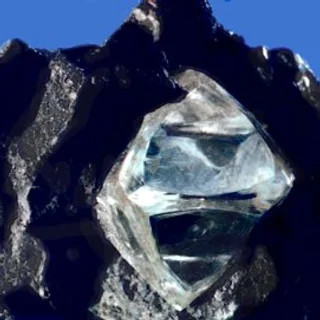

Diamond Meaning, Gemstone Language, and Effects
A comprehensive guide to April's birthstone, diamond, covering the origin of its gemstone language ("eternal bonds, indomitable spirit, purity"), its characteristics as the hardest gemstone, reasons for its popularity in engagements and weddings, its reputed effects, compatible stones, care methods, and FAQs.
Table of Contents (Tap to toggle)
Introduction
Called the "King of Gems," diamond is the hardest natural mineral on Earth and synonymous with eternal brilliance. It holds a special place as the absolute classic for engagement and wedding rings today, and is also cherished as the birthstone for those born in April.
This article provides a comprehensive overview, from the origin of its gemstone language and its mineralogical characteristics to its history as an engagement stone and its modern significance, reputed effects, care methods, differences from synthetic diamonds and simulants, and frequently asked questions. It's designed to serve as a comprehensive guide for anyone who wants to deeply understand this stone, not just admire it, but also consider it as "a stone to welcome at significant turning points in their life."
Table of Contents
- Basic Information and Mineral Data
- Gemstone Language, History, and Cultural Background
- Reputed Effects
- How to Use it to Enhance Engagement and Marriage Luck
- Compatible Combinations
- Cleansing and Care Methods
- How to Distinguish Natural Diamonds, Synthetic Diamonds, and Simulants
- Frequently Asked Questions (FAQ)
- Editor's Note
- Editorial Team's Perspective
- Related Articles You Might Also Like
Basic Information and Mineral Data
| Item | Content |
|---|---|
| Stone Name | Diamond |
| Japanese Name | Kongoseki (金剛石) |
| Mineral Species | Native element mineral: Carbon (C) |
| Crystal System | Isometric (Cubic) |
| Main Production Areas | South Africa, Botswana, Russia, Australia, Canada |
| Mohs Hardness | 10 (Highest for natural minerals) |
| Specific Gravity | 3.52 |
| Refractive Index | 2.417 |
| Color | Colorless to pale yellow, Fancy colors (pink, blue, yellow, green, and more) |
Diamond is a crystal of pure carbon (C); in terms of composition alone, it's made of the same element as pencil lead (graphite). The difference lies in the arrangement of atoms. The crystal structure, formed only under high temperature and pressure at depths of over 150km below the Earth's surface, gives it a Mohs hardness of 10, the highest for any natural mineral. Its refractive index of 2.417 is top-tier for a gemstone, and it's this optical property that allows it to intensely disperse light, creating "fire" depending on the cut.
However, "hard" and "unbreakable" are not the same thing. Due to its cleavage, a strong impact from a specific angle can cause it to chip instantly. Making it a habit to remove your ring during baths, washing dishes, and sports is basic etiquette for ensuring its longevity.
Gemstone Language, History, and Cultural Background
The gemstone language of diamond includes "eternal bonds, indomitable spirit, purity, and sanctity." Its etymology comes from the ancient Greek word "adamas," meaning "unconquerable," derived from its overwhelming hardness, believed to be unbreakable.
In ancient India, diamonds were mined and worshipped from around the 4th century BCE, treated as symbolic stones adorning royal crowns. In medieval Europe, knights wore them as "amulets for courage." It is said that Archduke Maximilian I of Austria gave the first diamond engagement ring to Mary of Burgundy in the 15th century, leading to the widespread culture of "engagement stone equals diamond."
De Beers' "A Diamond is Forever" campaign (1947) in the 20th century firmly established the modern image of "eternal love equals diamond" worldwide. While this context was popularized through marketing, the symbolism itself, backed by its physical permanence of Mohs hardness 10, represents an intrinsic meaning humanity has recognized since before myths.
Source: GIA (Gemological Institute of America) Diamond Overview, CIBJO World Jewellery Confederation gemological materials, and more.
Recommended for people who...
- ...are approaching major life milestones such as marriage or engagement.
- ...desire an "indomitable amulet" to inspire themselves.
- ...want to choose just one piece of jewelry that retains its value long-term.
- ...are looking for a gift for themselves, family members, or partners born in April.
Reputed Effects
Note: The "effects" of crystals are cultural and symbolic in nature. They are not medically or scientifically guaranteed, and individual experiences of their effects may vary.
- Enhanced Marriage Luck, Symbolizing Eternal Bonds — Its unbreakable hardness is said to symbolize the permanence of vows.
- Support for Indomitable Spirit and Courage — It is believed to remind one of inner strength that remains unshaken even in difficulties.
- Purity and Cleansing — Its colorless and transparent brilliance is said to dispel doubts and distracting thoughts.
- Symbol of Financial Luck and Asset Value — Due to its high market value, it is spoken of as a symbol of wealth and success.
- Support for Self-Realization — It is believed to encourage the resolve to "believe completely in oneself."
Regardless of whether one believes in the "effects" as tradition, many users feel that the very resolve to wear it at a life milestone becomes a small switch that changes their actions. It's a contiguous benefit with that feeling one gets when putting on an engagement ring, thinking, "Starting today, things are different."
How to Use it to Enhance Engagement and Marriage Luck
- Wear it daily as an engagement or wedding ring. This is the classic way to use a diamond. The left ring finger has traditionally been believed to have a vein directly connected to the heart, making it the chosen finger for wearing a stone of vows.
- As a necklace around the chest (near the heart chakra). A solitaire diamond pendant is an accessible option whether you are married or not. It's said to resonate with the fourth chakra, and more people are incorporating it into their daily lives with the aim of boosting self-esteem.
- Own just one piece as an amulet for birthdays or anniversaries. A classic gift for April birthdays and a popular reward jewelry. The strength of a diamond is its ability to remain as a single-piece investment.
- Wear it in "situations where you need to make a decision." On the day of an important presentation, interview, or contract signing. This is a traditional use to evoke resolve by placing the symbol of indomitable spirit close to your skin.
- Pass it down to the next generation as a family heirloom. A Mohs hardness of 10 means it won't wear down in a human lifetime. Many choose it as jewelry to be passed down from grandmother to mother to daughter, with the stone itself weaving together relationships.
Compatible Combinations
| Combination | Expected Meaning |
|---|---|
| Diamond and Quartz (Crystal) | Cleansing and amplification. A classic pair of alternative April birthstones. |
| Diamond and Morganite | Sincere energy for marriage and long-term partnership. Both are April birthstones. |
| Diamond and Aquamarine | An engagement stone combination. For wishing a peaceful married life. |
| Diamond and Rose Quartz | Love and resolve. A symbol of nurturing tender affection into a strong bond. |
| Diamond and Garnet | Indomitable spirit and passion. As an amulet for a challenging or crucial year. |
It is said that increasing the number of combinations too much can disperse the energy of each stone. Since diamond is a complete stone on its own, a style of using it simply with one or two accompanying stones, rather than layering excessively, is often more sustainable.
Cleansing and Care Methods
Diamond is a versatile stone compatible with almost all cleansing methods.
- Running Water: A quick rinse with lukewarm water is fine for a short time.
- Placing on Quartz Cluster or Tumbled Stones: A classic overnight cleansing method.
- Passing through White Sage Smoke: 1 to 2 minutes is sufficient.
- Moonlight and Sunlight Bathing: Place by a window 3 days before and after a full or new moon. It is also resistant to sunlight.
- Sound Bath with Tuning Fork or Crystal Tuner: Within the range that does not damage the metal setting.
Cleansing methods to avoid:
- Burying in coarse salt for extended periods (as it can cause discoloration of the metal setting or plating).
- Prolonged operation of an ultrasonic cleaner (the stone itself may be fine, but if there are many inclusions (internal flaws), cracks could expand).
- Strong impact (potential for chipping along cleavage planes. This is the biggest caution for physical care).
For daily care, simply soak it in lukewarm water with a diluted mild detergent for 5 minutes, scrub the back of the setting with a soft brush, rinse thoroughly, and wipe dry. If sebum stains accumulate, the beautiful fire will dull, so making it a monthly habit will help maintain its sparkle for a lifetime.
How to Distinguish Natural Diamonds, Synthetic Diamonds, and Simulants
- Natural diamonds usually have microscopic inclusions (internal flaws). "Too perfect transparency" is actually a point to suspect synthetic or simulant stones.
- Synthetic diamonds (lab-grown) are chemically and structurally identical to natural diamonds, true carbon crystals. Their price is about 30-50% of natural diamonds. They are clearly marked as "Laboratory-Grown" on GIA grading reports.
- Moissanite: The highest quality simulant. Its refractive index is higher than diamond, and its fire is stronger, so if the light dispersion feels "too flashy," it might be moissanite.
- Cubic Zirconia (CZ): With a refractive index of 1.95, its fire is weaker, and its higher specific gravity makes it appear slightly smaller for the same carat weight.
- White Topaz and White Sapphire: Hardly exhibit any fire (rainbow flashes).
- Choosing stones with a grading report (from GIA, CGL, and more) is the most reliable method.
Synthetic diamonds are not "fakes" but rather "diamonds grown in a laboratory from the same material as natural ones." As a sensible option for those who want to achieve high 4C grades while keeping costs down, they have rapidly gained popularity in the engagement ring market in recent years.
Frequently Asked Questions (FAQ)
Q1. How many years can a diamond be worn?
A. A Mohs hardness of 10 means it won't wear down during a human lifetime, and its greatest strength is its ability to be passed down through generations. However, the platinum or gold setting may wear down in 10-20 years. By regularly having the setting re-worked or re-polished, the stone itself can be enjoyed semi-permanently.
Q2. Is it okay to wear it in the bath, pool, or during sports?
A. A short bath is okay, but it's generally safer to remove it considering the risk of impact and the dulling of its fire by soap residue. Chlorine in pools and sulfur in hot springs can discolor the metal setting, and sports carry the risk of strong impacts causing cleavage fractures. Developing the habit of removing it will ultimately make it last longer.
Q3. Do synthetic diamonds (lab-grown) have no "effects"?
A. As a mineral, it is a carbon crystal completely identical to natural ones, so the majority of enthusiasts believe its gemstone language and symbolic meaning are the same as natural diamonds. If you prioritize "the billions of years Earth took to create it," choose natural. If you prioritize "the balance between 4C and budget," choose lab-grown. The choice depends on your values.
Q4. If someone didn't receive an engagement ring, is it okay to buy one for themselves?
A. In recent years, more and more people are choosing solitaire diamond necklaces or rings as a "self-reward diamond." Rather than just being a stone for engagement, choosing to welcome it as a "stone of commitment to one's own life" fully resonates with the diamond's gemstone language of "indomitable spirit and purity."
Q5. Is it unlucky if a diamond accessory chips or falls out of its setting?
A. In the world of crystals, there's a tradition of viewing it as having "taken a hit on your behalf." If it merely fell out of the setting, it can usually be repaired. If it chipped, it can often be re-cut by polishing (though the carat weight will decrease). So, the practical first step is to consult the original store or a trusted jewelry repair shop.
Q6. I'm not born in April, but can I still wear a diamond?
A. Of course! Birthstones are merely "stones with especially good compatibility." There's no problem at all for those born in other months who wish to resonate with the diamond's gemstone language of "eternal bonds and indomitable spirit." In fact, for April-born individuals, there's the joy of cherishing it as "their month's stone," and for those born in other months, the joy of "welcoming it as a stone of life's resolve"—both are wonderful ways to connect with it.
Editor's Note
For a long time, diamond was just "a stone to admire" for me, the operator. I'd see it through a display case at an exhibition, think "it's beautiful," and that would be it—a gem seemingly out of reach. However, when I boldly bought a small solitaire diamond (0.1ct) earring at one point, my perception completely changed.
It wasn't flashy. And yet, it was always there.
When I woke up and looked in the mirror, it would sparkle subtly by my ear. Just that sight gave me a sense of "today will be okay"—it had a mysterious presence. Even if it's not a large stone like an engagement ring, a diamond can perfectly serve as a small flag you raise for your own life.
Choosing "one piece I can be proud of now" rather than "a large stone someday"—I believe this is the way of relating to this stone that suits it best.
Editorial Team's Perspective: Separating "Investment Value" and "Amulet Value"
The way diamonds are discussed often conflates "asset value" and "symbolic value." Our editorial team recommends clearly separating these two when evaluating them.
| Perspective | Natural Diamond | Lab-Grown Diamond | Solitaire CZ / Moissanite |
|---|---|---|---|
| Asset Value (Resale) | ◎ Value retention over decades | △ Resale market still immature | × Almost zero |
| Rarity as a Mineral | ◎ Formed by Earth over billions of years | × Can be mass-produced in weeks | × Synthetic stone |
| Symbolic Value (Vow, Amulet) | ◎ Classic | ◎ Chemically identical | ○ Depends on "sentiment" |
| Cost Performance | △ High cost | ◎ 30-50% cheaper for the same grade | ◎ Significantly cheaper |
In other words—
- If you want to "preserve it as an asset or pass it down through generations," natural is the only choice.
- If you "only want the symbolic value and wish to allocate your budget to 4C grades," then lab-grown is for you.
- If you prioritize "everyday sparkle and casual wearability," then moissanite or CZ are also reasonable options.
It's not about which is "correct," but the first step to making a choice without regret is to articulate why you are welcoming this stone into your life.
Common Misconceptions
- ❌ "Diamonds don't depreciate in value" → ✅ Small stones under 1 carat are usually less than half their purchase price in the resale market. Asset value only applies to higher grades like 1 carat or more, D color, IF clarity, and with a GIA grading report.
- ❌ "Bigger carat means better" → ✅ The balance of the 4Cs (Carat, Color, Clarity, Cut) is essential. A good cut determines the fire, so a well-cut 0.3ct diamond can sparkle more brilliantly than a poorly cut 1ct one.
- ❌ "Synthetic diamonds are fakes" → ✅ Chemically identical to natural ones. They are legitimate synthetic gemstones explicitly marked as "Laboratory-Grown" on grading reports.
A message from Sun-chan☀️
Thank you for choosing a diamond! 💎
This little one, you see, is "a stone that helps you feel proud of your life." Whether it's a stone given to you or one you give to yourself, its sparkle holds exactly the same value! ✨
Its unbreakable hardness is "already within you," so don't worry. A diamond is a kind friend that reminds you of that! 💛
Related Articles You Might Also Like
- April Birthstones | A Complete Guide to Diamond and Quartz (Crystal) — A comprehensive guide to April, including alternative and additional birthstones.
- Complete Guide to 12-Month Birthstones — A comparison and quick reference guide for all 12 months.
- Clear Quartz Meaning and Effects — April's alternative birthstone: a versatile stone for cleansing and amplification.
- Morganite Meaning and Effects — Another April birthstone: a partner stone for marriage luck.
- Aquamarine Meaning and Effects — An engagement stone combination: a stone for wishing a peaceful married life.
- Crystals to Enhance Marriage Luck — Compares the positioning of diamonds in the marriage luck chapter.
- How to Properly Wear Crystals — Differentiating between left and right use and locations to maximize effects.
Summary
- Diamond is April's primary birthstone, symbolizing "eternal bonds, indomitable spirit, and purity." Its Mohs hardness of 10 is the highest for any natural mineral.
- While an absolute classic for engagement and wedding rings, its use as a "stone of self-commitment" is also growing.
- Almost all cleansing methods are acceptable (avoid prolonged coarse salt exposure and strong impacts only). It's a versatile stone well-suited for daily wear.
- Natural vs. Lab-Grown is a "choice of values." While chemically identical, there are differences in asset value and rarity.
- Since the experience of its effects varies by individual, it's recommended to approach it casually, simply as an "amulet."
It is a unique stone that can quietly accompany you through life's milestones and continue to sparkle across generations.
Tags
この記事をシェアする
この記事が役に立ったら、SNSでシェアしていただけるととても嬉しいです☀️

Thanks so much for reading! I hope this article brought a little sunshine to your day! See you again soon!
This section contains affiliate links.
You might also like
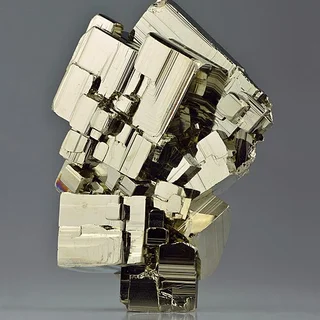

Pyrite (Iron Pyrite): Meaning, Stone Language, and Effects
A comprehensive guide to Pyrite (Iron Pyrite), covering its meaning, 'stone language' (financial luck, willpower, and warding off evil), effects, who it's recommended for, compatible stones, and purification methods. Discover the essentials and practical applications of this symbol of prosperity, famously known as 'Fool's Gold,' all in one place.
April Birthstones: A Complete Guide to Diamond and Quartz (Crystal)
A comprehensive guide to April's birthstone, Diamond, and its alternative, Quartz (Crystal). Explore their meanings, "Unyielding Spirit, Purity, and Eternal Bond" lore, symbolism of the hardest gem, wearing tips, care, choosing for birthday gifts or engagement rings, fun facts, and FAQs.
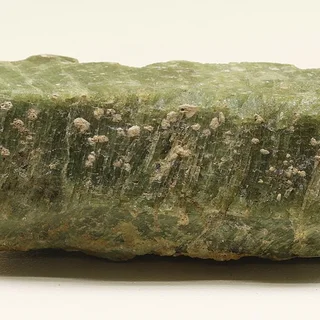

Apatite: Meaning, Stone Lore, and Effects
A comprehensive guide to Apatite: Its meaning, stone lore ('Communication, Academics, Goal Achievement'), effects, who it's recommended for, compatible stones, and purification methods. Discover the basics and practical uses of this 'Blue Guiding Stone' that helps you achieve your goals, all on one page.
How to Properly Wear Crystals
It's believed that the meaning of crystals changes depending on whether you wear them on your left or right hand. This beginner's guide provides a complete explanation of how to properly wear bracelets, pendants, rings, and earrings, how to align them with chakras, where to place them in your home, and even when not to wear them.