
Bloodstone Meaning, Symbolism, and Benefits
A comprehensive guide to Bloodstone, the March birthstone, covering the origins of its meanings like 'courage, devotion, and decisiveness,' its characteristics as a chalcedony variety known as Heliotrope, its reputed benefits, complementary stones, care instructions, and FAQs.
Table of Contents (Tap to toggle)
Introduction
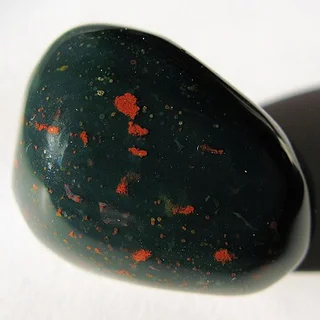
Often called "the Sun's Blood," Bloodstone is a striking gemstone with a distinctive appearance: deep green chalcedony (cryptocrystalline quartz) adorned with red specks that look like blood spatters. As an alternative March birthstone, and historically revered as a "guardian stone for warriors" and a "symbol of devotion and courage," it is a crystal with a rich and extensive history.
This article provides a comprehensive overview, from the origins of its symbolism and mineralogical features, to the legend of "Christ's blood symbolism," its reputed benefits, care methods, distinctions from jasper and other chalcedonies, and frequently asked questions. It is designed to serve as a dictionary for anyone wishing to deeply understand this "stone of courage to face challenges," whether as a March birthstone or for its powerful properties.
Table of Contents
- Basic Information and Mineral Data
- Symbolism, History, and Cultural Background
- Reputed Benefits and Effects
- How to Use Bloodstone for Courage and Decisiveness
- Compatible Combinations
- Cleansing and Care Methods
- Identifying Natural and Similar Stones
- Frequently Asked Questions (FAQ)
- Editor's Note
- Our Team's Perspective
- Related Articles You Might Enjoy
Basic Information and Mineral Data
| Item | Content |
|---|---|
| Stone Name | Bloodstone / Alternative Name: Heliotrope |
| Japanese Name | Ketsugyokuzui (Blood Chalcedony) / Kesseki (Blood Stone) |
| Mineral Species | Chalcedony (Microcrystalline Quartz Aggregate) |
| Crystal System | Trigonal (Cryptocrystalline) |
| Primary Sources | India, Brazil, Australia, USA, Madagascar |
| Mohs Hardness | 6.5 to 7 |
| Specific Gravity | 2.58 to 2.64 |
| Refractive Index | 1.530 to 1.539 |
| Color | Deep green to dark green base with reddish-brown to red spots |
Bloodstone is a variety of chalcedony, characterized by a deep green base color with red spots of iron oxide scattered throughout. Its official mineralogical name is Heliotrope, derived from the Greek words "Helio = sun" and "Tropein = turning/facing," referring to ancient observations that "when immersed in water and turned toward the sun, its red spots reflect."
With a Mohs hardness of 6.5 to 7, it is durable enough for daily wear and resistant to impact due to its lack of cleavage. It has been cherished since ancient times as a material for seals, cameos, and carvings. The number, size, and arrangement of its red spots vary greatly, giving each Bloodstone a unique charm, as no two are exactly alike.
Symbolism, History, and Cultural Background
Bloodstone's symbolism includes "courage, devotion, decisiveness, and endurance."
In ancient Babylonia and Egypt, it was prized since before recorded history as an "offering stone to the gods" and an "amulet against evil," even used in royal seals. In ancient Rome, it was carried into battle as a "warrior's guardian stone," with a widespread belief that "those who wear it will not suffer fatal wounds."
In medieval Christian tradition, it was believed to have been "born when Christ's blood dripped onto green jasper during his crucifixion," becoming a jewel of special significance in churches and monasteries as a "symbol of Christ's blood." From this tradition, it also earned the name "Martyr's Stone," and has been passed down to modern times as a symbol of "devotion, sacrifice, and rebirth."
Medieval European alchemists believed that "wearing Bloodstone enhanced magical powers by borrowing the sun's energy," and it frequently appeared in alchemical texts under the name Heliotrope (the stone that turns to the sun). Although it was recognized as a March birthstone only in the 20th century, its symbolism deeply resonates with the seasonal feeling of "March = the beginning of spring = having the courage to embrace a new season."
Sources: GIA (Gemological Institute of America) overview of chalcedony, AGTA (American Gem Trade Association) mineralogical data, and others.
Recommended for:
- Those seeking courage to face challenges
- Those facing important decisions or choices
- Those in selfless professions (medicine, caregiving, education, and public service)
- Those looking for a gift for March-born individuals, family, or partners
Reputed Benefits and Effects
Note: The "effects" of crystals are cultural and symbolic. They are not medically or scientifically guaranteed, and individual experiences may vary.
- Support for Courage and Decisiveness — Traditionally known as a "warrior's guardian stone," it is said to bestow the strength to face challenges.
- Symbol of Devotion and Sacrifice — From the legend of Christ's blood, it serves as a spiritual anchor for those in professions requiring devotion to others.
- Revitalization of Life Force — The red spots, as a "symbol of life's blood," are believed to energize and invigorate.
- Protection from Danger and Warding off Evil — As a warrior's guardian stone, it has long been spoken of as a protective amulet.
- Rebirth and New Beginnings — As a spring (March) birthstone, it symbolizes "the power to sprout anew after overcoming winter."
Regardless of whether you believe in these traditional "effects," simply gazing at the red spots scattered within the deep green can evoke a moment of conscious awareness of the "contrast between vitality and serenity." The visual presence of the dynamic and the static, blood and earth, coexisting in one stone serves as a symbol of the spirit that "acts calmly even in difficult situations," making it a visually harmonious addition to life, beyond just an amulet.
How to Use Bloodstone for Courage and Decisiveness
- Carry it as an amulet on "game-changing days" or "decision days" A lightweight way to carry a tumbled stone in your pocket or pencil case. Use it on days requiring courage, such as important interviews, contracts, surgeries, or competitions.
- Wear it daily as a ring or pendant The right ring finger is traditionally associated with "action and decision" energy, making it a classic placement for a Bloodstone ring. A pendant worn near the chest symbolizes "devotion."
- Place it on your desk or in your study A traditional practice is to place it in a location where important decisions are made. For business owners, managers, legal professionals, and healthcare providers, placing it on their desk is believed to support calm judgment.
- Wear it as a bracelet on your left wrist The left side is traditionally said to correspond to "receiving" energy. Wear it during periods when you wish to attract courage and vitality.
- As a commemorative jewelry for the start of spring A perfect gift for March-born individuals, or to mark the beginning of a new academic or professional year, or a new chapter in life. A gift to yourself symbolizing "moving forward again after winter."
Compatible Combinations
| Combination | Expected Meaning |
|---|---|
| Bloodstone and Aquamarine | Both March birthstones. Harmony of courage and serenity. |
| Bloodstone and Garnet | Layering with another red stone. Boosting competitiveness. |
| Bloodstone and Hematite | Both warrior's guardian stones. Courage and practical action. |
| Bloodstone and Quartz (Crystal) | Cleansing and amplification. Quartz balances Bloodstone's intensity. |
| Bloodstone and Carnelian | Chalcedony sister stone. Harmony of action and devotion. |
Increasing the number of combinations too much is said to disperse the energy of each stone. Bloodstone has a clear role as a stone of "courage and decisiveness," so simply adding one or two stones is a lasting style.
Cleansing and Care Methods
Bloodstone has a Mohs hardness of 6.5 to 7, making it durable enough for daily wear, and it responds well to many cleansing methods.
- Placing it on a quartz cluster or in tumbled quartz chips: A classic overnight cleansing method.
- Passing it through white sage smoke: One to two minutes is sufficient.
- Moonlight or Sunlight exposure: Place it by a window for three days before and after a full or new moon. As its name Heliotrope suggests, it has a deep connection with the sun.
- Running water: Short rinses with lukewarm water are fine.
- Sound bath with a tuning fork or crystal tuner: Effective if careful not to touch metal.
Cleansing methods to avoid:
- Burying it in coarse salt for extended periods (may scratch the surface).
- Long-term use of an ultrasonic cleaner (may expand cracks at inclusions).
- Strong detergents or acidic substances (may discolor the red iron spots).
For daily care, gently wiping with a soft cloth is fundamental. If sweat or sebum accumulates, quickly rinse it with lukewarm water and immediately wipe it dry.
Identifying Natural and Similar Stones
- Natural Bloodstone is characterized by the unique arrangement, size, and color of its red spots, meaning "no two are exactly alike."
- Dyed quartz or jasper: Similar-looking dyed stones are on the market. Distinguish them by the gradation of color and the realism of the spots.
- Green Jasper: Similar to Bloodstone's base color, but any stone without red spots is jasper.
- Blood Jasper: Sometimes difficult to distinguish clearly, and trade names can cause confusion.
- Glass imitation: There are also glass imitations that replicate the pattern. Can be distinguished from genuine stones by specific gravity, coolness to the touch, and texture.
- The most reliable way to ensure authenticity is to choose stones with a certification.
The balance between the "clarity of the red spots" and the "depth of the green base color" is essential when choosing Bloodstone. Traditionally, it is best to select stones where there is a beautiful contrast between the base color and the spots, rather than those with too many or too few spots.
Frequently Asked Questions (FAQ)
Q1. How long can Bloodstone be worn?
A. With a Mohs hardness of 6.5 to 7, it's durable enough for daily wear and can be passed down through generations. Its history of being used in seals and cameo carvings since ancient times demonstrates its ability to last for hundreds of years with proper care. While the platinum or gold setting may wear down in 10-20 years, reworking the setting periodically allows you to enjoy the stone for a long time.
Q2. Is it okay to wear Bloodstone in the bath, pool, or during sports?
A. Short baths are generally fine, but chlorine in pools and sulfur in hot springs can discolor the metal setting. Strong detergents and acidic substances may also discolor the iron content in the red spots, so it's safest to avoid contact with chemicals. For sports, there's a risk of the setting dislodging due to impact, so developing the habit of taking it off will ultimately make it last longer.
Q3. What's the difference between Bloodstone and Jasper?
A. Bloodstone is green chalcedony (microcrystalline quartz) with red spots scattered throughout. Jasper is opaque quartz rich in impurities, coming in various colors like green, red, brown, and yellow. The classic definition of Bloodstone is "green jasper plus red spots," but there is also a trade name "Blood Jasper," and some individual stones can be difficult to distinguish clearly.
Q4. Can I wear Bloodstone if I'm not born in March?
A. Absolutely! A birthstone is merely a stone with "particularly good compatibility," and there is no problem for individuals born in other months who wish to resonate with Bloodstone's symbolism of "courage and decisiveness." It is a stone that pairs well, regardless of birth month, for those facing important decisions or engaged in selfless work.
Q5. Why is Bloodstone also called "Heliotrope"?
A. Heliotrope is derived from the Greek words "Helio = sun" and "Tropein = turning/facing," meaning "sun-turning stone." Ancient texts record an observation that "when Bloodstone is immersed in water and turned toward the sun, its red spots reflect and tint the water red." From this property, it came to be known as "Sun's Blood" and "sun-turning stone." Heliotrope is the formal mineralogical name, while Bloodstone is the traditional and jewelry trade name.
Q6. What should I do if my Bloodstone accessory chips?
A. In the world of crystals, there's a tradition of interpreting this as the stone "acted as a substitute for you." While a Mohs hardness of 6.5 to 7 is quite durable, strong impacts can cause chipping. Since chipped stones can often be recut through polishing, first consult the store where you purchased it or a trusted jewelry repair shop.
Editor's Note
Bloodstone was for me, as an operator, "a stone that was always on my desk, though not flashy." My first one was a tumbled stone I bought for 200 yen at a local mineral show during my student days. I was drawn to the phrase "blood-like red spots," but when I brought it home and placed it on my desk, I remember feeling a little disappointed by its plainness.
However, on days of important exams, interviews, and contracts, I would mysteriously find myself holding the Bloodstone in my palm. Because it wasn't flashy, no one noticed me holding it in public. It was much later that I realized the true beauty of Bloodstone lay in its "discreetness as an amulet."
Bloodstone is called the "stone of courage," but in truth, I believe it is a stone that supports "the courage to make decisions while remaining calm." It's not like a ruby that burns with passion; it has a modest strength, like small red specks scattered across a deep green base.
Our Team's Perspective: The Balance of "Spot Quality" and "Depth of Base Color"
A common misconception when choosing Bloodstone is thinking that "the more red spots, the better." In reality, what determines Bloodstone's value is the "balance between the spots and the base color."
| Evaluation Factor | Importance |
|---|---|
| Depth of Base Color (Green) | ◎ Most Important. A deep, serene green as the base color is elegant. |
| Contrast of Red Spots | ◎ Clear, deep crimson red is beautiful. |
| Spot Arrangement | ○ Ideally, they are appropriately scattered. Too concentrated or too sparse is a drawback. |
| Overall Translucence | ○ Does it have the characteristic translucence of chalcedony? |
| Size | △ Depends on purpose. Ranges from tumbled stones to cameo carvings. |
In other words――
- ❌ It's not about "more spots" but "beautiful spots."
- ❌ If the base color is too dark, the spots won't stand out.
- ❌ If there are almost no spots, it cannot truly be called Bloodstone.
Common Misconceptions
- ❌ "Bloodstone = blood stone, so it's unlucky." → ✅ Symbol of Christ's blood = devotion and rebirth. It is actually one of the most sacred stones.
- ❌ "The more red spots, the higher the quality." → ✅ "Balance" is key. Too concentrated or too sparse is a drawback.
- ❌ "Bloodstone is the same as Jasper." → ✅ They are different. Bloodstone is "chalcedony," while Jasper is "opaque quartz."
A word from Sun-chan ☀️
Thank you for choosing Bloodstone, sweetie ❤️🌿
This little one, you see, helps you find the courage to make decisions while staying calm. The tranquility of deep green and the vitality of red spots — it helps both coexist within you ✨
It doesn't have to be flashy. On days when you need the power to decide quietly yet surely, Bloodstone will light a small red flame right by your side 💛
Related Articles You Might Enjoy
- March Birthstones | A Complete Guide to Aquamarine and Bloodstone — A comprehensive guide covering all March birthstones.
- Comprehensive Guide to 12-Month Birthstones — A comparison and quick reference for all 12-month birthstones.
- Aquamarine Meaning and Benefits — Another March birthstone, the blue stone protected by the sea goddess.
- Garnet Meaning and Benefits — The stone of victory and passion, a red gem supporting competitiveness.
- Hematite Meaning and Benefits (Red Iron Ore) — Another "warrior's guardian stone," the shield of ancient warriors.
- Carnelian Meaning and Benefits — A chalcedony sister stone, the reddish-orange stone of action and achievement.
- How to Properly Wear Crystals — Differentiating left and right, and maximizing effectiveness.
Summary
- Bloodstone symbolizes "courage, devotion, and decisiveness," and is an alternative March birthstone. Also known as Heliotrope (Sun Stone).
- A chalcedony mineral (a type of agate). Features a deep green base with red spots.
- Cherished throughout history: as a warrior's guardian stone in ancient Rome, and a symbol of Christ's blood in medieval Christianity.
- Responds well to most cleansing methods (avoid prolonged coarse salt and strong acidic substances).
- The perceived effects are individual, so it's best to approach it as a casual "amulet."
Embodying the coexistence of "serenity and vitality" within its deep green and scattered red spots—it is a unique partner that supports you in moments of important decisions and devotion.
Tags
この記事をシェアする
この記事が役に立ったら、SNSでシェアしていただけるととても嬉しいです☀️

Thanks so much for reading! I hope this article brought a little sunshine to your day! See you again soon!
You might also like

March Birthstones: Complete Guide to Aquamarine and Bloodstone Meaning, Benefits, and Selection
A complete guide to March birthstones, Aquamarine and Bloodstone. Explore their meanings of serenity, wisdom, and happy marriage, communication lore, care tips, gift ideas, trivia, and FAQs.

Apatite: Meaning, Stone Lore, and Effects
A comprehensive guide to Apatite: Its meaning, stone lore ('Communication, Academics, Goal Achievement'), effects, who it's recommended for, compatible stones, and purification methods. Discover the basics and practical uses of this 'Blue Guiding Stone' that helps you achieve your goals, all on one page.

How to Properly Wear Crystals
It's believed that the meaning of crystals changes depending on whether you wear them on your left or right hand. This beginner's guide provides a complete explanation of how to properly wear bracelets, pendants, rings, and earrings, how to align them with chakras, where to place them in your home, and even when not to wear them.
Moonstone Meaning, Stone Properties, and Effects
A comprehensive guide to moonstone's properties, history, lore surrounding femininity, intuition, and new moons, ideal pairings, mineral data, and FAQs. This is your go-to resource for incorporating this milky white stone, revered as the embodiment of the moon from ancient India to Rome, into your life.