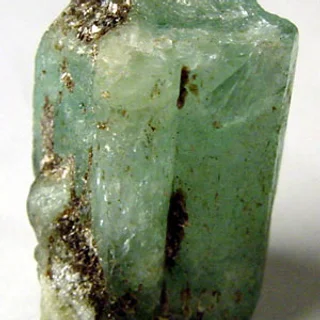

Emerald: Meanings, Gemstone Lore, and Effects
A comprehensive guide to Emerald, the May birthstone, covering the origins of its gemstone lore ('Happiness, Love, Wisdom'), its properties as a beryl mineral, its history as Cleopatra's beloved gem, its purported effects, complementary stones, care methods, and FAQs.
Table of Contents (Tap to toggle)
Introduction
Often called "green velvet," emerald is one of the world's four great gemstones (alongside diamonds, rubies, and sapphires), with its deep green embracing the sparkle of its inclusions. Beloved by Cleopatra, revered by the Inca Empire, and worn by Mughal royalty with sacred inscriptions—it has been cherished across cultures for over 3,000 years as the "Stone of Wisdom and Love."
This article provides a comprehensive overview, from the origins of its gemstone lore and mineralogical characteristics to how to appreciate Emerald's unique inclusions (jardin), its purported effects, care methods, how to distinguish natural, synthetic, and treated stones, and frequently asked questions. Our aim is to create a resource that serves as a dictionary for anyone who wishes to not only admire this coveted gem but also deeply understand it as a "stone to welcome into their life."
Table of Contents
- Basic Information and Mineral Data
- Gemstone Lore and Historical and Cultural Background
- Purported Effects
- How to Use for Love and Interpersonal Relationships
- Complementary Combinations
- Cleansing and Care Methods
- Distinguishing Natural, Synthetic, and Treated Stones
- Frequently Asked Questions (FAQ)
- Editor's Notes
- Editorial Team's Perspective
- Related Articles You Might Like
Basic Information and Mineral Data
| Item | Content |
|---|---|
| Gemstone Name | Emerald |
| Japanese Name | Suigyoku (翠玉) and Ryokugyoku (緑玉) |
| Mineral Species | Beryl Group |
| Crystal System | Hexagonal |
| Main Sources | Colombia, Zambia, Brazil, Ethiopia, Afghanistan |
| Mohs Hardness | 7.5 to 8 |
| Specific Gravity | 2.67 to 2.78 |
| Refractive Index | 1.565 to 1.602 |
| Color | Vivid green to deep green (chromium and vanadium as coloring agents) |
Emerald belongs to the same beryl mineral group as aquamarine, achieving its deep green hue from trace amounts of chromium or vanadium. While its Mohs hardness of 7.5 to 8 is sufficient for everyday wear, it is characterized by a high number of inclusions. These internal formations, known as "jardin" (French for "garden"), are also proof of an emerald's authenticity.
However, precisely because of its abundant inclusions, emerald's biggest weakness is its vulnerability to impact, ultrasonic cleaning, and sudden temperature changes, which can easily cause it to crack. Most emeralds on the market undergo oil treatment to minimize the appearance of surface fractures, requiring special care during maintenance.
Gemstone Lore and Historical and Cultural Background
Emerald's gemstone lore speaks of "Happiness, Love, Wisdom, and Hope." Its etymology traces back to the Greek word "smaragdos," meaning "green stone," an ancient term that originally referred to all green gemstones.
Mining in ancient Egypt dates back to around 1500 BCE, with tales of Queen Cleopatra owning exclusive mines in the eastern Egyptian desert. The Inca Empire revered it as a sacred stone, using it in priestly rituals and royal adornments. In the 16th century, the Spanish conquest brought vast quantities to Europe, establishing the enduring brand of "Colombian origin equals highest quality" that persists to this day.
In the Mughal Empire (17th century), there was a custom of engraving verses from the Quran onto emerald crystals and wearing them, symbolizing its cultural placement as a "stone that bestows wisdom." In medieval Europe, it was believed to be the "stone of truth," thought to change color when someone told a lie.
Sources: GIA (Gemological Institute of America) Emerald Overview, AGTA (American Gem Trade Association) Mineralogical Data, and others.
Recommended for People Who...
- ...wish to cultivate intellect, intuition, and insight.
- ...desire stable relationships (marriage, long-term partnerships).
- ...work in self-expression fields (creative, education, counseling).
- ...are looking for a gift for themselves, family, or a partner born in May.
Purported Effects
Note: The "effects" of crystals are cultural and symbolic in nature. They are not medically or scientifically guaranteed, and individual experiences may vary.
- Support for Wisdom and Insight — Believed to bestow the ability to see the true nature of things.
- Stabilization of Love and Marital Fortune — Said to nurture existing bonds and support faithful relationships.
- Harmony in Interpersonal Relationships — Passed down as a stone that enhances compassion and empathy.
- Power to Discern Truth — Spoken of since the Middle Ages as a stone that reveals lies and deceit.
- Symbol of Eye Relief — From its origin as the "stone that rests the eyes" in ancient Rome, it serves as a symbol of visual comfort.
Regardless of whether one believes in these traditional "effects," the fact that gazing at a deep green color brings a sense of calm is also recognized from a color psychology perspective. Green is known to soothe the nerves, and as a symbolic presence, many people incorporate emeralds into their lives not only as talismans but also as visual therapy stones.
How to Use Emerald for Enhanced Love and Interpersonal Relationships
- As a pendant near the chest (around the heart chakra) Considered to be compatible with the Fourth Chakra (Heart Chakra), this is a classic way to wear it, drawing forth both love and wisdom. A single emerald necklace is a staple for weddings and anniversaries.
- As a ring on the left ring finger A historically significant choice for wedding and engagement rings. Some people choose it instead of a diamond as it symbolizes "true love."
- Placed on a desk or in a study A traditional use that leverages its aspect as a "stone of wisdom." Placing it on the desk of students, researchers, or creative professionals can also bring a sense of visual calm.
- Gazing at it when feeling eye strain This practice stems from the legend that Roman Emperor Nero watched gladiatorial matches through an emerald lens. While it has no actual vision correction effect, the habit of gazing at the deep green can help reset your mind.
- As a gift for a loved one or a family heirloom With a Mohs hardness of 7.5 to 8, it has enough durability to be passed down through generations. Many choose it as inheritance jewelry from grandmother to mother to daughter, allowing the stone itself to weave together relationships.
Complementary Combinations
| Combination | Expected Meaning |
|---|---|
| Emerald and Aquamarine | Beryl sister stones. Harmony of serenity and wisdom. |
| Emerald and Quartz (Crystal) | Purification and amplification. Quartz reinforces emerald's delicacy. |
| Emerald and Rose Quartz | Deepening love. Wisdom supports tender affection. |
| Emerald and Jade (Jadeite) | Both green. Symbols of "virtue and wisdom" in East and West. |
| Emerald and Aventurine | Green healing and enhanced interpersonal luck. |
It is said that increasing the number of combinations too much can disperse the energy of each stone. Emerald is a complete stone even on its own, so rather than forcing combinations, a simple style with one or two complementary stones is often more enduring.
Cleansing and Care Methods
Emerald is a delicate stone. The following methods are suitable:
- Placing it on a quartz cluster or in tumbled stones (overnight): The safest method.
- Passing it through white sage smoke: 1 to 2 minutes is sufficient.
- Moon bathing: Place it by a window for three days before and after a full moon.
- Sound bathing with a tuning fork or crystal tuner: Effective if it does not touch metal.
Cleansing methods to avoid:
- Ultrasonic cleaning machines (risk of oil treatment leaching out; emerald's biggest NO).
- Burying in coarse salt for extended periods (risk of treated oil leaching and surface deterioration).
- Prolonged running water or strong detergents (risk of oil depletion and crack expansion).
- Sudden temperature changes (treating it like hot water followed by cold water is absolutely NOT recommended).
For daily care, gently wiping with a dry, soft cloth is fundamental. If concerned about sebum stains, immerse it in lukewarm water for a very short time, gently wash with your finger, and immediately wipe dry. Emeralds can regain their original transparency in areas where the oil has depleted and turned whitish by undergoing re-oiling treatment at a specialist store every few years.
Distinguishing Natural, Synthetic, and Treated Stones
- Natural emeralds usually show jardin (inclusions) internally. A "perfectly transparent emerald" is a point to suspect it might be synthetic or a simulant.
- Synthetic emeralds (Chatham, Gilson, etc.) have the same chemical composition as natural ones but can be identified by fewer inclusions or specific patterns. They are clearly marked as "Synthetic" on appraisal reports.
- Oil treatment is a standard practice for the vast majority of emeralds on the market and is generally acceptable.
- Resin impregnation treatment (e.g., Perfect Clear) improves durability but reduces the stone's value assessment.
- Simulants: Green garnet (tsavorite), green tourmaline, peridot, etc. Often, they do not exhibit the "bluish deep green" characteristic of emerald.
- The most reliable way is to choose an emerald with a gemological certificate (from GIA, CGL, etc.).
Synthetic emeralds are not "fakes" but rather "legitimate synthetic gemstones grown in a lab using the same materials as natural ones." They are widely available in the jewelry market as a practical option for those who want to enjoy a vibrant green color at a lower price point.
Frequently Asked Questions (FAQ)
Q1. How many years can I wear an emerald?
A. While a Mohs hardness of 7.5 to 8 is quite durable, emeralds are somewhat vulnerable to impact due to their cleavage and numerous inclusions. With re-oiling every few years, they can certainly be passed down through generations. For daily wear, getting into the habit of removing it for housework, exercise, and bathing is key to making it last longer.
Q2. Is it okay to wear emeralds in the bath, pool, or during sports?
A. Please consider all of these to be a NO. Chlorine in pools, sulfur in hot springs, and soap scum can degrade the oil treatment, and sports can cause impacts that expand cracks. Having the habit of taking it off will ultimately make it last much longer.
Q3. Do many inclusions (internal features) decrease an emerald's value?
A. Not necessarily. For high-quality Colombian emeralds, the inclusions themselves, often called jardin (garden), are part of its value as "proof of its natural origin." What's important is the balance between "the vividness and depth of its green color" and "whether the inclusions detract from the stone's overall transparency."
Q4. I wasn't born in May, but can I still wear emeralds?
A. Of course! Birthstones are simply "stones with particularly good compatibility," and there's absolutely no problem for those born in other months who wish to resonate with emerald's gemstone lore of "wisdom, love, and happiness." For people in professions that involve deep engagement with others, such as creative roles, education, or counseling, emerald is a compatible stone regardless of their birth month.
Q5. What if my emerald accessory gets chipped or broken?
A. In the world of crystals, there's a tradition of viewing it as the stone "taking the hit for you." If it's chipped, it's often possible to recut and polish it, so first consult the store where you bought it or a reputable jewelry repair shop. If it's broken, restoration is usually difficult, so it's common to return it to the earth with gratitude or carefully store it in a drawer.
Q6. Do synthetic emeralds have no "effects"?
A. Since synthetic emeralds are mineralogically the same beryl crystals as natural ones, the majority of enthusiasts believe that their gemstone lore and symbolic meanings are the same as natural emeralds. If you value the "billions of years of time the Earth took to create it," choose natural. If you prioritize "vivid color and cost-effectiveness," choose synthetic—the choice depends on your values.
Editor's Notes
For me, the editor, emerald was always "a stone I yearned for in pictures." I remember reading biographies of Cleopatra and histories of the Inca Empire during my student days, seeing deep green stones sparkling in photos, and thinking, "I want to hold one of those someday."
When I actually bought my first small pair of emerald earrings (0.05ct x 2), what I felt was a surprise: "Green can be this serene." It wasn't flashy or attention-grabbing, yet just having it at the edge of my vision brought a calm feeling. This was an experience directly linked to the soothing effects of green, as discussed in color psychology.
I believe emerald is "a stone that doesn't rush." The longer you spend with it, the more its internal jardin (garden) seems to intertwine with your own life—it's a stone with such profound depth.
Editorial Team's Perspective: The Culture of "Inclusions Are Value"
Emerald holds a unique position in the gemstone industry as a stone that is "expensive despite having many inclusions." What would be considered flaws in other gemstones, in emeralds, is poetically called "jardin (garden)" and treated as part of its value.
| Perspective | Evaluation Criteria |
|---|---|
| Color Vividness | Most important. The "deep, bluish green" of Colombian origin is the pinnacle. |
| Inclusions | Many are OK. As long as they do not completely impair transparency, they do not affect value. |
| Carat | Value increases significantly above 1 carat. Around 0.3 carats are more accessible. |
| Treatment Type | Oil treatment is standard and acceptable. Resin impregnation reduces value. |
In other words, the essence of choosing an emerald is more about "checking the vividness of the green" than "checking transparency." It's common for a 0.3-carat vivid green emerald to be more valuable than a 1-carat dull green one.
Common Misconceptions
- ❌ "The more transparent, the higher the grade" → ✅ Jardin is normal for emeralds. Perfect transparency is a sign to suspect synthetic stones or simulants.
- ❌ "Oil treatment is fake" → ✅ It is a standard treatment performed on the majority of emeralds on the market. It's a legitimate treatment explicitly stated on appraisal reports.
- ❌ "Emeralds are not an investment" → ✅ Higher grades of 1 carat or more, Colombian origin, and with GIA appraisal reports, often retain their value for decades.
A message from Sun-chan☀️
Thank you for choosing emeralds! 💚
This little one, you know, is "a stone that reminds you of the tranquility within yourself." The tiny sparkle deep within its green resembles the shape of the "true wisdom" in your heart ✨
There's no need to rush, you see. Emerald is a stone that will slowly grow with you 🌿
Related Articles You Might Like
- May Birthstones | Complete Guide to Emerald and Jade — A comprehensive guide to May, including alternative birthstones.
- Comprehensive Guide to 12-Month Birthstones — Comparison and quick reference for all 12 months.
- Jade: Meanings and Effects — May's alternative birthstone, the Eastern "Stone of Virtue and Prosperity."
- Aquamarine: Meanings and Effects — Beryl sister stone, the blue of serenity and marriage.
- Aventurine: Meanings and Effects — A green healing stone.
- Rose Quartz: Meanings and Effects — When wishing for harmony in love.
- How to Properly Wear Crystals — Differentiating left and right, and maximizing effects.
Summary
- Emerald is the main May birthstone, symbolizing "happiness, love, and wisdom." It is one of the world's four great gemstones.
- It is a beryl mineral (aquamarine's sister stone). Its deep green color comes from chromium and vanadium.
- Jardin (inclusions) are proof of its natural origin. Perfect transparency is actually a sign to suspect synthetic stones.
- For cleansing, use tumbled stones, sage, or moon bathing. Ultrasonic cleaning, coarse salt, and sudden temperature changes are absolutely NOT recommended.
- Since the perception of effects varies individually, it is recommended to approach it as a "talisman" with an open heart.
With a history spanning over 3,000 years, and holding tiny sparkles within its deep green—it's a unique partner, "a stone that doesn't rush," with whom you can build a long-lasting relationship.
Tags
この記事をシェアする
この記事が役に立ったら、SNSでシェアしていただけるととても嬉しいです☀️

Thanks so much for reading! I hope this article brought a little sunshine to your day! See you again soon!
You might also like
May Birthstones: The Complete Guide to Emerald and Jade
A comprehensive guide to May's birthstones, Emerald and Jade. Explore the meanings and properties like 'good fortune, love, and eternal youth' embedded in these green gems, their symbolism as one of the world's Big Four gemstones, how to wear and care for them, tips for choosing a birthday gift, fun facts, and FAQs.
The Ultimate Crystal Guide by Purpose
Discover crystals traditionally associated with 10 key areas: love, wealth, career, health, relationships, marriage, studies, fertility, protection, and career changes, all in one comprehensive guide.
Apatite: Meaning, Stone Lore, and Effects
A comprehensive guide to Apatite: Its meaning, stone lore ('Communication, Academics, Goal Achievement'), effects, who it's recommended for, compatible stones, and purification methods. Discover the basics and practical uses of this 'Blue Guiding Stone' that helps you achieve your goals, all on one page.

How to Properly Wear Crystals
It's believed that the meaning of crystals changes depending on whether you wear them on your left or right hand. This beginner's guide provides a complete explanation of how to properly wear bracelets, pendants, rings, and earrings, how to align them with chakras, where to place them in your home, and even when not to wear them.