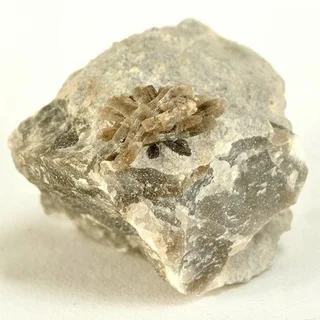

Howlite Meaning, Stone Properties, and Effects
A comprehensive guide to Howlite, covering the origins of its stone properties 'mental stability, improved sleep, and patience,' its characteristics as a borate mineral, why its white background and gray web-like patterns are called 'Karesansui,' its purported effects, compatible stones, care methods, and frequently asked questions.
Table of Contents (Tap to toggle)
Introduction
Howlite, often called the "Karesansui Stone," is a healing crystal with a distinctive appearance, featuring a white base traversed by gray, web-like patterns. It's widely cherished today as a charm that "calms the mind and promotes peaceful sleep," and its affordable price range (from a few dollars to tens of dollars) makes it a popular entry-level stone for beginners wanting to experience genuine healing benefits.
This article provides a comprehensive overview, from the origin of its stone properties and mineralogical characteristics to the meaning of its "Karesansui" patterns, its purported effects, care methods, how to distinguish it from turquoise-dyed howlite (howlite turquoise), and frequently asked questions. We've structured it to serve as a reference for anyone seeking "relief from insomnia and mental stability."
Table of Contents
- Basic Information and Mineral Data
- Stone Properties and Historical and Cultural Background
- Purported Effects
- Ways to Use It to Gently Calm and Organize Your Mind
- Compatible Combinations
- Cleansing Methods and Care
- Distinguishing Natural from Dyed Howlite
- Frequently Asked Questions (FAQ)
- Editor's Notes
- Editorial Team's View
- Related Articles You Might Also Like
Basic Information and Mineral Data
| Item | Content |
|---|---|
| Stone Name | Howlite |
| Japanese Name | Haauseki (ハウ石 or Howlite Stone) |
| Mineral Species | Borate mineral (Calcium borosilicate) |
| Crystal System | Monoclinic |
| Main Mining Locations | Canada (Nova Scotia), USA, Mexico, Russia, Germany |
| Mohs Hardness | 3 to 3.5 (relatively soft) |
| Specific Gravity | 2.53 to 2.59 |
| Refractive Index | 1.586 to 1.605 |
| Color | White to off-white base with gray to black web-like patterns |
Howlite belongs to the relatively rare borate mineral group, with a chemical composition of calcium and boron-containing silicate. It's a relatively new stone, named after the Canadian geologist Henry How who discovered it in 1868, but its unique appearance quickly gained global popularity.
Howlite's most striking feature is its "white base with gray to black web-like patterns (matrix)." In Japanese aesthetics, these patterns are often likened to "Karesansui" (dry landscape gardens), making it a popular choice for modern Japanese-style accessories as the "stone that awakens the spirit of Zen."
With a Mohs hardness of 3 to 3.5, it is extremely soft for a gemstone, to the point where it can be scratched with a fingernail. For daily wear, it's essential to avoid strong impacts and friction, and it should be understood as a stone primarily "for admiration and as a charm."
Stone Properties and Historical and Cultural Background
Howlite's stone properties are "mental stability, improved sleep, patience, and calmness."
In 1868, Dr. Henry How discovered and described it as a new mineral in a gypsum deposit in Nova Scotia, Canada. Initially, it was often kept in laboratories as a rare academic mineral, and its appearance in the jewelry market is relatively recent, in the latter half of the 20th century.
Since the 1970s, as part of the "New Age movement," its symbolism of "mental stability and improved sleep" gained attention, and it rapidly became popular worldwide as a "healing stone." Around the same time, howlite dyed blue became widely available under trade names like "Howlite Turquoise" and "White Turquoise" as a substitute for turquoise, and it remains one of the staple products in the jewelry market today.
In Japan, from the late 1990s to the 2000s, its "Japanese aesthetic reminiscent of Karesansui" was re-evaluated, establishing it as a material for Japanese-style accessories and crystal bracelets. As a unique stone that deeply resonates with the Japanese sense of beauty – "the purification of white and the tranquility of gray" – it continues to be cherished to this day.
Source: GIA (Gemological Institute of America) Howlite Overview, AGTA (American Gem Trade Association) mineralogical data, and others.
Recommended for those who:
- Are struggling with insomnia and difficulty falling asleep.
- Are looking for a charm during periods of anxiety and restlessness.
- Are searching for a stone to calm anger and irritation.
- Want to try a genuine healing stone at an affordable price.
Purported Effects
Disclaimer: The "effects" of crystals are cultural and symbolic in nature. They are not medically or scientifically guaranteed, and individual experiences may vary.
- Improved Sleep and Peaceful Rest — It is believed that placing it by your bedside calms the mind and helps you fall asleep more easily.
- Mental Stability and Anxiety Relief — Its white base color is said to support a visual effect that "calms you like a blank sheet of paper."
- Calming Anger and Irritation — As a charm to regain composure during periods of strong emotional fluctuations.
- Patience and Concentration — It is believed to be a support for maintaining focus and determination when working towards long-term goals.
- Memory Organization — As a "stone for organizing thoughts" during times requiring study, exams, or knowledge consolidation.
Regardless of whether one believes in the "effects" as tradition, it's a fact discussed in color psychology that the color white itself has a calming effect on the parasympathetic nervous system. Howlite, visually offering a "blank white space," quietly integrates into modern stressful life not just as a charm but also as a "visual therapy stone."
Ways to Use It to Gently Calm and Organize Your Mind
- Place it by your bedside or on a nightstand This is the most traditional way to use it as a charm that accompanies you as you fall asleep. It's classic to place a small tumbled stone on a nightstand or shelf, rather than directly under your pillow.
- Wear it as a bracelet on your left wrist The left side is believed to correspond to "receiving" energy. For daily wear during periods when you want to attract mental stability and healing. Affordable and durable tumbled bracelets are recommended for beginners.
- Place it on your desk or in your study A traditional way to utilize its aspect as a "stone for organizing thoughts." Many users place it on their desk during periods of long writing, exam preparation, or complex decision-making.
- Carry it in your pocket or bag during stressful times A lightweight method of carrying a tumbled stone in your pocket. Holding it in your hand when anxiety rises can create a small ritual that provides calm through both sight and touch.
- Hold it in your palm during meditation or yoga As a companion for "visual meditation," where you regulate your breathing while gazing at the white base color and gray web-like patterns.
Compatible Combinations
| Combination | Expected Meaning |
|---|---|
| Howlite and Amethyst | A classic pair for sleep and mental healing. Popular for use in bedrooms. |
| Howlite and Moonstone | Harmony of femininity and peaceful sleep. Aligns with the moon's rhythm. |
| Howlite and Larimar | Another healing stone, combining the healing of the Caribbean Sea and the tranquility of Karesansui. |
| Howlite and Chrysocolla | Embracing femininity and maternal warmth. For times of self-care. |
| Howlite and Clear Quartz | Purification and amplification. Quartz enhances Howlite's delicate energy. |
It is said that increasing the number of combinations too much can disperse each stone's energy. Since Howlite has the gentle role of "calming the mind," the most sustainable style is to simply pair it with one or two other stones.
Cleansing Methods and Care
Howlite has a Mohs hardness of 3 to 3.5, making it a soft stone that requires delicate cleansing methods.
Acceptable Cleansing Methods:
- Placing on a Quartz Cluster or Tumbled Stones: The safest and most common cleansing method.
- Passing through White Sage Smoke: 1 to 2 minutes is sufficient.
- Moonlight Bath: Place by a window 3 days before and after a full moon.
- Sound Bath with Tuning Fork or Crystal Tuner: Effective if not touching metal.
Cleansing Methods to Avoid:
- Burying in Coarse Salt for Extended Periods (soft stone, risk of surface damage)
- Ultrasonic Cleaner (potential for cracks to expand)
- Prolonged Running Water (short periods are fine, but long exposure risks surface deterioration)
- Prolonged Exposure to Direct Sunlight (dyed items like Howlite Turquoise risk fading)
For daily care, gently wiping with a soft cloth is fundamental. If sweat or sebum accumulates, quickly rinse it with lukewarm water and dry it immediately. The key to preventing surface scratches is to avoid using fingernails or bumping it against other stones due to its softness.
Distinguishing Natural from Dyed Howlite
- Natural howlite has a white to off-white base with irregular gray to black web-like patterns. The pattern varies completely from stone to stone.
- Howlite Turquoise (dyed product): Howlite dyed blue is circulated as a turquoise substitute. It is sold under names such as "dyed howlite," "white turquoise," and "magnesite turquoise." It is not genuine natural turquoise, so be mindful of its price and handling.
- Howlite and Magnesite Confusion: Magnesite is also a white stone with web-like patterns, and the two can be confused by trade names. Mineralogically, they are distinct.
- Glass Imitations: There are also imitations made of white glass with painted web-like patterns. These can be distinguished from genuine stones by weight, coolness to the touch, and texture.
- Choosing items with a certification is the most reliable method.
"Howlite Turquoise = dyed howlite" is a crucial point to remember. It's common for beginners to mistakenly buy dyed howlite thinking it's natural turquoise, so if the price of turquoise is unusually low, it's generally wise to suspect it's dyed howlite. While dyed howlite isn't a bad choice in the sense that it can be "enjoyed affordably as a turquoise substitute," it's correct to acquire it with the understanding that it is "not real turquoise."
Frequently Asked Questions (FAQ)
Q1. How long can Howlite be worn?
A. With a Mohs hardness of 3 to 3.5, it is considered soft for a gemstone, to the point where it can be scratched with a fingernail. If handled carefully, avoiding strong impacts and friction, it can be enjoyed for decades, but it is not the type of stone to be passed down through generations like diamonds or sapphires. A realistic approach is to consider it a "charm for several years."
Q2. Is it okay to wear it in the bath, pool, or during sports?
A. Please consider all of these activities as "not okay." As a soft stone, hot water, chlorine, and friction are all major adversaries. Developing the habit of "taking it off" will ultimately make it last much longer.
Q3. Is it true that Howlite helps with insomnia?
A. This has not been medically or scientifically proven. Its effectiveness as a charm in modern times stems from a combination of its traditional symbolism as a "stone that calms the mind" and the visual calming effect of the color white. The proper way to approach it is to use it as a "mental support for dealing with insomnia," rather than expecting it to "cure insomnia." For severe insomnia, please prioritize seeking medical attention.
Q4. Is Howlite Turquoise "real turquoise"?
A. No, it is not real turquoise. It is a substitute made of howlite dyed blue, and it is sometimes called "turquoise" by trade name. Genuine natural turquoise typically costs several tens to hundreds of dollars per carat, and many "turquoise bracelets" sold for a few to ten dollars per strand are dyed howlite. If you want genuine turquoise, we recommend purchasing from a store that provides certification.
Q5. Are Howlite and Magnesite the same stone?
A. They are different minerals. Both have a white base with gray to black web-like patterns and are used as materials for turquoise-style dyeing, so they can be confused by trade names, but:
- Howlite: Borate mineral (containing calcium and boron)
- Magnesite: Carbonate mineral (containing magnesium) They are distinct minerals with different chemical compositions.
Q6. What should I do if my Howlite accessory chips or breaks?
A. As a soft stone, it is prone to chipping. In the world of crystals, there's a tradition of viewing this as the stone having "taken the damage on your behalf." It's common to return it to the earth with gratitude or carefully store it in a drawer. Since it is in an affordable price range, it's also a good point of Howlite that it's easy to welcome a new stone if one chips.
Editor's Notes
For me, Howlite was the "first healing stone I ever bought." During my student days, when I was struggling with insomnia, I found a tumbled stone for 300 yen (about 2-3 dollars) at a local crystal shop and, half-skeptical, began placing it by my bedside.
I can't say that "I was able to sleep simply because I placed Howlite there." However, every time I saw the small white stone by my pillow, it became a mental signal like, "It's time to sleep now," and the habit of putting away my phone before bed gradually took root. The feeling remains that I changed through the stone, rather than the stone itself having magical effects.
Howlite is not a "flashy stone." However, it's a practical healing stone that brings visual calm every night at an affordable price—quietly integrating into today's stressful lifestyle.
Editorial Team's View: "The Best Value Entry-Level Healing Stone"
A common misconception when choosing Howlite is to think "it's cheap, so it's not effective." In fact, our editorial team believes that "price and effectiveness are unrelated." The value of a charm is determined not by its price, but by whether you can cherish it.
| Evaluation Factor | Importance |
|---|---|
| Whiteness of base color | ◎ Most important. Off-white to pure white is beautiful. |
| Balance of web-like patterns | ◎ Ideally, the patterns should be well-distributed. Too concentrated or too sparse is a drawback. |
| Surface smoothness | ○ As a soft stone, careful polishing helps maintain its beauty. |
| Size and Shape | ○ Depends on use. Tumbled stone (for bedside), bracelet, raw stone. |
| Size | △ Smaller sizes are believed to have the same effect. |
In short—
- Positioned as the "best value entry-level healing stone"
- The "calmness of white and the Karesansui-like tranquility of its patterns" are its essential values
- It's important to distinguish between "dyed howlite = howlite turquoise" and "real turquoise"
Common Misconceptions
- ❌ "Howlite cures insomnia" → ✅ Not medically proven. Its essence lies in its symbolic role as a charm.
- ❌ "It's cheap, so it's ineffective" → ✅ Price and effect are unrelated. Its essence lies in whether you can cherish it.
- ❌ "Howlite Turquoise is real turquoise" → ✅ Dyed howlite. It is not real turquoise.
A Word from Sun-chan☀️
Thank you for choosing Howlite 🤍
You know, this little one is a "stone that makes your heart as pure white as a blank sheet of paper." Even on sleepless nights or days when your heart feels restless, it's a kind friend that brings you a "moment to take a deep breath" ✨
It doesn't have to be fancy. It's okay if it's affordable. The little charm you've prepared "just for yourself" is the most effective one 💛
Related Articles You Might Also Like
- Amethyst Meaning and Effects — A classic pair for sleep and mental healing.
- Moonstone Meaning and Effects — The moon stone supporting femininity and peaceful sleep.
- Larimar Meaning and Effects — The healing of the Caribbean Sea and the tranquility of Karesansui.
- Turquoise Meaning and Effects — Genuine turquoise to compare with "Howlite Turquoise."
- Clear Quartz Meaning and Effects — The versatile cleansing stone to combine with Howlite.
- Protection and Warding Off Evil Crystals — As a stone combining mental stability and protection.
- How to Properly Wear Crystals — Distinguishing left from right and places to maximize effects.
Summary
- Howlite is a healing stone symbolizing "mental stability, improved sleep, and patience," characterized by its white base and web-like patterns.
- A borate mineral, it is a relatively new stone discovered in Canada in 1868.
- In Japan, its "Japanese aesthetic reminiscent of Karesansui" was re-evaluated, making it a staple in Japanese-style accessories.
- Cleansing involves tumbled stones, sage, and moonlight baths. As it is soft, strong impacts and friction are strictly prohibited.
- Since the perception of effects varies from person to person, it's recommended to approach it casually, purely as a "charm."
As the "best value entry-level healing stone," it gently supports stressful modern life—a kind partner, perfect as a first stone for those who want to experience genuine healing at an affordable price.
Tags
この記事をシェアする
この記事が役に立ったら、SNSでシェアしていただけるととても嬉しいです☀️

Thanks so much for reading! I hope this article brought a little sunshine to your day! See you again soon!
You might also like
Seraphinite: Meaning, Stone Lore, and Effects
A comprehensive guide to Seraphinite, covering its meaning, stone lore ('Angels, High-Vibration Healing, Spirituality'), effects, who it's recommended for, compatible stones, and purification methods. Discover the fundamentals and practical uses of this 'High-Vibration Healing Stone' that carries angelic feathers, all on this single page.
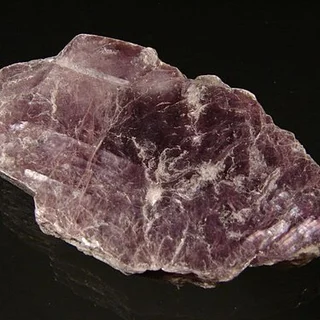

Lepidolite: Meaning, Stone Language, and Effects
A comprehensive guide to Lepidolite, covering the origins of its stone meanings ('mental stability, transition support, hope'), its characteristics as a lithium-bearing mica group mineral, its reputed effects, compatible stones, care instructions, and frequently asked questions.
The Ultimate Crystal Guide by Purpose
Discover crystals traditionally associated with 10 key areas: love, wealth, career, health, relationships, marriage, studies, fertility, protection, and career changes, all in one comprehensive guide.
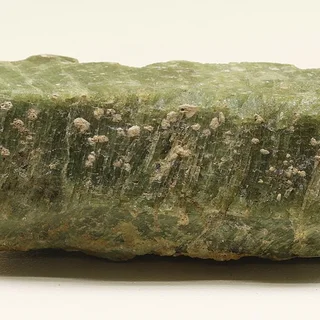
Apatite: Meaning, Stone Lore, and Effects
A comprehensive guide to Apatite: Its meaning, stone lore ('Communication, Academics, Goal Achievement'), effects, who it's recommended for, compatible stones, and purification methods. Discover the basics and practical uses of this 'Blue Guiding Stone' that helps you achieve your goals, all on one page.