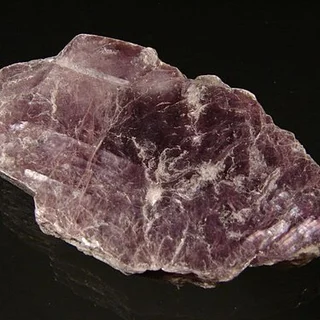

Lepidolite: Meaning, Stone Language, and Effects
A comprehensive guide to Lepidolite, covering the origins of its stone meanings ('mental stability, transition support, hope'), its characteristics as a lithium-bearing mica group mineral, its reputed effects, compatible stones, care instructions, and frequently asked questions.
Table of Contents (Tap to toggle)
Introduction
Also known as "Purple Mica," Lepidolite is a rare crystal that naturally contains lithium. With its soft pink to lilac (pale purple) hues and the "flaky, shimmering luster" characteristic of mica, it has garnered attention in the modern healing world as "a stone that calms the waves of the heart and supports life transitions."
This article compiles everything you need to know, from the origin of its stone meanings to its mineralogical characteristics, its unique composition containing lithium, its reputed effects, care methods, and frequently asked questions. It is structured to serve as a comprehensive reference for those who "wish to maintain mental balance during times of change" or "want to calm anxiety and impatience."
Table of Contents
- Basic Information and Mineral Data
- Stone Language, History and Cultural Background
- Reputed Effects
- How to Use for Mental Stability and Supporting Transitions
- Compatible Combinations
- Purification Methods and Care
- Distinguishing Natural and Similar Stones
- Frequently Asked Questions (FAQ)
- Postscript
- Team's View
- Related Articles You Might Enjoy
Basic Information and Mineral Data
| Item | Content |
|---|---|
| Stone Name | Lepidolite |
| Japanese Name | Rubellite Mica and Lithia Mica |
| Mineral Species | Mica group, Potassium Lithium Aluminum Silicate |
| Crystal System | Monoclinic |
| Main Producing Areas | Brazil, Madagascar, Russia, USA, Afghanistan |
| Mohs Hardness | 2.5 to 3.5 |
| Specific Gravity | 2.80 to 2.90 |
| Refractive Index | 1.525 to 1.587 |
| Color | Pink, Lilac (pale purple), Rose tones (Lithium is the source of color) |
Lepidolite is a type of Mica group mineral, with a composition of potassium, lithium, and aluminum silicate. Its name is derived from the Greek word "lepidos," meaning "scale," referring to its flaky crystalline structure that resembles fish scales.
Its most significant characteristic is being a "rare stone that naturally contains lithium." Lithium is known today as a main component of mood stabilizers, and from this fact, the symbolism of "a stone that harmonizes the waves of the heart" became widely discussed in the modern healing world (however, wearing the stone does not mean lithium acts on the body. Details are explained in the FAQ).
With a Mohs hardness of 2.5 to 3.5, it is extremely soft for a gemstone, to the point where it can be scratched by a fingernail. Due to its nature of flaking off in thin layers, it is more commonly distributed as tumbled stones, raw specimens, or small decorative pieces rather than jewelry.
Stone Language, History and Cultural Background
Lepidolite's stone meanings are "Mental Stability, Transition Support, Hope, and Acceptance."
The name Lepidolite was given in the early 19th century by a German mineralogist. Before that, it was also called "lilalite," a more poetic name derived from its lilac (pale purple) color, used in a previous era.
In the late 19th century, with the discovery of lithium in Lepidolite, the stone gained industrial attention as the "world's first source of lithium." In the latter half of the 20th century, as lithium found medical application as "mood stabilizers" and "a treatment for bipolar disorder," the symbolic connection between Lepidolite and "mental stability" began to be discussed in the healing community, laying the foundation for its modern popularity.
Within the context of the New Age movement and modern spirituality, it is positioned as "a stone that supports periods of change and life transitions," widely chosen as an amulet for times when emotions are easily stirred, such as during divorce, job changes, relocation, or the loss of family members. In Japan, it rapidly gained popularity as a "relaxing stone" and "healing stone" since the 2000s.
Sources: GIA (Gemological Institute of America) overview of the Mica Group, AGTA (American Gem Trade Association) mineralogical data, and others.
Recommended for those who:
- Desire an amulet during periods of change and life transitions (such as job changes, relocation, divorce, or loss).
- Tend to feel anxiety, impatience, or emotional fluctuations.
- Are looking for a healing stone with soft hues.
- Want to try a purple healing stone other than Amethyst.
Reputed Effects
Note: The "effects" of crystals are cultural and symbolic in nature. They are not medically or scientifically guaranteed, and individual experiences may vary.
- Symbol of Mental Stability and Harmonizing Emotional Waves — Due to its symbolism as a lithium-bearing mineral, it is used as an amulet to "gently calm emotional fluctuations."
- Support for Transitions — Believed to watch over the process of moving "towards your next self" amidst change.
- Hope and Acceptance — Said to inspire the courage to accept situations and move forward with a positive mindset.
- Calming Anxiety and Impatience — The soft lilac color aligns with the "visual effect of balancing the parasympathetic nervous system."
- Peaceful Sleep — One of the "healing stones to place by the bedside" alongside Amethyst.
Regardless of whether you believe in these traditional "effects," observing the pale pink to purple gradient can indeed bring a sense of calm—a fact also discussed from the perspective of color psychology. The very fact that it "contains lithium" imbues it with a strong symbolic meaning of "mental stability" for its modern wearers, making it a truly unique stone.
Important Note: The lithium contained in Lepidolite is integrated into the mineral's crystal structure and is not absorbed into the body by wearing the stone. It is scientifically impossible to "obtain the medicinal benefits of lithium from the stone," so it should be enjoyed for its symbolism as an amulet. If you are experiencing serious mood disorders or anxiety symptoms, please prioritize consulting a medical professional.
How to Use for Mental Stability and Supporting Transitions
- Wear as a bracelet on your left wrist The left side is believed to correspond to "receiving" energy. Ideal for daily use during times when you want to attract emotional healing and stability. However, as it is a soft stone, care must be taken to avoid strong friction.
- Place by your bedside or on a side table A traditional way to seek peaceful sleep and calm anxiety. A tumbled stone on a small dish on your bedside table is a classic choice.
- Place on your desk or in your study As a companion during long-term projects or difficult decision-making periods. A visual amulet for "times when you want to maintain emotional balance."
- Carry a small tumbled stone in your pocket or bag For business trips, interviews, or important meetings. A lightweight way to carry a small, palm-sized tumbled stone in your pocket.
- Hold in your palm during meditation or yoga As a companion for "visual meditation," where you focus on the lilac color while regulating your breath. The flaky shimmer of mica can aid visual meditation.
Compatible Combinations
| Combination | Expected Meaning |
|---|---|
| Lepidolite and Amethyst | Classic purple healing pair. Dual support for spirituality and mental stability |
| Lepidolite and Rose Quartz | Harmony of love and healing. For self-care moments |
| Lepidolite and Larimar | Caribbean sea healing and Purple mica stability. Double healing |
| Lepidolite and Moonstone | Harmony of femininity and transition. In tune with the moon's rhythm |
| Lepidolite and Clear Quartz | Purification and amplification. Quartz refines Lepidolite's delicate energy |
Increasing the number of combinations too much is said to disperse the energy of each stone. Lepidolite is a stone with a gentle role of "calming the heart," so simply adding one or two other stones is a sustainable approach.
Purification Methods and Care
Lepidolite is a soft stone with a Mohs hardness of 2.5 to 3.5, and its characteristic flaky mica structure requires delicate handling.
OK Purification Methods:
- Placing on a Quartz cluster or with tumble chips: The safest and most common purification method.
- Passing through white sage smoke: One to two minutes is sufficient.
- Moonlight bathing: Place by a window for three days before and after a full moon.
- Sound bath with a tuning fork or crystal tuner: Effective if it doesn't touch metal.
Purification Methods to Avoid:
- Burying in coarse salt for a long time (soft stone, so the surface may be scratched).
- Ultrasonic cleaners (risk of separation of mica flakes).
- Prolonged exposure to running water (brief rinsing is okay, but water penetrating the flaky layers can cause separation).
- Prolonged exposure to direct sunlight (lithium-induced color has a risk of fading from UV rays).
For daily care, gently wipe with a soft cloth. The key to preventing surface scratches and delamination is to avoid using fingernails, striking against other stones, or peeling off flakes.
Distinguishing Natural and Similar Stones
- Natural Lepidolite shows the characteristic flaky, shimmering luster of mica. Color variations and gradients in lilac to pink are also natural.
- Other pink micas: Several similar stones exist within the mica group, such as pink varieties of muscovite (white mica) and fluorophlogopite.
- Dyed Magnesite: Magnesite dyed purple sometimes circulates as "lepidolite-like." Can be distinguished by the presence or absence of flaky luster.
- Glass Imitations: Plastic and glass imitations also exist. Can be distinguished from genuine pieces by specific gravity, coolness to the touch, and flaky structure.
- Confusion with Amethyst: Although similar in color, Amethyst is a highly translucent, hard quartz, while Lepidolite is a flaky, soft mica — easily distinguished by feel and hardness.
- Choosing a piece accompanied by a gemological certificate is the most reliable method.
The essential charm of Lepidolite lies in its "flaky shimmer characteristic of mica." A piece that shows a "fine, shimmering, particulate luster" is indicative of natural Lepidolite.
Frequently Asked Questions (FAQ)
Q1. How long can I wear Lepidolite?
A. With a Mohs hardness of 2.5 to 3.5, it is among the softest gemstones, to the point where it can be scratched by a fingernail. If handled carefully, avoiding strong impact and friction, it can be enjoyed for several years, but it is not the type of stone that is passed down through generations like diamonds or sapphires. Approaching it as "an amulet for a few years" is a realistic way to interact with it.
Q2. Is it okay to wear it while bathing, swimming, or playing sports?
A. Consider all of these as NG. As a soft stone, hot water, chlorine, and friction are all major enemies. Water penetrating the flaky mica structure can cause delamination. Developing the "habit of removing it" will result in it lasting much longer.
Q3. Does the lithium contained in Lepidolite have health benefits?
A. Lithium is not absorbed into the body by wearing the stone. Lithium is integrated into the mineral's crystal structure and does not act on the body through the skin. While the symbolism of "a lithium-bearing stone" is central to discussions in the modern healing world, it has no medical or pharmacological effects. If you are experiencing serious mood disorders or anxiety symptoms, please prioritize consulting a medical professional.
Q4. Which is more effective for "mental stability," Lepidolite or Amethyst?
A. Both are traditionally spoken of as stones symbolizing "mental stability," but they are said to have different characteristics:
- Amethyst: A purple variety of quartz. Offers translucent healing. Deeply connected to spirituality and intuition.
- Lepidolite: A lithium-bearing mica. Offers healing through its soft mica luster. Deeply connected to periods of change and transition. Choosing based on your purpose is key, and many wearers own both as a pair.
Q5. Is it okay to put Lepidolite under my pillow when I sleep?
A. As it is a soft stone, there is a risk of chipping due to pressure under a pillow. Placing it on a bedside table or shelf is a more practical approach. Not placing it directly within your bedding is key to preserving your Lepidolite for a long time.
Q6. What should I do if my Lepidolite accessory chips or flakes?
A. It is a soft stone, so it has a tendency to chip. In the world of crystals, it is traditionally believed that "it took the damage in your place," and it is common to return it to the earth with gratitude or carefully store it in a drawer. As it is in an affordable price range, it's also a positive aspect of Lepidolite that it's easy to welcome a new stone if it chips.
Postscript
For me, as the administrator, Lepidolite was "a stone I encountered during a period of transition in my life." In my early thirties, amidst a major environmental change (a time when a job change and relocation overlapped), I first bought one when it was recommended as "a stone that supports change" at a healing stone specialty shop. It started with a single 500 yen tumbled stone.
When I actually had it in my life, I experienced a peculiar feeling: the very fact of "having a lithium-bearing stone" somehow became a source of mental support. Even knowing that lithium doesn't act on the body, the awareness of "having a symbol for regulating emotional waves on my desk" served as a small ritual during an anxious period.
Lepidolite is not a "flashy stone." However, its pale lilac hue quietly blends into the daily scenery and accompanies you through periods of change — it's a gentle crystal with which you can have such a relationship.
Team's View: Value as a "Companion for Times of Change"
The main point of caution when choosing Lepidolite is "not to expect pharmacological effects from lithium." In reality, its symbolism as an amulet and its visual calming effect are the intrinsic values of Lepidolite.
| Evaluation Factor | Importance |
|---|---|
| Lilac Hue | ◎ Most Important. Beautiful pale purple to pink gradient |
| Mica Luster and Shimmer | ◎ Flaky shimmer is proof of natural Lepidolite |
| Orderliness of Flakes | ○ Excessively separated flakes can be difficult to handle |
| Size and Shape | ○ Depends on use. Tumbled stones, raw specimens, or slices |
| Size | △ Smaller pieces are said to have the same effect |
In other words:
- ❌ Do not overexpect "Lithium = medicinal effects" (scientifically unproven) → ✅ Lithium from the stone is not absorbed into the body. Symbolism is its essence.
- ❌ "Cheap substitute for amethyst" → ✅ Distinct and has its own charm. Mica luster is unique and not found in amethyst.
- ❌ "Softness implies cheapness" → ✅ Hardness is unrelated to value. Choose for its value as an amulet.
Sun-chan's Message☀️
Thank you for choosing Lepidolite, my dear💜
This little one, you see, is a stone that will gently stay by your side when the waves of your heart get rough. During times of change and on anxious nights, it will gently whisper, "It's okay, let's take it slow" to you✨
Its pale lilac color reminds you of "gentleness" rather than "strength." No need to rush, let's go at our own pace, okay?💛
Related Articles You Might Enjoy
- Amethyst: Meaning and Effects — Classic purple healing pair, spirituality and mental stability
- Rose Quartz: Meaning and Effects — Harmony of love and healing, for self-care moments
- Larimar: Meaning and Effects — Caribbean sea healing, double healing
- Moonstone: Meaning and Effects — Harmony of femininity and transition
- Jade: Meaning and Effects — Eastern healing stone, virtue and prosperity
- Protection and Amulet Crystals — Stones that offer mental stability and ward off evil
- How to Properly Wear Crystals — Differentiating left and right, and maximizing effects
Summary
- Lepidolite is a lithium-bearing mica symbolizing "mental stability, transition support, and hope."
- Its greatest visual appeal is the flaky shimmer in lilac to pink hues.
- The pharmacological effects of lithium cannot be obtained by wearing it (it is integrated into the mineral's crystal structure). Symbolism is its essence.
- Purify with tumble chips, sage, or moonlight bathing. As it is soft, strong impact, friction, and prolonged water exposure are strictly prohibited.
- Since the experience of effects varies individually, it is recommended to approach it casually, primarily as an "amulet."
It is a unique partner that whispers "let's take it slow" during life's transitions — a gentle companion for times of change, quietly supporting you in today's stressful life.
Tags
この記事をシェアする
この記事が役に立ったら、SNSでシェアしていただけるととても嬉しいです☀️

Thanks so much for reading! I hope this article brought a little sunshine to your day! See you again soon!
You might also like

Seraphinite: Meaning, Stone Lore, and Effects
A comprehensive guide to Seraphinite, covering its meaning, stone lore ('Angels, High-Vibration Healing, Spirituality'), effects, who it's recommended for, compatible stones, and purification methods. Discover the fundamentals and practical uses of this 'High-Vibration Healing Stone' that carries angelic feathers, all on this single page.
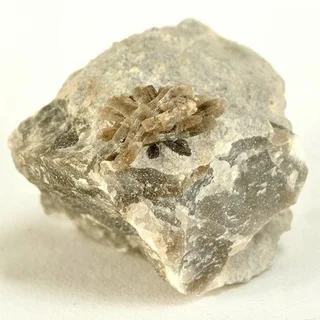
Howlite Meaning, Stone Properties, and Effects
A comprehensive guide to Howlite, covering the origins of its stone properties 'mental stability, improved sleep, and patience,' its characteristics as a borate mineral, why its white background and gray web-like patterns are called 'Karesansui,' its purported effects, compatible stones, care methods, and frequently asked questions.
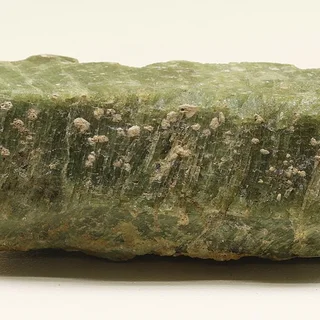
Apatite: Meaning, Stone Lore, and Effects
A comprehensive guide to Apatite: Its meaning, stone lore ('Communication, Academics, Goal Achievement'), effects, who it's recommended for, compatible stones, and purification methods. Discover the basics and practical uses of this 'Blue Guiding Stone' that helps you achieve your goals, all on one page.

How to Properly Wear Crystals
It's believed that the meaning of crystals changes depending on whether you wear them on your left or right hand. This beginner's guide provides a complete explanation of how to properly wear bracelets, pendants, rings, and earrings, how to align them with chakras, where to place them in your home, and even when not to wear them.