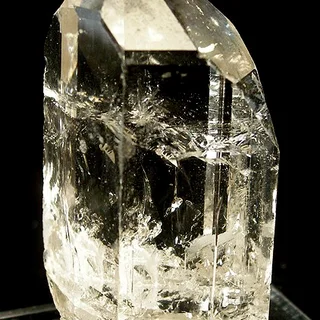

Topaz: Meaning, Gemstone Lore, and Effects
A comprehensive guide to Topaz, November's birthstone, covering the origins of its meanings like 'friendship, hope, and success,' its characteristics as a silicate mineral, the symbolism of various colors such as Imperial, Blue, and White, its purported effects, complementary stones, care methods, and FAQs.
Table of Contents (Tap to toggle)
Introduction
Topaz, often called the "Sun Gem," is a silicate mineral that boasts a vibrant spectrum of colors, including sherry gold, blue, white, and pink. As November's birthstone, it symbolizes "friendship, hope, and success." Among its varieties, the pinnacle is Imperial Topaz (sherry color), famed as a gemstone beloved by Russian emperors.
This article provides a comprehensive overview, from the origins of its gemstone lore and mineralogical characteristics to the meanings and distinctions of various color types (Imperial, Blue, White, and Pink), its purported effects, care methods, the truth about heat and irradiation treatments, and frequently asked questions. Designed as a "parent article" for Topaz beginners, it can also serve as a dictionary for understanding individual color varieties like Blue Topaz and Imperial Topaz.
Table of Contents
- Basic Information and Mineral Data
- Characteristics and Meanings by Color Variety
- Gemstone Lore and Historical-Cultural Background
- Purported Effects
- Ways to Enhance Friendship and Success
- Compatible Combinations
- Cleansing and Care Methods
- Distinguishing Natural from Treated Stones
- Frequently Asked Questions (FAQ)
- Editor's Note
- Editorial Team's Perspective
- Related Articles You Might Enjoy
Basic Information and Mineral Data
| Item | Content |
|---|---|
| Stone Name | Topaz |
| Japanese Name | Ōgyoku (Yellow Gem) |
| Mineral Species | Silicate Mineral (Fluorine-bearing) |
| Crystal System | Orthorhombic |
| Main Production Areas | Brazil (Minas Gerais), Russia, Pakistan, Sri Lanka, Mexico |
| Mohs Hardness | 8 |
| Specific Gravity | 3.49–3.57 |
| Refractive Index | 1.610–1.638 |
| Colors | Colorless, yellow, orange, red, blue, pink, brown, and more |
Topaz is an aluminum silicate mineral containing fluorine, displaying a wide range of colors due to varying trace elements and crystal lattice defects. With a Mohs hardness of 8, it is second only to sapphire in hardness, making it durable enough for everyday wear. However, it possesses perfect cleavage (a tendency to split easily in specific directions), so care must be taken to avoid strong impacts.
The yellow to orange colors that many people associate with "Topaz" are actually relatively rare in their natural state. The majority of Blue Topaz available on the market is natural colorless Topaz that has been irradiated and then heat-treated to achieve its blue hue. The most prized variety, Imperial Topaz, is a natural sherry color (an orange-reddish hue), with specimens from Brazil and Russia being particularly renowned.
Characteristics and Meanings by Color Variety
Topaz varies significantly in name, meaning, and popularity depending on its color. The main color varieties are as follows:
| Color Variety | Common Name | Main Meaning and Effect |
|---|---|---|
| Imperial Topaz | (Sherry Gold to Pink-Orange) | Rarest and most prized color. Symbol of success, dignity, and self-realization. |
| Blue Topaz | Sky Blue, Swiss Blue, London Blue | Honest words and communication. Symbol of sincerity. |
| White Topaz | (Colorless) | Purification and amplification. Also used as a diamond substitute. |
| Champagne Topaz | (Champagne Gold) | Power of the sun. A classic for wealth and success. |
| Pink Topaz | (Rare Natural Color) | Love and gentleness. One of the rarest natural colors. |
| Mystic Topaz | (Iridescent Coating) | Multi-color effect from coating treatment. For ornamental use. |
Even when we say "Topaz," its character varies so much that each color variety is often treated as a distinct gemstone. While this article covers the general meanings, the best way to choose a Topaz for a specific purpose is to start by considering the meaning of its particular color variety.
Gemstone Lore and Historical-Cultural Background
The general gemstone lore for Topaz includes "friendship, hope, success, sincerity, and health." There are two theories regarding its etymology: either from the Greek word "Topazos" (meaning "island in the Red Sea") or from the Sanskrit word "tapas" (meaning "fire" or "heat").
In ancient Egypt, it was revered as the gemstone of Ra, the sun god, and used as an amulet by royalty, known as the "stone embodying the sun's power." In ancient Greece and Rome, there was a legend that it could make the wearer invisible, leading to its use as a protective stone for warriors.
During medieval Europe, it became known as the "stone of friendship" and was customarily exchanged among friends. It has been established as November's birthstone and remains so today. The Russian imperial family cherished Imperial Topaz from the Ural Mountains, with the finest sherry gold specimens being exclusive to the imperial court.
In the late 19th century, large quantities of Imperial Topaz were discovered in Minas Gerais, Brazil, initiating its global market distribution. By the latter half of the 20th century, irradiation treatment techniques for colorless topaz were established, allowing Sky Blue, Swiss Blue, and London Blue Topaz to be supplied affordably and in large volumes.
Sources: GIA (Gemological Institute of America) Topaz overview, AGTA (American Gem Trade Association) mineralogical data, and others.
Recommended For:
- Those who value friendship and interpersonal relationships.
- Those wishing for goal achievement and success (→ Imperial, Champagne).
- Those striving for sincere communication (→ Blue Topaz).
- Those looking for a gift for themselves, family, or partners born in November.
Purported Effects
Note: The "effects" of crystals are cultural and symbolic in nature. They are not medically or scientifically guaranteed, and individual experiences may vary.
- Symbol of Friendship and Trust — Believed to deepen friendships and foster sincere bonds.
- Support for Success and Achievement — As a stone embodying the sun's power, it is said to encourage the attainment of goals.
- Symbol of Honest Words — Blue Topaz, in particular, is associated with the throat chakra and is traditionally believed to dispel lies and deceit.
- Wish for Health and Longevity — Cherished as an "amulet for health" since ancient Egypt.
- Wealth and Business Prosperity — Champagne Topaz and Imperial Topaz are staples for attracting wealth, alongside Citrine.
Regardless of whether one believes in these traditional "effects," the fact that gazing at its warm golden hues or clear blue colors can soothe one's feelings is also discussed from the perspective of color psychology. The very symbolism of being the "Sun Gem" can inspire one to cultivate a "bright and positive outlook on life".
Ways to Enhance Friendship and Success
- As a pendant or necklace around the neck Imperial and Champagne Topaz symbolize the sun's warmth at the chest. Blue Topaz is well-suited for the throat chakra and is a classic way to wear it, believed to support honest communication.
- As a ring on the right ring finger The right hand is said to correspond to the energy of "action and expression," making it a traditional position to wear a Topaz ring when seeking success and achievement.
- Placed on a desk or in a study As a stone embodying the sun's power, this is a traditional way to use it in a place where one focuses on goal achievement and career growth. Many enthusiasts place raw stones or tumbled stones on their desks.
- Given as a gift to a friend Due to its symbolism as the "stone of friendship," it makes an excellent gift for a friend's birthday, wedding, or career change. Blue Topaz, being in an accessible price range, is a popular choice.
- Carried as an amulet on days of exams, interviews, or presentations A lightweight option is to carry a tumbled stone in your pocket or pencil case. This is for days when you wish to support both sincerity and success.
Compatible Combinations
| Combination | Expected Meaning |
|---|---|
| Topaz and Citrine | Both are November birthstones. Double enhancement of wealth and business prosperity. |
| Imperial Topaz and Garnet | Sun and passion. Self-realization and tenacity. |
| Blue Topaz and Aquamarine | Both blue stones. Calmness and sincere expression. |
| White Topaz and Diamond | Purification and resilience. Substitute and complementary combination. |
| Topaz and Quartz (Crystal) | Purification and amplification. A classic combination that suits all Topaz varieties. |
It is often said that increasing the number of combinations too much can disperse the energy of each stone. Since Topaz has different characteristics depending on its color variety, choosing "one color to match your purpose" is a style that tends to last longer.
Cleansing and Care Methods
Topaz is robust with a Mohs hardness of 8, but it possesses perfect cleavage, so care must be taken to avoid impacts.
Acceptable Cleansing Methods:
- Placing on a quartz cluster or in tumbled stones: A classic overnight cleansing method.
- Passing through white sage smoke: 1 to 2 minutes is sufficient.
- Moonlight bath: Place by a window for 3 days before and after the full moon.
- Running water: Briefly rinsing with lukewarm water is acceptable.
- Sound bath with a tuning fork or crystal tuner: Effective if not touching metal.
Cleansing Methods to Avoid:
- Burying in coarse salt for extended periods (can cause discoloration of metal settings or plated parts).
- Ultrasonic cleaners (potential for cracks to expand along cleavage planes).
- Strong impacts (Imperial and Pink Topaz are particularly delicate).
- Sudden temperature changes (treating with boiling water then cold water is absolutely forbidden).
- Prolonged exposure to direct sunlight (many Blue Topaz and Imperial Topaz are treated stones, posing a risk of fading).
For daily care, gently wiping with a soft cloth is fundamental. If sweat or sebum is a concern, quickly rinse with lukewarm water and wipe dry immediately.
Distinguishing Natural from Treated Stones
- Natural Topaz often shows inclusions (needle-like or liquid-filled).
- Imperial Topaz is a rare natural color, and heat treatment is typically not performed.
- The vast majority of Blue Topaz is colorless Topaz that has undergone irradiation and heat treatment. Natural Sky Blue is extremely rare.
- Mystic Topaz is for ornamental use, featuring a thin-film coating on its surface. This coating may wear off with polishing.
- Similar stones: Citrine (yellow hues), sherry-colored Spessartine Garnet, and Aquamarine as a substitute for Blue Topaz.
- Choosing stones accompanied by a gemological certificate (from GIA, CGL, etc.) is the most reliable method.
The fact that "Blue Topaz = treated stone" is a standard truth and a legitimate treatment clearly stated on gemological certificates. Its price is often a fraction of natural Imperial Topaz, making it a widely beloved and accessible birthstone.
Frequently Asked Questions (FAQ)
Q1. How long can Topaz be worn?
A. A Mohs hardness of 8 indicates sufficient durability, making it capable of being passed down through generations. However, due to its perfect cleavage, care must be taken to avoid strong impacts. While the platinum and gold settings may wear down in 10-20 years, with regular re-setting and re-polishing of the mounting, the stone itself can be enjoyed almost indefinitely.
Q2. Is it okay to wear Topaz in the bath, pool, or during sports?
A. Brief exposure to baths is acceptable for untreated Topaz, but irradiated Blue Topaz and Imperial Topaz may fade with heat and UV exposure, so it is safest to remove all Topaz in such situations. Chlorine in pools and sulfur in hot springs can discolor metal settings, and impacts during sports could cause cracks to extend along cleavage planes.
Q3. Is the irradiation treatment for Blue Topaz safe?
A. It is completely safe. Irradiation treatment is a technique where colorless Topaz is exposed to minute amounts of radiation and then heat-treated for stabilization. No radioactivity remains in the stone after treatment. All international organizations, including GIA, CIBJO, and the Gemmological Association of Japan, recognize it as a "safe standard treatment". It is also legally distributed in Japan, and the treatment is clearly stated on gemological certificates.
Q4. Why is Imperial Topaz so expensive?
A. Natural sherry color (orange-reddish orange) is only produced in limited deposits in Brazil and Russia, and its annual production volume in carats is less than that of emerald. With top-tier specimens fetching hundreds of thousands to millions of JPY per carat, it has a strong appeal among collectors and investors.
Q5. Can I wear Topaz even if I'm not born in November?
A. Absolutely! Birthstones are merely "stones that are particularly compatible," and there is no problem for those born in other months who wish to resonate with Topaz's meanings of "friendship and success." Given its diversity of colors, Topaz is cherished by a wide range of wearers, regardless of their birth month, because it "can be chosen to match one's current purpose".
Q6. What are the differences between Blue Topaz colors (Sky, Swiss, London)?
A. The color changes based on the intensity of the irradiation treatment:
- Sky Blue: The lightest blue hue. Refreshing and suitable for everyday wear.
- Swiss Blue: A bright and vivid blue. The most popular Blue Topaz.
- London Blue: A deep, dark blue to blue-green. Also known as "ink blue" for its profound intensity. Prices tend to increase in the order of Sky < Swiss < London.
Editor's Note
For me, Topaz was a stone that was "so familiar, I had not truly realized its charm." I remembered receiving Blue Topaz earrings from a relative during my student days, and the impression of it being an "affordable birthstone" lingered as a preconception for a long time.
The turning point came when I first saw an Imperial Topaz rough stone at a gem exhibition. Its unique color, with both orange and pink coexisting within the sherry gold, possessed a depth that photos could never convey. It was in that moment that I realized, "Topaz is such a rich and beautiful gemstone!"
I believe Topaz is the only gemstone that possesses the "depth to cater to both beginners and connoisseurs alike." Starting with an affordable Blue Topaz and eventually moving on to Imperial—it is a partner you can cherish for a long time, allowing for a "gradually deepening relationship."
Editorial Team's Perspective: How Color Variety and Price Range Determine Your Choice
A common pitfall when choosing Topaz is lumping all "Topaz" together. In reality, it is not uncommon for Blue Topaz and Imperial Topaz to have price differences of over 100 times.
| Purpose | Recommended Color Variety | Price Range (1ct) |
|---|---|---|
| Affordable birthstone and friend gift | ◎ Blue Topaz (Sky, Swiss) | From several thousand to around 10,000 JPY |
| Robust casual wear | ◎ London Blue Topaz | From 10,000 to around 30,000 JPY |
| Classic for wealth and success | ◎ Champagne Topaz | From 10,000 to around 50,000 JPY |
| Premium rare birthstone | ◎ Imperial Topaz | From hundreds of thousands to millions of JPY |
| Cleansing and substitute stone | ◎ White Topaz | From several thousand to around 10,000 JPY |
In other words—
- Decide to buy "○○ Topaz" rather than simply "Topaz".
- The essence is to choose a color variety that matches your purpose and budget.
- A gradual enjoyment is also an option, starting with an entry-level Blue Topaz and eventually moving to Imperial.
Common Misconceptions
- ❌ "Blue Topaz is a natural color" → ✅ The vast majority are colorless Topaz treated with irradiation. This is a legitimate treatment clearly stated on gemological certificates.
- ❌ "Irradiation treatment is dangerous" → ✅ Completely safe. All international organizations, including GIA and CIBJO, certify it as safe.
- ❌ "Imperial Topaz is the same as regular Topaz" → ✅ The price difference can be over 100 times. Its rarity and color prestige are in a different league.
A Word from Sun-chan☀️
Thank you for choosing Topaz! 🌅
This gem, you know, is "like your own personal sun, always brightly shining for you". It will gently and positively support your friendships and your journey towards your goals! ✨
From entry-level Blue Topaz to the ultimate Imperial—there is definitely one color that is "perfect for the current you", so feel free to choose with confidence! 💛
Related Articles You Might Enjoy
- November Birthstones | The Complete Guide to Topaz and Citrine — A comprehensive guide covering November's birthstones.
- 12-Month Birthstone Comprehensive Guide — A comparison and quick reference guide for all 12 months.
- Meaning and Effects of Blue Topaz — Sub-article: Blue Topaz, the blue gem that carries sincere words.
- Meaning and Effects of Imperial Topaz — Sub-article: Imperial Topaz, the premium Topaz beloved by Russian emperors.
- Meaning and Effects of Citrine (Yellow Quartz) — Another November birthstone: Citrine, the prosperity stone for business success.
- Crystals for Attracting Wealth — Compares the positioning of Champagne Topaz in the wealth chapter.
- How to Properly Wear Crystals — Understanding left and right hand usage and maximizing effects.
Summary
- Topaz symbolizes "friendship, hope, and success," and is November's birthstone. It is the "Sun Gem" with diverse color varieties.
- Key color varieties include Imperial (rare and premium), Blue (popular and classic), Champagne (for wealth), White (for purification), and Pink (rare natural color).
- The majority of Blue Topaz is treated with irradiation. This is a legitimate and safe standard treatment, clearly stated on gemological certificates.
- Cleansing involves tumbled stones, sage, and moonlight baths. Sudden temperature changes and prolonged direct sunlight pose a risk of fading.
- Since the perception of effects varies individually, it is recommended to approach it casually as an "amulet."
From affordable, entry-level Blue Topaz to the ultimate Imperial—it is a unique and profound partner that allows for a "gradually deepening relationship".
Tags
この記事をシェアする
この記事が役に立ったら、SNSでシェアしていただけるととても嬉しいです☀️

Thanks so much for reading! I hope this article brought a little sunshine to your day! See you again soon!
You might also like

November Birthstones: Topaz and Citrine
A comprehensive guide to November's birthstones: Topaz and its parallel, Citrine. Discover their golden symbolism of 'friendship, hope, and success,' the traditions of prosperity, how to wear and care for them, tips for choosing birthday gifts, interesting facts, and FAQs. An essential resource for anyone born in November seeking a lifelong lucky charm.
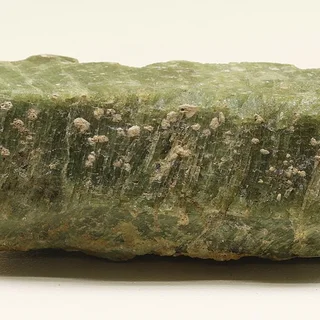

Apatite: Meaning, Stone Lore, and Effects
A comprehensive guide to Apatite: Its meaning, stone lore ('Communication, Academics, Goal Achievement'), effects, who it's recommended for, compatible stones, and purification methods. Discover the basics and practical uses of this 'Blue Guiding Stone' that helps you achieve your goals, all on one page.
How to Properly Wear Crystals
It's believed that the meaning of crystals changes depending on whether you wear them on your left or right hand. This beginner's guide provides a complete explanation of how to properly wear bracelets, pendants, rings, and earrings, how to align them with chakras, where to place them in your home, and even when not to wear them.
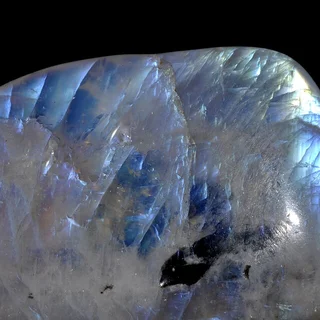

Moonstone Meaning, Stone Properties, and Effects
A comprehensive guide to moonstone's properties, history, lore surrounding femininity, intuition, and new moons, ideal pairings, mineral data, and FAQs. This is your go-to resource for incorporating this milky white stone, revered as the embodiment of the moon from ancient India to Rome, into your life.