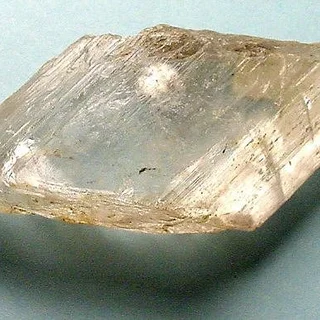

Selenite: Meanings, Properties, and Effects
A comprehensive guide to Selenite, covering the origins of its stone meanings "Purification, Angelic Protection, and Spiritual Awakening," its characteristics as a gypsum group mineral, its naming from the Greek 'Selene (Moon Goddess),' its purported effects, compatible stones, care methods, and FAQs.
Table of Contents (Tap to toggle)
Introduction
Known as the "Transparent Stone of the Moon Goddess," Selenite possesses a silky luster woven from fibrous crystals and is a rare crystal imbued with the power to purify other stones. True to its name, derived from the ancient Greek Moon Goddess Selene, it emits a soft, moon-like glow and holds a special place in the modern healing world as "the stone that carries angelic vibrations."
This article provides a comprehensive overview, from the origins of its stone meanings and its mineralogical characteristics, to its unique duality of possessing a rare ability to purify other stones and being extremely sensitive to water, its purported effects, care methods, and frequently asked questions. We've structured it to serve as a dictionary for anyone seeking purification, spirituality, and angelic protection.
Table of Contents
- Basic Information and Mineral Data
- Stone Meanings, History, and Cultural Background
- Purported Effects
- Ways to Harness Purification and Angelic Protection
- Compatible Combinations
- Purification Methods and Care
- Distinguishing Natural Selenite and Similar Stones
- Frequently Asked Questions (FAQ)
- Editor's Note
- Editorial Team's View
- Related Articles You Might Also Like
Basic Information and Mineral Data
| Item | Description |
|---|---|
| Stone Name | Selenite |
| Japanese Name | Tōsekkō (Transparent Gypsum) |
| Mineral Species | Gypsum |
| Crystal System | Monoclinic |
| Main Localities | Mexico, Morocco, USA, Brazil, Poland |
| Mohs Hardness | 2 to 2.5 (Extremely soft) |
| Specific Gravity | 2.30 to 2.33 |
| Refractive Index | 1.520 to 1.530 |
| Color | Colorless and transparent to white and milky white (fibrous crystals have a silky luster) |
Selenite is a transparent variety of the mineral gypsum, with a chemical composition of CaSO₄·2H₂O (hydrated calcium sulfate). It is a "hydrous mineral" with water molecules incorporated into its crystal structure, which is the fundamental reason for its extreme sensitivity to water.
With a Mohs hardness of 2 to 2.5, it is so soft that it can be scratched by a fingernail, placing it among the most delicate gemstones. Fibrously grown crystals have a silky luster, resembling "satin spar" or "fiber optics," which is the essence of Selenite's mystical appearance.
Selenite's most significant characteristic is its purported "rare ability to purify other crystals." While quartz clusters and tumbled chips are common purification tools, Selenite is regarded as a stone with "even stronger purifying power," used by many healing practitioners as a "tool to place other stones upon for purification."
Stone Meanings, History, and Cultural Background
Selenite's stone meanings are "Purification, Angelic Protection, Spiritual Awakening, and Lunar Blessing." Its etymology comes from the Greek word "Selene = Moon Goddess," and it was named for its meaning as "a stone that emits a pale, moon-like light."
In ancient Greece and Rome, it was revered as "the stone of the Moon Goddess Selene" and is said to have been used in rituals aligned with the phases of the moon. In ancient Egypt, it was sometimes placed inside sarcophagi, symbolizing "a stone that guides souls to the moon."
In medieval Europe, it was likened to "angel wings" and placed on altars in monasteries and churches, considered "a stone that protects sacred spaces." Shamans and mediums believed that wearing Selenite during rituals helped them "maintain a connection with higher dimensional beings."
In modern New Age movements and the healing world, it has been rediscovered as "one of the most powerful purifying stones," and its use as a "tool to purify other stones by placing them on top" has become widespread. Forms other than jewelry for purification tools, such as "Selenite plates," "Selenite wands," and "Selenite domes," are abundantly available, which is a unique characteristic of Selenite.
Source: GIA (Gemological Institute of America) overview of Gypsum and Selenite, AGTA (American Gem Trade Association) mineralogical data, and others.
Recommended for People Who Are Interested In:
- Those looking for a tool to purify other crystals
- Those interested in connecting with angels and higher dimensional beings
- Those who want to purify spaces and create sacred areas (such as bedrooms or meditation spaces)
- Those who wish to enhance their intuition and spirituality
Purported Effects
Disclaimer: The "effects" of crystals are cultural and symbolic in nature. They are not medically or scientifically guaranteed, and individual experiences may vary.
- Strong Purifying Power — Believed to possess the rare ability to draw out the "tired energy" from other crystals.
- Symbol of Angelic Vibrations — Said to support connections with the "angelic realm" and "higher dimensional beings."
- Spiritual Awakening — Harmonizes well with the 7th chakra (Crown Chakra), supporting intuition and spiritual sensitivity.
- Space Purification — Acts as a protective charm to ward off negative energy when placed in rooms, bedrooms, or meditation spaces.
- Resonance with Lunar Rhythms — A companion for meditation aligned with the phases of the moon.
Regardless of whether you believe in the "effects" as tradition suggests, visually observing a transparent stone with a silky luster can become a small ritual that creates "quiet time away from daily life." The very act of "holding Selenite" or "placing other stones on a Selenite plate" functions as a mental reset switch—many users experience this firsthand.
Ways to Harness Purification and Angelic Protection
- Use it as a "purification tool" for other crystals Selenite's most distinctive use. Placing stones you wish to purify on a Selenite plate or slab overnight is an excellent and safe method, even for stones sensitive to water, salt, or sunlight.
- Place it in your bedroom or meditation space As a charm to purify the space itself. It's common to place raw Selenite or tower-shaped crystals near your bed's headboard or meditation cushion.
- Use a Selenite "wand" for meditation A traditional method of meditation, holding a long, polished Selenite rod in your hand. Its weight in your palm and silky texture support meditation focus.
- Place it by the entrance or window A traditional method to "block the entry of negative energy." Placing it by a window where moonlight falls encourages resonance with lunar energy.
- Wear it as a pendant around your neck Given its affinity with the 7th chakra (Crown Chakra), this method of wearing it emphasizes a connection with higher dimensional beings. As it is extremely sensitive to water, it is essential to remove it on sweaty days.
Compatible Combinations
| Combination | Expected Meaning |
|---|---|
| Selenite and Clear Quartz | The strongest purification pair. A combination suitable for all stones. |
| Selenite and Amethyst | Dual support for spirituality. Enhancement of meditation and intuition. |
| Selenite and Labradorite | Angelic and spiritual alignment. For when you focus on connecting with higher dimensions. |
| Selenite and Moonstone | Layering lunar energy. For meditation aligned with the moon's phases. |
| Selenite and Rose Quartz | Harmony of love and purification. For times of self-care. |
It is said that increasing the number of combinations too much can disperse the energy of each stone. Since Selenite has a strong aspect as a "purification tool," a style where the stones you wear are kept simple, and Selenite is used as a "base for other stones," is often the easiest to maintain in the long run.
Purification Methods and Care
Selenite has a Mohs hardness of 2 to 2.5, making it extremely soft and fatally vulnerable to water, thus requiring special care.
Acceptable Purification Methods:
- Pass it through white sage smoke: For 1 to 2 minutes. The safest method that does not use water.
- Moonlight bath: Place it by a window for 3 days around the full moon. A traditional purification fitting for the Moon Goddess's stone.
- Sound bath with tuning forks or crystal tuners: Effective if not allowed to touch metal.
- Generally no purification needed: Selenite itself is "a rare stone that possesses the power to purify other stones," thus its own purification is considered largely unnecessary.
Absolutely Not Recommended Purification Methods:
- Water or running water (It has a dissolving property in water, so its surface will cloud white, and prolonged immersion will cause it to disintegrate.)
- Coarse salt (Absorbs moisture and destroys the surface.)
- Ultrasonic cleaner (Expands cracks and penetrates moisture.)
- Long-term storage in humid places (Moisture destroys the crystal structure.)
For daily care, simply wipe it gently with a soft, dry cloth. Never wash it with water. During rainy seasons and periods of high humidity, it is ideal to store it with a desiccant, such as silica gel.
Distinguishing Natural Selenite and Similar Stones
- Natural Selenite has a silky luster and its fibrous crystal structure is visible to the naked eye.
- Same Gypsum Group: Names vary by shape, such as Satin Spar (fibrous), Desert Rose (rose-like), and Fishtail (fish-tail like).
- Glass imitations: There are also Selenite-like imitations made of plastic and glass. You can distinguish them from genuine Selenite by their coolness, weight, and silky luster.
- Alabaster (Snowflake Gypsum): An opaque variety from the same gypsum group. It can sometimes be mistaken for an ornamental stone.
- Confusion with Quartz and Crystal: Highly transparent quartz and Selenite can sometimes be visually confused, but they are easily distinguishable by their hardness (quartz 7, Selenite 2.5). If it can be scratched with a fingernail, it's Selenite.
- Choosing one with a gem identification certificate is the most reliable option.
The "essence when choosing Selenite" is its silky luster. The "soft flow of light woven by crystals," which cannot possibly be replicated by plastic imitations, is the greatest charm of natural Selenite.
Frequently Asked Questions (FAQ)
Q1. How many years can I wear Selenite?
A. With a Mohs hardness of 2 to 2.5, it is among the softest gemstones and not suitable for wearing. While some pieces are made into jewelry, such as pendants, its extreme vulnerability to sweat, water, and friction makes it more practical to use it as a "tool to place" or "ritualistic implement" rather than "a gemstone to wear."
Q2. Is it okay to wear it in the bath, pool, or during sports?
A. Absolutely not for any of them. Due to its water-soluble nature, baths, pools, hot springs, and sweat during sports — all will destroy Selenite. "Keep it away from all water" is the absolute rule for Selenite.
Q3. Why can Selenite purify other stones?
A. While no scientific mechanism has been proven, it is traditionally said in the healing community that "Selenite is a rare stone that does not retain negative energy itself." Mineralogically, its characteristic as a hydrous mineral with water molecules incorporated into its crystal structure might be layered with the symbolism of "always maintaining a fresh state." The original way to interact with it is to enjoy its symbolism as a protective charm.
Q4. What is the specific method for purifying other stones with a Selenite plate?
A. Simply "place the stones you wish to purify on a Selenite slab (plate) overnight." Specifically:
- Place the Selenite slab in a dry and clean location.
- Arrange the crystals you want to purify (bracelets, pendants, tumbled stones, etc.) on top of it.
- Leave them there overnight (approximately 6 to 12 hours).
- The next morning, retrieve the purified stones. This is a safe purification method for delicate stones sensitive to water, salt, and sunlight (such as Rose Quartz and Amethyst), and many enthusiasts keep it on hand.
Q5. Are Selenite and Satin Spar different?
A. They are different forms within the same gypsum group. Selenite is a general term for transparent to translucent gypsum, Satin Spar refers to those with a "fibrous crystal structure," and Desert Rose refers to those with a "rose-like shape." Mineralogically, all are gypsum, but in the healing world, the general term "Selenite" is often used.
Q6. What if my Selenite accessory breaks or dissolves in water?
A. In the world of crystals, there's a tradition of viewing it as having "taken your place or sacrificed itself." Selenite, in particular, is often thanked for "taking on the purification burden of other stones." It's common to return it to the earth with gratitude or carefully store it in a drawer. You can also see this as a turning point to welcome a new stone and resume your connection.
Editor's Note
Selenite was "the stone that taught me the depth of the crystal world," as the operator of this site. My first encounter was with a small Selenite slab recommended at a healing specialty store as "a tool to purify other stones." The very idea of "a stone that purifies stones" was novel and greatly expanded my worldview as a beginner at the time.
When I actually used it, even for delicate stones (such as Rose Quartz and Amethyst) that are problematic with common purification methods like moonlight baths, water, salt, and sage, simply placing them on a Selenite slab overnight gave me the consistent feeling that "their freshness had returned by morning." Even if it's "just a feeling," that "sense of carefully caring for my stones" supports a long relationship with my charms.
Selenite is less of "a stone to wear" and more of "a foundation that supports other stones." It's not a flashy main character, but rather a gentle caretaker always present behind your stones — a rare crystal with which you can have such a relationship.
Editorial Team's View: Not a 'Stone to Wear,' but a 'Ritual Tool'
A common misconception when choosing Selenite is the idea of "wearing it as jewelry." In fact, the editorial team believes that positioning Selenite as a "ritual and purification tool" is its true essence.
| Purpose | Recommended Form |
|---|---|
| For purifying other stones | ◎ Selenite slab (plate) |
| For meditation and space purification | ◎ Tower-shaped or raw stone |
| For carrying or as a charm | ○ Small tumbled stone (be careful with water) |
| For advanced rituals | ◎ Wand (staff-shaped) |
| For jewelry | △ Pendant is acceptable but exercise maximum caution with water and sweat |
In other words—
- ❌ "Can be lightly washed with water" → ✅ Absolutely NOT. It dissolves and disintegrates in water.
- ❌ "Selenite is also a type of Amethyst" → ✅ Different minerals. Selenite is gypsum, Amethyst is quartz.
- ❌ "It's cheap, so it's not real" → ✅ Genuine even at an affordable price. Slabs typically range from 2,000 to 5,000 yen (approx. $15-$35 USD).
A Word from Sun-chan ☀️
Thank you for choosing Selenite ✨🌙
This little one, you see, is "a stone that gently watches over your other stones." It may not be in the spotlight, but it's a kind caretaker who supports your other stones when they're tired, always right there beside them 💛
Emitting a soft, moon-like glow, this stone will bring "time to lovingly care for your stones" itself into your life 🌌
Related Articles You Might Also Like
- Clear Quartz: Meanings and Effects — The versatile purification stone alongside Selenite; the most common combination.
- Complete Guide to Crystal Purification Methods — Explaining 10 types of purification, including methods using Selenite.
- Amethyst: Meanings and Effects — Dual support for spirituality and meditation.
- Labradorite: Meanings and Effects — An angelic and spiritual alignment stone.
- Moonstone: Meanings and Effects — Layering lunar energy.
- Moon Phases and Crystals — The practice of aligning Selenite with lunar rhythms.
- How to Properly Wear Crystals — Distinguishing left and right sides and maximizing effects by placement.
Summary
- Selenite is a transparent variety of the gypsum group, symbolizing "Purification, Angelic Protection, and Spiritual Awakening."
- Named after the ancient Greek Moon Goddess Selene, it has a deep connection with lunar energy.
- It possesses a "rare ability to purify other stones," making it a special presence in the healing world.
- Extremely sensitive to water (Mohs hardness 2 to 2.5) — it is best embraced as a "ritual tool" rather than a "stone to wear."
- Since the experience of its effects varies by individual, it is recommended to interact with it casually, purely as a "protective charm."
While not a flashy protagonist, it serves as a "foundation that gently supports other stones" — a rare crystal that brings the blessings of the Moon Goddess.
Tags
この記事をシェアする
この記事が役に立ったら、SNSでシェアしていただけるととても嬉しいです☀️

Thanks so much for reading! I hope this article brought a little sunshine to your day! See you again soon!
You might also like

Seraphinite: Meaning, Stone Lore, and Effects
A comprehensive guide to Seraphinite, covering its meaning, stone lore ('Angels, High-Vibration Healing, Spirituality'), effects, who it's recommended for, compatible stones, and purification methods. Discover the fundamentals and practical uses of this 'High-Vibration Healing Stone' that carries angelic feathers, all on this single page.
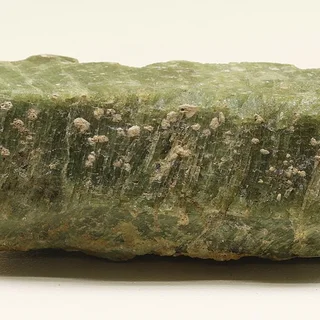
Apatite: Meaning, Stone Lore, and Effects
A comprehensive guide to Apatite: Its meaning, stone lore ('Communication, Academics, Goal Achievement'), effects, who it's recommended for, compatible stones, and purification methods. Discover the basics and practical uses of this 'Blue Guiding Stone' that helps you achieve your goals, all on one page.

How to Properly Wear Crystals
It's believed that the meaning of crystals changes depending on whether you wear them on your left or right hand. This beginner's guide provides a complete explanation of how to properly wear bracelets, pendants, rings, and earrings, how to align them with chakras, where to place them in your home, and even when not to wear them.
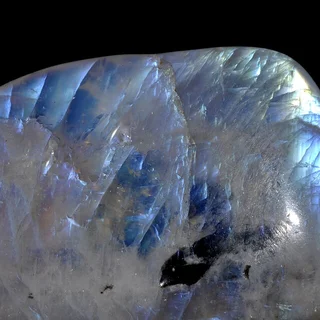

Moonstone Meaning, Stone Properties, and Effects
A comprehensive guide to moonstone's properties, history, lore surrounding femininity, intuition, and new moons, ideal pairings, mineral data, and FAQs. This is your go-to resource for incorporating this milky white stone, revered as the embodiment of the moon from ancient India to Rome, into your life.