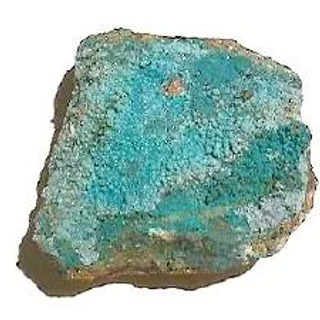

Chrysocolla: Meaning, Properties, and Benefits
Explore Chrysocolla's meaning, properties like 'femininity, Mother Earth, and communication,' along with its benefits, ideal users, compatible stones, and purification methods. This page provides a complete guide to Chrysocolla, the feminine stone symbolizing 'Mother Earth.'
Table of Contents (Tap to toggle)
Introduction
The English name Chrysocolla comes from the Greek words "chrysos (gold)" and "kolla (glue)." It's said to have been used in ancient gold craftsmanship as a material to bind gold together. The origin of its name, meaning "gold-gluing stone," has evolved in modern times to symbolize a stone that "connects people's hearts" and "connects the Earth and humanity."
This blue-green stone, known since before BCE and appearing in the writings of the philosopher Theophrastus, has been re-evaluated in the modern spiritual market as "Mother Earth's stone" because it forms as a secondary mineral in copper deposits on the Earth's surface. It was also used in ceremonial adornments by Native Americans in the American Southwest, and is cherished as a stone symbolizing femininity and the gentle kindness of our planet.
Basic Information
| Item | Description |
|---|---|
| Stone Name | Chrysocolla |
| Mineral Group | Hydrous Copper Mineral |
| Main Sources | USA, Congo, Peru |
| Mohs Hardness | 2 to 4 |
| Color | Blue-Green to Turquoise Blue |
| Corresponding Chakras | 4th (Heart) / 5th (Throat) |
Gemstone Properties and Meaning
Chrysocolla's gemstone properties are "Femininity, Mother Earth, and Communication." It has long been cherished worldwide as a feminine stone symbolizing "Mother Earth."
In ancient Egypt, Chrysocolla is said to have been used in the adornments of goddesses Hathor and Isis. There's even an anecdote that Queen Nefertiti always wore this stone to calm her anger. Among the Native American traditions of the American Southwest, it was considered "a stone that protects the women of the tribe" and was given during childbirth, menopause, and other significant milestones of motherhood.
Its color, a blend of blue and green, is believed to correspond to both the 4th Chakra (love) and the 5th Chakra (speech). It's popular among modern women as a stone that "helps express love in words" and "transforms kindness into communication."
Recommended For You If...
- You want to harmonize your maternal and feminine energies.
- You're struggling with communication with those around you.
- You wish to deepen your relaxation.
- You want to feel a stronger connection to the Earth.
What People Say About Its Effects
Please note: The 'effects' of crystals are cultural and symbolic in nature. They are not medically or scientifically guaranteed.
- Feminine Balance: With its history as a stone of Egyptian goddesses Isis and Hathor, it's believed to support women's physical and emotional cycles.
- Maternal Energy: Known as the color of "Mother Earth," it's said to bring a nurturing gentleness.
- Smoother Communication: As a blue-green stone corresponding to the 5th Chakra, it's believed to infuse warmth into your words.
- Deep Relaxation: Its soft, copper-derived hues make it a favorite among modern healers for its ability to soothe the mind and body.
Ways to Use Chrysocolla
- Wear it as a bracelet: It can serve as a daily reminder to show kindness to yourself.
- Wear it as a pendant near your throat or chest: This places it close to both the 4th and 5th Chakras, making it ideal when you want to put your feelings into words.
- Place it in your bedroom or bathroom: It's considered a good companion for "self-care time," so many people place it in relaxing spaces.
- Hold a tumbled stone in your hand: This is a traditional method for calming irritation or heightened emotions.
Characteristics by Origin
Chrysocolla varies greatly in appearance depending on its origin and coexisting minerals.
- USA, Arizona: Famous for Gem Silica (high-hardness Chrysocolla encased in quartz). Considered top-grade.
- Congo, Zaire: Known for producing large, deep turquoise-blue rough stones.
- Peru: Often found coexisting with Malachite and Azurite, creating beautiful color contrasts.
- Israel, Eilat Stone: Famous as a unique stone mixed with Malachite and Turquoise.
Gem Silica, in particular, has increased hardness and is popular as a grade suitable for bracelets. If you're unsure how to choose, please refer to our Complete Guide to Choosing Crystals.
Harmonious Combinations
| Combination | Expected Meaning |
|---|---|
| Chrysocolla and Rose Quartz | Harmony of Femininity and Love |
| Chrysocolla and Clear Quartz | Amplifies Maternal Energy |
| Chrysocolla and Turquoise | Communication and Travel Protection |
| Chrysocolla and Moonstone | Two Stones to Balance the Female Cycle |
| Chrysocolla and Larimar | Blue-Green Healing of 'the Caribbean and Earth' |
You can find a detailed explanation of how to think about combinations in our Complete Guide to Crystal Combinations.
Cleansing Methods
Recommended Methods:
- Clear Quartz Chips
- White Sage
- Moonlight Bath
Methods to Avoid:
- Water (due to being a hydrous copper mineral)
- Salt (risk of discoloration)
- Prolonged Direct Sunlight
- Strong Impacts (due to its low hardness of 2 to 4)
For detailed steps, please refer to our Complete Guide to Crystal Purification Methods.
Price Guide
Here's an estimated price guide for Chrysocolla available on the market (as of 2026, for A to AA grade items).
| Form | Approximate Price |
|---|---|
| Bracelet (approx. 8mm beads) | ¥2,500 to ¥7,000 |
| Tumbled Stones and Chips (50g) | ¥1,000 to ¥3,500 |
Gem Silica, a composite with quartz to stabilize Chrysocolla's low hardness, commands a higher price.
Prices vary significantly depending on origin, grade, and size. It's recommended to compare prices at several stores, looking for items with certification, transparency, and color intensity, before making a purchase.
How to Spot Fakes and Artificial Stones
- Natural Chrysocolla usually exhibits a natural gradient of blue and green, and often includes brown or black inclusions from the host rock.
- Bargain items claiming a uniform color similar to turquoise may be dyed howlite or resin-impregnated.
- Due to its low hardness, perfectly polished small beads without any scratches might be 'silica-impregnated' or synthetic.
- For peace of mind, purchase from a reputable specialty store with authentication certificates. Also, check out our Guide to Spotting Fake and Artificial Stones.
Frequently Asked Questions (FAQ)
Q. What is the difference between Chrysocolla and Turquoise? A. While they look similar, Turquoise is a phosphate, and Chrysocolla is a hydrous copper mineral. Chrysocolla's color tends to be slightly greener with more translucence, and its patterns often have a flowing appearance.
Q. What bead size is recommended for bracelets? A. Due to its low hardness, around 8mm is standard as it's less prone to impact. If it's a Gem Silica processed item, you can safely use 10mm beads too.
Q. Can I wash it with water? A. Generally, no. As it's a hydrous copper mineral, moisture can cause its color or surface to change. After sweating, simply wipe it gently with a dry cloth.
Q. Can men wear it too? A. Although it's called a "feminine stone," this refers to its symbolism of "softness and compassion." It's also favored by men who wish to reconnect with their inner gentleness.
Summary
- Chrysocolla is a crystal symbolizing 'Femininity, Mother Earth, and Communication.'
- Its name originates from the Greek 'gold-gluing,' and it has a history associated with Queen Nefertiti and the goddess Isis.
- It corresponds to the 4th and 5th Chakras and is popular among modern women for its theme of 'expressing love in words.'
- For cleansing, Clear Quartz chips and white sage are recommended, while water, salt, direct sunlight, and strong impacts should be avoided.
Chrysocolla is a stone that can remind you of your "femininity" every time you wear it—that's the kind of relationship you can have with it.
Editor's Note
I feel that the soft, blue-green hues of Chrysocolla are particularly effective for those who tend to be too hard on themselves. Maternal energy isn't just for others; it's first and foremost for yourself—this stone gently reminds us of that.
Related Articles You Might Also Enjoy
Tags
この記事をシェアする
この記事が役に立ったら、SNSでシェアしていただけるととても嬉しいです☀️

Thanks so much for reading! I hope this article brought a little sunshine to your day! See you again soon!
You might also like

Moonstone Meaning, Stone Properties, and Effects
A comprehensive guide to moonstone's properties, history, lore surrounding femininity, intuition, and new moons, ideal pairings, mineral data, and FAQs. This is your go-to resource for incorporating this milky white stone, revered as the embodiment of the moon from ancient India to Rome, into your life.

Apatite: Meaning, Stone Lore, and Effects
A comprehensive guide to Apatite: Its meaning, stone lore ('Communication, Academics, Goal Achievement'), effects, who it's recommended for, compatible stones, and purification methods. Discover the basics and practical uses of this 'Blue Guiding Stone' that helps you achieve your goals, all on one page.

How to Properly Wear Crystals
It's believed that the meaning of crystals changes depending on whether you wear them on your left or right hand. This beginner's guide provides a complete explanation of how to properly wear bracelets, pendants, rings, and earrings, how to align them with chakras, where to place them in your home, and even when not to wear them.

Pyrite (Iron Pyrite): Meaning, Stone Language, and Effects
A comprehensive guide to Pyrite (Iron Pyrite), covering its meaning, 'stone language' (financial luck, willpower, and warding off evil), effects, who it's recommended for, compatible stones, and purification methods. Discover the essentials and practical applications of this symbol of prosperity, famously known as 'Fool's Gold,' all in one place.