Opal Meaning, Lore, and Effects
A comprehensive guide to opal, covering its meaning and lore, historical legends of creativity, hope, and passion, types such as black, white, and fire opal, harmonious pairings, mineral data, and frequently asked questions. This is your definitive guide to incorporating the rainbow-hued October birthstone into your life.
Table of Contents (Tap to toggle)
Introduction
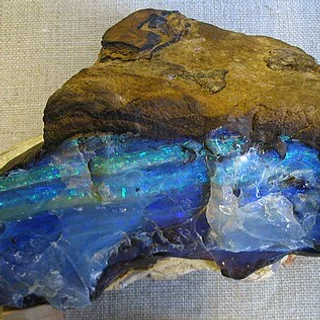
Opal is a rare gem that holds a rainbow-like play of color (opalescence) within, shimmering with every shift in light. Ancient Romans celebrated it as the "Queen of All Gems," and Shakespeare called it "the queen of marvels." In Australia, which accounts for over 95% of the world's opal market, it's designated as the national gemstone. It's also a beloved October birthstone, known as the stone of creativity and hope. In this article, I'll put together mineral data, historical background, commonly attributed effects, FAQs, and an editor's note for you.
Table of Contents
- Basic Information and Mineral Data
- Types of Opal
- Stone Lore, History, and Cultural Background
- Commonly Attributed Effects
- How to Use Opal
- Harmonious Combinations
- Cleansing and Care
- Frequently Asked Questions (FAQ)
- Editor's Note
- Related Articles You Might Enjoy
Basic Information and Mineral Data
| Item | Content |
|---|---|
| Gem Name | Opal |
| Japanese Name | Tanpakuseki (蛋白石) |
| Mineral Species | Hydrated Amorphous Silica |
| Chemical Formula | SiO₂·nH₂O (Water Content 3-21%) |
| Crystal System | Amorphous (or Semi-crystalline) |
| Main Sources | Australia (over 90%), Ethiopia, Mexico, Brazil |
| Mohs Hardness | 5.5–6.5 |
| Color | With play of color: White, Black, Fire, Boulder, and more |
| Corresponding Chakras | 2nd (Sacral) / 7th (Crown) |
| October Birthstone | ◯ |
As a hydrated mineral, opal contains 3-21% water, and its rainbow play of color is created by the interference of light within its spherical silica structure. It's recognized as the October birthstone and the traditional gem for the 14th wedding anniversary.
Types of Opal
| Type | Characteristics |
|---|---|
| Black Opal | Rainbow play of color on a dark body tone, considered the finest. |
| White Opal | Milky white with a gentle play of color, a classic beauty. |
| Fire Opal | Orange to red, often associated with Mexico. |
| Boulder Opal | With host rock, offering a natural and unique look. |
| Ethiopian Opal | Translucent with vibrant play of color, from emerging sources. |
Black opal from Lightning Ridge, Australia, is considered the highest grade and is extremely rare.
Stone Lore, History, and Cultural Background
Its lore speaks of "Creativity, Hope, and Passion."
Pliny the Elder, an ancient Roman naturalist, praised opal in his Natural History as "possessing the combined brilliance of all gemstones." Napoleon famously gifted his wife, Josephine, an opal he named "The Burning of Troy." In medieval Europe, it was even believed to be a magical amulet that could turn its wearer invisible. Today, it continues to be cherished as the October birthstone and as a protective charm for artists and creatives.
Source: GIA Opal Reference, various gemological historical documents.
Recommended For
- Those in creative professions
- Anyone embarking on a new challenge
- Those wanting to uplift their mood
- Individuals seeking to uncover their hidden talents
- People born in October
Commonly Attributed Effects
Please Note: The "effects" of crystals are primarily cultural and symbolic. They are not medically or scientifically guaranteed, and individual experiences may vary.
- Unlocking Creativity — A symbol of artistic inspiration.
- Hope and Positivity — Like a rainbow, it can uplift your mood.
- Love and Passion — Corresponds to the 2nd (Sacral) Chakra.
- Awakening Talents — Helps to bring forth your dormant potential.
- Heightened Sensitivity — Supports intuition and aesthetic perception.
Examples of Use
- As a pendant around your neck — Wear it for important occasions.
- As a ring on your left ring finger — Following its ancient tradition as an engagement stone.
- Hold it in your palm before creative work — A ritual for inspiration.
- A birthday gift for someone born in October — A classic birthstone choice.
- For special occasion jewelry — Perfect for wedding anniversaries and celebratory days.
Harmonious Combinations
| Combination | Expected Meaning |
|---|---|
| Opal and Rose Quartz | Harmony of love and passion |
| Opal and Clear Quartz | Amplification of creative energy |
| Opal and Moonstone | A pairing for intuition and sensitivity |
| Opal and Amethyst | Creativity and introspection |
| Opal and Tourmaline | A pairing for diverse creativity |
Cleansing and Care
- Clear Quartz chips and Moonlight bathing — Safe and gentle methods.
- Avoid dryness at all costs — As a hydrated mineral, it can crack if it loses moisture.
- Avoid prolonged direct sunlight.
- Steer clear of salt, acids, and chemical substances.
- With a Mohs hardness of 5.5–6.5, it's delicate, so handle with care to avoid impact.
Opal is a hydrated mineral that requires particular care among gemstones. How you interact with it daily will determine its longevity.
Frequently Asked Questions (FAQ)
Q1. What's the difference between black opal and white opal?
A. The difference lies in their body tone (background color). Black opals display iridescent colors against a deep black background, while white opals feature a softer play of color on a milky white base. Black opals are rarer and more valuable, but white opals have their own unique charm with their gentle luster.
Q2. What is water content?
A. Opal is a mineral that contains water internally, and drying can cause cracks (crazing). Ethiopian opals have a higher water content and are particularly susceptible to dryness, so they require careful handling.
Q3. I've heard it's an "unlucky stone."
A. This superstition spread due to the 19th-century novel Anne of Geierstein by Sir Walter Scott, where opal was given an inauspicious role. However, this is a literary misconception. From ancient times to the present, opal has been revered as a lucky stone, "the Queen of All Gems." It's also the birthstone for those born in October!
Q4. Is it okay to wear it all the time?
A. It's ideal to remove your opal when bathing, exercising, or doing dishes. Dryness, impact, and chemicals are its enemies, so wearing it only for outings is a good tip for preserving it over time.
Q5. Are there other stones for creativity and hope?
A. Amethyst, Labradorite, and Kyanite are popular choices. For more details, check out the October chapter of our Comprehensive Guide to 12 Monthly Birthstones and the career luck section in our Complete Guide to Crystals by Purpose.
Editor's Note
For me, opal is a "stone for special days." For important presentations, milestone celebrations, or those few big stages each year—when I take it out and wear it just for those days, its inner rainbow symbolizes those "moments that can only be savored on special occasions." While it might not be an everyday stone, having one on hand to add color to your 'hare' (extraordinary) moments in life, distinct from 'ke' (ordinary), can make life's milestones a little richer.
Related Articles You Might Enjoy
- Moonstone Meaning and Effects — A pairing for intuition and sensitivity
- Rose Quartz Meaning and Effects — A pairing for love and passion
- Amethyst Meaning and Effects — Creativity and introspection
- Comprehensive Guide to 12 Monthly Birthstones — As the October Birthstone
- Complete Guide to Crystals by Purpose — Featured in the Career Luck and Talent Awakening sections
Summary
- Opal is a rainbow-hued stone symbolizing "Creativity, Hope, and Passion."
- It was celebrated in ancient Rome as the "Queen of All Gems."
- It is the October birthstone and the traditional gem for the 14th wedding anniversary.
- As a hydrated mineral, it is a delicate stone vulnerable to dryness and impact.
- It comes in various types, including Black, White, and Fire Opal.
Each time you wear it, it reminds you of a "special day"—that's the kind of relationship you can have with opal.
Tags
この記事をシェアする
この記事が役に立ったら、SNSでシェアしていただけるととても嬉しいです☀️

Thanks so much for reading! I hope this article brought a little sunshine to your day! See you again soon!
You might also like

Apatite: Meaning, Stone Lore, and Effects
A comprehensive guide to Apatite: Its meaning, stone lore ('Communication, Academics, Goal Achievement'), effects, who it's recommended for, compatible stones, and purification methods. Discover the basics and practical uses of this 'Blue Guiding Stone' that helps you achieve your goals, all on one page.

How to Properly Wear Crystals
It's believed that the meaning of crystals changes depending on whether you wear them on your left or right hand. This beginner's guide provides a complete explanation of how to properly wear bracelets, pendants, rings, and earrings, how to align them with chakras, where to place them in your home, and even when not to wear them.
Moonstone Meaning, Stone Properties, and Effects
A comprehensive guide to moonstone's properties, history, lore surrounding femininity, intuition, and new moons, ideal pairings, mineral data, and FAQs. This is your go-to resource for incorporating this milky white stone, revered as the embodiment of the moon from ancient India to Rome, into your life.

Pyrite (Iron Pyrite): Meaning, Stone Language, and Effects
A comprehensive guide to Pyrite (Iron Pyrite), covering its meaning, 'stone language' (financial luck, willpower, and warding off evil), effects, who it's recommended for, compatible stones, and purification methods. Discover the essentials and practical applications of this symbol of prosperity, famously known as 'Fool's Gold,' all in one place.