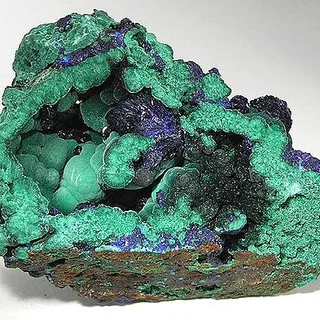

Malachite: Its Meaning, Gemstone Language, and Effects
This comprehensive guide delves into malachite's gemstone language, history, and legends surrounding its abilities for danger detection, healing, and maternal love. You'll find information on compatible pairings, mineral data, and frequently asked questions. It's your definitive resource for incorporating this deep green stone, cherished as a protective amulet for children from ancient Egypt to medieval Russia, into your daily life.
Table of Contents (Tap to toggle)
Introduction
Malachite is a rare and visually captivating stone, showcasing vibrant green with concentric striped patterns. In ancient Egypt, its green pigment was powdered and used as Cleopatra's eye makeup, and in Russia, it was carved into pillars for the Emperor's palace. Its concentric patterns are said to represent "all-seeing eyes," leading to its long-standing popularity as a protective amulet for children. This article compiles mineral data, historical background, attributed effects, FAQs, and editor's notes for malachite.
Table of Contents
- Basic Information and Mineral Data
- Gemstone Language, History, and Cultural Background
- Attributed Effects
- Usage Examples
- Compatible Pairings
- Cleansing Methods and Care
- Frequently Asked Questions (FAQ)
- Editor's Notes
- Related Articles You Might Like
Basic Information and Mineral Data
| Item | Content |
|---|---|
| Gemstone Name | Malachite |
| Japanese Name | Kujaku-ishi (Peacock Stone) |
| Mineral Species | Carbonate Mineral (Copper Mineral) |
| Chemical Formula | Cu₂CO₃(OH)₂ |
| Crystal System | Monoclinic |
| Main Production Areas | Democratic Republic of Congo, Zambia, Russia, Australia |
| Mohs Hardness | 3.5〜4 (Soft) |
| Color | Deep green to emerald green with concentric black and light green bands |
| Corresponding Chakras | 4th (Heart) / 3rd (Solar Plexus) |
Composed mainly of copper, malachite forms in the oxidation zones of ore deposits. It's a delicate stone, vulnerable to water, acids, sweat, and salt, which can react with its copper content and cause deterioration.
Gemstone Language, History, and Cultural Background
Its gemstone language is " Danger Detection, Healing, and Maternal Love."
In ancient Egypt, dating back to around 4000 BCE, it was used as a material for kohl eyeliner and was also found in royal tombs and Tutankhamun's ornaments. In Russia, large deposits were discovered in the Ural Mountains, and it was carved into pillars and vases in the Hermitage Museum in St. Petersburg, becoming a stone that symbolized imperial authority. In medieval Europe, there was a custom of placing it in cradles or hanging it near children's chests as a " stone to protect children from illness and misfortune," and even today, it is spoken of as a stone that protects children.
Source: GIA Malachite Reference, and various archaeological and historical sources.
Recommended for People Who
- Seek strong protection and warding off evil.
- Want to heal emotional wounds.
- Are at a significant turning point in their life.
- Need an amulet for motherhood or childcare.
- Desire harmony with nature.
Attributed Effects
Note: The "effects" of crystals are cultural and symbolic. They are not medically or scientifically guaranteed, and individual experiences may vary.
- Danger Detection and Warding Off Evil — Symbolizes forewarning of trouble.
- Healing and Maternal Love — Embraces and comforts wounded hearts.
- Promotes Transformation — Supports letting go and rebirth.
- Child Protection — Historically known as the "Cradle Stone."
- Alleviates Interpersonal Stress — Corresponds to the Heart Chakra.
Usage Examples
- As a pendant worn close to the heart — Corresponds to the 4th chakra, an amulet for maternal love.
- As a bracelet on the left hand — To receive and absorb protection.
- As an ornament in homes with children — An amulet for the living room or entryway.
- As an amulet in situations where you sense danger — A tumbled stone for business trips or walking at night.
- Hold it before making big decisions — To become aware of signs of transformation.
Compatible Pairings
| Pairing | Expected Meaning |
|---|---|
| Malachite and Rose Quartz | Harmony of maternal love and affection |
| Malachite and Clear Quartz | Amplification of protection and purification |
| Malachite and Turquoise | Protection for travel and movement |
| Malachite and Azurite | Blue-green pairing for intellect and protection |
| Malachite and Jade | Green healing and prosperity |
Cleansing Methods and Care
- Clear quartz chips, white sage, and moonlight bathing — The recommended three methods.
- Absolutely NO water, running water, salt, or direct sunlight — Copper components will oxidize and degrade.
- Also vulnerable to sweat, cosmetics, and perfumes — Handle with care when putting on and taking off.
- Soft with a Mohs hardness of 3.5-4 — Fragile to impact, store in a dedicated soft cloth.
Malachite's delicate nature is unparalleled by other stones. To enjoy it for a long time, it's essential to adopt habits that keep it away from moisture, chemicals, and impacts.
Frequently Asked Questions (FAQ)
Q1. Is it true that if it breaks, it acts as a 'substitute' for you?
A. This is a belief common to all crystals, and malachite, especially as a symbol of danger detection, is often believed to have 'taken on trouble on behalf of its owner.' Its soft and brittle mineralogical characteristics further reinforce this legend.
Q2. Is copper harmful to health?
A. Malachite does contain copper, but wearing it for typical jewelry purposes is generally not an issue. However, inhaling or ingesting the powder is strictly prohibited. Always wear a mask and ensure good ventilation when cutting rough malachite.
Q3. Does the contrast of the concentric patterns indicate quality?
A. Generally, malachite with a clear contrast between dark, deep green and brighter green is considered higher quality. The patterns vary, including concentric circles, tree rings, stripes, and spots, allowing you to choose based on your design preference and enjoy the stone.
Q4. Is it okay to wear it directly on the skin?
A. Sweat and skin oils can cause its surface to deteriorate. It's ideal to avoid continuous long-term wear and remove it during bathing or exercise. Temporary wear, such as a pendant, is recommended.
Q5. Is it truly suitable as a child's amulet?
A. Culturally, this role has been spoken of since ancient times. However, for small children, there's a risk of accidental ingestion, so it's safer to place it as an ornament out of their reach or secure it firmly around their neck with a cord.
Editor's Notes
For me, Sun-chan, malachite is truly a "stone to display and admire." While it's delicate and requires a bit of care for daily use, if you place it on a corner of your desk as an ornament, its concentric patterns give it the presence of "all-seeing eyes." On mornings when I sense trouble brewing, catching a glimpse of it from the corner of my eye mysteriously brings back a sense of caution. It truly feels more like an amulet and ornament that brings peace of mind when it's near, rather than just a piece of jewelry.
Related Articles You Might Like
- Turquoise Meaning and Effects — A pairing for travel and protection
- Rose Quartz Meaning and Effects — A pairing for maternal love and affection
- Jade Meaning and Effects — A pairing for green healing and prosperity
- Complete Guide to Crystal Cleansing Methods — Handling Malachite
- Comprehensive Guide to Crystals by Purpose — Featured in the Amulets chapter
Summary
- Malachite is a deep green, banded stone symbolizing "danger detection, healing, and maternal love."
- Used as eyeshadow in ancient Egypt, palace decorations for Russian emperors, and as an amulet for children.
- A very delicate stone, extremely vulnerable to water, salt, sweat, chemicals, and direct sunlight.
- Popularly paired with Rose Quartz and Turquoise.
- A symbol of protection with the legend of "breaking as a substitute."
Every time I wear it, it reminds me to "proceed with caution"—that's the kind of stone malachite is, and it's wonderful to have such a companion.
Tags
この記事をシェアする
この記事が役に立ったら、SNSでシェアしていただけるととても嬉しいです☀️

Thanks so much for reading! I hope this article brought a little sunshine to your day! See you again soon!
You might also like
Seraphinite: Meaning, Stone Lore, and Effects
A comprehensive guide to Seraphinite, covering its meaning, stone lore ('Angels, High-Vibration Healing, Spirituality'), effects, who it's recommended for, compatible stones, and purification methods. Discover the fundamentals and practical uses of this 'High-Vibration Healing Stone' that carries angelic feathers, all on this single page.
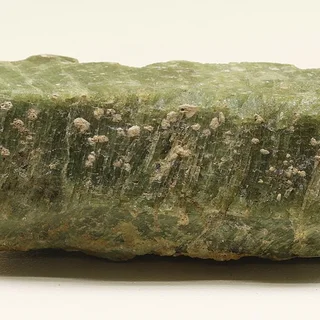
Apatite: Meaning, Stone Lore, and Effects
A comprehensive guide to Apatite: Its meaning, stone lore ('Communication, Academics, Goal Achievement'), effects, who it's recommended for, compatible stones, and purification methods. Discover the basics and practical uses of this 'Blue Guiding Stone' that helps you achieve your goals, all on one page.

How to Properly Wear Crystals
It's believed that the meaning of crystals changes depending on whether you wear them on your left or right hand. This beginner's guide provides a complete explanation of how to properly wear bracelets, pendants, rings, and earrings, how to align them with chakras, where to place them in your home, and even when not to wear them.
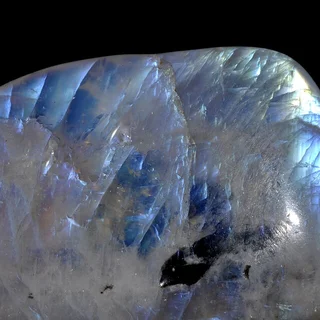
Moonstone Meaning, Stone Properties, and Effects
A comprehensive guide to moonstone's properties, history, lore surrounding femininity, intuition, and new moons, ideal pairings, mineral data, and FAQs. This is your go-to resource for incorporating this milky white stone, revered as the embodiment of the moon from ancient India to Rome, into your life.