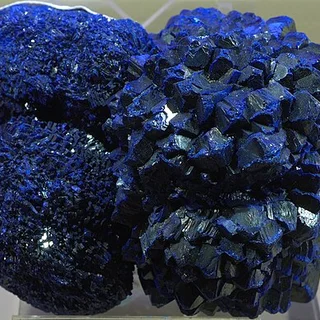

Azurite: Meaning, Properties, and Effects
A comprehensive guide to Azurite (meaning, properties like 'intuition, spirituality, and deep insight', effects, who it's for, compatible stones, and purification methods). Discover the basics and practical uses of this deep blue 'Stone of Spirituality and Insight' all on one page.
Table of Contents (Tap to toggle)
Introduction
Azurite is a mineral of deep azure blue, formed in the oxidized zones of copper deposits. Its English name, Azurite, comes from the Persian word lazhward, meaning "blue." In Europe, up until the Middle Ages, it was known as "Azzurro di la Magna" and historically used as an expensive blue pigment for painting the robes of the Virgin Mary.
Ancient Egyptians are said to have used it in rituals to open the "Third Eye" for priests and pharaohs, its deep blue color symbolizing the heavens. It often occurs together with Malachite within its host rock, forming "Azzurromalachite," a particularly popular and rare variety where green and blue blend beautifully. With a low hardness of 3.5 to 4, it's also a "connoisseur's stone" that requires delicate handling.
Basic Information
| Item | Description |
|---|---|
| Stone Name | Azurite |
| Mineral Species | Copper Carbonate Mineral |
| Main Origins | USA, Morocco, Namibia |
| Mohs Hardness | 3.5 to 4 |
| Color | Deep Azurite Blue |
| Corresponding Chakra | Sixth (Third Eye) |
Stone Properties and Meaning
Azurite's stone properties are "Intuition, Spirituality, and Deep Insight." It has long been cherished worldwide as the deep blue "Stone of Spirituality and Insight."
In Egyptian mythology, the god of wisdom, Thoth, is said to have used Azurite as a "stone that sees through truth." Records from ancient Greek oracles also indicate that priests performed rituals before meditation, placing this stone on their foreheads to "receive the voices of the gods."
In Renaissance Europe, it also played a role in supporting the sacredness of church art as a precursor to ultramarine pigment used to depict the Virgin Mary's blue robes. Its symbolism as "the blue that connects gods and humans" is now embraced as a stone of intuition and insight, corresponding to the Sixth Chakra (Third Eye).
Recommended for People Who
- Want to sharpen their spiritual sensitivity
- Seek deep insights into matters
- Wish to deepen their meditation
- Desire the power to discern the essence of things
Reported Effects
Note: The "effects" of crystals are cultural and symbolic meanings. They are not medically or scientifically guaranteed.
- Enhancement of Intuition and Psychic Abilities: Corresponding to the Sixth Chakra with its deep blue, it has been referred to as a stone that "opens the Third Eye" due to its historical use by Egyptian priests.
- Deep Insight: Following the tradition of the Virgin Mary's blue and the oracular blue, it is considered a stone for discerning the essence of things.
- Spiritual Awakening: It is said to be compatible with meditation and encourages inner awareness.
- Connection to Past Lives: Practitioners of spiritual work also refer to it as a "stone that gazes across the layers of time."
Examples of Use
- As a Pendant (near the throat to chest): Positioning it close to the Fifth and Sixth Chakras is said to be beneficial when you want to articulate your intuition.
- Placing it on the forehead during meditation: This is a traditional method, placing it directly on the Sixth Chakra. It's favored by those who want to deepen their meditation or contemplative practices.
- Placing it by your bedside: A classic spiritual practice for those who wish to experience lucid or symbolic dreams.
- Keeping a raw stone or tumbled stone in your study: An amulet for work that requires "deep thinking," such as research or writing.
Characteristics by Origin
Azurite is a stone whose appearance and popularity vary by origin.
- Arizona, USA: Deep, rich azure blue. Possesses the classic texture known as "priest's blue."
- Morocco: Often found co-existing with Malachite, forming beautiful Azzurromalachite with striking contrasts between blue and green.
- Namibia (Tsumeb Mine): A highly sought-after origin for collectors, known for producing large, highly crystalline specimens.
- Mexico and China: Spherical crystals (Azurite "balls") can sometimes be found, making them rare.
Enjoying the differences between origins is also part of Azurite's charm. If you're unsure how to choose, please refer to our Complete Guide to Choosing Crystals.
Compatible Combinations
| Combination | Anticipated Significance |
|---|---|
| Azurite x Amethyst | The ultimate combo for spirituality and intuition |
| Azurite x Clear Quartz | Amplifies awareness |
| Azurite x Lapis Lazuli | Combines deep insight and wisdom |
| Azurite x Malachite | Enhances protection through symbiotic stones |
| Azurite x Sodalite | A blue trio for thought and expression |
The basics of combinations are explained in detail in our Complete Guide to Crystal Combinations.
Purification Methods
Recommended Methods:
- Clear Quartz Grids or Tumbled Stones
- White Sage
- Moonlight Bath
Methods to Avoid:
- Water (weak to water due to being copper carbonate)
- Salt (risk of discoloration)
- Prolonged Direct Sunlight
- Strong Impact (low hardness and fragile)
For detailed steps, please refer to our Complete Guide to Crystal Purification Methods.
Price Range
Here are the approximate market prices for Azurite (as of 2026, for A to AA grade items):
| Form | Market Price |
|---|---|
| Bracelet (approx. 8mm beads) | ¥3,000 - ¥10,000 |
| Tumbled stones and chips (50g) | ¥1,500 - ¥5,000 |
It has low hardness and is delicate. Azzurromalachite, which co-exists with Malachite, is particularly popular.
Prices vary significantly depending on origin, grade, and size. It's recommended to compare options from several stores, looking for items with authenticity certificates, transparency, and color intensity.
How to Spot Fakes and Artificial Stones
- Natural Azurite typically shows slight inclusions of green (Malachite) or black within its deep azure blue color.
- Perfectly uniform, bright blue beads may be dyed howlite or resin-impregnated products.
- Due to its low hardness, the surface may have fine irregularities, and raw stones are prone to cracking, which can sometimes be "proof of authenticity."
- Purchasing from a reputable specialist store with an authenticity certificate is recommended for peace of mind. Please also refer to our Guide to Spotting Fake and Artificial Stones.
Frequently Asked Questions (FAQ)
Q. What's the difference between Azurite and Lapis Lazuli? A. Both are deep blue, but Lapis Lazuli is a metamorphic rock composed of multiple minerals and characteristically contains golden pyrite. Azurite is a single mineral, offering a darker, more profoundly copper-derived indigo hue.
Q. Can I use it for a bracelet? A. With a low hardness of 3.5 to 4 and susceptibility to sweat and moisture, bracelets require careful handling. For daily use, a pendant or raw stone/tumbled stone for contemplation is recommended.
Q. I heard it's good for meditation. How should I use it? A. Traditionally, you can gently place it on your forehead (Sixth Chakra) or keep it within your sight to regulate your breathing. It's favored for deepening prolonged meditation sessions.
Q. Can I wash it with water? A. No. Because it's made of copper carbonate, it is vulnerable to water and carries a risk of discoloration or dissolution. For purification, please use tumbled stones, sage, or moonlight bathing.
Summary
- Azurite is a crystal symbolizing "intuition, spirituality, and deep insight."
- A stone with a history of being "the blue that connects gods and humans"—from ancient Egyptian priests, the Virgin Mary's blue, and the blue of oracles.
- A delicate stone with a low hardness of 3.5 to 4, requiring protection from water, salt, and impact.
- For purification, clear quartz chips and white sage are recommended, while water, salt, and direct sunlight should be avoided.
Each time you wear it, it reminds you of "intuition"—Azurite is a stone that allows for such a connection.
Editor's Note
A reader's message about keeping Azurite by their bedside during a time when they "didn't want to rush to a conclusion, yet wanted an answer quickly" left a strong impression on me. I feel that the deep blue isn't about providing an answer immediately, but rather a color that allows answers to mature and unfold.
Related Articles You Might Also Like
Tags
この記事をシェアする
この記事が役に立ったら、SNSでシェアしていただけるととても嬉しいです☀️

Thanks so much for reading! I hope this article brought a little sunshine to your day! See you again soon!
You might also like
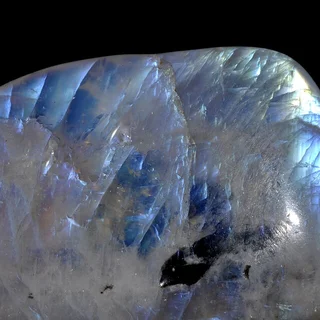
Moonstone Meaning, Stone Properties, and Effects
A comprehensive guide to moonstone's properties, history, lore surrounding femininity, intuition, and new moons, ideal pairings, mineral data, and FAQs. This is your go-to resource for incorporating this milky white stone, revered as the embodiment of the moon from ancient India to Rome, into your life.

Seraphinite: Meaning, Stone Lore, and Effects
A comprehensive guide to Seraphinite, covering its meaning, stone lore ('Angels, High-Vibration Healing, Spirituality'), effects, who it's recommended for, compatible stones, and purification methods. Discover the fundamentals and practical uses of this 'High-Vibration Healing Stone' that carries angelic feathers, all on this single page.
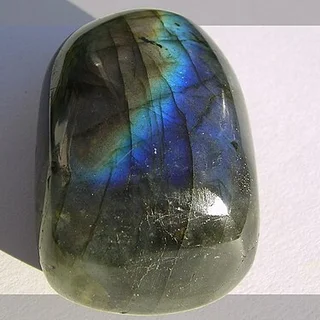

Meaning, Stone Properties, and Effects of Labradorite
A comprehensive guide to Labradorite, covering its meaning, stone properties of 'Intuition, Spirituality, and Protection,' effects, who it's recommended for, compatible stones, and purification methods. Everything you need to know about the 'Stone of Spirituality and Intuition' that cradles the aurora, all on one page.
Apatite: Meaning, Stone Lore, and Effects
A comprehensive guide to Apatite: Its meaning, stone lore ('Communication, Academics, Goal Achievement'), effects, who it's recommended for, compatible stones, and purification methods. Discover the basics and practical uses of this 'Blue Guiding Stone' that helps you achieve your goals, all on one page.