
Aragonite Meaning, Stone Properties, and Effects
A comprehensive guide to Aragonite, covering the origins of its stone properties such as "Grounding," "Patience," and "Earth Connection," its characteristics as a calcium carbonate mineral, its unique radial crystal structure (Sputnik type), its purported benefits, compatible crystals, care methods, and frequently asked questions.
Table of Contents (Tap to toggle)
Introduction
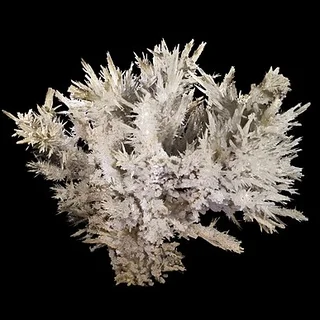
Known as the "Earth's Honey-Colored Stone," Aragonite is an exceptionally unique crystal, characterized by its warm, honey-like yellowish-brown hue and distinctive radial crystal structure (Sputnik type). It's deeply cherished as a talisman for "rooting oneself to the earth" and "reclaiming a sense of being present here and now," especially by anyone in today's stressful world who needs to "get their feet on the ground."
This article comprehensively covers everything from the origin of its stone properties and its mineralogical characteristics to its symbolism for "grounding," its purported benefits, care methods, how it differs from Calcite, and frequently asked questions. We've structured it to serve as a reference for those who feel "scattered," "anxious," or need to "focus on reality."
Table of Contents
- Basic Information and Mineral Data
- Stone Properties and Historical and Cultural Background
- Purported Benefits
- How to Use Aragonite for Grounding and Earth Connection
- Compatible Combinations
- Cleansing and Care
- Distinguishing Natural Aragonite and Similar Stones
- Frequently Asked Questions (FAQ)
- Editor's Note
- Editorial Team's View
- Related Articles You Might Like
Basic Information and Mineral Data
| Item | Content |
|---|---|
| Stone Name | Aragonite |
| Japanese Name | Arare-ishi (Hailstone) |
| Mineral Species | Carbonate Mineral, Calcium Carbonate (CaCO₃) |
| Crystal System | Orthorhombic |
| Main Localities | Spain (Aragon region - original locality), Morocco, Mexico, Namibia, Czech Republic |
| Mohs Hardness | 3.5 to 4 (relatively soft) |
| Specific Gravity | 2.93 to 2.95 |
| Refractive Index | 1.530 to 1.685 |
| Color | Honey-colored (yellowish-brown), white, blue, green, reddish-brown, and various others |
Aragonite is a calcium carbonate (CaCO₃) mineral that shares the same chemical composition as Calcite but has a different crystal structure. This makes them "polymorphs." Even with the same chemical composition, their differing crystal systems (Aragonite is orthorhombic, Calcite is trigonal) result in significant differences in crystal form and physical properties.
Its name originates from the "Aragon region of Spain," where it was discovered and named in 1797. The Japanese name, "Arare-ishi (hailstone)," comes from its crystal aggregates resembling snow pellets. The most commonly distributed type is the "honey-colored (yellowish-brown) radial crystal" from Morocco, with its unique "Sputnik-type" (satellite-shaped) formation, where needle-like crystals radiate in multiple directions, being prevalent in the market.
With a Mohs hardness of 3.5 to 4, it is considered relatively soft for a gemstone, easily scratched even by a fingernail. It is not suitable for jewelry and is primarily used as raw stones, tumbled stones, or decorative pieces for the home.
Stone Properties and Historical and Cultural Background
Aragonite's stone properties are "Grounding, Patience, Earth Connection, and Anchoring in Reality."
First described in 1797 in Molina de Aragón, Spain, it was named "Aragonite" after the region. Possessing calcium carbonate, the same composition as coral, seashells, and pearls, it has long been associated with the symbolism of being "a stone holding the power of both the sea and the earth."
Within the context of the New Age movement and modern spirituality, it has been positioned as a prime example of a "grounding stone." It is believed to be compatible with the First Chakra (Root Chakra) and is widely cherished as "a stone that connects modern people, who tend to feel ungrounded, to the earth."
Especially the "Sputnik-type" radial crystals are a visual representation of "rooting in multiple directions," making them an essential item for meditation and healing practitioners as a symbol of "grounding."
In Japan, it gained attention after the 2000s as a talisman for "overly busy modern people" and rapidly spread as a stone that addresses contemporary concerns like "calming anxiety and getting one's feet on the ground."
Source: GIA (Gemological Institute of America) overview of carbonate minerals, AGTA (American Gem Trade Association) mineralogical data, and others.
Recommended for People Who
- Want a talisman during times when they feel scattered or anxious
- Are working on long-term plans or tasks requiring patience
- Practice meditation, yoga, or spiritual disciplines and focus on grounding
- Wish to feel a connection to the earth and nature
Purported Benefits
Note: The "effects" of crystals are cultural and symbolic meanings. They are not medically or scientifically guaranteed, and individual experiences may vary.
- Grounding — A talisman for "getting your feet on the ground" and "focusing on reality," deeply connected to the First Chakra (Root Chakra)
- Support for Patience — Believed to provide support for maintaining resolve during the process of working towards long-term goals
- Earth Connection — Used as a tool in spiritual rituals to foster a connection with nature and the Earth
- Maintaining Focus — A talisman for "staying in the present moment" during times of distraction
- Anchoring in Reality — Supports the ability to "translate plans and ideas into actual action"
Regardless of whether one believes in these traditional "effects," simply gazing at Aragonite's warm, honey-colored hue and radial crystal structure can be a visual experience of "the warmth of the earth and sun." Many admirers report that the very act of "holding a Sputnik-type crystal in their hand" serves as a small ritual to "become aware of their own roots," bringing a quiet sense of stability to their daily lives.
How to Use Aragonite for Grounding and Earth Connection
- Place it in a meditation space or on the floor This is Aragonite's most traditional use. Placing a Sputnik-type crystal on the floor or near a meditation cushion helps it function as "a symbol connecting you to the ground."
- Place it in a corner of your desk As a companion for long-term projects or tasks requiring patience. When you feel anxious, simply being aware of the Aragonite in the corner of your vision can serve as a visual talisman to calm your mind.
- Position it near your feet or at the entrance A traditional way to encourage "grounding for the entire home." Many users place a larger Sputnik-type specimen on top of a shoe cabinet at the entrance.
- Carry a tumbled stone in your pocket As a portable talisman to "hold when you feel anxious or scattered." A lightweight method involves slipping a small, palm-sized tumbled stone into your pocket.
- Use it as a tool during yoga and meditation Position it beside your yoga mat or near your meditation cushion as "a symbol connecting you to the ground." It supports grounding through both visual and tactile senses.
Compatible Combinations
| Combination | Expected Meaning |
|---|---|
| Aragonite and Hematite | The strongest grounding pair. Practical action rooted in reality. |
| Aragonite and Smoky Quartz | Layering earth-element stones. Dual support for focus on reality. |
| Aragonite and Black Tourmaline | Grounding and protection. An impenetrable pair for a stable daily life. |
| Aragonite and Carnelian | Harmony of action and patience. A companion for achieving long-term goals. |
| Aragonite and Clear Quartz | Cleansing and amplification. Clear Quartz refines Aragonite's delicate energy. |
It is said that increasing the number of combinations too much can disperse the energy of each stone. Aragonite is a stone with a gentle role of "getting one's feet on the ground," so using it simply, with one or two accompanying stones, is a style that tends to last.
Cleansing and Care
Aragonite has a Mohs hardness of 3.5 to 4, making it soft, and it is weak against acids due to its calcium carbonate composition, requiring specific care.
OK Cleansing Methods:
- Placing it on a Clear Quartz cluster or tumbled stones: The safest and most common method.
- Passing it through White Sage smoke: 1 to 2 minutes is sufficient.
- Moonlight bathing: Place it near a window 3 days before or after a full moon.
- Sound bathing with a tuning fork or crystal tuner: Effective if it does not touch metal.
Cleansing Methods to Avoid:
- Running water or washing with water (brief exposure is okay, but prolonged immersion will degrade the surface).
- Coarse salt (being a soft stone, its surface can be scratched).
- Acidic substances (calcium carbonate dissolves in vinegar, lemon juice, or acidic detergents — absolutely NOT recommended).
- Ultrasonic cleaners (may cause cracks to expand).
- Prolonged exposure to direct sunlight (colored Aragonite risks fading).
For daily care, gently wipe it with a soft, dry cloth. Keeping acidic substances absolutely away from it is the most important point for maintaining Aragonite's beauty for a long time.
Distinguishing Natural Aragonite and Similar Stones
- Natural Aragonite (Sputnik type) has a unique shape where needle-like crystals radiate in multiple directions. It can feel surprisingly light when held.
- Difference from Calcite: They have the same chemical composition (CaCO₃) but different crystal systems:
- Aragonite: Orthorhombic, with needle-like/radial crystals.
- Calcite: Trigonal, with rhombohedral crystals.
- Birefringence: Calcite shows strong birefringence, while Aragonite shows almost none.
- Relationship with Pearls and Coral: Pearls, coral, and seashells also have a calcium carbonate crystal structure — broadly classified as "Aragonite-like."
- Glass Imitations: There are glass imitations that mimic the radial crystal structure. They can be distinguished from genuine stones by weight, coolness to the touch, and texture.
- Dyed Aragonite: Some colored Aragonite pieces on the market are dyed. Distinguishable by the naturalness of the color distribution.
- Choosing with a certificate of authenticity is the most reliable method.
The popularity of the "Sputnik type" stems from its visual appearance of needle-like crystals radiating in multiple directions, which perfectly aligns with the symbolism of "grounding." Well-formed and larger crystals are highly valued.
Frequently Asked Questions (FAQ)
Q1. How long can I wear Aragonite?
A. With a Mohs hardness of 3.5 to 4, it is relatively soft for a gemstone, easily scratched even by a fingernail. "Placing" it rather than "wearing" it is the primary use, and jewelry-grade Aragonite is rare. If handled carefully, avoiding strong impacts, water, and acids, you can enjoy it for several years to a decade.
Q2. Is it okay to wear it in the bath, pool, or during sports?
A. Absolutely NOT for all of these. Calcium carbonate dissolves in acidic substances, so sweat, sulfur from hot springs, chlorine from pools, and soap scum from baths will all degrade Aragonite. Acquiring it as a "display stone" rather than jewelry is its intended use.
Q3. Should I choose Aragonite or Calcite?
A. They have the same chemical composition (CaCO₃) but are treated as distinct due to their different crystal structures and symbolisms:
- Aragonite: Sputnik-type needle-like radial crystals. Strong symbolic connection to grounding.
- Calcite: Rhombohedral crystals. Symbolizes light amplification and purification. The correct choice depends on your intended use, and many admirers own both as a pair.
Q4. Is Aragonite's "grounding effect" real?
A. It has not been scientifically or medically proven. The mineralogical fact that "calcium carbonate = same composition as earth and coral" led to its widespread association with the symbolism of "earth connection." It's not that "placing Aragonite automatically calms you," but rather that "every time you see Aragonite, you are reminded to get your feet on the ground" — that ritualistic use is its true way of engagement.
Q5. Is it true that drinking "Aragonite water" makes you healthy?
A. Absolutely do not do that. Aragonite is soluble in water, and it has no health benefits. While there is a modern spiritual practice of "crystal elixirs" (water infused with stones), it is a mineralogical fact that calcium carbonate stones dissolve in water, so they should never be used for drinking.
Q6. What should I do if my Aragonite accessory chips or degrades from water?
A. In the world of crystals, it's traditionally believed that the stone "took the hit for you." As it is a soft and delicate stone, chipping or degradation is not uncommon. It's generally handled by returning it to the earth with gratitude or carefully storing it in a drawer. This approach also beautifully aligns with its symbolism as "a stone that returns to the earth."
Editor's Note
Aragonite was a stone I encountered during a "period of extreme busyness." Work, housework, relationships — I was constantly anxious from having too much to do. It started when I placed a Moroccan Sputnik-type crystal (about 5 cm in diameter), recommended as a "grounding stone" at a healing specialty store, on my desk.
In my daily life, I developed a small habit of "glancing at the Aragonite on my desk whenever I felt anxious." Just gazing at the radiating needle-like crystals brought back the feeling of "Ah, I am here and now." I feel this experience is connected to the "calming effect of earth tones (yellowish-brown)" also discussed in color psychology.
Aragonite is not a "flashy stone." But its honey-like warmth and radial crystal structure bring a quiet sense of stability to a busy daily life. I believe it is a healing stone that is essential for us living in modern times, allowing for such a relationship.
Editorial Team's View: "A Grounding Tool for Modern People"
A key point of caution when choosing Aragonite is "not to buy it as jewelry." In reality, "a talisman to place on your desk, floor, or entryway" is the essential way to use Aragonite.
| Evaluation Factor | Importance |
|---|---|
| Crystal Radial Structure | ◎ Most Important. Is the Sputnik-type radiation beautifully formed and complete? |
| Honey-like Warmth | ◎ Warm colors like yellowish-brown to orange are classic. |
| Size | ○ Depends on use. A medium size of about 5-10 cm in diameter is easy to place in a room. |
| Crystal Arrangement | ○ Best when needle-like crystals are neither too chipped nor overly uniform. |
| Origin | △ Moroccan origin is common for Sputnik type; Spanish origin is rare. |
In short:
- It's a "placing stone," not a "wearing stone."
- The "Sputnik-type radiation" is its essential appeal.
- "Absolutely keeping acidic substances away" is key to its longevity.
Common Misconceptions
- ❌ "Drinking Aragonite water makes you healthy." → ✅ Absolutely NOT recommended. It dissolves in water and has no health benefits.
- ❌ "It's the same as Calcite." → ✅ Same chemical composition but different crystal structure and symbolism, making them distinct.
- ❌ "A stone for jewelry." → ✅ "Display stone" is fundamental. It's too soft for jewelry.
A word from Sun-chan☀️
Thank you for choosing Aragonite🌾💛
This little one, you see, is "a stone that grounds you to the earth when you feel so busy you might float away into the sky." Its warm, honey-like color and needle-like crystals reaching out in multiple directions — "your roots are truly extending into the earth," it reminds you! ✨
It doesn't need to be flashy. Just quietly placing it in a corner of your desk brings that "sense of being present here and now." It's a gentle messenger from Mother Earth, for sure🌍
Related Articles You Might Like
- Hematite Meaning and Effects — The strongest grounding pair, practical action rooted in reality
- Smoky Quartz Meaning and Effects — Layering earth-element stones, focus on reality
- Black Tourmaline Meaning and Effects — Grounding and protection, an impenetrable pair for a stable daily life
- Carnelian Meaning and Effects — Harmony of action and patience, a companion for achieving long-term goals
- Clear Quartz Meaning and Effects — A versatile cleansing stone to combine with Aragonite
- Crystals and Feng Shui (Entrance Edition) — Feng Shui placement of stones in the entryway
- How to Properly Wear Crystals — Distinguishing left and right and optimizing placement for maximum effect
Summary
- Aragonite is a calcium carbonate radial crystal symbolizing "Grounding, Patience, and Earth Connection."
- Discovered and named in 1797 in the Aragon region of Spain, also known as "Arare-ishi (hailstone)."
- Its most significant feature is the Sputnik-type radial crystal structure — a visual symbol of grounding.
- Cleanse with tumbled stones, sage, or moonlight. Absolutely avoid acidic substances, prolonged water exposure, and coarse salt.
- Since the experience of its effects varies by individual, it is best to approach it casually as a "talisman."
"Grounding modern people who feel like they're floating in the sky back to the earth" — it is a warm and dependable partner from the earth for everyone living in today's world.
Tags
この記事をシェアする
この記事が役に立ったら、SNSでシェアしていただけるととても嬉しいです☀️

Thanks so much for reading! I hope this article brought a little sunshine to your day! See you again soon!
You might also like

Seraphinite: Meaning, Stone Lore, and Effects
A comprehensive guide to Seraphinite, covering its meaning, stone lore ('Angels, High-Vibration Healing, Spirituality'), effects, who it's recommended for, compatible stones, and purification methods. Discover the fundamentals and practical uses of this 'High-Vibration Healing Stone' that carries angelic feathers, all on this single page.
Apatite: Meaning, Stone Lore, and Effects
A comprehensive guide to Apatite: Its meaning, stone lore ('Communication, Academics, Goal Achievement'), effects, who it's recommended for, compatible stones, and purification methods. Discover the basics and practical uses of this 'Blue Guiding Stone' that helps you achieve your goals, all on one page.
How to Properly Wear Crystals
It's believed that the meaning of crystals changes depending on whether you wear them on your left or right hand. This beginner's guide provides a complete explanation of how to properly wear bracelets, pendants, rings, and earrings, how to align them with chakras, where to place them in your home, and even when not to wear them.

Moonstone Meaning, Stone Properties, and Effects
A comprehensive guide to moonstone's properties, history, lore surrounding femininity, intuition, and new moons, ideal pairings, mineral data, and FAQs. This is your go-to resource for incorporating this milky white stone, revered as the embodiment of the moon from ancient India to Rome, into your life.