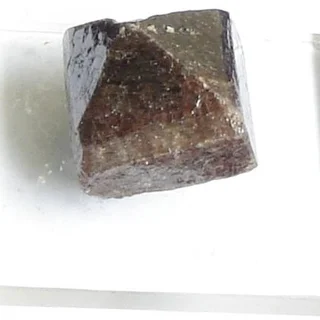
Zircon: Meaning, Gemstone Properties, and Effects
A comprehensive guide to Zircon, the December birthstone. Explore the origins of its meanings – "Longevity, Wisdom, and Conviction for Success" – its characteristics as Earth's oldest mineral, the significance of its various colors (blue, white, and yellow), attributed effects, compatible gemstones, care instructions, and FAQs.
Table of Contents (Tap to toggle)
Introduction
"Earth's Oldest Gemstone," zircon, is a natural mineral with a timeline almost as old as Earth itself, with crystals confirmed to be over 4.4 billion years old. As an additional December birthstone, it symbolizes "Longevity, Wisdom, and Conviction for Success," and is a rare gem possessing a strong brilliance (fire) comparable to that of a diamond.
This article comprehensively covers everything from the origins of its gemstone meanings to its mineralogical characteristics, why it is entirely different from cubic zirconia, its attributed effects, care methods, explanations of various colors such as blue, white, and hyacinth (red), and frequently asked questions. It is structured to serve as a comprehensive reference for those born in December, and anyone wishing to deeply understand this "gemstone that harbors Earth's time."
Table of Contents
- Basic Information and Mineral Data
- Characteristics and Meanings by Color Variety
- Gemstone Meanings and Historical/Cultural Background
- Attributed Benefits
- Ways to Enhance Longevity and Wisdom
- Compatible Combinations
- Purification and Care Methods
- Differences Between Zircon and Cubic Zirconia
- Frequently Asked Questions (FAQ)
- Editor's Notes
- Editorial Team's Perspective
- Related Articles You Might Like
Basic Information and Mineral Data
| Item | Content |
|---|---|
| Gemstone Name | Zircon |
| Japanese Name | Hyacinth Stone (ひあしんすこう) or Zircon Stone |
| Mineral Species | Zirconium Silicate (ZrSiO₄) |
| Crystal System | Tetragonal |
| Main Origins | Cambodia, Myanmar, Thailand, Sri Lanka, Australia, and Tanzania |
| Mohs Hardness | 6 to 7.5 |
| Specific Gravity | 4.6 to 4.7 (considered heavy for a gemstone) |
| Refractive Index | 1.810 to 2.024 (comparable to diamond) |
| Colors | Colorless, blue, yellow, brown, green, red (Hyacinth), and diverse others |
Zircon is a natural mineral, Zirconium Silicate (ZrSiO₄), and is geologically an extremely important existence as Earth's oldest solid material. Zircon crystals discovered in Jack Hills, Western Australia, have yielded dating values of over 4.4 billion years old, containing an astonishing amount of time, representing almost the earliest solid material since Earth's birth (4.55 billion years ago).
As a gemstone, zircon possesses exceptionally high optical properties with a refractive index of 1.810 to 2.024, exhibiting a "fire" (dispersion of light) comparable to that of a diamond. Its specific gravity is over 1.3 times that of a diamond for the same carat weight, meaning a zircon of the same carat will typically appear slightly smaller.
Zircon can contain trace amounts of radioactive elements (uranium and thorium), which can gradually destroy the crystal structure, leading to a phenomenon called "metamictization." Metamictized zircon shows reduced crystallinity and changes in refractive index and hardness.
Characteristics and Meanings by Color Variety
Zircon is given different names and meanings depending on its color. The main color varieties are as follows:
| Color Variety | Common Name | Main Meaning and Effect |
|---|---|---|
| Blue Zircon | (Mostly heat-treated) | Christmas Gemstone. The representative color for December birthstones |
| White Zircon | (Colorless) | Purification and Amplification. Also serves as a diamond substitute |
| Yellow to Gold | (Champagne color) | Financial Luck and Wise Judgment. One of the main circulating colors |
| Hyacinth | (Red to reddish-brown zircon) | Ancient stone for "Prophecy and Spirituality". The oldest named color variety |
| Green Zircon | (Metamict type) | Healing and Grounding. Relatively rare |
| Brown Zircon | (Often unprocessed rough) | Earth's Power. The original color for heat treatment |
Blue zircon, in particular, is cherished as a classic jewelry piece for the Christmas season, radiating a clear blue reminiscent of a December winter sky. The majority of blue zircons in circulation are produced by heat-treating brown zircon to induce this color, which is widely accepted as a standard industry practice.
Gemstone Meanings and Historical/Cultural Background
Zircon's gemstone meanings are "Longevity, Wisdom, Conviction for Success, and Sincerity." Its etymology has several theories, including the Persian word "zarqun" meaning "gold-colored," or a combination of "zar" (gold) and "gun" (color).
In ancient Greece and Rome, red zircon, known as "hyacinth," was highly valued and traditionally placed by bedsides as a "stone to ensure peaceful sleep" and "protect from nightmares." In medieval Europe, it was considered a "traveler's guardian stone," with those embarking on long journeys carrying zircon amulets.
In Hinduism, zircon was chosen as one of the nine gemstones (Navaratna) corresponding to the nine planets (Navagraha), holding special significance since ancient times as a "stone corresponding to the power of Pluto and the Moon."
Since the late 20th century, blue zircon has become a popular classic jewelry piece for the Christmas season, establishing its status as a December birthstone. Cambodian and Myanmar origins are particularly known for producing high-quality blue zircon, and "rough crystals with distinct, sharp edges" are recognized as a traditional mark of origin.
Source: GIA (Gemological Institute of America) Zircon Overview, AGTA (American Gem Trade Association) Gemological Data, and others.
Recommended for people who:
- Wish for longevity and good health (also great as a gift for family)
- Seek wise judgment and calm decision-making
- Desire a guardian stone before travel, adventure, or new challenges
- Are looking for a gift for themselves, family, or a partner born in December
Attributed Benefits
Please note: The "effects" of crystals are cultural and symbolic. They are not medically or scientifically guaranteed, and individual experiences may vary.
- Symbol of Longevity and Health — Historically cherished as a "health amulet" since ancient times.
- Support for Wise Judgment — Its "clear brilliance" resulting from high refractive index is believed to support calm thinking.
- Traveler's Guardian Stone — Loved as a "talisman for long journeys" since the Middle Ages, and still used as a charm for business trips and travel today.
- Peaceful Sleep — Hyacinth (red zircon) has a tradition of being placed by the bedside as a "stone to protect from nightmares."
- Sincerity and Conviction for Success — As a stone harboring Earth's oldest time, it is believed to support a "steadfast self."
Regardless of whether one believes in the traditional "effects," the very fact of wearing a mineral that has existed on Earth for 4.4 billion years can serve as an opportunity to "look at things from a broader time perspective, free from immediate anxieties" — many wearers find this to be true.
Ways to Enhance Longevity and Wisdom
- As a pendant or necklace around the neck The clear blue of blue zircon is perfect as Christmas season jewelry. Placing it around the throat chakra is a classic way to wear it, believed to support sincere communication.
- Wear daily as a ring A ring is the best way to enjoy its strong fire (dispersion of light) due to its high refractive index. The right ring finger corresponds to "action and expression," while the left ring finger corresponds to "reception and love" energies.
- Carry as a guardian amulet for long trips and business travel Following the medieval tradition of a "traveler's guardian stone," carry a tumbled stone or necklace as a travel companion. Many wearers make a habit of purifying it on a quartz cluster before departure.
- Place by the bedside (Hyacinth or red zircon) Following the ancient tradition of a "stone to protect from nightmares." A traditional method is to place a tumbled stone under your pillow or on a bedside table.
- As a gift for a loved one or a family heirloom With a Mohs hardness of 6 to 7.5, it has sufficient durability to be passed down through generations. It can be a generational jewelry piece, perhaps a Christmas gift from a December-born grandmother to her grandchild.
Compatible Combinations
| Combination | Expected Meaning |
|---|---|
| Zircon and Turquoise | Both are December birthstones. Longevity and travel protection |
| Zircon and Tanzanite | Both are December birthstones, a blue-hued layering |
| Zircon and Lapis Lazuli | Double support for wisdom. Collaboration for scholarship and insight |
| Blue Zircon and Aquamarine | Harmony of blue. Balance of calmness and tranquility |
| Zircon and Quartz (Crystal) | Purification and amplification. A classic combination suitable for all zircons |
It is said that increasing the number of combinations too much can disperse the energy of each stone. Zircon is a complete gemstone with strong fire on its own, so a style of simply pairing it with one or two other stones tends to be more enduring.
Purification and Care Methods
Zircon has a Mohs hardness of 6 to 7.5, which is durable enough for everyday use, but it does have cleavage so care should be taken with impacts.
Acceptable purification methods:
- Place on a quartz cluster or chip stones: A classic overnight purification method.
- Pass through white sage smoke: 1 to 2 minutes is sufficient.
- Moonlight bath: Place by a window for three days before and after a full moon.
- Running water: Briefly rinse with lukewarm water if done for a short time.
- Sound bath with a tuning fork or crystal tuner: Effective as long as it does not come into contact with metal.
Purification methods to avoid:
- Long-term burial in coarse salt (may discolor metal settings or plating)
- Ultrasonic cleaner (potential for cracks to expand along cleavage planes)
- Strong impacts (corners and edges are prone to chipping)
- Sudden temperature changes (treating with hot water followed by cold water is absolutely forbidden)
- Prolonged exposure to direct sunlight (heat-treated blue zircon risks fading)
For daily care, gently wiping with a soft cloth is fundamental. If sweat or sebum is a concern, quickly rinse with lukewarm water and immediately wipe dry. To maintain its strong fire, making a habit of hand-washing it about once a month will keep its brilliance lasting a lifetime.
Differences Between Zircon and Cubic Zirconia
Zircon and Cubic Zirconia (CZ) are entirely different things. This distinction is often misunderstood and is crucial for understanding the true nature of zircon.
| Item | Zircon | Cubic Zirconia (CZ) |
|---|---|---|
| Mineral Species | Natural mineral, Earth's oldest solid | Artificial synthetic stone (circulating since 1976) |
| Chemical Composition | Zirconium Silicate (ZrSiO₄) | Zirconium Oxide (ZrO₂) |
| Mohs Hardness | 6 to 7.5 | 8 to 8.5 |
| Refractive Index | 1.810 to 2.024 | 2.15 to 2.18 |
| Specific Gravity | 4.6 to 4.7 | 5.5 to 6.0 |
| Value | December birthstone, natural gemstone | Artificial stone, diamond substitute |
In summary:
- Zircon: Earth's oldest natural mineral. A genuine gemstone recognized as a birthstone.
- Cubic Zirconia: An artificial synthetic stone introduced in 1976. Costume jewelry that substitutes for diamond.
Although "Zirconia," "Zircon," and "Cubic Zirconia" sound similar, only Zircon is a natural gemstone; the other two are artificial stones. When purchasing, always check the accompanying appraisal certificate to ensure it states "Zircon."
Other distinguishing points:
- Natural zircon exhibits double refraction; when viewed through a loupe, the back facets appear double (a characteristic not seen in diamonds or CZ).
- Blue zircon from heat treatment is standard and has limited impact on its value.
- Metamictized zircon has a lower refractive index and appears softer.
Frequently Asked Questions (FAQ)
Q1. How long can I wear zircon?
A. A Mohs hardness of 6 to 7.5 is sufficient for daily use, but it has cleavage, so care should be taken with impacts. If strong impacts are avoided, it has enough durability to be passed down through generations. As the platinum or gold settings may wear down over 10-20 years, regular re-setting or re-shaping of the metalwork can ensure its longevity.
Q2. Is it okay to wear it while bathing, swimming, or playing sports?
A. Short baths are acceptable, but chlorine in pools and sulfur in hot springs will discolor metal settings. Heat-treated blue zircon may fade with heat or UV exposure, so it's safest to remove all jewelry. For sports, there's a risk of cracks expanding along cleavage planes due to impact, so making a habit of removing it will ultimately prolong its life.
Q3. Are zircon and cubic zirconia different?
A. They are completely distinct. Zircon is a natural mineral that has existed on Earth for 4.4 billion years, while Cubic Zirconia (CZ) is an artificial synthetic stone circulating since 1976. Their chemical composition (ZrSiO₄ vs ZrO₂), origin, and value are all different. Zircon is a genuine gemstone recognized as the December birthstone, and its treatment is entirely different from CZ.
Q4. Are the trace amounts of radioactive elements in zircon safe?
A. They are completely safe. The uranium and thorium contained in zircon are in extremely minute quantities, and wearing it as a gemstone has no effect on the human body. While the phenomenon of "metamictization" — which gradually destroys the crystal structure over a long period — has been observed, this affects the stone itself, and the radiation risk to the wearer is close to zero. All international organizations such as GIA and AGTA recognize its safety as a gemstone.
Q5. Is hyacinth the same as zircon?
A. Hyacinth is a traditional name for red to reddish-brown zircon. It originates from the ancient Greek flower name "Hyacinthus" and has been cherished since ancient times as a "stone to ensure peaceful sleep" and "protect from nightmares." Mineralogically, it is zircon, but it is still used in the jewelry industry today as a traditional alternative name for a color variety.
Q6. Can I wear zircon even if I'm not born in December?
A. Of course! Birthstones are merely "stones with particularly good synergy," and there is no problem for those born in other months who wish to resonate with zircon's meanings of "Longevity and Wisdom." Blue zircon is a versatile gift for the Christmas season, and hyacinth as a bedside amulet has a wide range of wearers regardless of their birth month.
Editor's Notes
For me, the editor, zircon was a gemstone I had "misunderstood for a long time." Every time I heard the name "zircon," I would picture "Cubic Zirconia (CZ)" and hold the preconception that it was a "cheap diamond substitute."
The turning point came when I learned the fact that "zircon is Earth's oldest solid material" in an introductory gemology book. A natural mineral that has existed on Earth for 4.4 billion years — the overwhelming depth of that time scale completely shifted my perception.
The moment I actually held a Cambodian blue zircon, I realized, "This isn't a diamond substitute; it's an independent gemstone comparable to a diamond." Its color, like a clear winter sky, and its strong fire, almost as brilliant as a diamond, truly make it the perfect gemstone to wear during the December Christmas season.
I believe zircon is "a gemstone that harbors Earth's time." Wearing a stone that has lived for a period far longer than human history can be a small ritual to cultivate a self that "isn't swayed by immediate anxieties" — it's a unique presence that allows for such a connection.
Editorial Team's Perspective: Beyond Confusing "Zircon" and "Zirconia"
The biggest pitfall when choosing zircon is "confusing it with cubic zirconia and thinking it's cheap." In reality, zircon is an independent and distinguished natural gemstone, a legitimate existence recognized as a December birthstone.
| Perspective | Zircon (Natural) | Cubic Zirconia (Artificial) |
|---|---|---|
| Mineralogical Status | ◎ Natural mineral, Earth's oldest solid | × Artificial synthetic stone from 1976 onwards |
| Birthstone Recognition | ◎ December birthstone | × Not a birthstone |
| Value | ◎ Thousands to hundreds of thousands of yen per carat | × Hundreds to thousands of yen per carat |
| Fire (Light Dispersion) | ◎ Comparable to diamond | ○ More brilliant than diamond but somewhat flashy |
| Origin and History | ◎ Cherished since ancient times | × Industrial product |
In summary:
- "Zircon = Natural Gemstone" and "Cubic Zirconia = Artificial Stone" are clearly distinct.
- When purchasing, checking for "Zircon" on the appraisal certificate is an absolute prerequisite for choosing an authentic stone.
- Heat treatment for blue zircon is standard, and is a legitimate treatment clearly stated on appraisal certificates.
Common Misconceptions
- ❌ "Zircon = abbreviation for Cubic Zirconia" → ✅ Completely different. Zircon is natural, CZ is artificial.
- ❌ "Zircon is a cheap diamond substitute" → ✅ A legitimate December birthstone. Possesses value as an independent gemstone.
- ❌ "Dangerous because it contains radioactive elements" → ✅ Completely safe. GIA, AGTA, and others certify its safety as a gemstone.
A message from Sun-chan☀️
Thank you for choosing Zircon! ✨🌌
You know what, this little one is "Earth's oldest friend, here since 4.4 billion years ago." When you think about how a stone that has lived for a time much, much longer than human history is now right by your side — doesn't it make your immediate worries feel a little smaller? 💛
Whether it's for a long journey, a new challenge, or a sleepless night — zircon will always be your ally 🌠 as a charm to "help you look at yourself from a broader time perspective."
Related Articles You Might Like
- December Birthstones | A Complete Guide to Turquoise, Tanzanite, Lapis Lazuli, and Zircon — A comprehensive guide covering all December birthstones.
- Comprehensive Guide to 12-Month Birthstones — A comparative overview and quick reference for all 12 months.
- Meaning and Effects of Turquoise — Also a December birthstone, a guardian stone of travel and the sky.
- Meaning and Effects of Tanzanite — Also a December birthstone, a New Age gemstone discovered in the 20th century.
- Meaning and Effects of Lapis Lazuli — Also a December birthstone, a blue stone symbolizing the heavens.
- Meaning and Effects of Clear Quartz — Enhances purification when combined with zircon.
- How to Properly Wear Crystals — Differentiating left and right hand use and maximizing effects.
Summary
- Zircon is an additional December birthstone symbolizing "Longevity, Wisdom, and Conviction for Success." It is Earth's oldest solid material.
- Key color varieties include blue (Christmas gemstone), white, hyacinth (red), and yellow.
- Completely different from Cubic Zirconia (artificial stone). Zircon is a legitimate December birthstone.
- Purification methods include chip stones, sage, and moonlight baths. Sudden temperature changes and prolonged direct sunlight risk fading.
- Since the experience of effects varies individually, it is recommended to approach it casually, purely as a "charm."
A "gemstone that holds Earth's memories" from 4.4 billion years ago — a unique partner that supports you by helping you transcend immediate anxieties and adopt a broader perspective.
Tags
この記事をシェアする
この記事が役に立ったら、SNSでシェアしていただけるととても嬉しいです☀️

Thanks so much for reading! I hope this article brought a little sunshine to your day! See you again soon!
You might also like

Apatite: Meaning, Stone Lore, and Effects
A comprehensive guide to Apatite: Its meaning, stone lore ('Communication, Academics, Goal Achievement'), effects, who it's recommended for, compatible stones, and purification methods. Discover the basics and practical uses of this 'Blue Guiding Stone' that helps you achieve your goals, all on one page.

How to Properly Wear Crystals
It's believed that the meaning of crystals changes depending on whether you wear them on your left or right hand. This beginner's guide provides a complete explanation of how to properly wear bracelets, pendants, rings, and earrings, how to align them with chakras, where to place them in your home, and even when not to wear them.
Moonstone Meaning, Stone Properties, and Effects
A comprehensive guide to moonstone's properties, history, lore surrounding femininity, intuition, and new moons, ideal pairings, mineral data, and FAQs. This is your go-to resource for incorporating this milky white stone, revered as the embodiment of the moon from ancient India to Rome, into your life.

Pyrite (Iron Pyrite): Meaning, Stone Language, and Effects
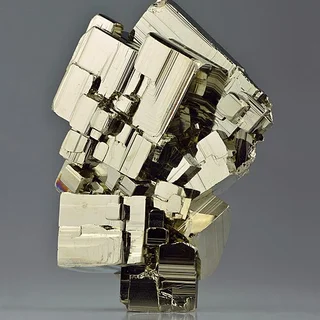
A comprehensive guide to Pyrite (Iron Pyrite), covering its meaning, 'stone language' (financial luck, willpower, and warding off evil), effects, who it's recommended for, compatible stones, and purification methods. Discover the essentials and practical applications of this symbol of prosperity, famously known as 'Fool's Gold,' all in one place.