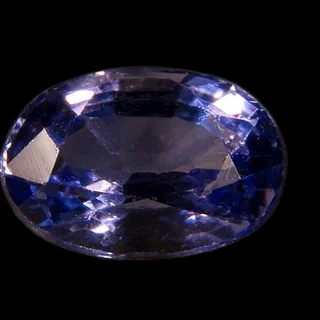

Tanzanite: Meaning, Symbolism, and Effects
A comprehensive guide to Tanzanite: its meaning, spiritual symbolism ('transformation, spirituality, new life'), effects, who it's recommended for, compatible stones, purification methods, and FAQs.
Table of Contents (Tap to toggle)
Introduction
Tanzanite is a rare gem considered one of the greatest gemstone discoveries of the 20th century, found exclusively in 1967 in the Merelani Hills of northern Tanzania (at the foothills of Mount Kilimanjaro). The bluish-purple crystals, accidentally discovered by Maasai pastoralists, caught the eye of geologists. Tiffany and Company, the renowned New York jeweler, then named it 'Tanzanite' (from 'Tanzania' the country and '-ite' for stone) and commercially launched it, making it famous worldwide.
Tiffany famously promoted it as "the most exciting blue gemstone discovery since sapphire," and it reportedly spread across the global market within just a few years. Due to its geographical rarity, being mined solely in Tanzania, it's known as the "New Time Stone of the 20th Century" and the "Sapphire of the Next Generation." It's also recognized as a gemstone that will eventually be depleted. Mineralogically, it's a blue variety of zoisite. The common modern practice involves heat treatment to transform its natural brownish hue into a vibrant bluish-purple.
Basic Information
| Item | Content |
|---|---|
| Stone Name | Tanzanite |
| Mineral Species | Zoisite (Calcium Aluminum Silicate) |
| Primary Origin | Merelani Mine, Tanzania (World's only source) |
| Mohs Hardness | 6.5 to 7 |
| Color | Deep violet-blue (pleochroism changes from blue to violet to reddish-purple depending on the angle) |
| Corresponding Chakras | Sixth (Brow) / Seventh (Crown) |
Stone Symbolism and Meaning
Tanzanite is said to symbolize "transformation, spirituality, and a new life." Given its recent discovery in 1967, it resonated with the "New Age movement" of the late 20th century and has been enthusiastically embraced by spiritual enthusiasts as a "stone heralding the arrival of a new era."
From a color symbolism perspective, its unique blend of blue and purple is believed to represent a "bridge between the earthly (blue) and the heavenly (purple)." It has been used in meditation and healing practices to simultaneously activate the Third Eye (6th Chakra) and Crown (7th Chakra).
Furthermore, Tanzanite possesses a rare property called pleochroism, where rotating the crystal reveals three distinct colors: blue, violet, and reddish-purple. This characteristic is believed to contribute to its symbolism as a "stone that changes your perspective on life" and "a stone that offers multifaceted viewpoints." According to Maasai tradition, blue is a sacred color symbolizing "the birth of new life," and the stone is said to be given to women as a blessing after childbirth.
Recommended for those who:
- Are at a major turning point in life (e.g., career change, marriage, relocation, starting a business)
- Want to enhance their spirituality and intuition
- Want to move into a new phase of life
- Seek profound insights and the ability to discern the essence of things
- Want to shed past attachments or old versions of themselves
Effects and What It's Said to Do
Please note: The "effects" of crystals are cultural and symbolic in nature. They are not medically or scientifically guaranteed.
- Life Transformation: Due to its history as the "New Time Stone of the 20th Century," it's believed to support significant life transitions.
- Enhanced Spirituality: Its high-frequency blue-purple hues are said to simultaneously activate the 6th and 7th Chakras, deepening your connection to the spiritual realm.
- New Life Phase: Stemming from the Maasai tradition of symbolizing "new life," it's believed to invite new beginnings.
- Profound Insights: Owing to its pleochroic nature, it's considered a stone that helps you view things from multiple perspectives and discern their true essence.
Ways to Use It
- As a pendant worn on the chest: It tends to act on the 4th through 6th Chakra line and is favored by those practicing meditation and yoga.
- As a ring or earrings: Daily wear requires some care due to its hardness, but it makes a wonderful amulet for special occasions.
- Held during meditation: Gazing at the pleochroic stone while regulating your breath is said to deepen introspection.
- Placed on your desk or by your bedside: Some people place it by their bedside during transitional periods to receive messages from dreams.
Compatible Combinations
| Combination | Expected Meaning |
|---|---|
| Tanzanite and Amethyst | Purple and purple: Balances spirituality and transformation. Deepens meditation. |
| Tanzanite and Clear Quartz | Amplifies transformation energy and provides stabilization. |
| Tanzanite and Moonstone | Invites new beginnings. Also beneficial during pregnancy and childbirth. |
| Tanzanite and Lapis Lazuli | Higher wisdom and spirituality. Enhances learning and insight. |
| Tanzanite and Labradorite | The ultimate combination for transformation and intuition. |
Purification Methods
Recommended methods:
- Clear Quartz chips
- White Sage
- Moonlight bath
- Tuning forks and crystal bowls (the gentlest purification)
Methods to avoid:
- Prolonged direct sunlight (may cause the bluish-purple color to fade)
- Strong impacts (it has cleavage and is prone to chipping)
- Running water purification (Mohs hardness 6.5-7, but somewhat fragile)
For detailed purification methods, please refer to the Complete Guide to Crystal Purification.
Origin and Rarity
Tanzanite is exclusively found in one location worldwide: the Merelani Mine. According to on-site surveys, it's predicted to be largely depleted around 2050. To protect the industry, the Tanzanian government has nationalized the area around the mine and tightened export regulations on unprocessed rough stones. The rarity, meaning "no more will ever be produced beyond what currently exists," is considered one of the factors supporting the recent price increase.
Price Range
The approximate market prices for Tanzanite are as follows (as of 2026, for A to AA grade items):
| Form | Price Range |
|---|---|
| Bracelet (approx. 8mm beads) | ¥10,000 to ¥80,000 |
| Tumbled stones and chips (50g) | ¥5,000 to ¥30,000 |
| Loose stone (approx. 1ct, AAA grade) | ¥30,000 to ¥200,000 |
Only found in Tanzania. The deep bluish-purple "AAA" grade is exceptional!
Prices vary significantly depending on origin, grade, and size. It's recommended to compare prices from multiple stores, checking for certification, transparency, and color intensity before making a purchase.
How to Spot Fakes and Synthetics
- Natural stones typically exhibit variations in color, minor inclusions, or natural fissures.
- If the transparency or color saturation appears too uniform, it might be glass, a synthetic stone, or a dyed stone.
- "Tanzanite-colored glass" and "synthetic forsterite" are sometimes circulated as fakes.
- Almost all Tanzanite undergoes heat treatment, which is a legitimate and common practice.
- Purchasing from a reputable specialist with a gemological certificate provides assurance. For more details, refer to How to Spot Fake or Synthetic Crystals.
Frequently Asked Questions (FAQ)
Q1. Will Tanzanite really be depleted? A. Based on the Merelani Mine's reserves, it's generally estimated that it will be largely depleted around 2050. It's suggested that current yields might hold "antique" value in the future.
Q2. Why is it heat-treated? A. Raw Tanzanite typically has a brownish-to-greenish hue. Heat treatment (around 400-500°C or 750-930°F) transforms it into its vibrant bluish-purple color. This is a standard industry practice and does not diminish its value.
Q3. How is it different from Sapphire? A. Sapphire is corundum (Mohs hardness 9), while Tanzanite is zoisite (Mohs hardness 6.5-7); they are distinct minerals both chemically and in terms of hardness. Tanzanite exhibits strong pleochroism, with its color changing depending on the viewing angle. Sapphire is generally considered more durable for everyday wear.
Q4. Is it truly a December birthstone? A. Yes. In 2002, the American Gem Trade Association added Tanzanite alongside turquoise and zircon as a December birthstone. It's a relatively recent addition.
Q5. Is it suitable for use in rings? A. With a Mohs hardness of 6.5-7, it's somewhat fragile and also has cleavage. Therefore, while it can be used in rings, it's generally recommended for special occasion jewelry rather than everyday wear, or for use in pendants and earrings.
Editor's Note
The "New Time Stone of the 20th Century" — as this name suggests, Tanzanite is a stone that accompanies you as you shed your old self and step into a new era. As its rarity increases, finding your own unique piece now would certainly be a valuable endeavor.
Related Articles You Might Enjoy
- Amethyst | February Birthstone: Meaning and Effects of the Purple Quartz
- Lapis Lazuli | The Sacred Blue Stone of Wisdom and Truth
- Labradorite | The Iridescent Stone of Transformation
- Moonstone | The Stone of Femininity and New Beginnings
- Birthstone Guide | A Summary of 12 Months of Birthstones
Summary
- Tanzanite is a crystal symbolizing "transformation, spirituality, and a new life."
- Discovered in Tanzania in 1967, named and popularized globally by Tiffany and Company as a "20th-century discovery."
- A rare stone found in only one location worldwide, predicted to be depleted in the near future.
- For purification, clear quartz chips and white sage are recommended. It's best to avoid prolonged direct sunlight.
Every time you wear it, it reminds you of "transformation" — Tanzanite is a stone with which you can have such a special relationship!
Tags
この記事をシェアする
この記事が役に立ったら、SNSでシェアしていただけるととても嬉しいです☀️

Thanks so much for reading! I hope this article brought a little sunshine to your day! See you again soon!
You might also like
Seraphinite: Meaning, Stone Lore, and Effects
A comprehensive guide to Seraphinite, covering its meaning, stone lore ('Angels, High-Vibration Healing, Spirituality'), effects, who it's recommended for, compatible stones, and purification methods. Discover the fundamentals and practical uses of this 'High-Vibration Healing Stone' that carries angelic feathers, all on this single page.

Charoite Meaning, Stone Properties, and Effects
A comprehensive guide to Charoite's meaning, stone properties ('Transformation,' 'Ward off Evil,' 'Spirituality'), effects, who it's recommended for, compatible stones, and purification methods. Discover the basics and practical uses of this 'World's Top 3 Healing Stone,' found only in Russia, all on one page.
Apatite: Meaning, Stone Lore, and Effects
A comprehensive guide to Apatite: Its meaning, stone lore ('Communication, Academics, Goal Achievement'), effects, who it's recommended for, compatible stones, and purification methods. Discover the basics and practical uses of this 'Blue Guiding Stone' that helps you achieve your goals, all on one page.

How to Properly Wear Crystals
It's believed that the meaning of crystals changes depending on whether you wear them on your left or right hand. This beginner's guide provides a complete explanation of how to properly wear bracelets, pendants, rings, and earrings, how to align them with chakras, where to place them in your home, and even when not to wear them.