
Udo Shrine Guide (Miyazaki): The Cave Shrine, Luck-Ball Throwing, Love & Safe Childbirth, Route & Timing
A visitor's guide to Udo Jingu in Nichinan, Miyazaki: a route through the gate, tower gate, Tama Bridge and the cave main hall, how luck-ball throwing works, why it is known for relationships and safe childbirth, how long to allow, parking and access.
Table of Contents (Tap to toggle)
Introduction
Udo Jingu in Nichinan, Miyazaki, is a shrine whose main hall stands inside a sea cave carved by waves into a cliff facing the Pacific. You walk down stone steps along the cliff to reach it (a style called "kudari-miya"), and the sight of red-lacquered buildings against the blue sea is considered rare in Japan.
Three things worth knowing before you go:
- The highlight is "unedama" (luck-ball throwing): you toss a small clay ball into a hollow on the sacred Turtle Rock in front of the main hall.
- It is known for relationships, married harmony, conceiving, safe childbirth and child-raising. It is easy to visit alone, as a couple, or to report a new beginning.
- Parking is reported to be free (about 400 spaces). The walk from the car park to the main hall is about 10-15 minutes, and the whole visit takes about 30 minutes to 1 hour.
Basic information
| Item | Details |
|---|---|
| Name | Udo Jingu (Udo Shrine) |
| Address | 3232 Miyaura, Nichinan City, Miyazaki |
| Main deity | Hikonagisa-takeugayafukiaezu no Mikoto |
| Visiting hours | Reported 6:00-18:00 |
| Parking | About 400 spaces, reported free |
| Phone | 0987-29-1001 |
Hours and arrangements can change, so please check the official website or call before you go.
The cave shrine and its story
The main deity, Ugayafukiaezu, is said to be the father of Emperor Jimmu, traditionally regarded as Japan's first emperor. He is said to have been born in the birthing hut inside the cave before its roof of cormorant feathers was finished. His mother, the sea princess Toyotama-hime, is said to have left him and returned to the sea, pressing her breasts onto the rock for him; this is the legend of the "Ochichi-iwa" rock.
The cave holding the main hall is described as about 38 m east-west, 29 m north-south and 8.5 m high. The shrine is said to date from the reign of Emperor Sujin, and locals call it "Udo-san."
What visitors hope to gain (traditionally said)
These are commonly told associations, not guaranteed effects.
- Relationships and married harmony: linked to the story of Toyotama-hime and her husband.
- Safe childbirth, conceiving and child-raising: people who are expecting or raising children visit because of the Ochichi-iwa legend.
- A wish you act out: throwing the luck ball is a hands-on way to put a wish into words.
- A scene far from daily life: the approach between cave and sea suits anyone wanting to reset.
From the gate to the main hall
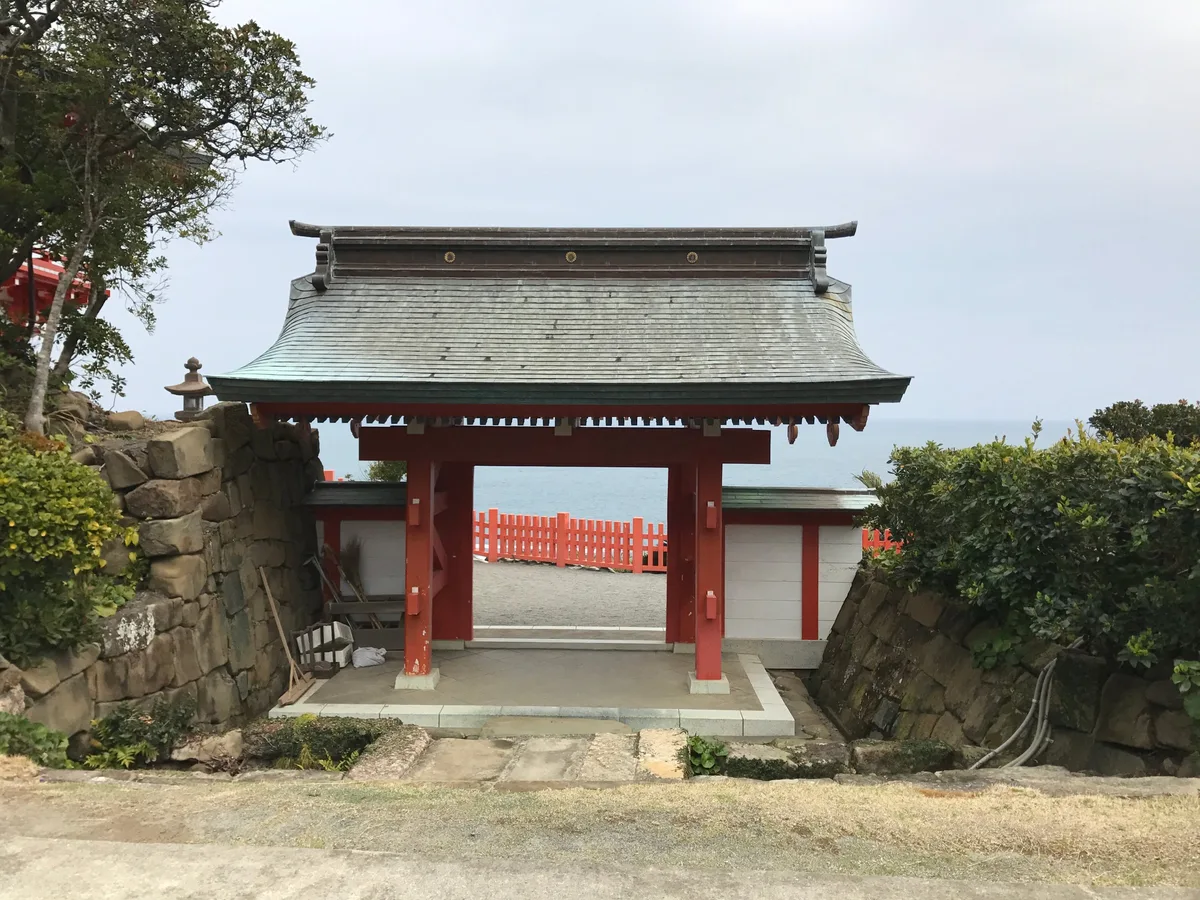
After the car park, the first structure is the gate.
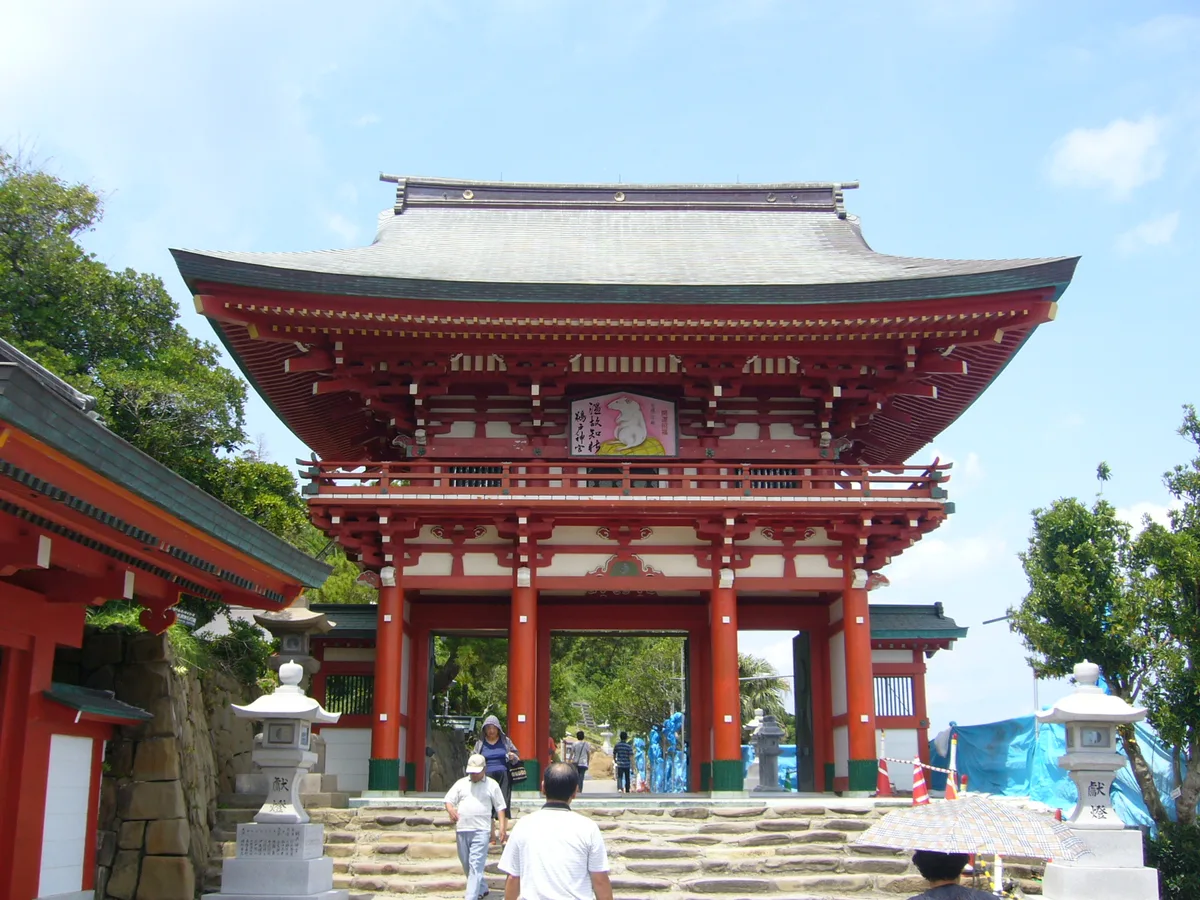
Next comes the red-lacquered tower gate.
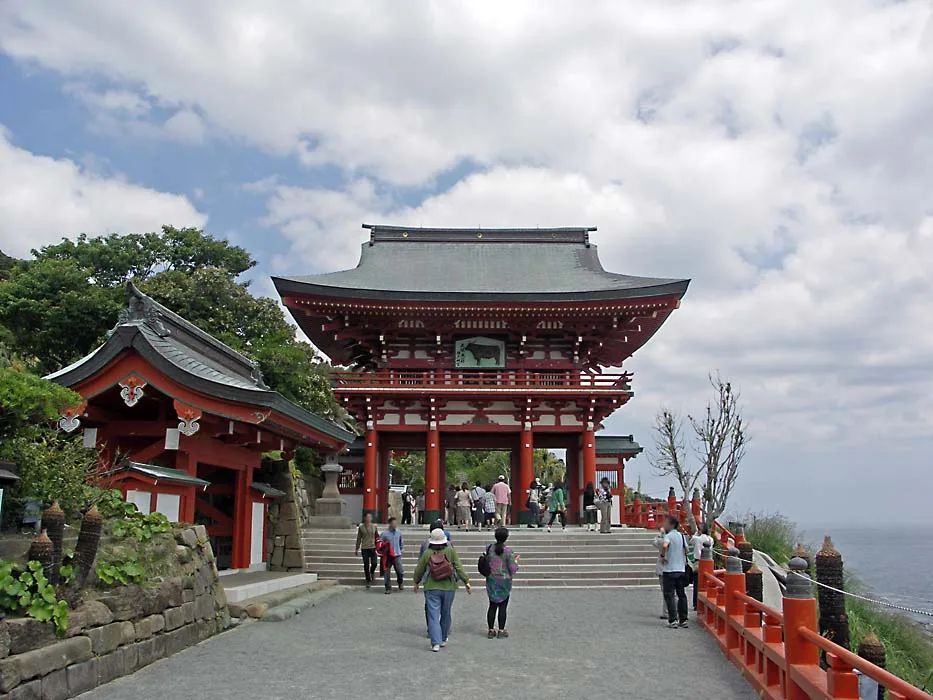
The approach rises and falls along the coast, lined with a red railing.
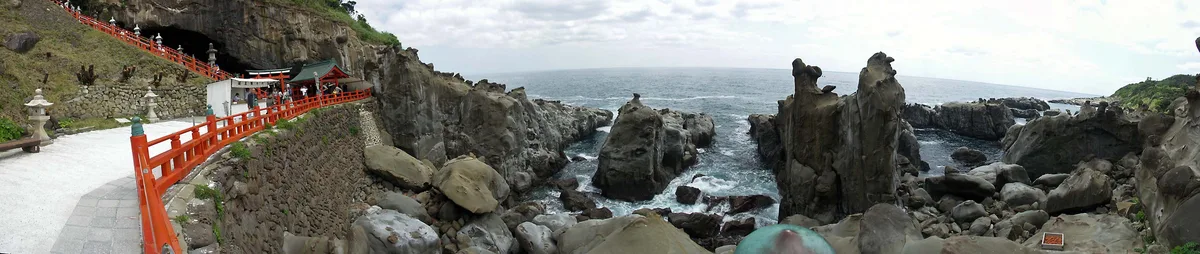
After crossing the red Tama Bridge, the main hall appears below the cliff.
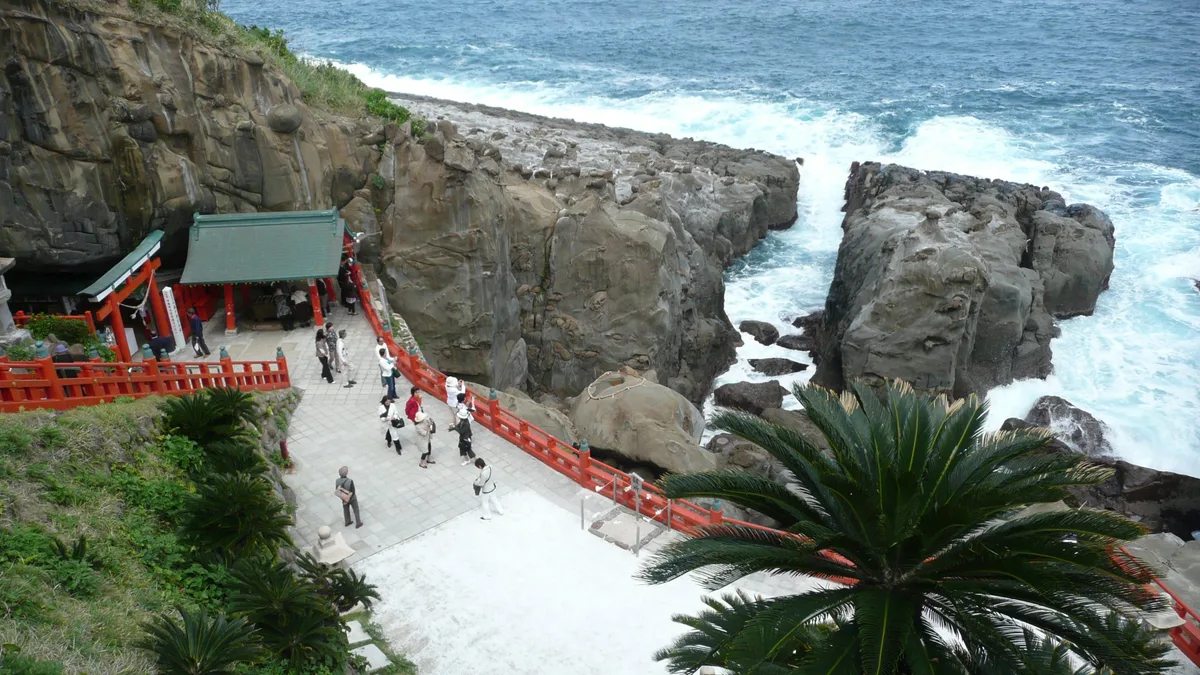
Down the stone steps, the main hall sits inside the cave.
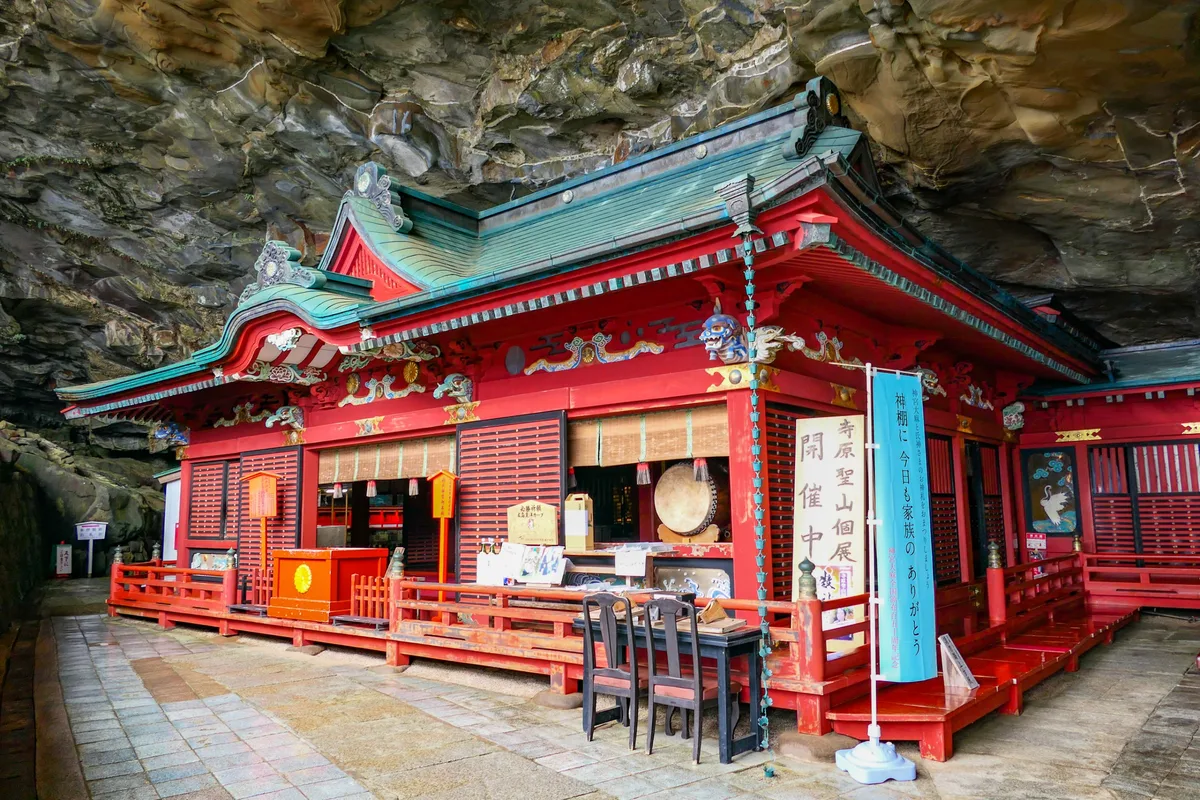
Luck-ball throwing and Ochichi-iwa
In unedama, you throw a clay ball into the hollow on the back of the sacred "Turtle Rock" on the shore in front of the hall. If it lands inside, the wish is said to come true. Men throw with the left hand and women with the right, as the shrine's guidance is reported. The balls are sold at the amulet office (about 200 yen for five, reportedly). A gentle arc is said to work better than a hard throw.
Ochichi-iwa is a rock beside the main hall shaped like a breast, with water dripping slowly down it. A candy made with this water, "ochichi-ame," is a known offering, and people who are expecting or raising children favour it.
Suggested route and timing
Times are rough estimates.
- Walk from the car park to the gate and tower gate (about 10-15 min)
- Cross Tama Bridge, go down the steps and pray at the main hall (about 10-15 min)
- Luck-ball throwing and Ochichi-iwa (about 10-15 min)
- Walk back, enjoying the sea views (about 10-15 min)
Allow about 30 minutes to 1 hour. The return is uphill, so extra time helps.
Tips
- Go early in the morning: hours are reported as 6:00-18:00, and quieter times let you feel the cave's calm.
- Wear comfortable shoes: there are many steps and spray can make them wet.
- Do not climb down onto the rocks: stay on the approach and avoid the area around Turtle Rock.
- New Year and holiday weekends are crowded, and nearby roads can back up; early mornings and weekdays are easier.
- Amulets and offerings: buy luck balls and ochichi-ame at the amulet office during opening hours.
Access
- By car: about 40 minutes from Miyazaki Airport and about 50 minutes from Miyazaki IC, reportedly. Parking is about 400 spaces, free.
- Train and bus: from JR Aburatsu Station, take a bus (about 20 min) to "Udo Jingu," then walk about 10 minutes. Buses are infrequent; check times in advance.
Crystals people choose for a visit
Offered as a gentle accompaniment, with no guaranteed effect.
| Stone | Why it is chosen |
|---|---|
| Rose quartz | Often chosen for wishes about love and harmony |
| Moonstone | Chosen by those hoping for safe birth and a calm heart |
| Aquamarine | Linked to the sea, and chosen as a travel companion |
Basic etiquette
- Bow before passing under the torii and gate.
- Walk near the edge of the approach; the center is said to be for the gods.
- Bow twice, clap twice, bow once.
- Wait your turn at luck-ball throwing and throw quietly, away from other visitors.
- In the cave, do not point flashes or lights at worshippers.
For basics, see the Shrine Visit Basics guide.
FAQ
How long should I allow? About 30 minutes to 1 hour, a little more if you enjoy luck-ball throwing and photos.
How many luck balls, and how do I throw? Five for about 200 yen, reportedly. Men throw left-handed and women right-handed, aiming for the hollow on Turtle Rock.
Is the car park far? The walk to the main hall is described as about 10-15 minutes.
Can I go alone? Of course. Many visit to report a new start, not only for relationships.
Related articles
Tags
この記事をシェアする
この記事が役に立ったら、SNSでシェアしていただけるととても嬉しいです☀️

Thanks so much for reading! I hope this article brought a little sunshine to your day! See you again soon!
You might also like
Omiwa Shrine Worship Guide
This comprehensive guide covers the history, divine blessings, Mount Miwa faith, key worship points, Sai Shrine, the Medicinal Well, sacred mountain ascent (Tohhai), recommended crystals, and surrounding attractions of Omiwa Shrine (1422 Miwa, Sakurai City, Nara Prefecture). It's an essential resource for visiting a sacred site that continues to preserve one of Japan's oldest forms of primitive worship.
Izanagi Shrine Guide (Awaji Island): Married Couples' Camphor Tree, Creation Myth, Route & Timing
A visitor's guide to Izanagi Jingu on Awaji Island, Hyogo: the creation-myth story, the Married Couples' Camphor Tree known for marriage and relationships, a simple route, how long to allow, shrine office hours and access.
Complete Guide to Kyushu's Power Spot Shrines and Sacred Sites
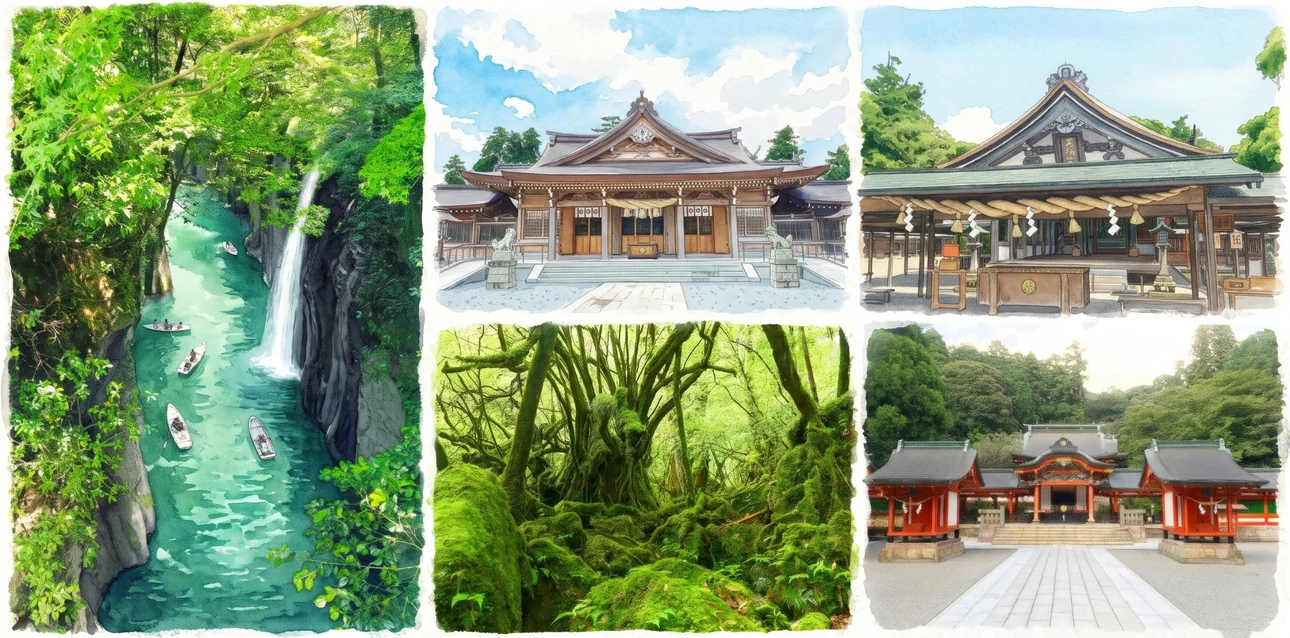
A curated introduction to Kyushu's top power spot shrines and sacred sites. This page compares the enshrined deities, blessings, highlights, access, and visiting tips for five major locations: Munakata Taisha (Fukuoka), Aso Shrine (Kumamoto), Kirishima Jingu (Kagoshima), Takachiho Gorge (Miyazaki), and Yakushima (Kagoshima).

Ise Grand Shrine Pilgrimage Guide
This comprehensive guide covers the history, blessings, official pilgrimage order (Geku to Naiku), nearby power spots, model itineraries, etiquette, and recommended crystals for Ise Grand Shrine, revered as 'Japan's Chief Guardian Deity.' It's an easy-to-understand, essential guide for first-time visitors.