
Kirishima Jingu Pilgrimage Guide
This article contains promotional content.
A comprehensive guide to Kirishima Jingu (Kirishima City, Kagoshima Prefecture), covering its history, Ninigi-no-Mikoto, the Tenson Korin myth, the vermilion National Treasure shrine, Sakamoto Ryoma's honeymoon, Mt. Takachiho trailhead, key visiting points, access, recommended crystals, nearby attractions, and FAQs.
Table of Contents (Tap to toggle)
Introduction
Kirishima Jingu is a venerable shrine that stands at the foot of the sacred Kirishima Mountain Range, representing Southern Kyushu. It enshrines Ninigi-no-Mikoto, the main character of the Tenson Korin (Descent of the Heavenly Grandson) myth, and serves as a distant worship site for Mount Takachiho, the mythical stage itself. It's also famous as the destination for Sakamoto Ryoma and Oryo's first honeymoon in Japan, and its vermilion-lacquered main hall was designated a National Treasure in 2022. It's a sacred precinct with a grand scale, offering views of the Kirishima Mountain Range and Sakurajima. In this article, I'll put together the shrine's history, the Tenson Korin myth, Sakamoto Ryoma's story, FAQs, and an editor's note all on one page.
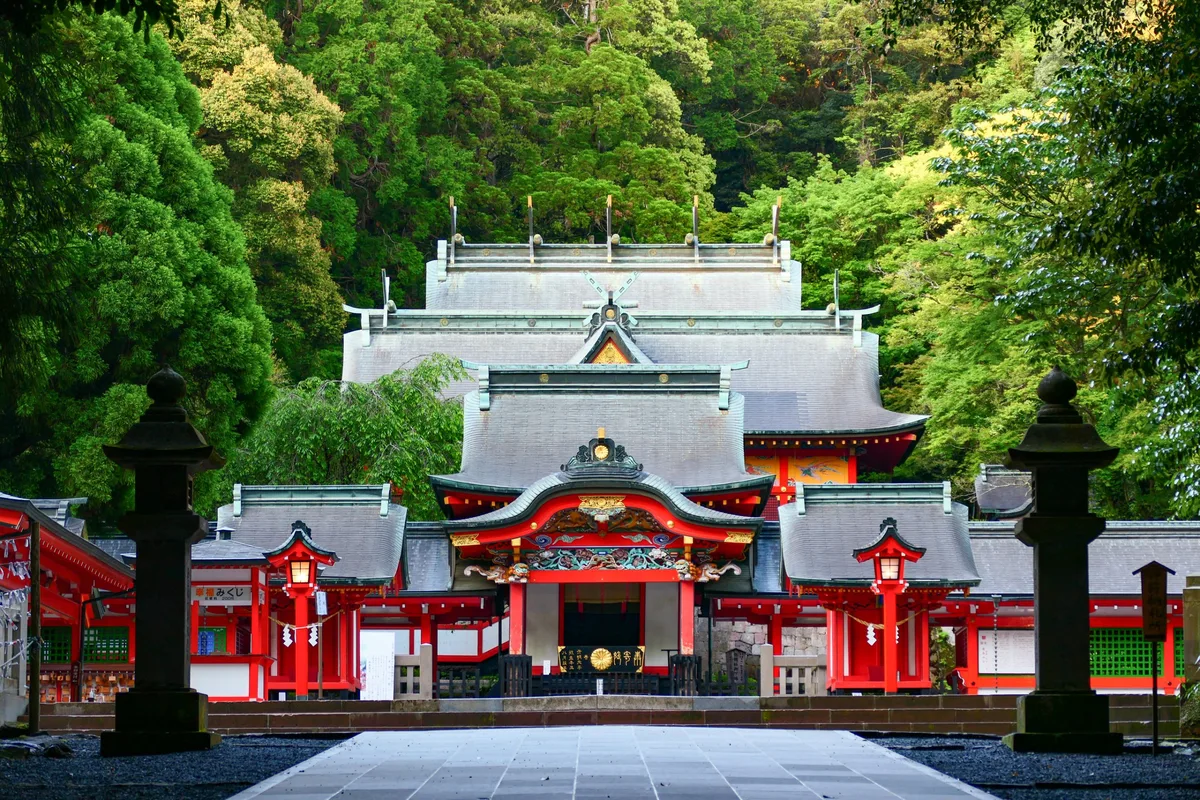
Table of Contents
- Basic Information and Shrine Data
- History and Origins
- Divine Blessings
- The Tenson Korin Myth and Mount Takachiho
- The National Treasure Shrine Buildings
- Sakamoto Ryoma and Oryo's Honeymoon
- Key Visiting Points
- Access
- Recommended Crystals
- Nearby Spots to Visit
- Best Times to Visit
- Basic Shrine Visiting Manners
- Frequently Asked Questions (FAQ)
- Editor's Note
- Related Articles You Might Enjoy
Basic Information and Shrine Data
| Item | Content |
|---|---|
| Official Name | Kirishima Jingu |
| Location | 2608-5 Kirishima Taguchi, Kirishima City, Kagoshima Prefecture |
| Main Deity Enshrined | Ten’okuishikuniokuishi-amatsuhikohikohononinigi-no-Mikoto (Ninigi-no-Mikoto) |
| Founding | 6th Century (Tradition from Emperor Kinmei's Reign) |
| Shrine Rank | Former Kanpei Taisha (Grand Imperial Shrine) |
| National Treasure Designation | Main Hall, Heiden (Offering Hall), and Haiden (Worship Hall) (2022) |
| Official Website | https://kirishimajingu.or.jp |
History and Origins
According to shrine tradition, Kirishima Jingu was founded during Emperor Kinmei's reign (6th century). Initially, it was enshrined between Mount Takachiho and Mount Hinotsunemine in the Kirishima Mountain Range. However, due to repeated damage from volcanic eruptions, it was relocated multiple times, finally settling in its current location in the 15th century.
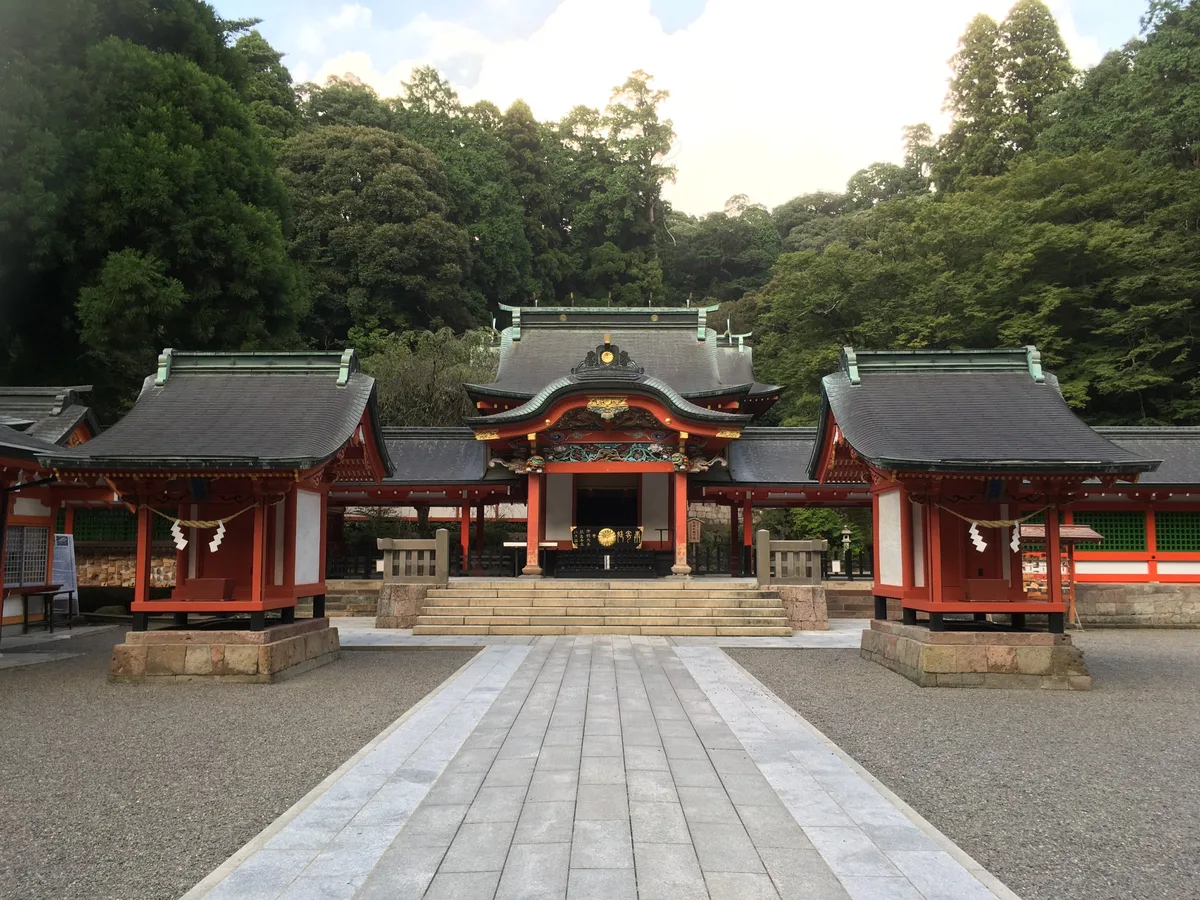
The current shrine buildings were donated by Shimazu Yoshitaka, the 4th Lord of the Satsuma Domain, in 1715. It's renowned as a masterpiece of architecture, embodying the vermilion and polychromatic styles of Kagoshima, and its Main Hall, Heiden, and Haiden were designated National Treasures in 2022. Since the Meiji era, it has gathered nationwide reverence as a Kanpei Taisha (Grand Imperial Shrine), attracting approximately 1.5 million worshippers annually.
Source: Official Kirishima Jingu documents, various Satsuma Domain historical records.
Divine Blessings
- Good Fortune and National Peace (Ninigi-no-Mikoto's descent as a heavenly grandson)
- Matchmaking and Marital Harmony (Ninigi-no-Mikoto and Konohanasakuya-hime)
- Business Prosperity
- Family Safety and Ward off Evil
- Protection from Disasters (Historical faith in warding off disasters in volcanic regions)
The Tenson Korin Myth and Mount Takachiho
According to the "Kojiki" and "Nihon Shoki," Ninigi-no-Mikoto, the grandson of Amaterasu Omikami, descended from Takamagahara (the High Plain of Heaven) to the earthly realm, carrying the Three Sacred Treasures. It's said that he landed on the summit of Mount Takachiho (elevation 1,574m), the highest peak in the Kirishima Mountain Range.
An anecdote remains that "Ama-no-Sakaboko" (Heavenly Reverse Spear) stands thrust into the summit of Mount Takachiho, and Sakamoto Ryoma and Oryo pulled it out and laughed. Kirishima Jingu stands as a distant worship site for Mount Takachiho, connecting myth and reality. For those who genuinely want to experience the world of myth, it's possible to hike to Mount Takachiho from the former site of Kirishima Jingu (for experienced hikers).
The National Treasure Shrine Buildings
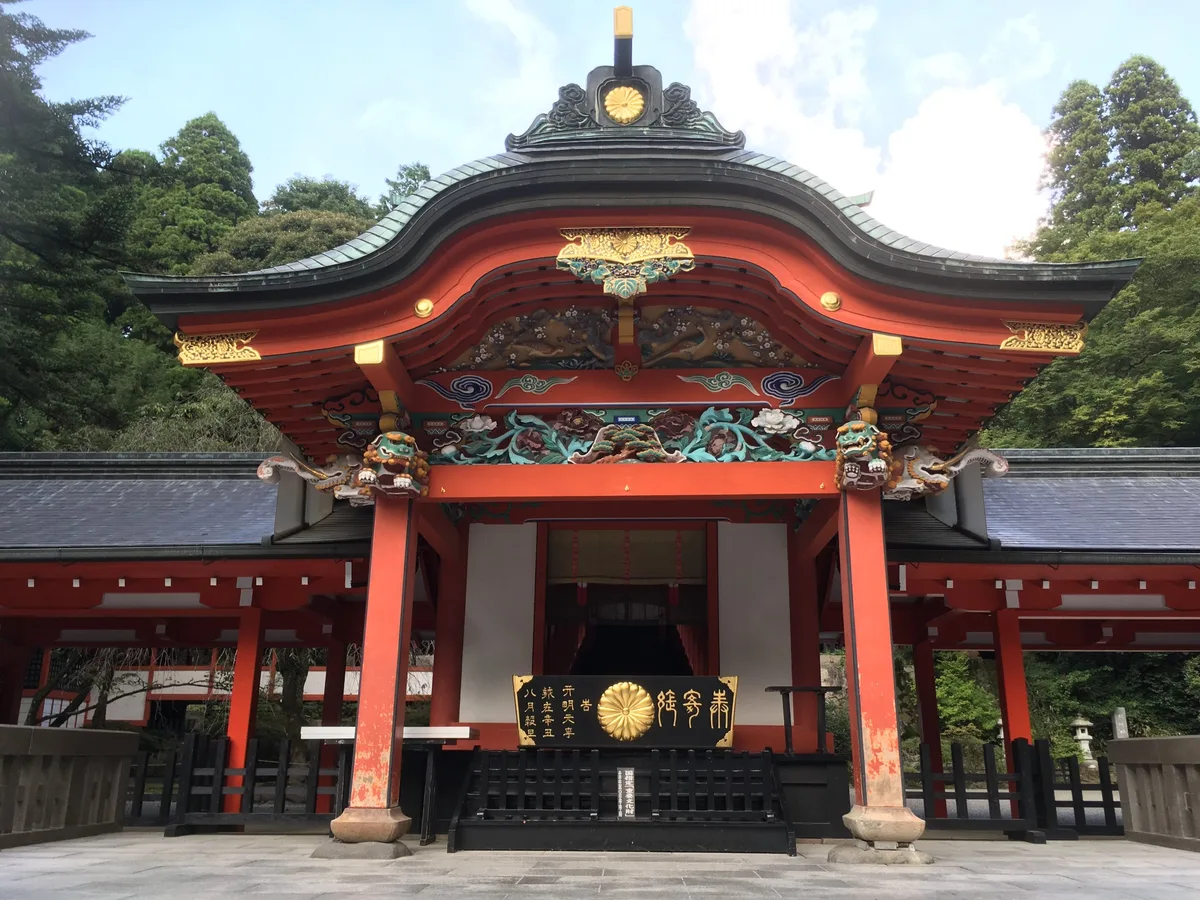
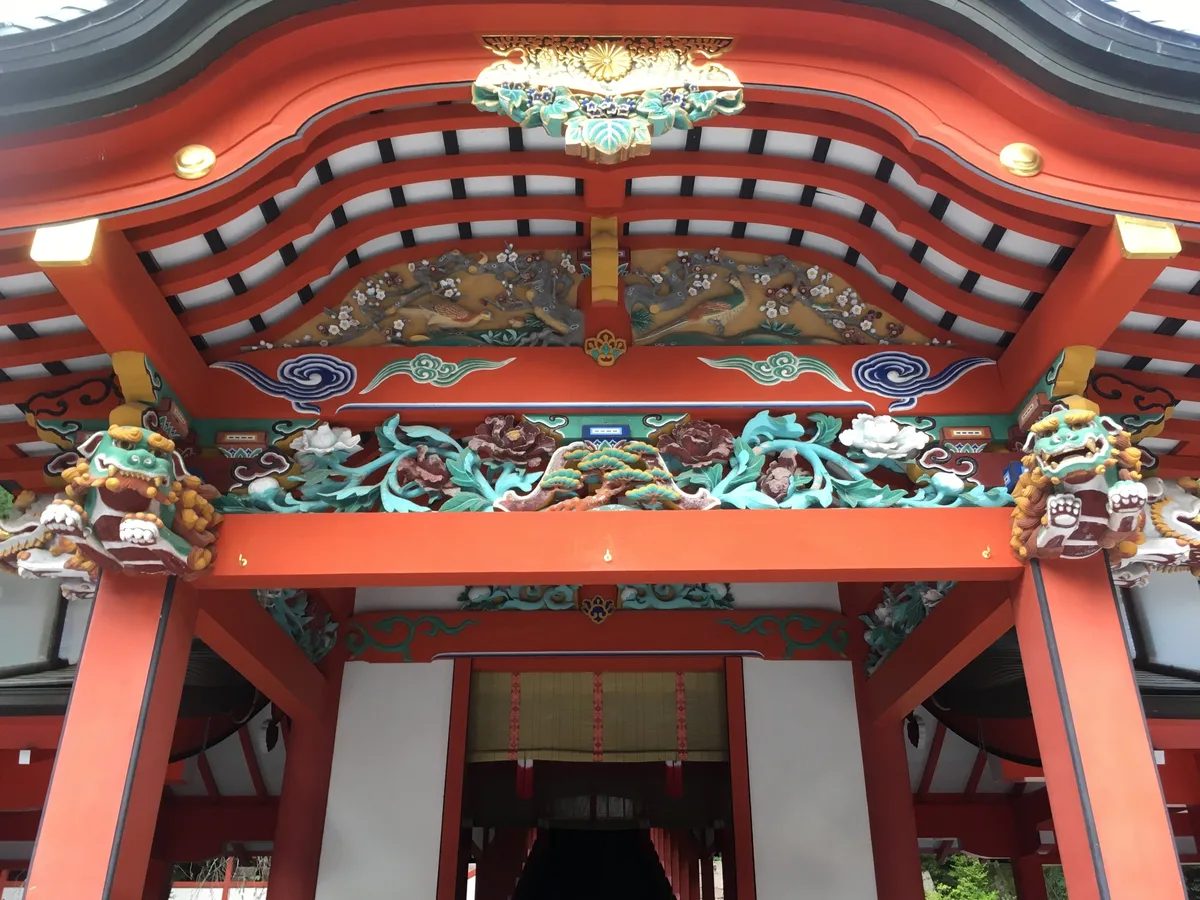
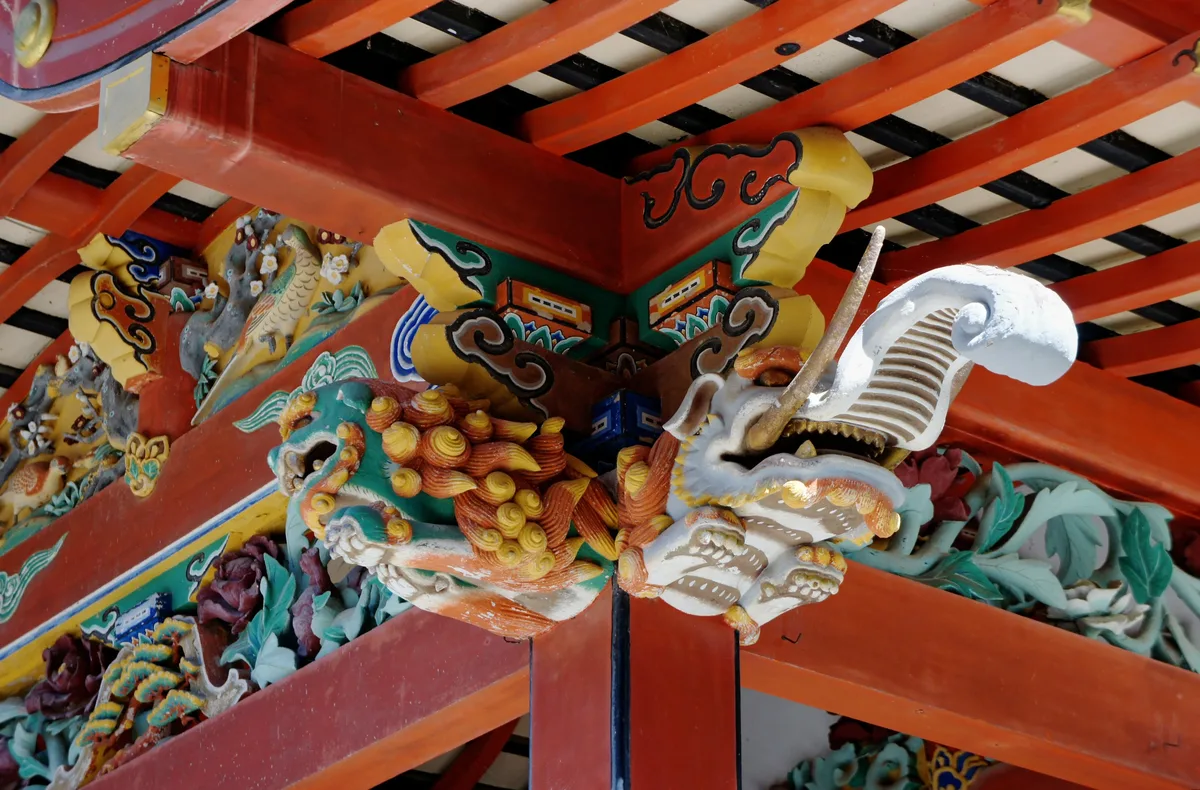
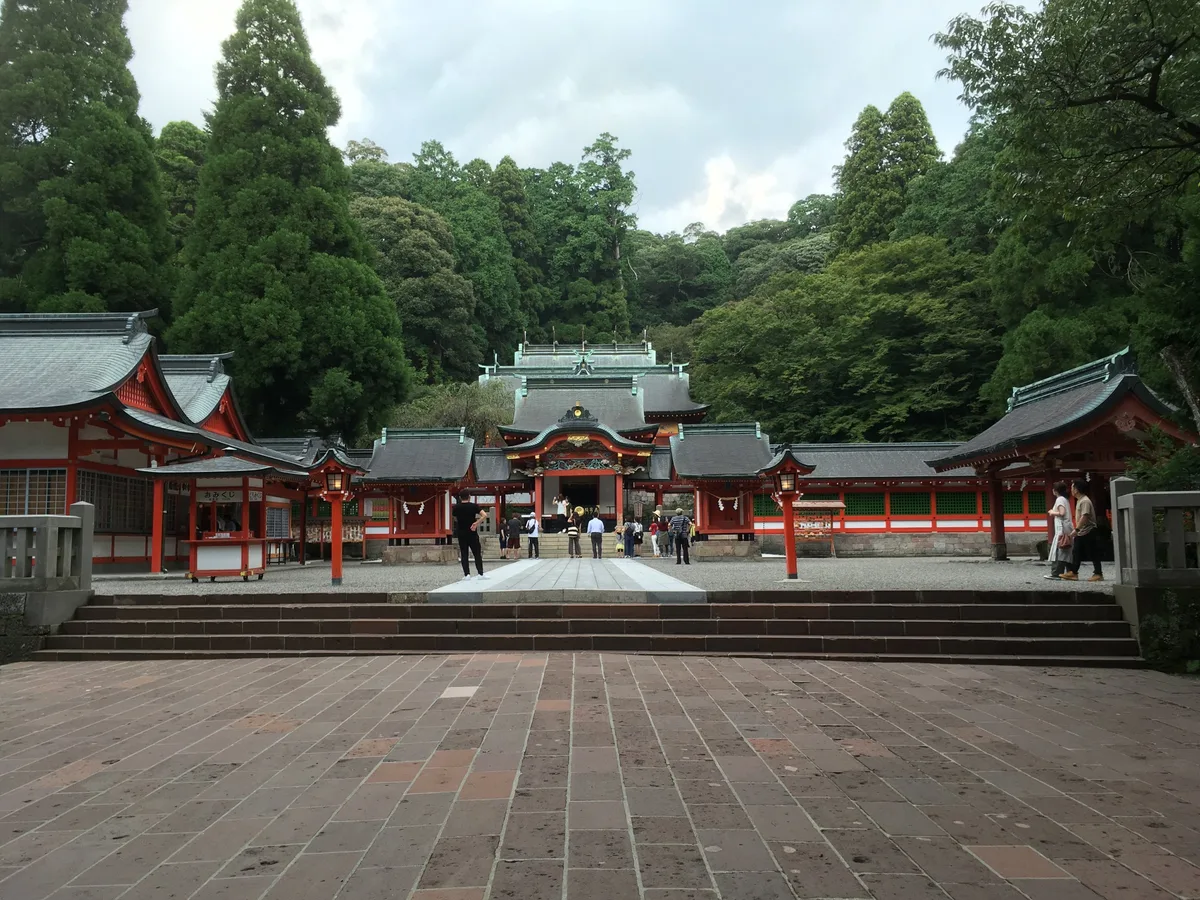
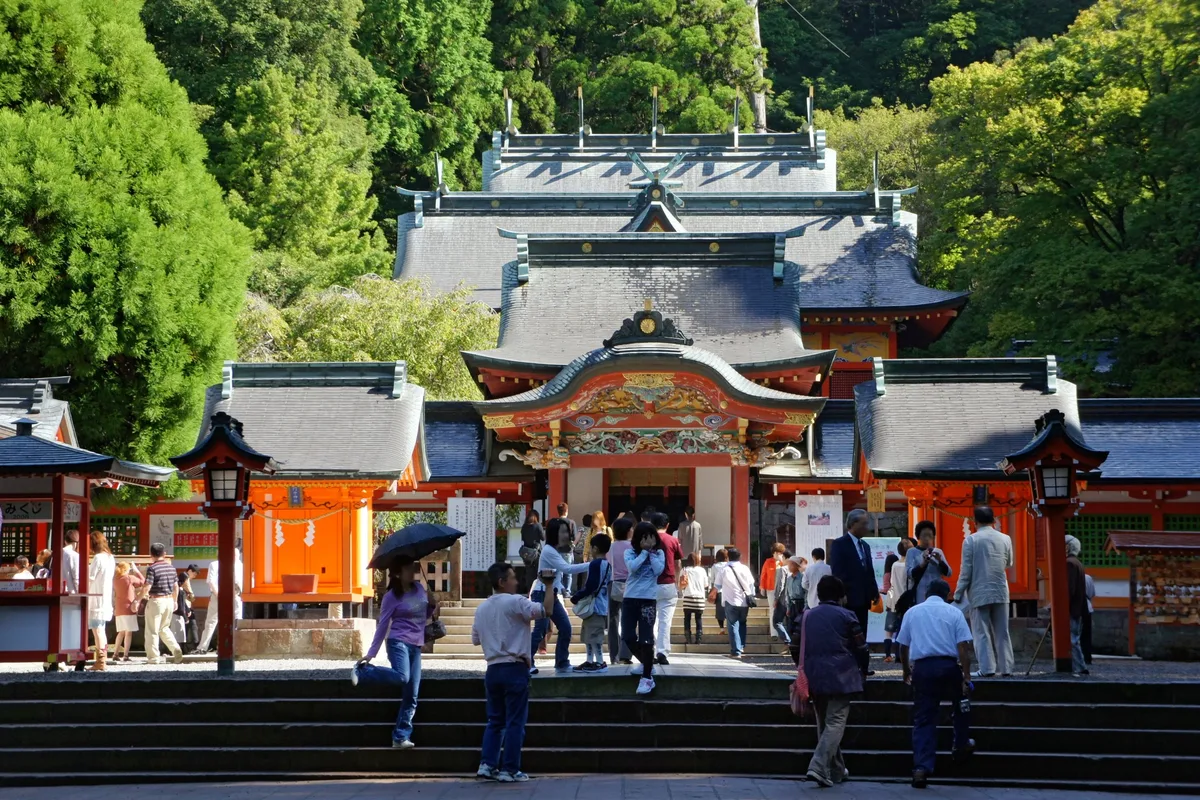
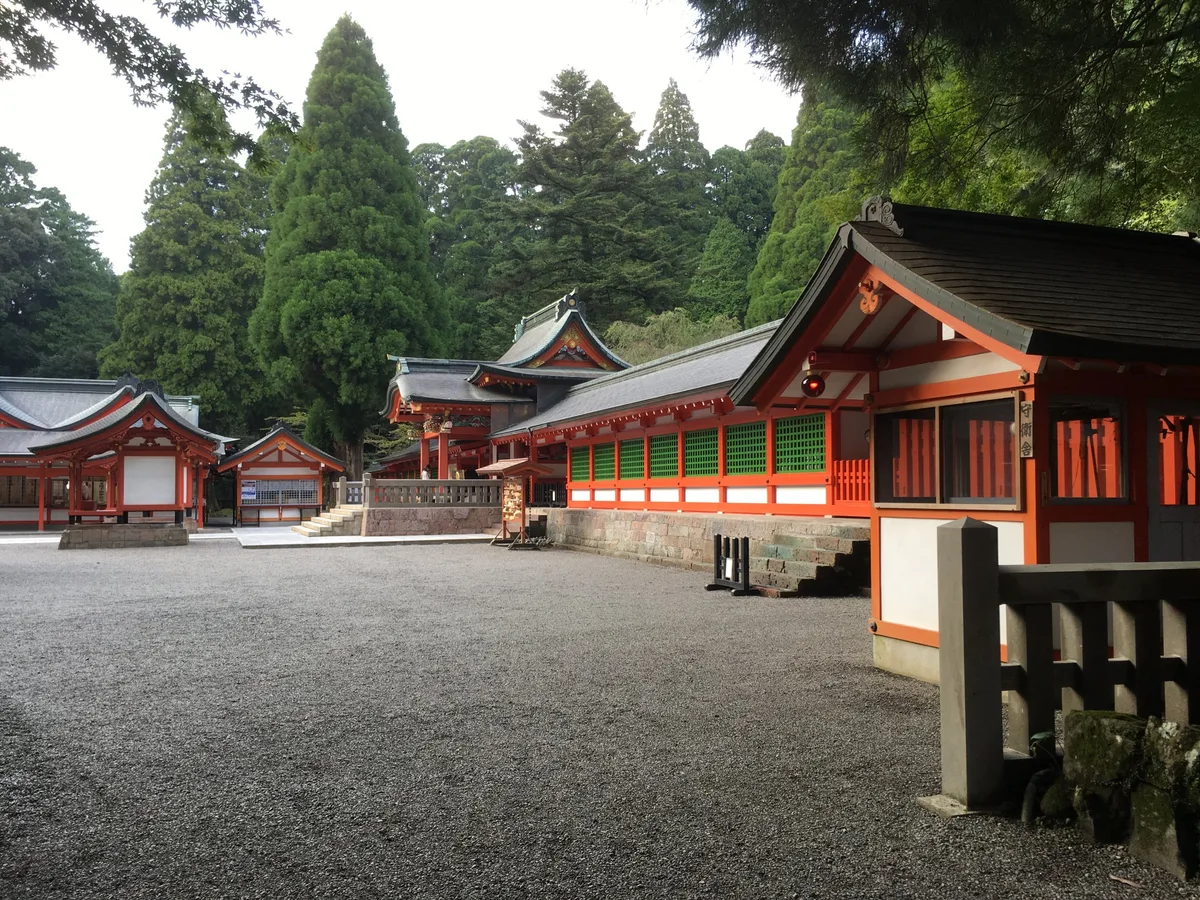
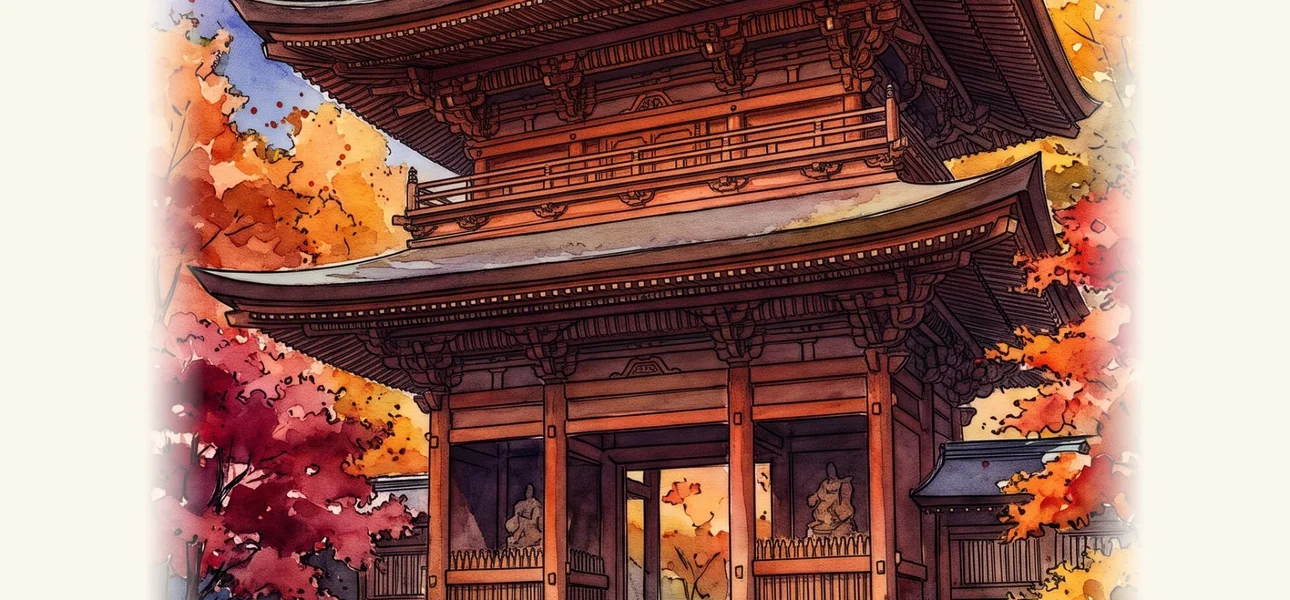
The Main Hall, Heiden, and Haiden of Kirishima Jingu were designated National Treasures in 2022. The gorgeous architectural style, built in 1715 with vermilion lacquer, gold leaf, and richly colored carvings, is also known as "Nikkō of the West."
Especially noteworthy are the flower and bird paintings on the coffered ceiling and the dragon carvings on the pillars inside, making it a representative example of early modern shrine architecture in Kyushu. The excellent state of preservation of the entire building was also a key factor in its National Treasure designation.
Sakamoto Ryoma and Oryo's Honeymoon
In 1866 (Keiō 2), Sakamoto Ryoma, who was injured in the Teradaya Incident, embarked on a recuperative journey in Satsuma with his new wife, Oryo, also taking advantage of the hot springs. This journey is remembered as "Japan's first honeymoon," and it's said that the couple climbed the Kirishima Mountain Range and also visited Kirishima Jingu.
The anecdote of them pulling out the Ama-no-Sakaboko on Mount Takachiho's summit and laughing together is recorded in a letter Ryoma sent to his sister Otome. Today, tourist routes tracing "Ryoma and Oryo's Footsteps" are maintained around Kirishima Jingu.
Key Visiting Points
- Be sure to carefully observe the vermilion National Treasure shrine buildings, including their interior decorations.
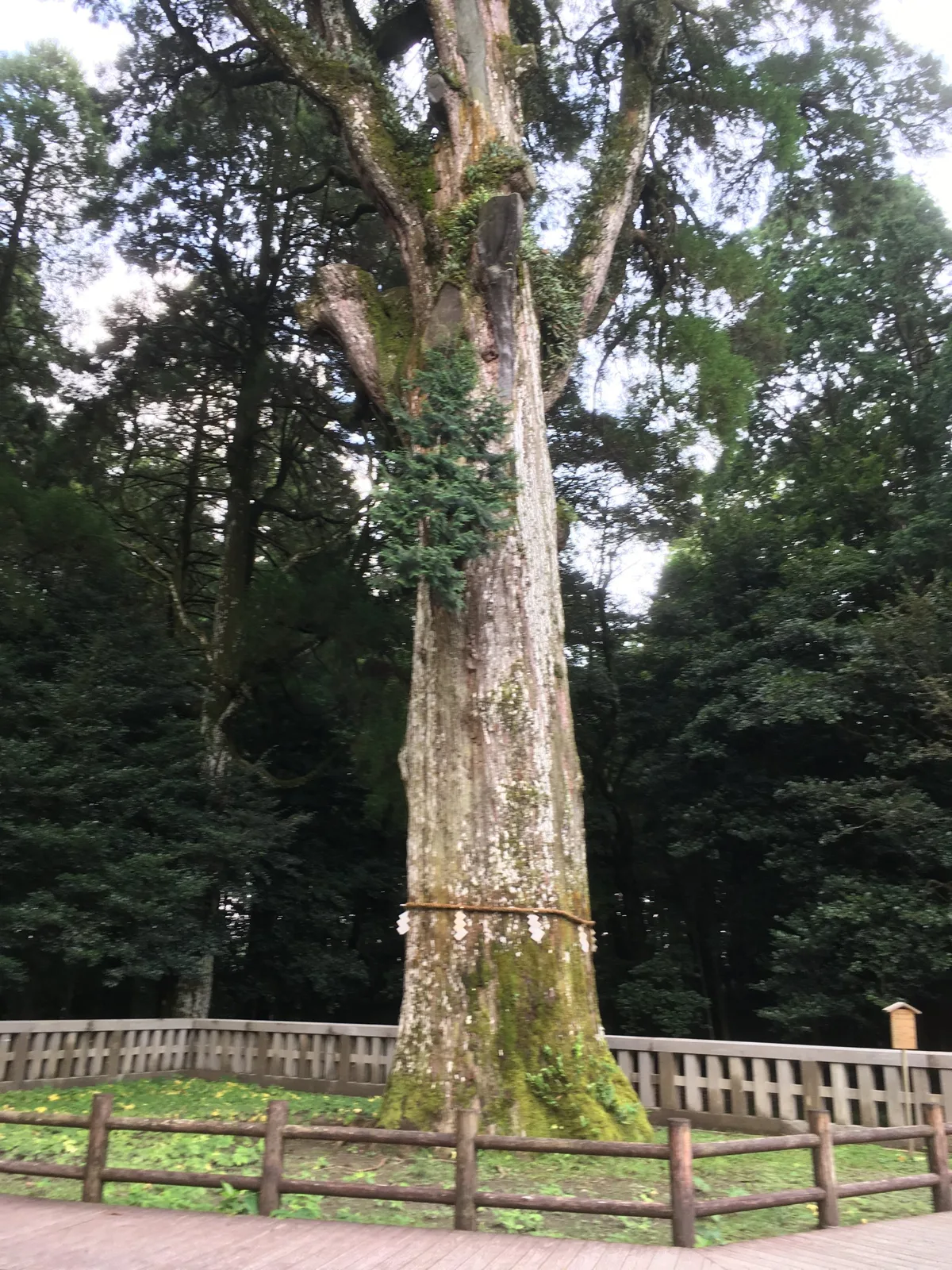
- Take a deep breath in front of the sacred tree (an 800-year-old cedar) within the precincts.
- Experience the myth by combining your visit with a hike up Mount Takachiho.
- Plan an overnight stay, combining it with Kirishima Onsen (hot springs).
- Explore routes connected to Sakamoto Ryoma and Oryo.
Access
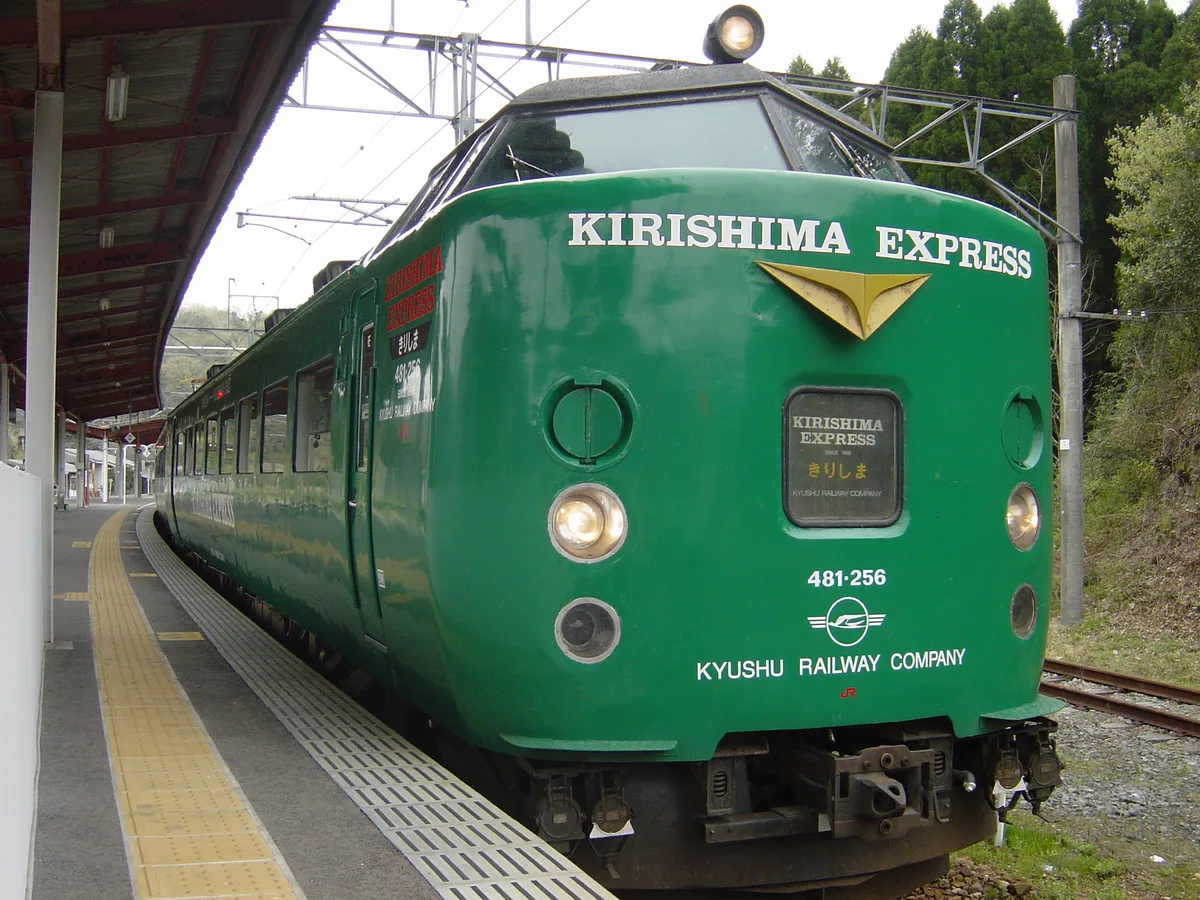
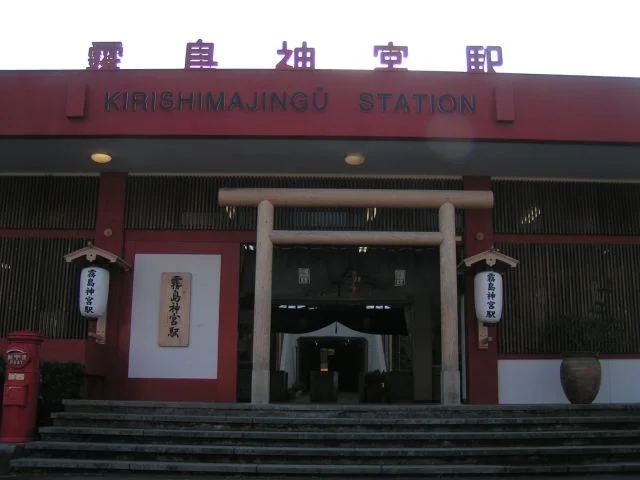
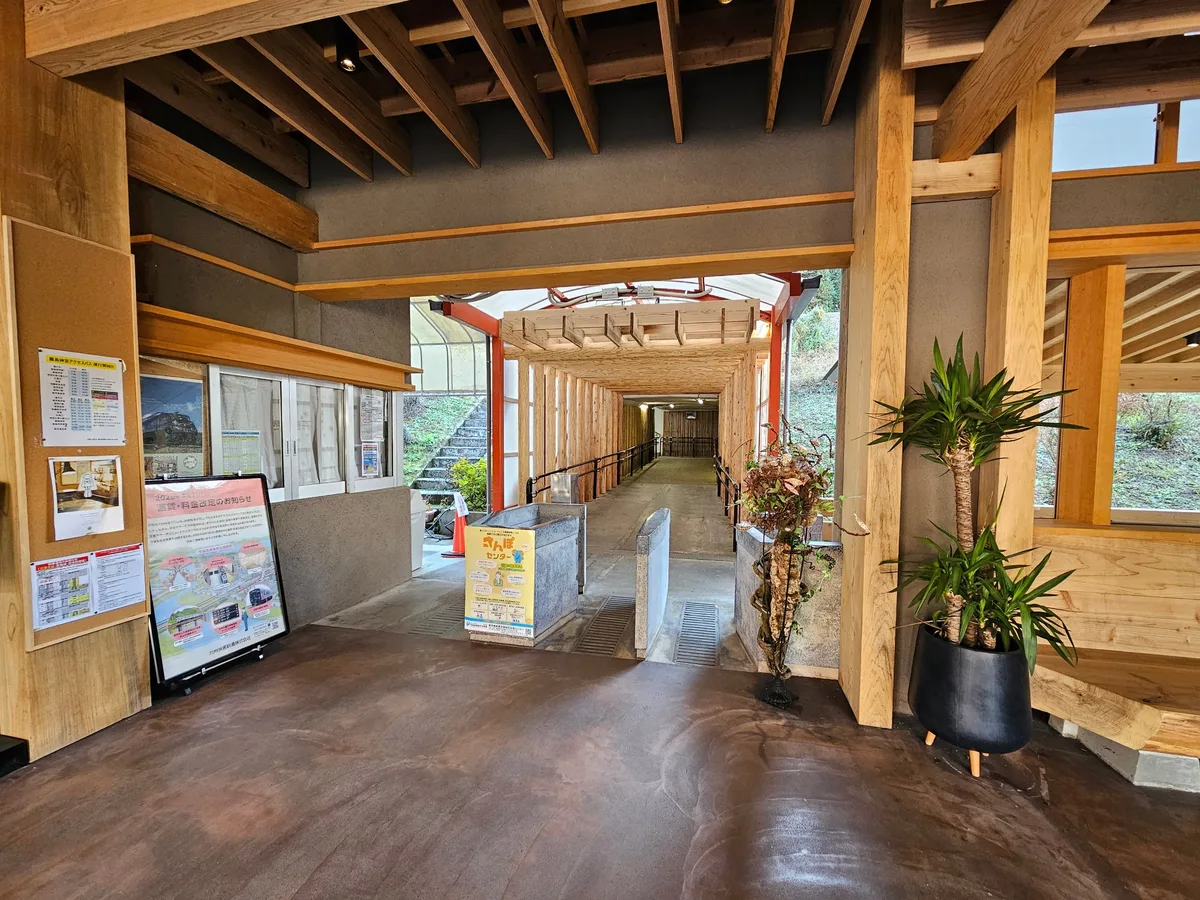
Train: From JR Nippō Main Line "Kirishima Jingu Station," take the Iwasaki Bus for about 10 minutes and alight at "Kirishima Jingu."
Car: Approximately 30 minutes from Kyushu Expressway "Mizobe-Kagoshima Airport IC," or about 60 minutes from Higashi Kyushu Expressway "Miyakonojo IC."
Parking: Available within the shrine grounds (free, approx. 500 spaces).
Recommended Crystals
Here are some stones that are said to resonate well with the sacred energy of Kirishima Jingu if you bring them when you visit.
| Stone | Reason for Compatibility |
|---|---|
| Rose Quartz | For matchmaking and marital harmony, resonating with Ryoma and Oryo's story |
| Garnet | The passion and victory of this mythical land |
| Clear Quartz | Purifying energy of the sacred precinct, resonating with the power of the sacred tree |
| Sunstone | Resonating with the Tenson Korin and the lineage of the Sun God |
Nearby Spots to Visit
- Kirishima Onsenkyo (Hot Spring Village) — One of Japan's leading hot spring resorts
- Mount Takachiho Trailhead — A hike to the mythical stage (for experienced hikers)
- Mythical Village Park — A tourist facility with a mythology theme
- Sakurajima — Towards Kagoshima City, a landscape of an active volcano
Best Times to Visit
Cherry blossoms in spring (late March to early April) and autumn foliage (November) are especially beautiful. Hatsumode (first shrine visit of the New Year) draws some of the largest crowds in Southern Kyushu. Visiting on a clear morning when the Kirishima Mountain Range is visible makes it easier to experience the mythological worldview.
Basic Shrine Visiting Manners
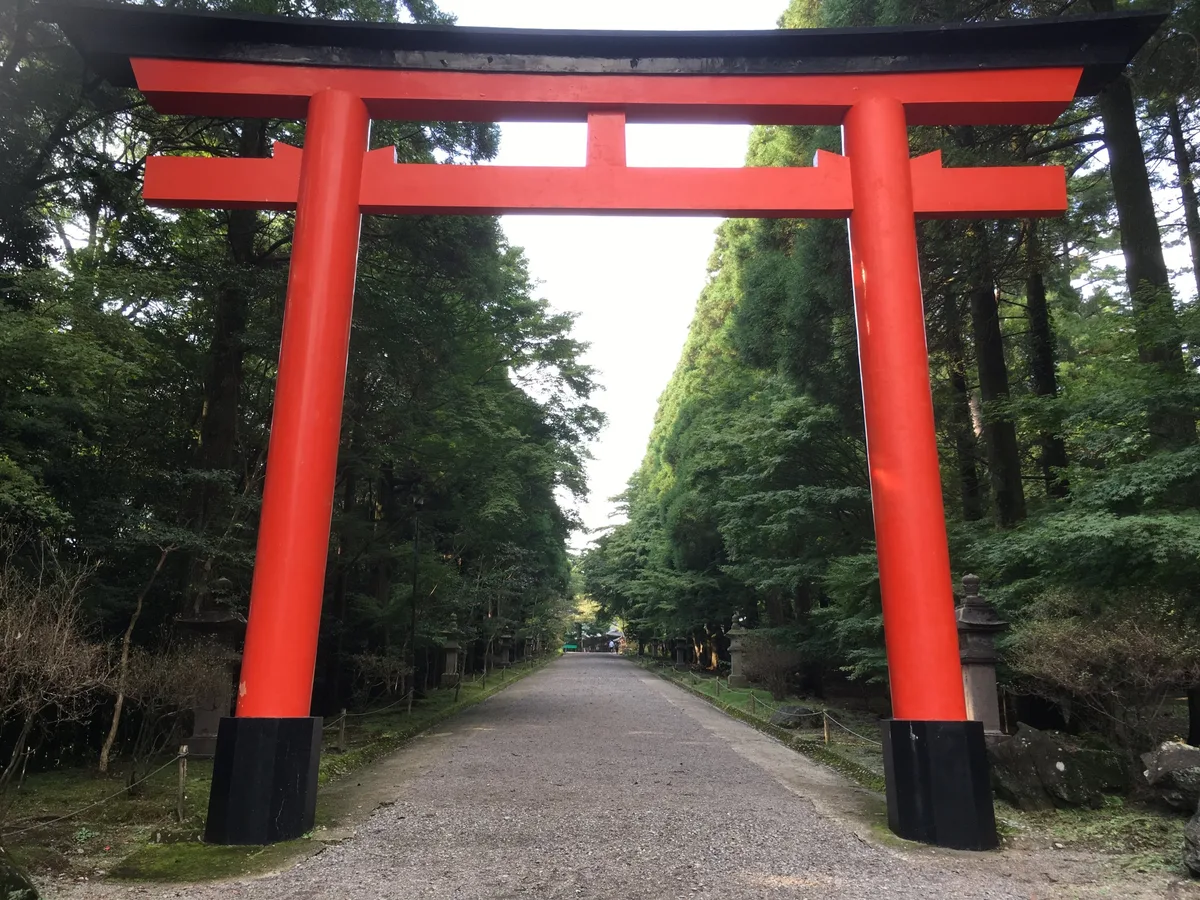
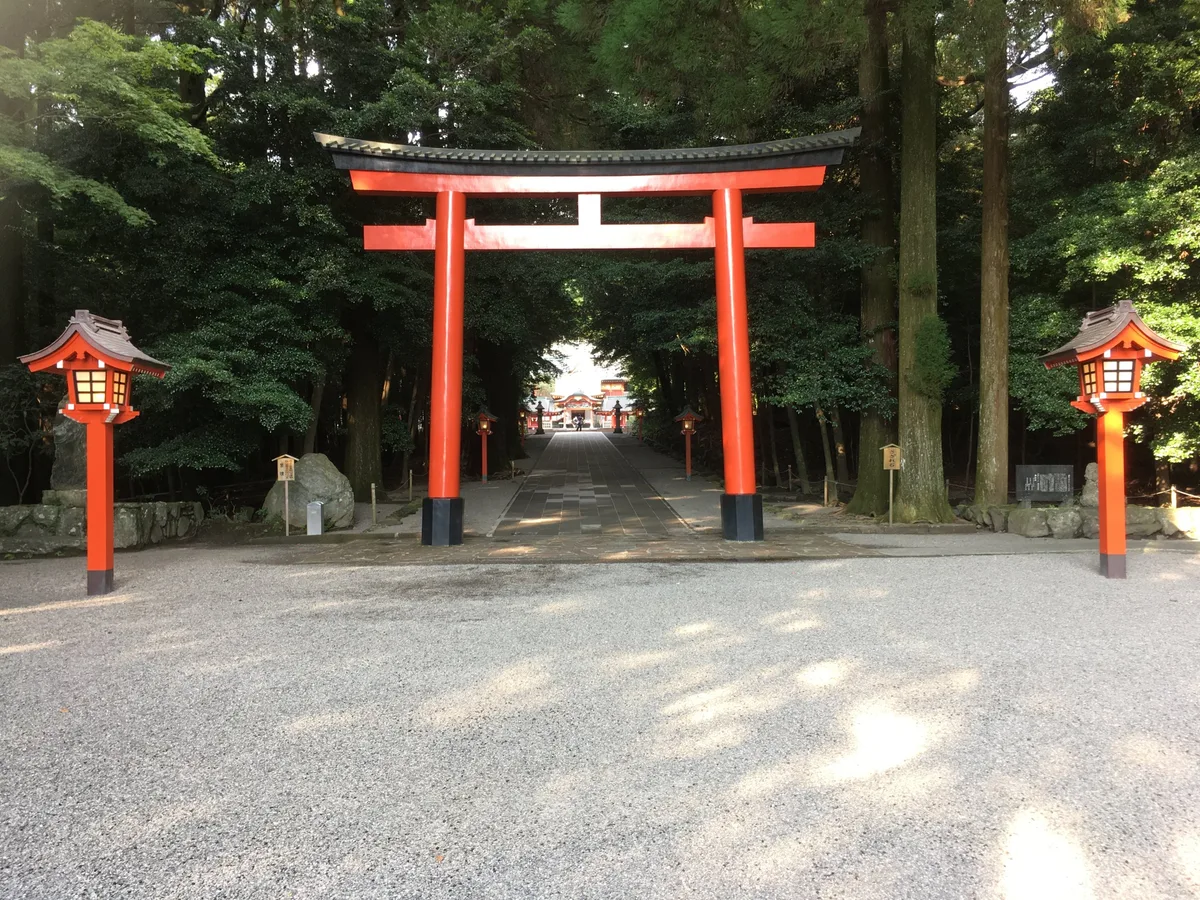
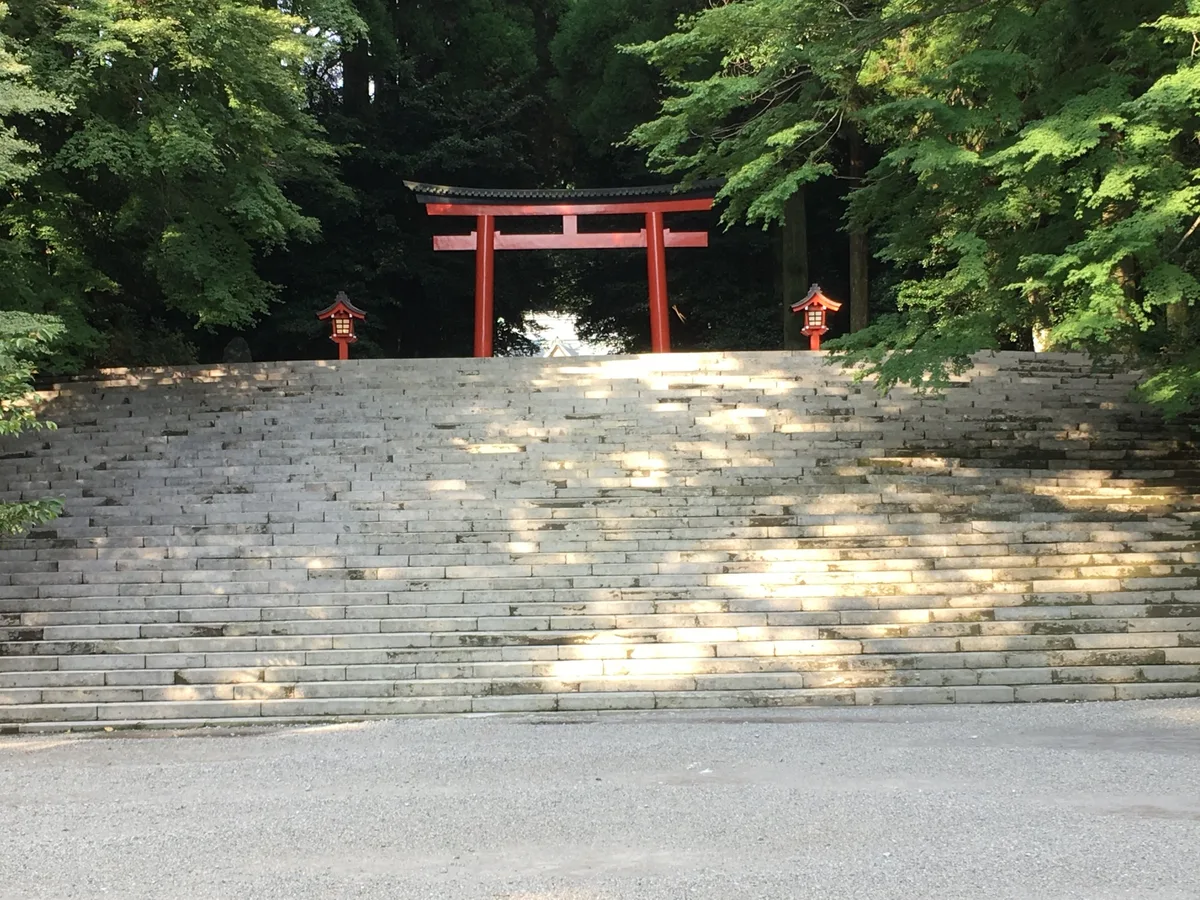
- Bow once before passing through the torii gate.
- The center of the path is for the deities; walk along the sides.
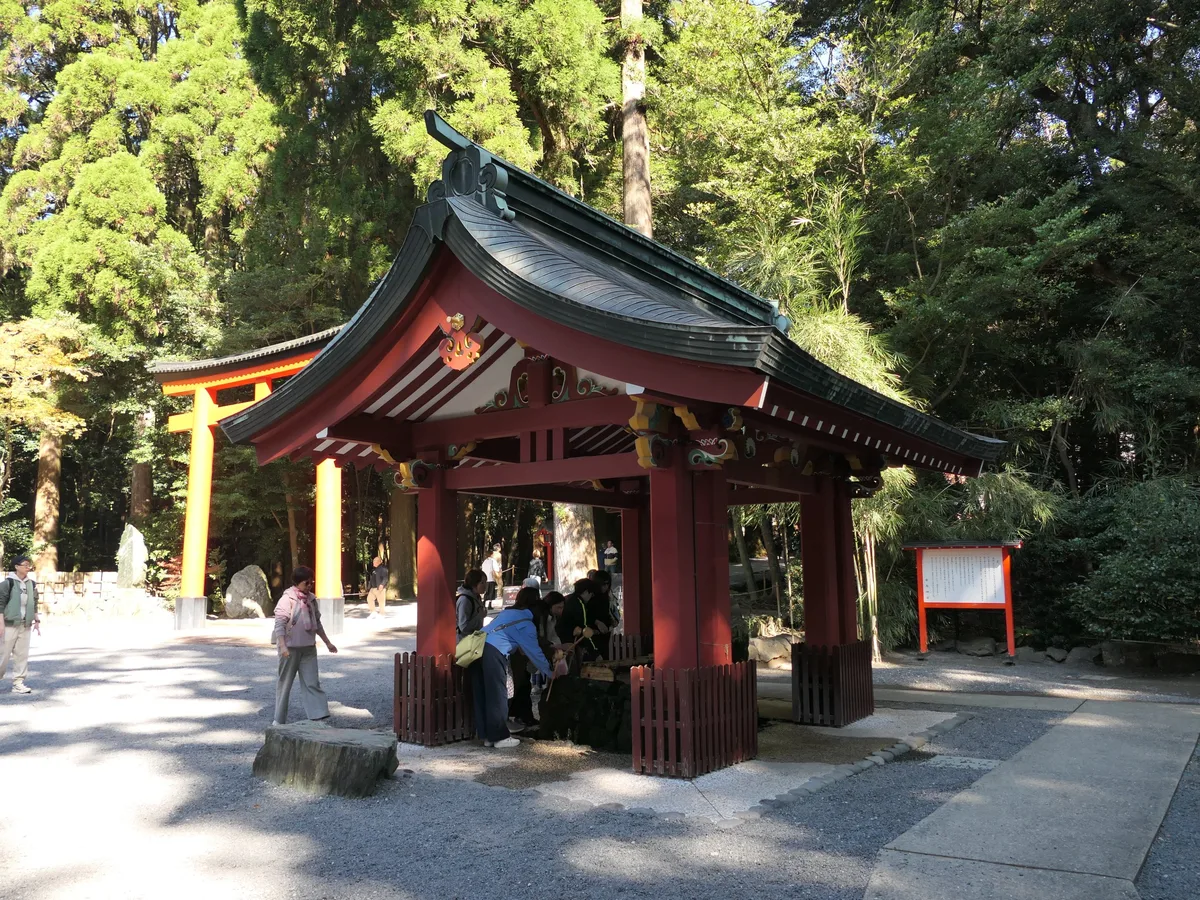
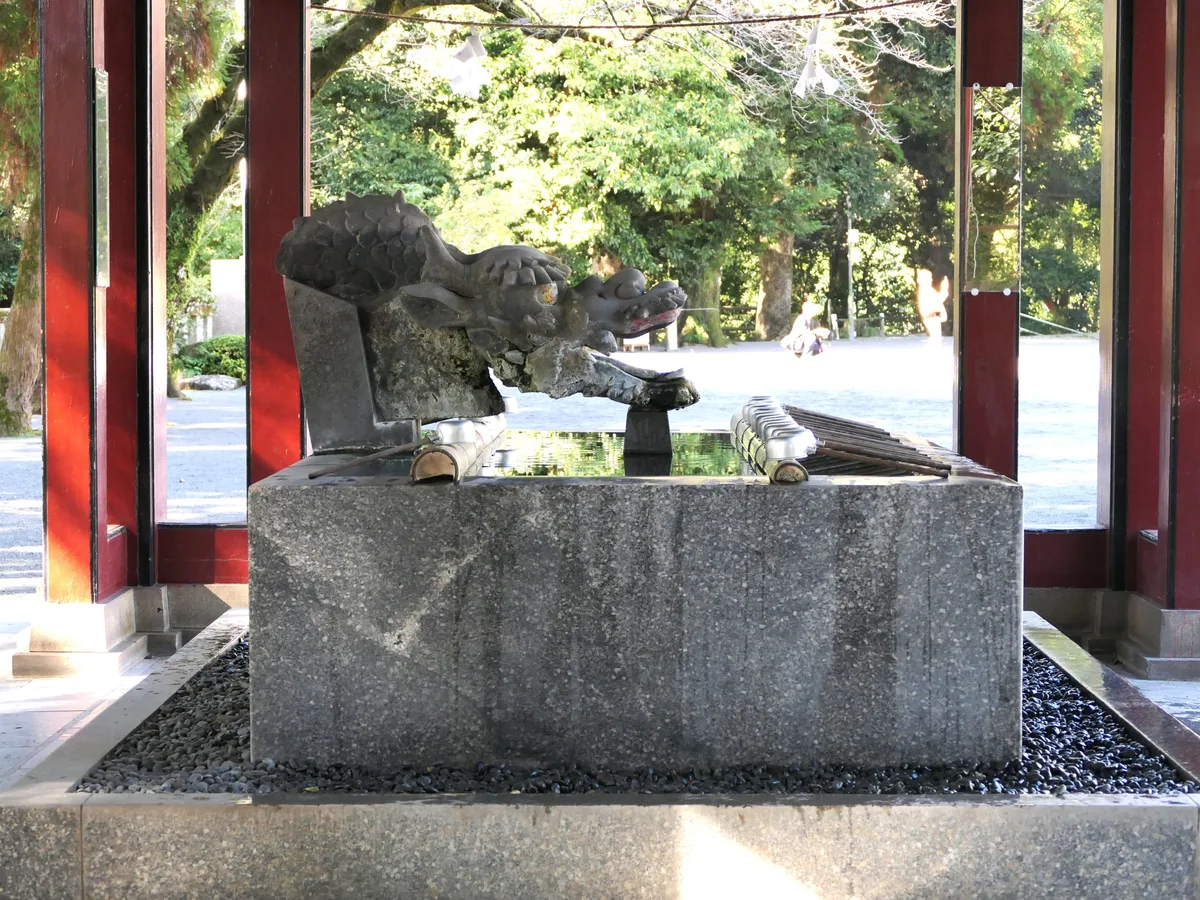
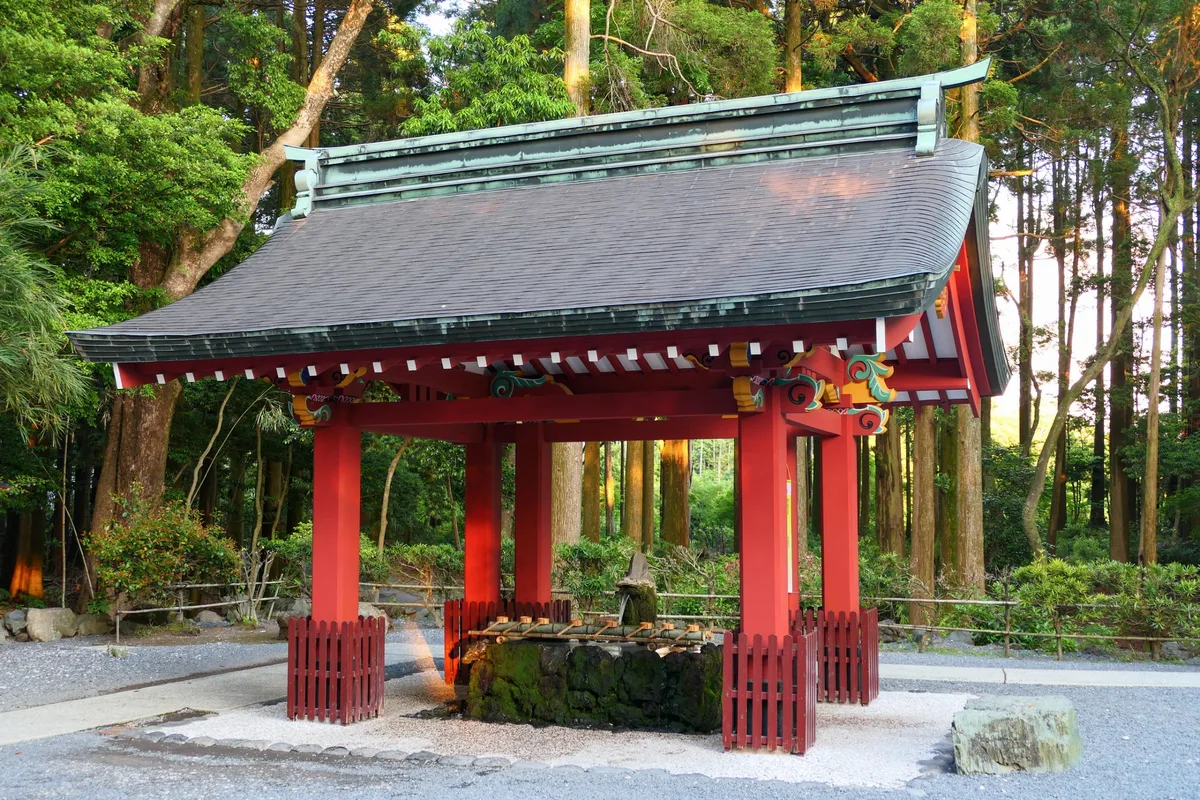
- At the chozuya (purification font), cleanse your left hand, then right hand, rinse your mouth, cleanse your left hand again, and then cleanse the dipper.
- Two bows, two claps, one bow.
- When photographing the decorations of the National Treasure shrine buildings, please be mindful of others.
- When touching the sacred tree, do so quietly and don't linger.
If you're unsure about basic shrine etiquette, please also refer to the Complete Guide to Basic Shrine Visits.
Frequently Asked Questions (FAQ)
Q1. When was it designated a National Treasure?
A. The Main Hall, Heiden, and Haiden were collectively designated National Treasures in February 2022. This was due to the high evaluation of the excellent preservation state and architectural value of the vermilion-lacquered shrine buildings, which were built in 1715.
Q2. What about hiking to Mount Takachiho?
A. There's a climbing trail from the former site of Kirishima Jingu, leading to a serious hike of about 3 hours to the summit (5-6 hours round trip). There may be entry restrictions due to volcanic gas or weather, so please check information with the Kirishima Mountain Nature Guide Club, etc., beforehand.
Q3. Can I trace Sakamoto Ryoma's footsteps?
A. Centered around Kirishima Onsenkyo, the "Ryoma and Oryo Honeymoon Road" is maintained, allowing you to visit sites like the remains of Shiohira Onsen, where they stayed. Walking maps are available at the tourist information center.
Q4. Where can I get a Goshuin (shrine stamp)?
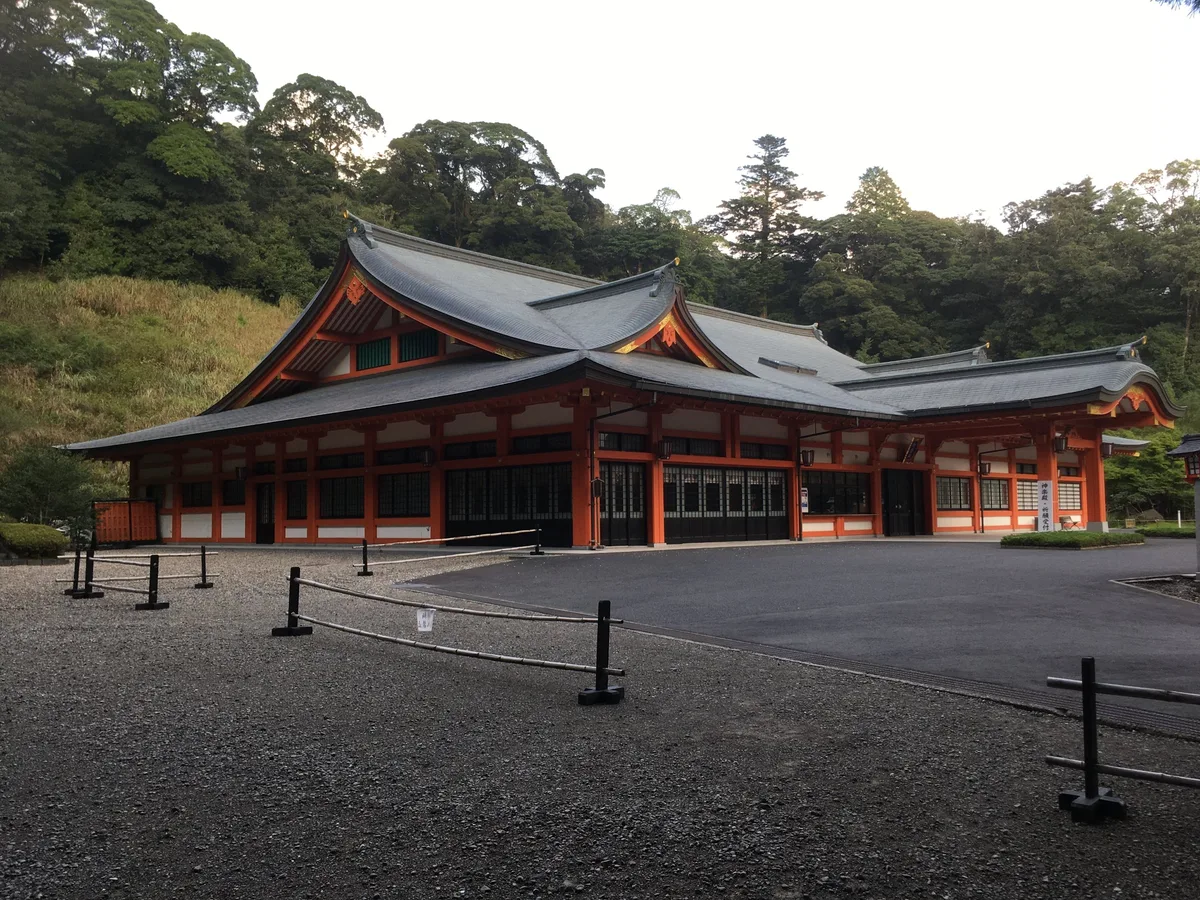
A. You can get one at the Juyosho (shrine office for offerings and charms) in front of the Haiden (Worship Hall). There are sometimes limited edition Goshuin commemorating the National Treasure designation, so please check when you visit.
Q5. What about the effects of eruptions and volcanic gas?
A. While the Kirishima Mountain Range is an active volcano, Kirishima Jingu itself is in a safe location. However, volcanic activity from Shinmoedake and Sakurajima can sometimes affect surrounding tourism, so please check the Japan Meteorological Agency's volcanic activity information.
Editor's Note
What strikes me most about Kirishima Jingu is the contrast between the vibrant vermilion of the shrine buildings and the imposing presence of the Kirishima Mountain Range behind them. On some days, when you turn back from the shrine's torii gate, you can faintly see Mount Takachiho in the distance, and you're enveloped in the feeling that "the mythical mountain and the shrine are indeed connected." It's a rare and sacred place that encompasses both the approachable anecdote of Sakamoto Ryoma's honeymoon visit and the profound roots of Japanese mythology in the Tenson Korin.
Related Articles You Might Enjoy
- Complete Guide to Basic Shrine Visits — Etiquette, Manners, and Visiting Techniques for Different Wishes
- Takachiho Gorge Pilgrimage Guide — A Place Connected to the Tenson Korin Myth
- Aso Shrine Pilgrimage Guide — A Representative Ancient Shrine of Kyushu
- Rose Quartz Meaning and Effects — A Charm for Love and Relationships
Summary
- Kirishima Jingu is an ancient shrine in Southern Kyushu that enshrines Ninigi-no-Mikoto, the protagonist of the Tenson Korin myth.
- Its National Treasure (2022) vermilion-lacquered shrine buildings are known as "Nikkō of the West."
- Directly connected to the mythical stage as a distant worship site for Mount Takachiho.
- A place associated with Sakamoto Ryoma and Oryo's honeymoon.
- A sacred site in Kagoshima that you'll want to visit in conjunction with Kirishima Onsen (hot springs).
When you're embarking on a new journey in life, or when you wish to form new connections, the vermilion shrine buildings of Kirishima Jingu and the energy of this mythical land are sure to strongly support your first step.
Tags
この記事をシェアする
この記事が役に立ったら、SNSでシェアしていただけるととても嬉しいです☀️

Thanks so much for reading! I hope this article brought a little sunshine to your day! See you again soon!
Plan Your VisitAd
This section contains affiliate links. See our disclosure.
Plan your trip
Please check the details before booking.
This section contains affiliate links.
You might also like
Omiwa Shrine Worship Guide
This comprehensive guide covers the history, divine blessings, Mount Miwa faith, key worship points, Sai Shrine, the Medicinal Well, sacred mountain ascent (Tohhai), recommended crystals, and surrounding attractions of Omiwa Shrine (1422 Miwa, Sakurai City, Nara Prefecture). It's an essential resource for visiting a sacred site that continues to preserve one of Japan's oldest forms of primitive worship.
Top Shrines for Love and Relationships
Discover a curated selection of famous shrines across Japan known for matchmaking and relationship success. This guide compares the enshrined deities, origins of their love blessings, highlights, and worship tips for major shrines like Izumo Taisha, Meiji Jingu, Enoshima Jinja, Aso Jinja, and Omiwa Jinja, all on one page. An essential resource for anyone wishing for good relationships, romantic success, or marital harmony.
Aso Shrine Visitor's Guide
A comprehensive guide to Aso Shrine (Aso City, Kumamoto Prefecture), covering its history, the deity Takeiwatatsu no Mikoto and the Aso Twelve Gods, its status as one of Japan's Three Great Romon Gates, its restoration after the 2016 Kumamoto Earthquake, the matchmaking Takasago Pine, access information, recommended crystals, nearby attractions, and a frequently asked questions section.

Enoshima Shrine Visit Guide
A comprehensive guide to Enoshima Shrine (Enoshima Island, Fujisawa City, Kanagawa Prefecture), covering its history, the Munakata Three Goddesses (Tagorihime-no-Mikoto, Ichikishimahime-no-Mikoto, Tagitsuhime-no-Mikoto), Hetsunomiya, Nakatsunomiya, Okutsunomiya, Japan's Three Great Benzaiten, key visiting points, access, recommended crystals, nearby attractions, and FAQs.