
Ise Grand Shrine Pilgrimage Guide
This article contains promotional content.
This comprehensive guide covers the history, blessings, official pilgrimage order (Geku to Naiku), nearby power spots, model itineraries, etiquette, and recommended crystals for Ise Grand Shrine, revered as 'Japan's Chief Guardian Deity.' It's an easy-to-understand, essential guide for first-time visitors.
Table of Contents (Tap to toggle)
Introduction
Ise Grand Shrine (Ise Jingu) in Ise City, Mie Prefecture, is hailed as "Japan's Chief Guardian Deity" and attracts over 8 million visitors annually, making it one of Japan's foremost spiritual power spots. Its official name is simply "Jingu," and it encompasses a total of 125 shrines and facilities. A unique tradition, the Shikinen Sengu, has continued for over 1,300 years, involving the complete reconstruction of all shrine buildings every 20 years. This article provides a comprehensive overview on a single page, covering its history, pilgrimage order, model itineraries, surrounding spots, recommended crystals for your visit, and frequently asked questions.
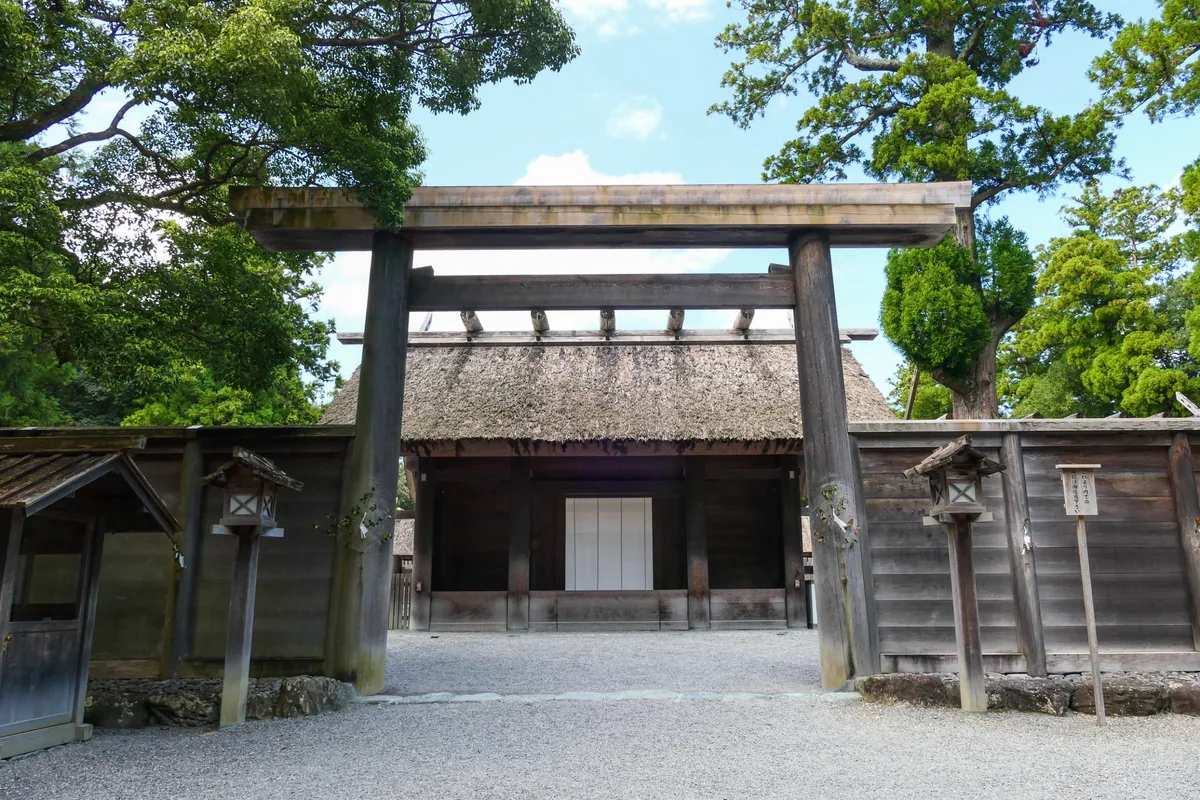
Table of Contents
- Basic Information and Shrine Data
- History and Origins of Ise Grand Shrine
- Blessings and Benefits
- Official Pilgrimage Order: Geku to Naiku
- Basic Pilgrimage Etiquette
- Nearby Power Spots
- Model Itinerary
- Recommended Crystals
- Frequently Asked Questions (FAQ)
- Editor's Notes
- Related Articles You Might Also Like
Basic Information and Shrine Data
| Item | Content |
|---|---|
| Official Name | Jingu (じんぐう) |
| Common Names | Ise Grand Shrine, O-Ise-san |
| Location | Ise City, Mie Prefecture |
| Main Deity Enshrined (Naiku) | Amaterasu Omikami (天照大御神) |
| Main Deity Enshrined (Geku) | Toyouke Omikami (豊受大御神) |
| Founding | Naiku: Approx. 2,000 years ago / Geku: Approx. 1,500 years ago |
| Shikinen Sengu | Once every 20 years (last in 2013, next in 2033) |
| Shrine Rank | A special, transcendent existence beyond typical shrine ranks |
| Official Website | https://www.isejingu.or.jp |
History and Origins of Ise Grand Shrine
According to the "Nihon Shoki" (The Chronicles of Japan), approximately 2,000 years ago during the reign of Emperor Suinin, Imperial Princess Yamatohime-no-mikoto journeyed throughout the land seeking a suitable place to enshrine Amaterasu Omikami. Her search led her to the banks of the Isuzu River, which became the origin of Naiku. Geku was established about 500 years later, during Emperor Yuryaku's reign, when Toyouke Omikami, the deity of food and provisions, was invited from Tanba Province and enshrined there.
The Shikinen Sengu, established by Emperor Tenmu, is a magnificent ritual held every 20 years, involving the complete rebuilding of all shrine structures and the renewal of sacred treasures. This unparalleled ceremony symbolizes the passing down of traditional techniques and the eternal youth of the deities. During the Edo period, "O-Ise Mairi" (pilgrimage to Ise) became a cherished aspiration for common people, with records showing millions of pilgrims visiting annually.
Source: Official Jingu Administration materials, "Nihon Shoki," various folklore sources.
Blessings and Benefits
- National prosperity and family well-being
- Good fortune and warding off evil
- Abundant harvests and industrial prosperity (especially Geku)
- A "reset" to support life's milestones
Traditionally, Ise Grand Shrine is said to be less a place for making wishes and more a place for expressing daily gratitude. It's positioned as a sacred site primarily for offering thanks for the gift of life itself, rather than for seeking personal desires.
Official Pilgrimage Order: Geku to Naiku
Following the tradition of "Geku Sentsai" (visiting Geku first), you should visit Geku, and then Naiku.
Geku (Toyouke Daijingu)
- Deity of clothing, food, housing, and industry
- Easily accessible, about a 5-minute walk from Ise-shi Station
- The order is Omotesando (main approach) → Kaguraden (hall for sacred music and dance) → Goshogu (main sanctuary) → Betsugu (auxiliary shrines, such as Taganomiya)
Naiku (Kotaijingu)
- The central shrine dedicated to Amaterasu Omikami
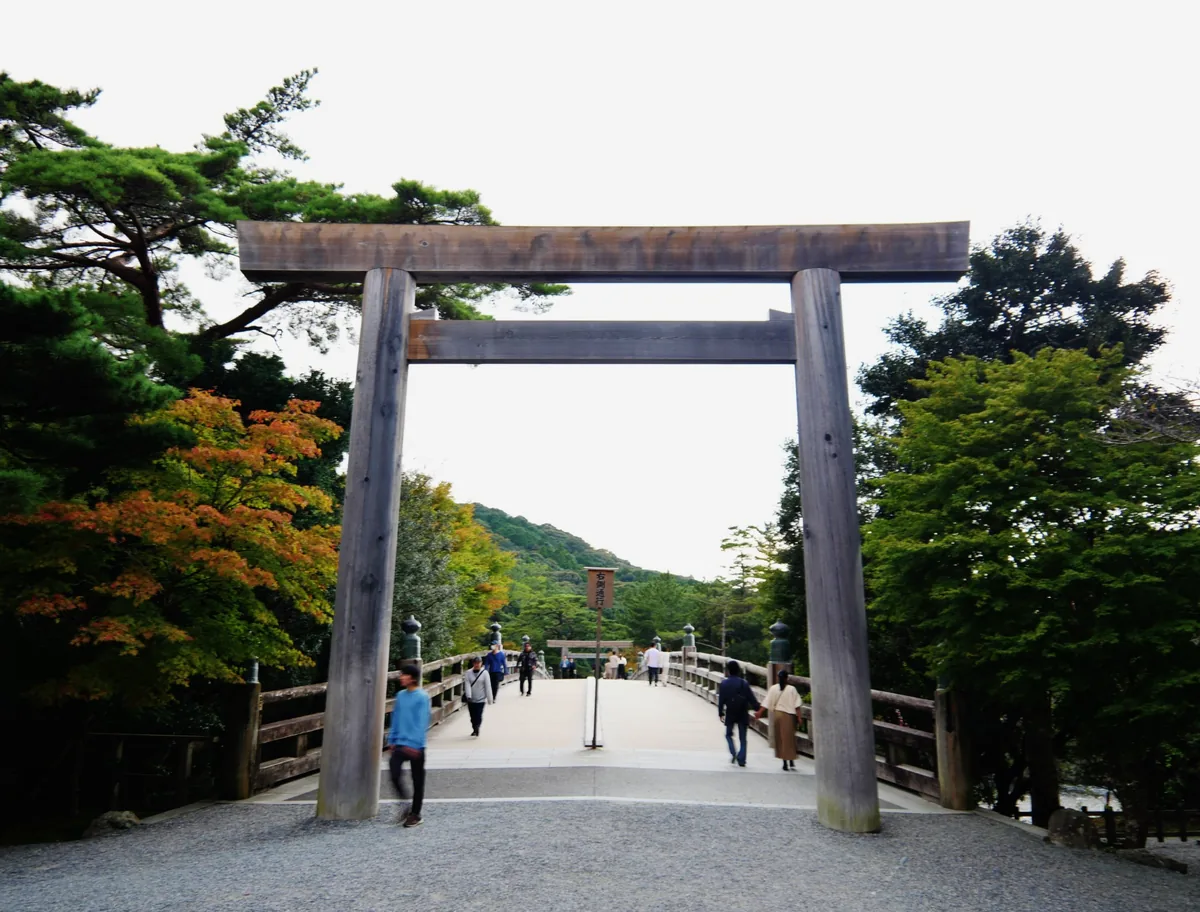
- Crossing Ujibashi Bridge marks the transition from daily life to the sacred realm
- The tradition of purifying one's mind and body at the Mitarashiba of the Isuzu River
- The approach path is right-hand traffic (Geku is left-hand traffic)
Basic Pilgrimage Etiquette
- Bow once before passing through the torii gate.
- Do not walk in the center of the path (it's reserved for the deities).
- At the chozuya (purification font), purify your left hand, then right hand, rinse your mouth, wash your left hand again, and then cleanse the dipper.
- Two bows, two claps, one bow (common to both shrines).
- Keep personal wishes modest, focusing primarily on gratitude.
Nearby Power Spots
Sarutahiko Shrine
About a 15-minute walk from Naiku. Many people visit this shrine, dedicated to "Michihiraki no Kami" (Deity of Guiding Paths), when they are uncertain about their direction in life or career.
Futami Okitama Shrine (Meoto Iwa)
Famous for the Meoto Iwa (Wedded Rocks) floating in Ise Bay. Traditionally, it was a place for "misogi" (ritual purification) before the Ise pilgrimage. Originally, one was supposed to visit here before going to Ise Grand Shrine.
Tsukiyomi-no-miya and Yamatohime-no-miya
Auxiliary shrines of Naiku, these tranquil sanctuaries enshrine Tsukuyomi-no-mikoto, who appears in mythology, and Yamatohime-no-mikoto, who established Ise Grand Shrine.
Okage Yokocho and Oharai-machi
An essential area to enjoy after your visit. Tea and mochi at Akafuku Honten after worship are a classic Ise experience.
Model Itinerary (Half-Day Plan)
| Time | Activity |
|---|---|
| 9:00 | Misogi (purification) at Futami Okitama Shrine |
| 10:30 | Visit Geku |
| 12:00 | Lunch at Oharai-machi |
| 13:30 | Visit Naiku |
| 15:30 | Sarutahiko Shrine |
| 16:00 | Depart |
Recommended Crystals
The sacred grounds of Ise Grand Shrine are filled with the pure energy of Amaterasu, the Sun Goddess. Here are some stones believed to resonate well with this energy.
| Stone | Reason for Compatibility |
|---|---|
| Clear Quartz | Light and purification, resonates with the Sun Goddess |
| Citrine | Connects to golden solar energy |
| Tiger's Eye | An amulet for decisive path-finding |
| Rose Quartz | Resonates with Yamatohime-no-mikoto's gentle compassion and love |
Frequently Asked Questions (FAQ)
Q1. Is it okay to visit only Geku or Naiku, not both?
A. While "Ryogu Sanpai" (visiting both shrines) is the traditional custom, if time is limited, visiting one is perfectly fine. However, local custom, following "Geku Sentsai" (Geku first), suggests visiting Geku first if you can only choose one.
Q2. Is early morning pilgrimage truly recommended?
A. Yes, absolutely! Early mornings between 5 and 7 AM have fewer visitors, allowing you to experience the purest atmosphere of the Isuzu River. The birdsong in the sacred forest at this time is also truly exceptional.
Q3. Is photography allowed?
A. Photography is prohibited from the stone steps of the Goshogu (main sanctuary) upwards. It's allowed up to the front of the torii gate. The shrine's forest, Ujibashi Bridge, and the Isuzu River are permissible for photography.
Q4. Are there any dress code requirements?
A. There are no strict rules, but as it's a sacred place, it's customary to avoid overly revealing attire. If you wish to participate in the Mikakiuchi Sanpai (special inner sanctuary visit), men should wear suits, and women should wear jackets and non-revealing clothing.
Q5. Are omamori (charms) and goshuin (red seal stamps) available at both shrines?
A. Yes. Both Geku and Naiku offer goshuin and omamori. Visiting both and collecting both goshuin is a common tradition for an Ise pilgrimage.
Editor's Notes
For me, as the writer, Ise Grand Shrine is a "shrine where you don't make wishes." It's not a place to bring your desires, but rather a place to say, "I've made it this far safely, thank you." No matter how many times I visit, that feeling of tension releasing the moment I cross Ujibashi Bridge is unique to Ise. I feel it's a place best suited for visiting empty-handed during life's milestones or as an annual reset, forming a special kind of relationship with it.
Editor's Team Perspective: Clarifying the "Correct Order" Debate for Ise Pilgrimage
Regarding the pilgrimage order for Ise Grand Shrine, there are various opinions online, such as "You absolutely must follow Geku → Naiku" and "Nowadays, it's not a big concern." Here's the Editor's Team's breakdown:
| Faction | Stance | Editor's Team View |
|---|---|---|
| Strict Faction | The Geku → Naiku order, and misogi (purification) at Futami Okitama Shrine are essential. | The orthodox way, in line with Jingu Shicho's tradition. Recommended for first-time visitors. |
| Simplified Faction | Visiting only Naiku is acceptable. | Permissible if time is limited. However, Ise is truly complete with both shrines. |
| Reverse Order Faction | Some say Naiku → Geku is fine. | Officially, "Geku Sentsai" is the principle. Reversing the order is considered "contrary to tradition." |
| Futami Okitama Shrine Essential Faction | Ise pilgrimage without misogi is incomplete. | Desirable if possible, but not essential. It's okay to omit it if time is a priority. |
Conclusion: The orthodox route is Futami → Geku → Naiku. If time is short, Geku → Naiku is good. At a minimum, Naiku alone is acceptable. Realistically, it's better to prioritize your own time and feelings for the day over strict adherence to "correctness."
Ise Grand Shrine is especially recommended for these people:
- Those at life's turning points (e.g., Kanreki - 60th birthday, unlucky years, marriage, retirement, major transitions).
- Those who feel comfortable with an attitude of "gratitude" rather than "wishing" during their visit.
- Those who can visit early in the morning, between 5 and 7 AM (Ise during these hours is exceptional).
- Those who wish to build a relationship of repeated visits, rather than a one-time pilgrimage.
Conversely, if you visit seeking "immediate benefits," the atmosphere of Ise Grand Shrine might feel anticlimactic. As mentioned at the beginning of this article, Ise is very much a "shrine where you don't make wishes," so those who can resonate with that culture will find it to be a deeply satisfying sacred place.
Common Misconceptions
- ❌ "You must not make personal wishes." → ✅ It's not forbidden. However, the ancient tradition is "gratitude first, and wishes second."
- ❌ "Goshuin are only needed from Naiku." → ✅ Both shrines issue goshuin. Collecting both is a standard part of an Ise pilgrimage.
- ❌ "The Shikinen Sengu year brings the most blessings." → ✅ The Sengu year is crowded, but blessings do not increase or decrease. The essence of Ise is that "it welcomes you consistently, at any time."
A word from Sun-chan ☀️
I want you to try going to Ise Grand Shrine to "forget" your wishes.
Usually, our hearts are full of "I want this" and "I hope this comes true," right? But as you walk through the forests of Ise, you'll mysteriously find that a feeling of "Ah, I've lived well so far, thank you" grows stronger 💛
And that's perfectly fine. Ise is a place to "reset your wishes." Until your future self comes back next year with new desires – for now, leave your gratitude here 🌼
Related Articles You Might Also Like
- Izumo Grand Shrine Pilgrimage Guide — One of the two great sacred sites alongside the "Home of Mythology"
- Meaning and Effects of Clear Quartz — As an amulet for visiting sacred grounds
- Meaning and Effects of Citrine — A stone for financial luck that resonates with the Sun Goddess
- Meaning and Effects of Rose Quartz — An amulet of compassion and love
- Comprehensive Guide to Crystals by Purpose — Featured in the chapter on good fortune and warding off evil
Summary
- Ise Grand Shrine is "Japan's Chief Guardian Deity," and a top-tier sacred site visited by 8 million people annually.
- The ancient pilgrimage order follows "Geku Sentsai" (Geku first): Geku → Naiku.
- The Shikinen Sengu (periodic reconstruction) occurs every 20 years; the next one is in 2033.
- Traditionally, it is said to be "a place for gratitude and not for making wishes."
- Visiting early in the morning, between 5 and 7 AM, offers a uniquely clear and special atmosphere.
When you're at a turning point in life or ready to take a new step, the crisp, pure air of Ise's forests will gently encourage you forward.
Tags
この記事をシェアする
この記事が役に立ったら、SNSでシェアしていただけるととても嬉しいです☀️

Thanks so much for reading! I hope this article brought a little sunshine to your day! See you again soon!
Plan Your VisitAd
This section contains affiliate links. See our disclosure.
Plan your trip
Please check the details before booking.
This section contains affiliate links.
You might also like
Omiwa Shrine Worship Guide
This comprehensive guide covers the history, divine blessings, Mount Miwa faith, key worship points, Sai Shrine, the Medicinal Well, sacred mountain ascent (Tohhai), recommended crystals, and surrounding attractions of Omiwa Shrine (1422 Miwa, Sakurai City, Nara Prefecture). It's an essential resource for visiting a sacred site that continues to preserve one of Japan's oldest forms of primitive worship.
Kansai Power Spot Shrines Guide
Discover the best power spot shrines in Kansai and Kinki regions. This guide compares seven prominent shrines: Ise Grand Shrine (Mie), Kasuga Taisha, Omiwa Shrine, Tamaki Shrine (Nara), Kurama-dera (Kyoto), Kumano Hongu Taisha (Wakayama), and Enryaku-ji on Mount Hiei (Shiga), detailing their enshrined deities, benefits, highlights, and access.
Kanto's Power Spot Shrines
Discover carefully selected power spot shrines in the Kanto region. This guide compares the enshrined deities, benefits, highlights, access, and visiting tips for major shrines like Meiji Jingu (Tokyo), Enoshima Shrine (Kanagawa), and Mitsumine Shrine (Saitama) all on one page. Your essential guide for day trips and weekend tours of Kanto's renowned shrines.

Top Shrines for Love and Relationships
Discover a curated selection of famous shrines across Japan known for matchmaking and relationship success. This guide compares the enshrined deities, origins of their love blessings, highlights, and worship tips for major shrines like Izumo Taisha, Meiji Jingu, Enoshima Jinja, Aso Jinja, and Omiwa Jinja, all on one page. An essential resource for anyone wishing for good relationships, romantic success, or marital harmony.