
Izanagi Shrine Guide (Awaji Island): Married Couples' Camphor Tree, Creation Myth, Route & Timing
A visitor's guide to Izanagi Jingu on Awaji Island, Hyogo: the creation-myth story, the Married Couples' Camphor Tree known for marriage and relationships, a simple route, how long to allow, shrine office hours and access.
Table of Contents (Tap to toggle)
Introduction
Izanagi Jingu on Awaji Island, Hyogo, is the shrine linked to Japan's creation myth. According to the Kojiki and Nihon Shoki, the god Izanagi, after finishing the creation of the islands, spent his remaining days at Taga on Awaji, the first island he created. The shrine is said to have begun at the site of that retreat, and it is the only shrine in Hyogo with the title "Jingu."
Three things worth knowing before you go:
- Visiting is free and the grounds are open freely. The amulet office is reported to be open about 9:00-17:00.
- The "Married Couples' Camphor Tree" is known as a place to pray for a happy marriage, good relationships and safe childbirth. It feels easy to stand quietly there, whether you come with a partner or alone.
- It is a day trip from Kobe and Sannomiya, so it combines well with a drive or sightseeing around Awaji Island.
Basic information
| Item | Details |
|---|---|
| Name | Izanagi Jingu (Izanagi Shrine) |
| Address | 740 Taga, Awaji City, Hyogo |
| Deities | Izanagi no Okami and Izanami no Okami |
| Grounds | Open year-round (free) |
| Amulet office | Reported 9:00-17:00 |
| Parking | Available (check the official site for details) |
| Rank | Ichinomiya (chief shrine) of Awaji Province |
Hours and arrangements can change, so please check the official website before you go.
The creation myth and history
The Kojiki and Nihon Shoki record that Izanagi and Izanami created Awaji and the other islands. After completing this work, Izanagi is said to have handed rule to Amaterasu and built a "kakurinomiya" (retreat) at Taga on Awaji to live out his days.
A mausoleum was built on the site of that dwelling, and the shrine is said to have grown from there. The current main hall was moved to the mausoleum mound in the Meiji era; before that the area was a sacred, off-limits place. It is often called "Japan's oldest shrine" and is part of the Japan Heritage story "Awaji, the Island of Creation."
What visitors hope to gain (traditionally said)
These are commonly told associations, not guaranteed effects.
- Marriage and relationships: with two deities enshrined and the Married Couples' Camphor Tree on the grounds, couples and people hoping for new connections visit.
- Safe childbirth and children: the tree is also known among those praying for these.
- Reporting a new start to the god of beginnings: some people visit at turning points such as a new life stage.
- Feeling ancient Japan on foot: the "Sun Path Marker" connects the sun's movement with famous shrines.
From the approach to the main hall
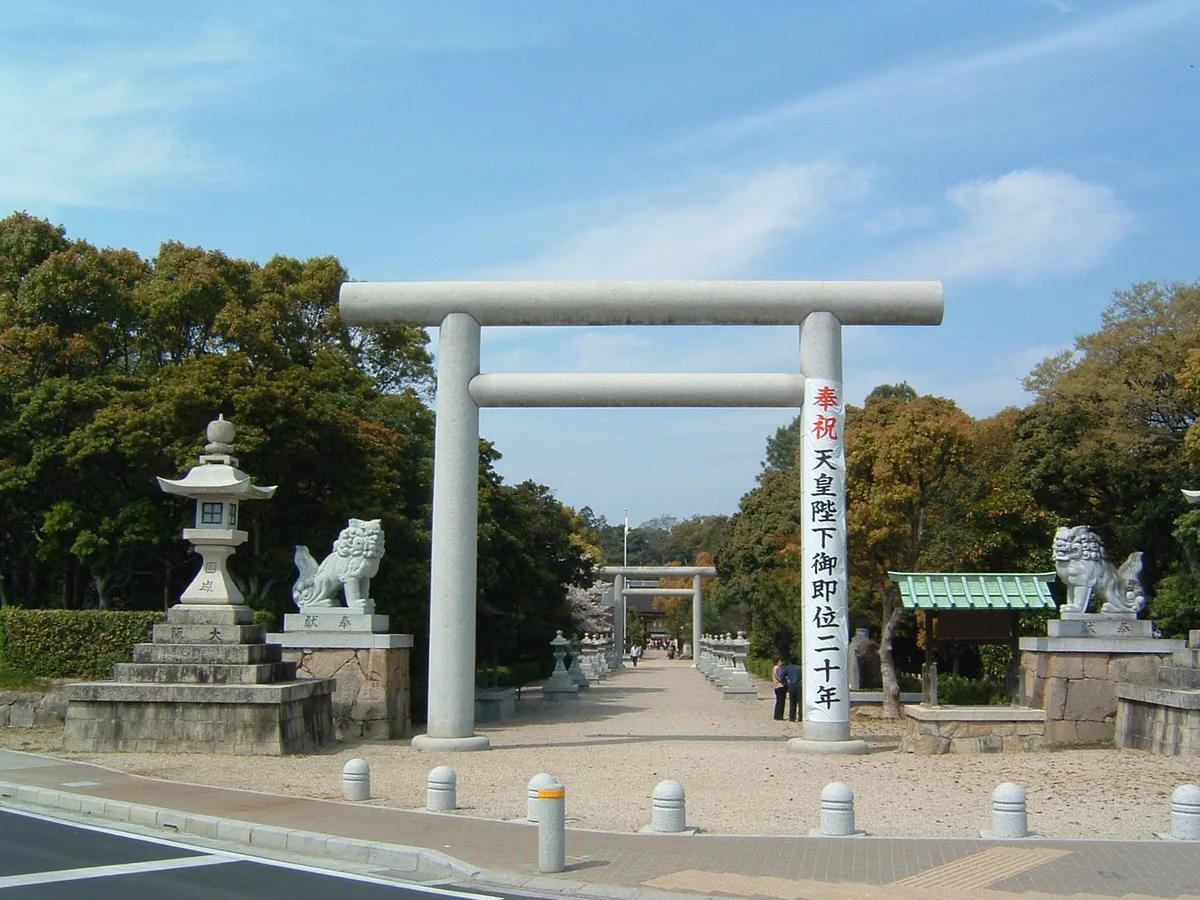
A white torii by the road marks the entrance.
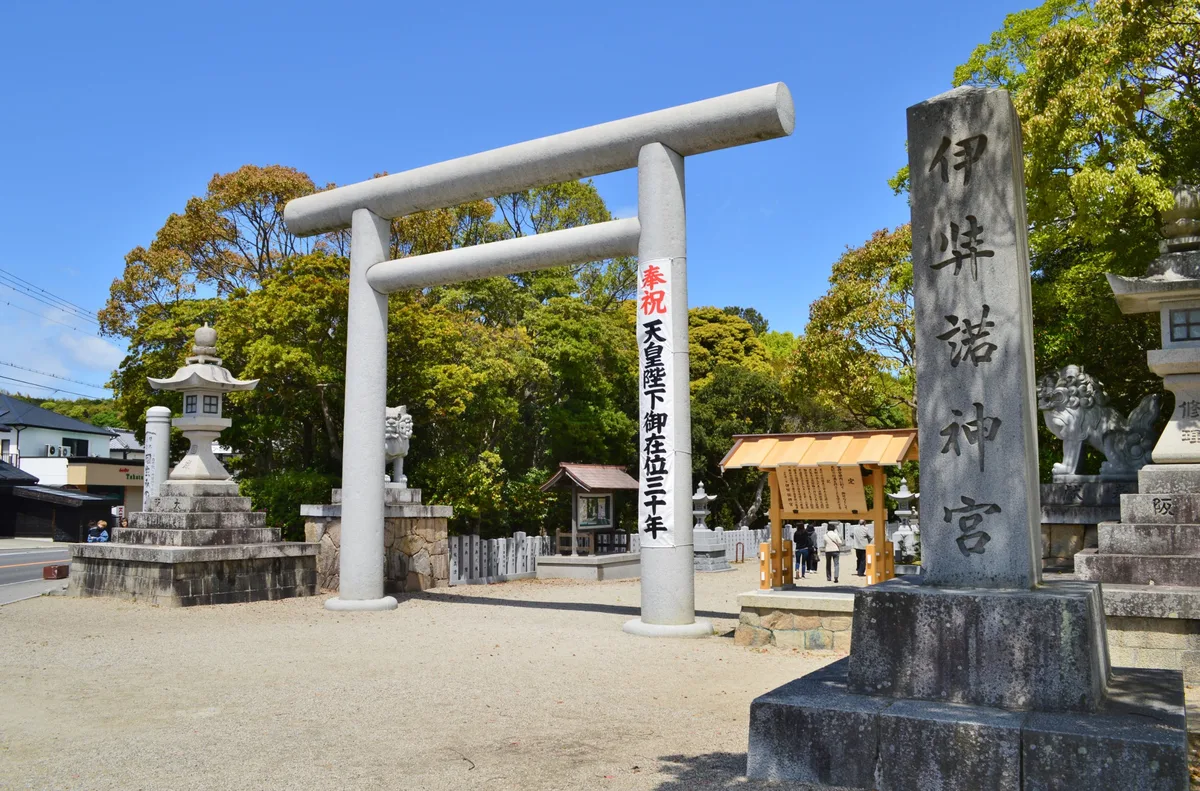
Inside, the large torii with the shrine's name stone marks the start of the grounds. A bow here helps settle the mind.
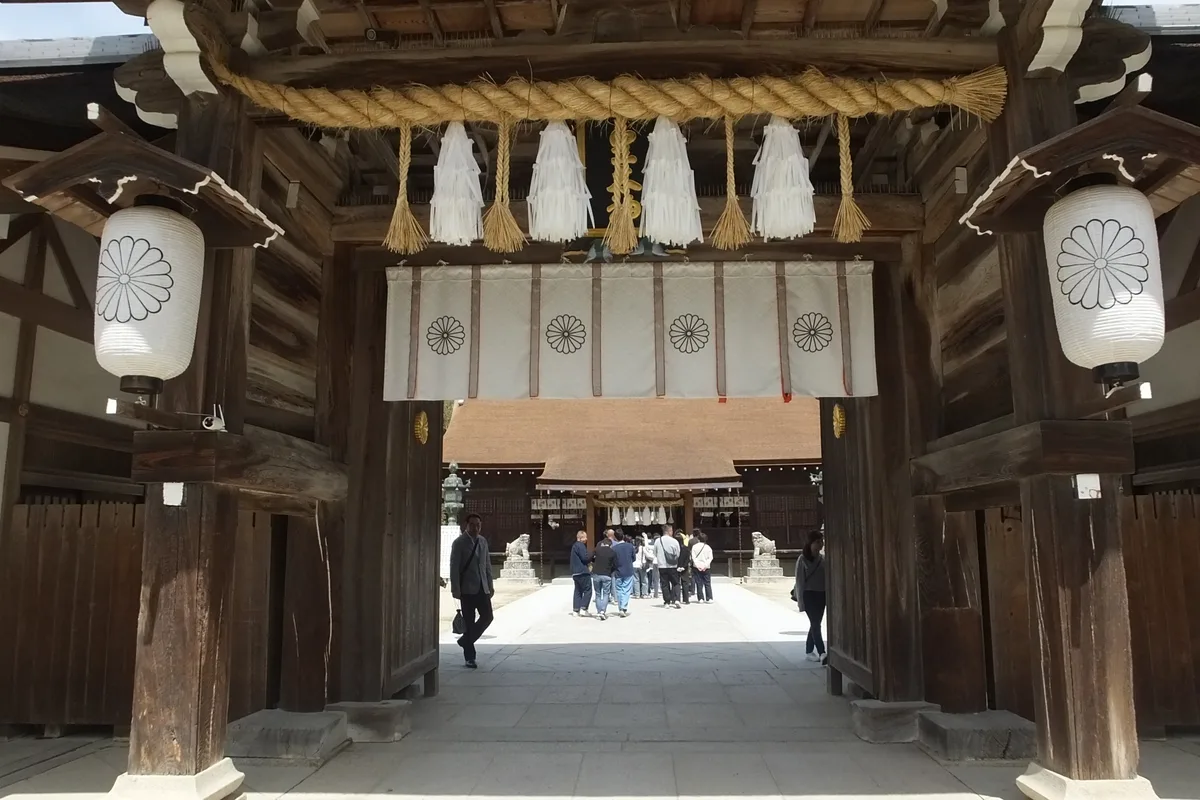
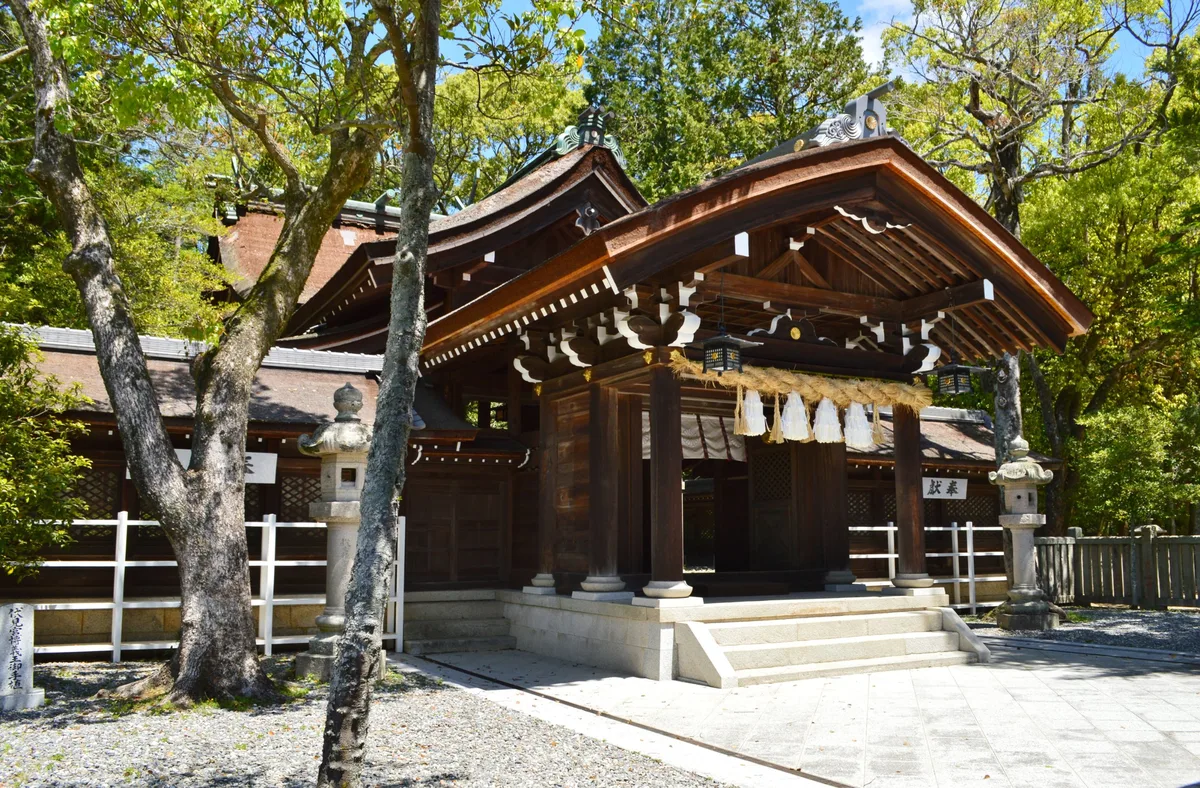
Beyond it stands the front gate, hung with a thick sacred rope and lanterns.
Past the gate, a wide gravel approach leads straight to the worship hall.
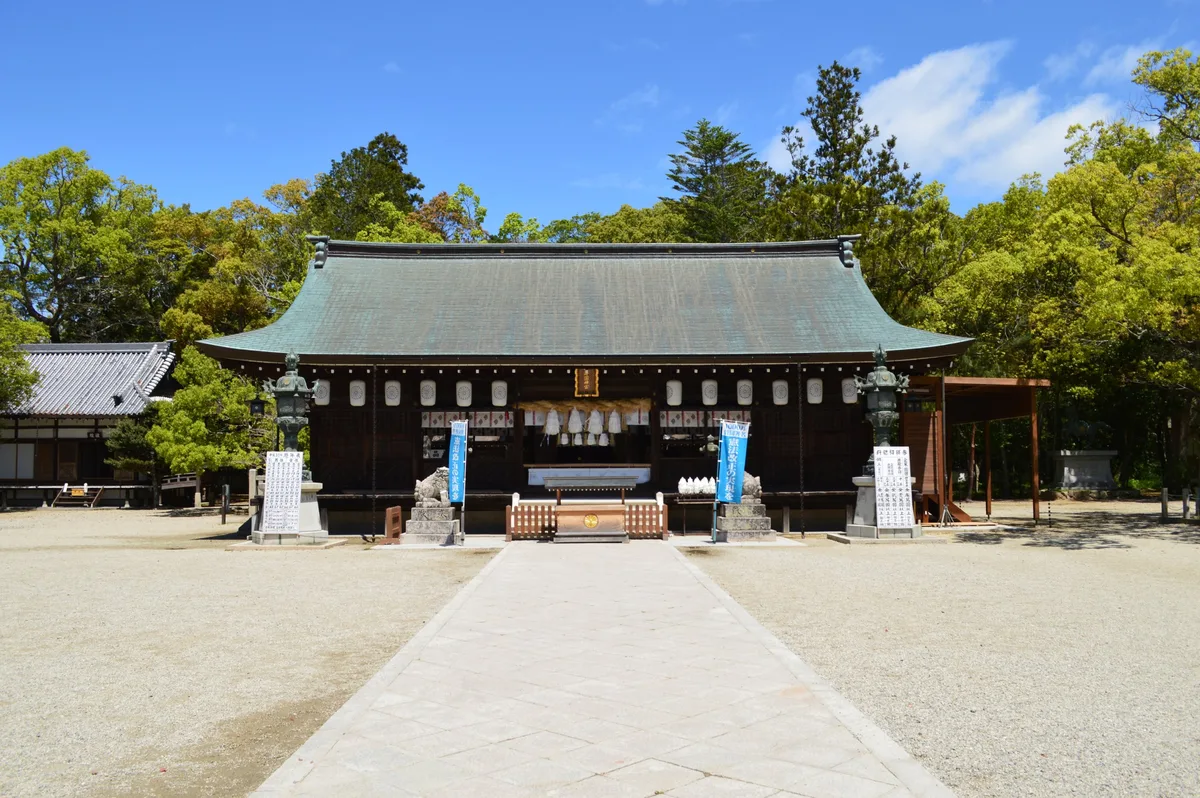
Behind it, the main hall stands on the mausoleum area.
The Married Couples' Camphor Tree and the Sun Path Marker
Do not miss the Married Couples' Camphor Tree. It is said to be about 900 years old and is a Hyogo Prefecture natural monument. Two trees are said to have grown into one, and it was recorded in Edo-period gazetteers as an entwined camphor. It is regarded as a sacred tree housing Izanagi and Izanami, and the small Iwakusu Shrine beside it enshrines their child Hiruko.
The other highlight is the Sun Path Marker, a circular monument showing how the sun's movement relates to famous shrines: Ise's Inner Shrine due east, Watatsumi Shrine on Tsushima due west, and others toward the solstice sunrise and sunset directions.
Suggested route and timing
Times are rough estimates.
- Walk the approach and large torii (about 10 min)
- Front gate and worship hall (about 10 min)
- Camphor tree and Iwakusu Shrine (about 10 min)
- Sun Path Marker and the amulet office (about 10-15 min)
Allow about 40 minutes to 1 hour in total. Morning is a good time, especially if you combine it with Awaji sightseeing.
Tips
- Go early in the morning for a quieter visit.
- The amulet office closes at 17:00. Aim to arrive before 16:00 for goshuin or amulets.
- Wear comfortable shoes; the grounds are gravel.
- Buses are infrequent; check the return time in advance.
- January 15: a rice-gruel divination festival is known; check the official site for the latest schedule.
Access
- Train and bus: from JR Maiko or Sannomiya, take an express bus onto Awaji, then an Awaji Kotsu bus (Nishiura line) to "Izanagi Jingu-mae" and walk a short distance. Direct express buses from Sannomiya and Maiko are also reported; check the operators for times.
- By car: parking is available, and it is handy for touring the island.
Crystals people choose for a visit
Offered as a gentle accompaniment, with no guaranteed effect.
| Stone | Why it is chosen |
|---|---|
| Rose quartz | Often chosen for wishes about love and harmony |
| Moonstone | Chosen for calm meetings and emotional steadiness |
| Rhodonite | Chosen by those who value human bonds |
Basic etiquette
- Bow before passing through the torii.
- Walk near the edge of the approach, as the center is said to be for the gods.
- Purify your hands and mouth at the water pavilion.
- Bow twice, clap twice, bow once.
- At the camphor tree, do not damage it or step into its roots; pray quietly.
For basics, see the Shrine Visit Basics guide.
FAQ
How long should I allow? About 40 minutes to 1 hour for the shrine, camphor tree and Sun Path Marker.
Is there an admission fee? The grounds are reported to be free to enter.
Can I visit alone? Of course. Many come to report a new start, not only for relationships.
Can I combine it with other Awaji sights? Yes; it is part of the Japan Heritage story "Awaji, the Island of Creation."
Related articles
- Shrine Visit Basics
- Amano Iwato Shrine Guide - the next story after the creation of Japan
- Ise Jingu Guide
Tags
この記事をシェアする
この記事が役に立ったら、SNSでシェアしていただけるととても嬉しいです☀️

Thanks so much for reading! I hope this article brought a little sunshine to your day! See you again soon!
You might also like
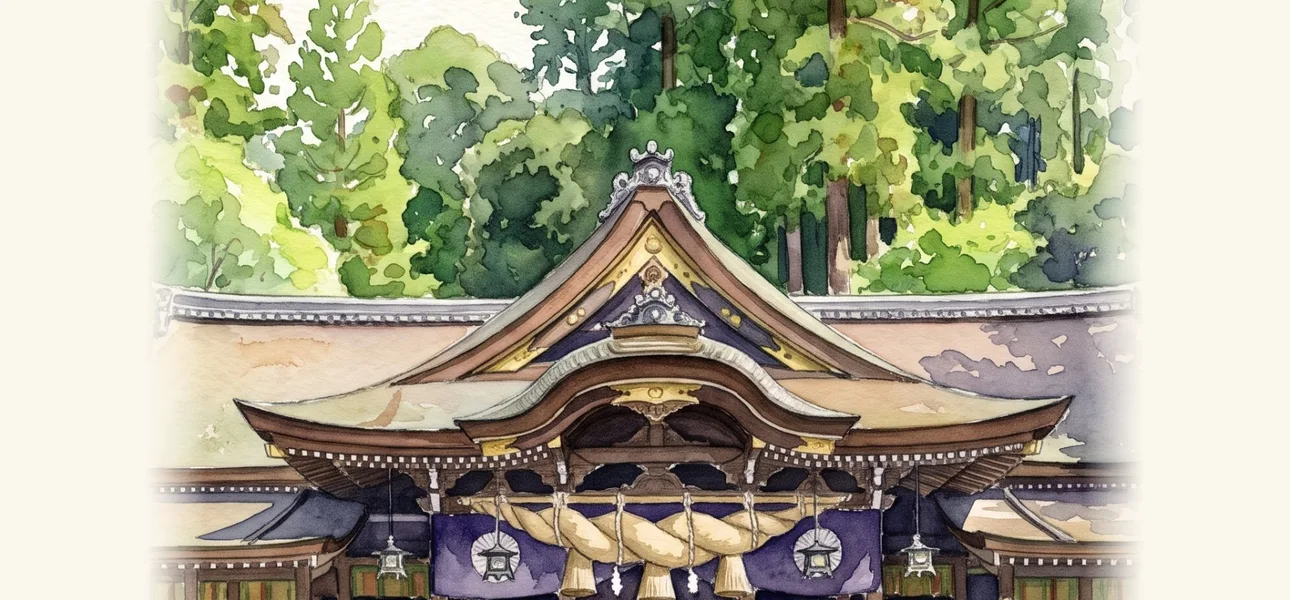
Omiwa Shrine Worship Guide
This comprehensive guide covers the history, divine blessings, Mount Miwa faith, key worship points, Sai Shrine, the Medicinal Well, sacred mountain ascent (Tohhai), recommended crystals, and surrounding attractions of Omiwa Shrine (1422 Miwa, Sakurai City, Nara Prefecture). It's an essential resource for visiting a sacred site that continues to preserve one of Japan's oldest forms of primitive worship.
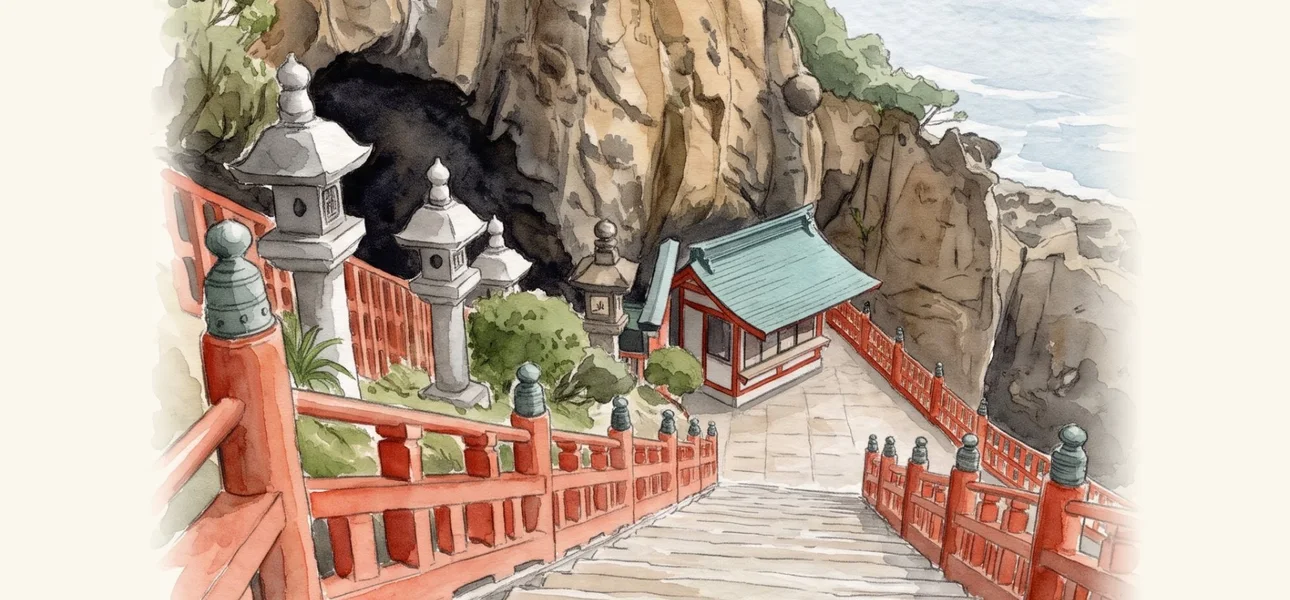
Udo Shrine Guide (Miyazaki): The Cave Shrine, Luck-Ball Throwing, Love & Safe Childbirth, Route & Timing
A visitor's guide to Udo Jingu in Nichinan, Miyazaki: a route through the gate, tower gate, Tama Bridge and the cave main hall, how luck-ball throwing works, why it is known for relationships and safe childbirth, how long to allow, parking and access.

Ise Grand Shrine Pilgrimage Guide
This comprehensive guide covers the history, blessings, official pilgrimage order (Geku to Naiku), nearby power spots, model itineraries, etiquette, and recommended crystals for Ise Grand Shrine, revered as 'Japan's Chief Guardian Deity.' It's an easy-to-understand, essential guide for first-time visitors.
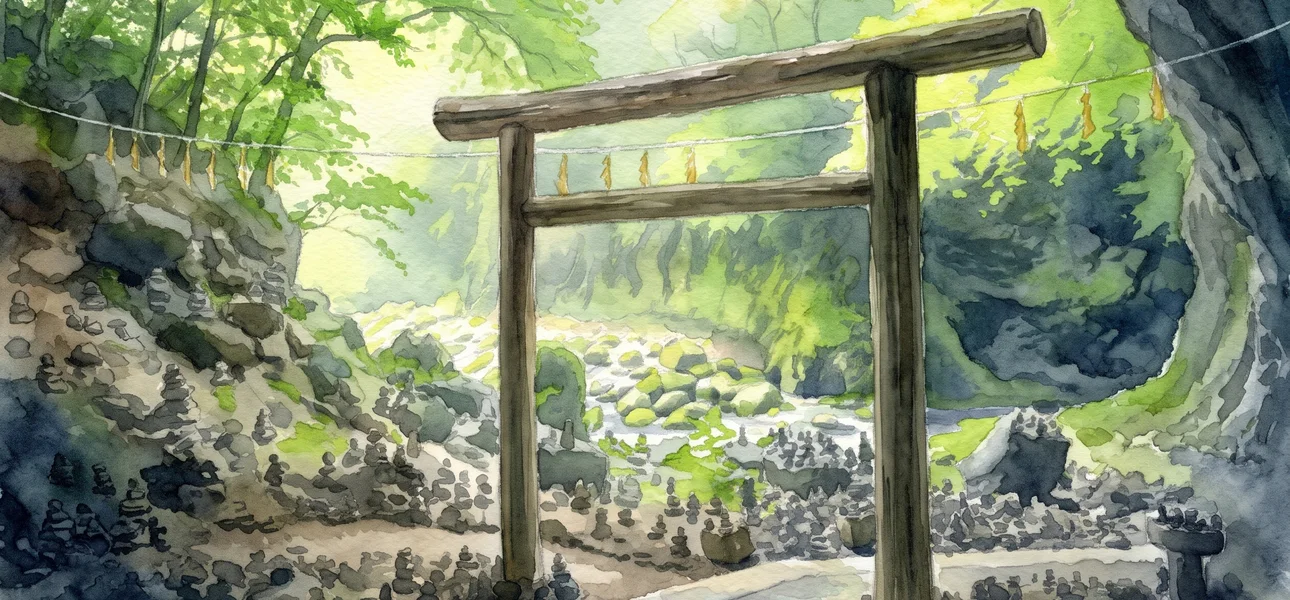
Amano Iwato Shrine Guide: West Shrine, East Shrine & Amanoyasukawara (Route and Timing)
A visitor's guide to Amano Iwato Shrine in Takachiho, Miyazaki: a route through the West Shrine, East Shrine and Amanoyasukawara, the timed viewing of the sacred cave, how long to allow, parking, goshuin, stone-stacking etiquette and the best seasons.