
Hakuto Shrine Guide: The White Rabbit of Inaba, Matchmaking Luck & Musubi Stone (Tottori)
A visitor's guide to Hakuto Shrine in Tottori, the setting of the Hare of Inaba myth: the approach, the Mitarashi pond, the musubi stone, a 40-60 minute route, parking and access.
Table of Contents (Tap to toggle)
Introduction
Hakuto Shrine in Tottori City is known as the setting of the myth of the Hare of Inaba (the White Rabbit). It enshrines the rabbit from the Kojiki and is loved as a shrine for good connections, because the rabbit is said to have helped bring Okuninushi and Princess Yakami together. It is also certified as a "Sanctuary of Lovers".
Three things worth knowing before you go:
- The grounds are free to enter, and the shrine office is said to be open about 9:00-16:00.
- It is a rabbit-spotting walk. Lanterns, charms and ema plaques all feature rabbits.
- White Rabbit Coast is right in front, with the roadside station "Shinwa no Sato Shirousagi" next door, so shrine, sea view and a meal fit into one stop.
Basic Information
| Item | Details |
|---|---|
| Name | Hakuto Shrine (Hakuto-jinja) |
| Address | 603 Hakuto, Tottori City, Tottori |
| Deity | The White Rabbit (Hakuto-shin) |
| Grounds | Open, free entry |
| Shrine office | About 9:00-16:00 |
| Parking | Shared free lot with the roadside station, reportedly |
| Phone | 0857-59-0047 |
Hours may change; please check the official site or call before visiting.
The Myth of the Hare of Inaba
In the Kojiki, a white rabbit on the Oki islands tricks crocodiles (sometimes read as sharks) into lining up so it can cross to the mainland, and is skinned as punishment. Misled by passing gods, it suffers more, until Okuninushi arrives last and teaches it the proper remedy.
The rabbit later helped Okuninushi win Princess Yakami, which is why the shrine has been revered for matchmaking. Where the myth's island lies today is uncertain; the Oki theory is one of several.
What You May Take Away (Traditional Benefits)
These are traditional beliefs, not guarantees.
- Good connections and romance, tied to the Okuninushi and Yakami story.
- A reminder of kindness: the tale of a hurt rabbit being helped.
- Walking a mythical setting, with shrine and coast in one visit.
- Charming rabbit-themed charms and ema.
From the Approach to the Main Hall
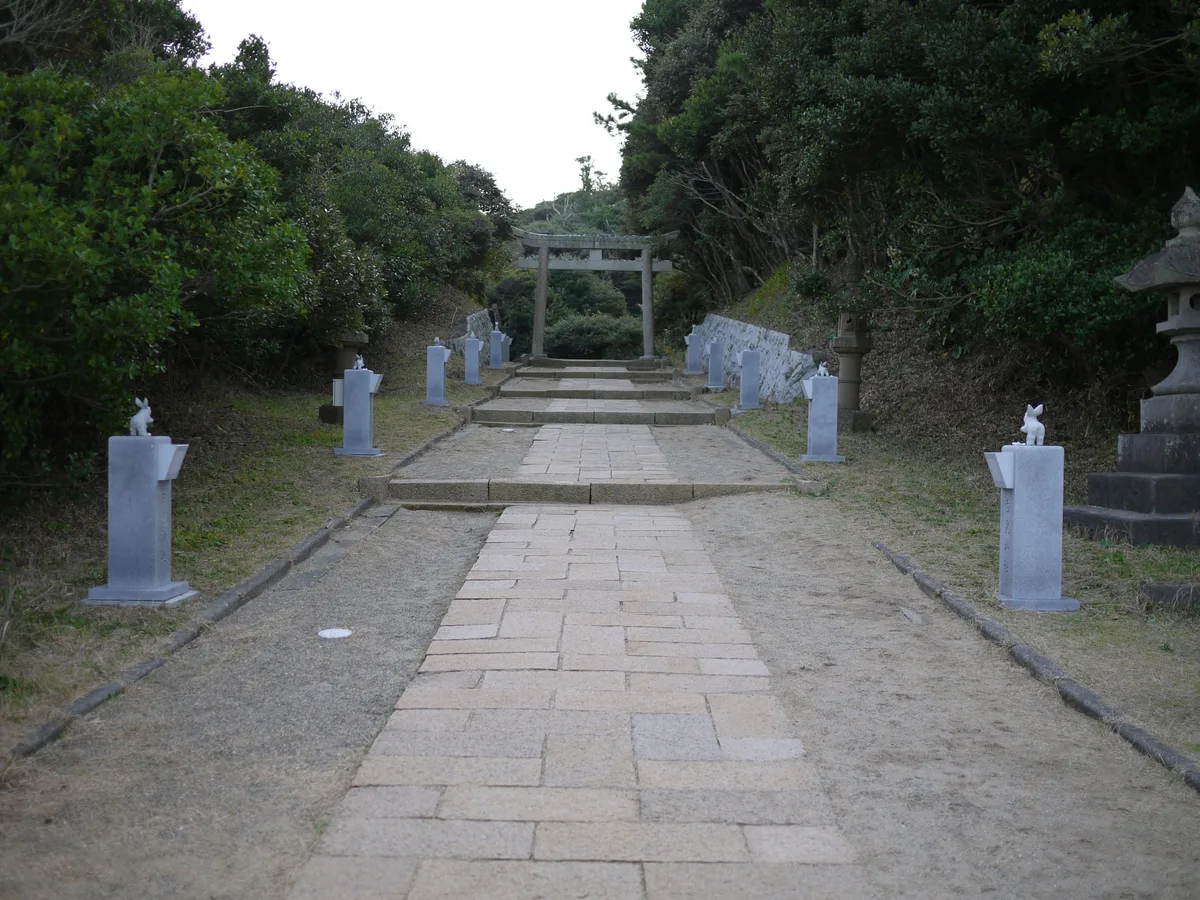
A straight stone-paved path runs between stone lanterns, each topped with a small white rabbit.
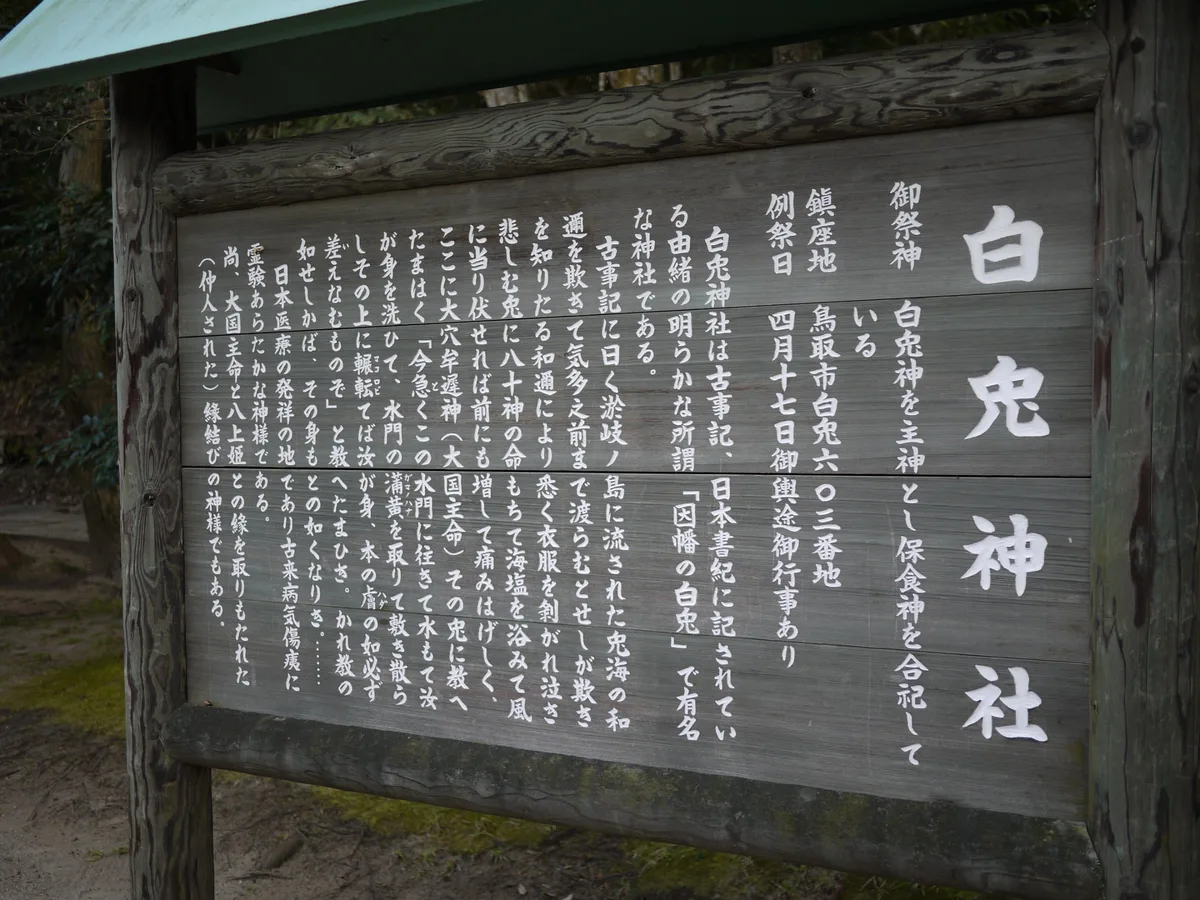
An information board near the grounds explains the shrine's history; reading it first helps the myth make sense.
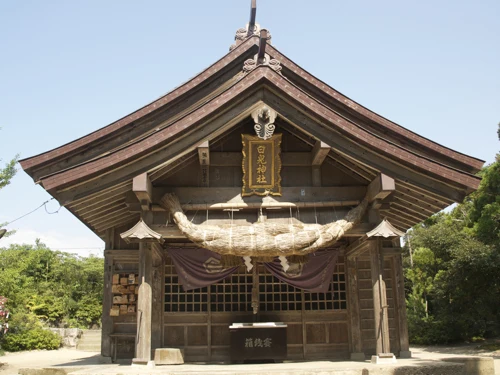
The worship hall carries a "Hakuto Shrine" plaque and a thick sacred rope.
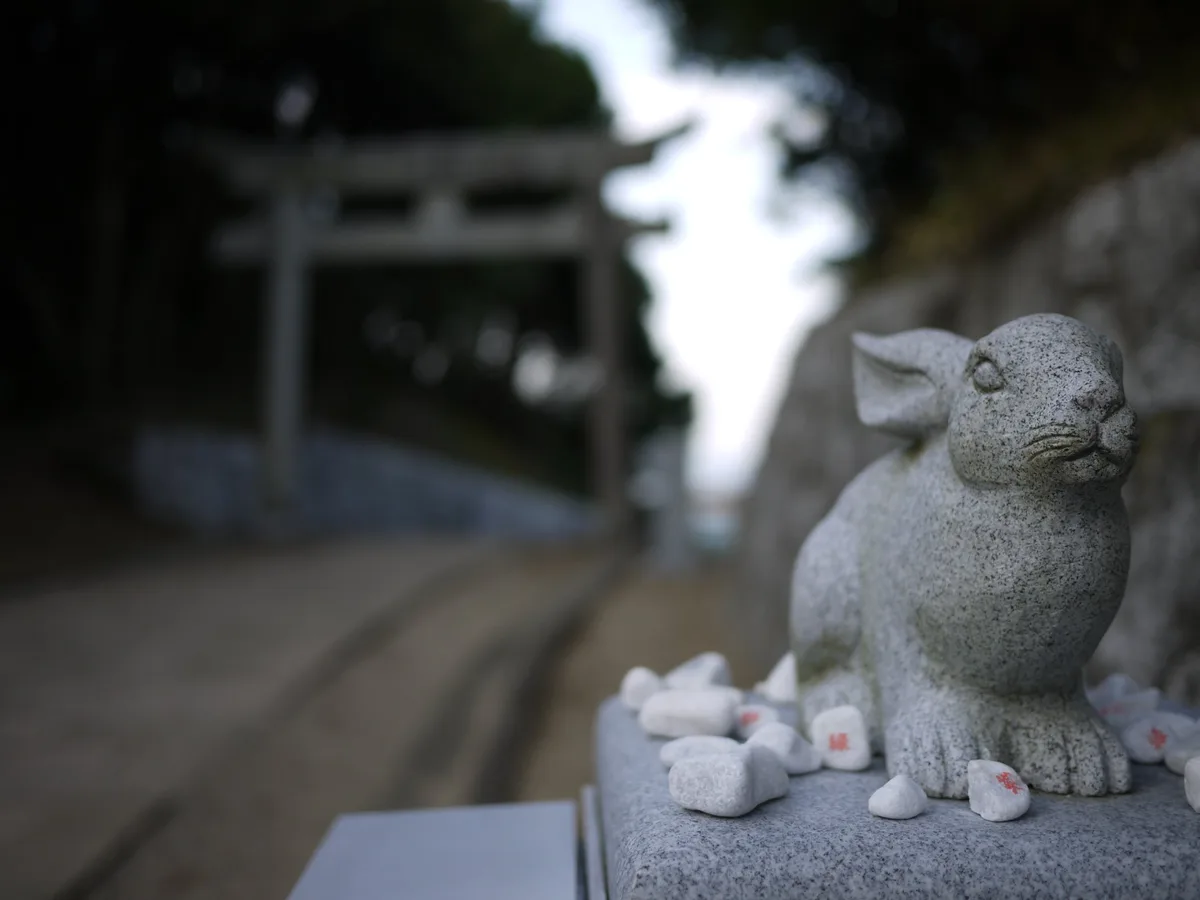
Rabbit Statues in the Grounds
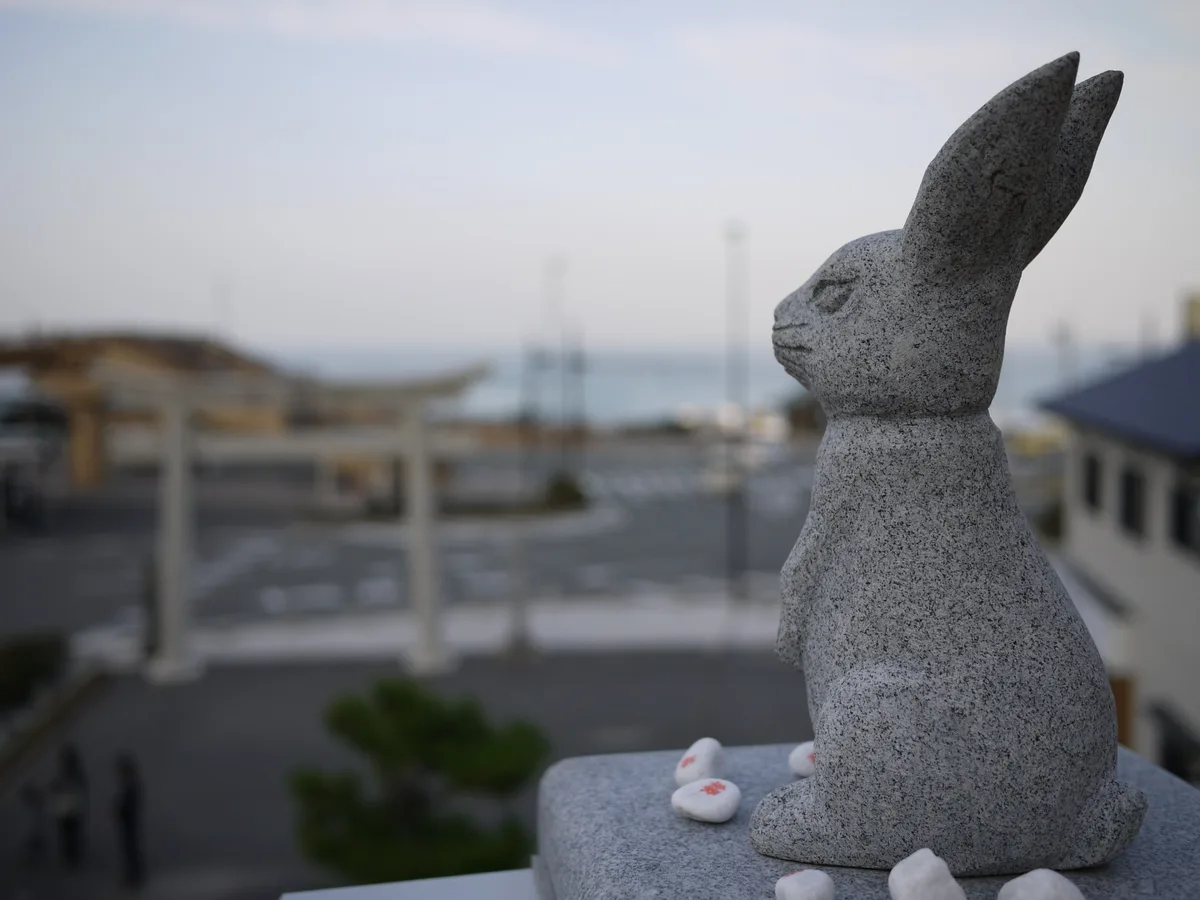
The lantern tops carry rabbits with different expressions. White stones marked with the character for "en" (connection) are sometimes left at their feet, which makes it fun to compare them.
Mitarashi Pond, Musubi Stone & White Rabbit Coast
- Mitarashi Pond: said to be where the rabbit washed its wounds; its water level is traditionally said never to change.
- Musubi stone: a stone charm; tradition says tossing it onto a torii brings good connections. Many visitors simply take it home. Check that no one is nearby.
- White Rabbit Coast: white sand and the Sea of Japan, a famed sunset spot, with the island linked to the myth offshore.
- Roadside station: local products and meals after your visit.
White Stones at the Rabbit's Feet
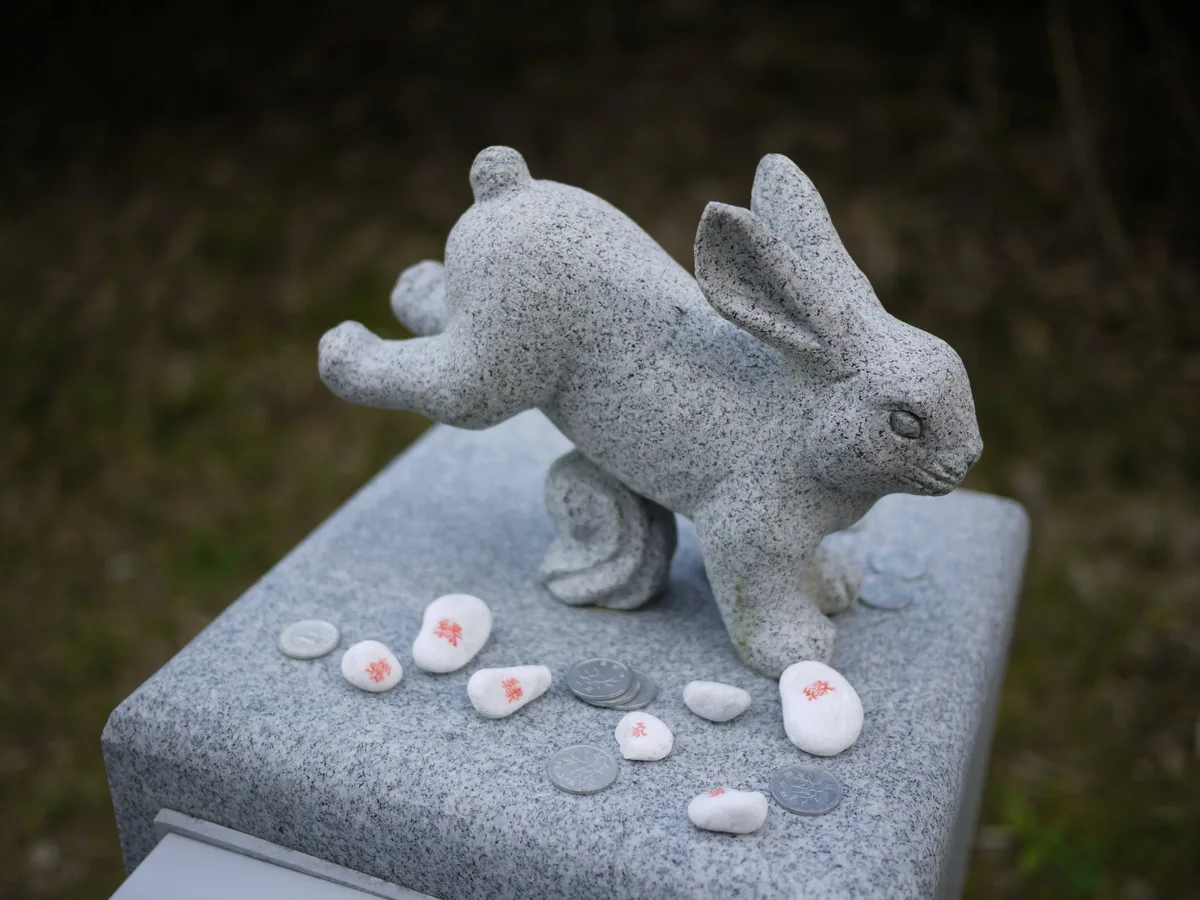
Around this leaping rabbit too, white stones marked with characters such as "en" are left.
Views of White Rabbit Coast
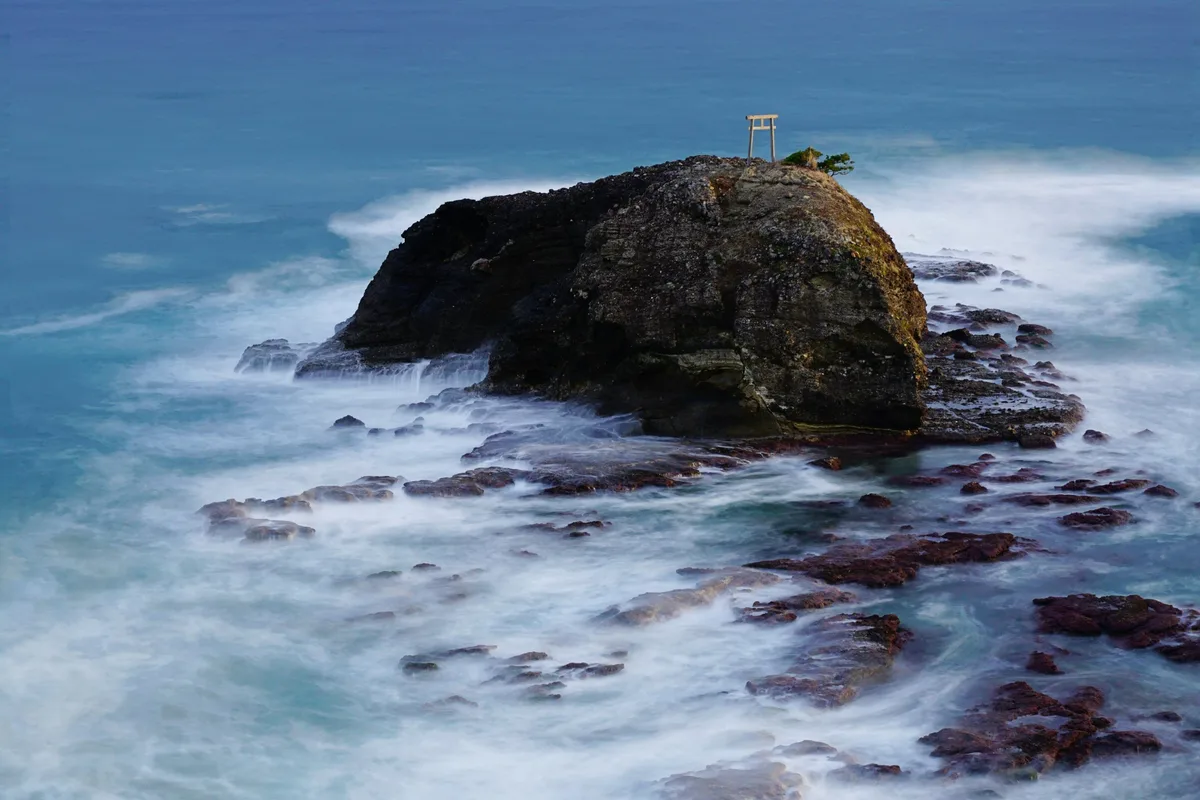
The coast in front of the shrine changes with the hour. Sunrise light and the rock called Okinoshima in the myth are both worth a look.


Model Route (Approx. Times)
- Walk the approach from the parking lot (about 10 min)
- Pray at the hall and visit the charm counter (10-15 min)
- Pond and musubi stone (about 10 min)
- Coast and roadside station (15-30 min)
Allow about 40 minutes to 1 hour in total.
Tips
- The shrine office closes around 16:00, so go earlier for charms.
- Wear comfortable shoes; the coast can be windy.
- Summer beach season can be crowded; mornings are easier.
Access
- Train/bus: JR Tottori Station, then Hinomaru Bus about 40 min to "Hakuto Jinja-mae"; buses are infrequent, so check the timetable.
- Car: about 20 min from Tottori IC, using the shared free lot.
Recommended Crystals
| Stone | Why people choose it |
|---|---|
| Rose Quartz | Chosen for love and relationships |
| Rhodonite | For those who value bonds |
| Aquamarine | A sea-themed travel charm |
Shrine Etiquette
- Bow before the torii.
- Walk to the side of the path.
- Two bows, two claps, one bow.
- Toss the musubi stone only when no one is near.
- Do not touch or climb the rabbit statues.
See the shrine visiting basics for more.
FAQ
How long should I plan? About 40-60 minutes, longer with the coast.
Is there parking? A shared free lot with the roadside station, reportedly.
Can I go alone? Of course; many come for the rabbit story.
Related Articles
Tags
この記事をシェアする
この記事が役に立ったら、SNSでシェアしていただけるととても嬉しいです☀️

Thanks so much for reading! I hope this article brought a little sunshine to your day! See you again soon!
You might also like
Omiwa Shrine Worship Guide
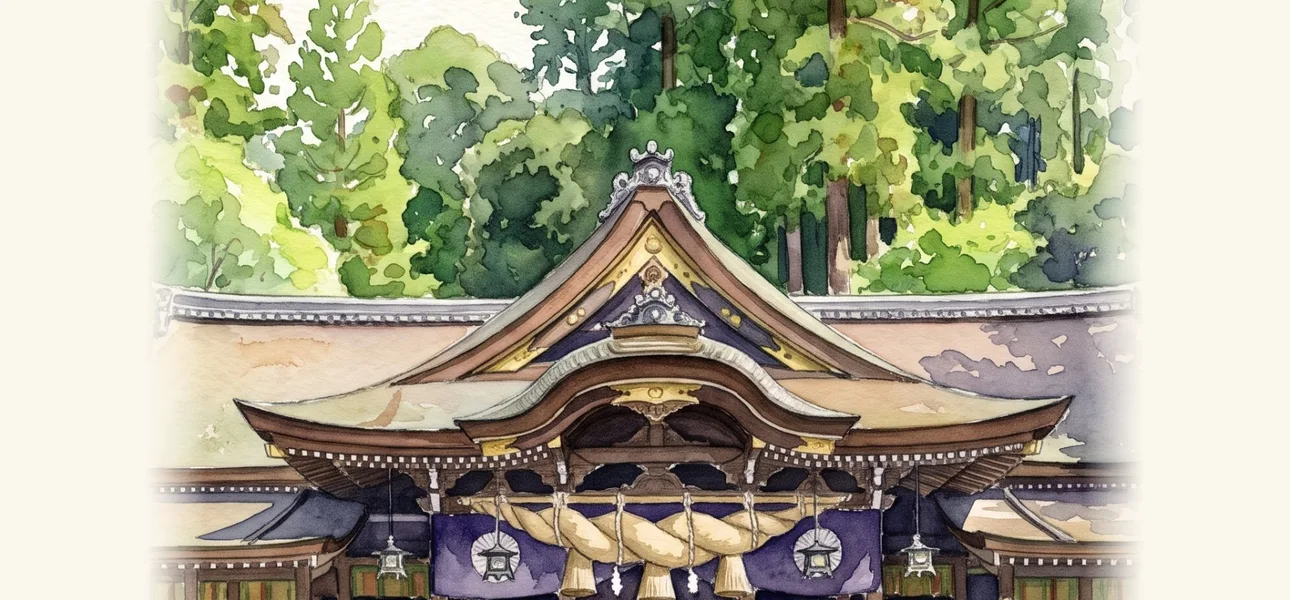
This comprehensive guide covers the history, divine blessings, Mount Miwa faith, key worship points, Sai Shrine, the Medicinal Well, sacred mountain ascent (Tohhai), recommended crystals, and surrounding attractions of Omiwa Shrine (1422 Miwa, Sakurai City, Nara Prefecture). It's an essential resource for visiting a sacred site that continues to preserve one of Japan's oldest forms of primitive worship.
Amano Iwato Shrine Guide: West Shrine, East Shrine & Amanoyasukawara (Route and Timing)
A visitor's guide to Amano Iwato Shrine in Takachiho, Miyazaki: a route through the West Shrine, East Shrine and Amanoyasukawara, the timed viewing of the sacred cave, how long to allow, parking, goshuin, stone-stacking etiquette and the best seasons.
Tokyo Daijingu Shrine Guide: Tokyo's Ise Shrine for Love and Matchmaking
A visitor's guide to Tokyo Daijingu in Iidabashi, Tokyo: its history, deities, why it is known as the first shrine in Japan to hold a Shinto wedding, matchmaking charms and fortunes, tips for avoiding crowds, and access.
Shimogamo Shrine's Ring Charm "Ai no Wa Mamori": Where to Get It, Price and Matchmaking Visit Guide
A friendly guide to the ring-shaped charm "Ai no Wa Mamori" at Shimogamo Shrine in Kyoto: where it is offered (next to Aioi-sha), the 3,000 yen price, the double-hollyhock design, what to do when it is sold out, the matchmaking visit routine and access.