
Shimogamo Shrine's Ring Charm "Ai no Wa Mamori": Where to Get It, Price and Matchmaking Visit Guide
A friendly guide to the ring-shaped charm "Ai no Wa Mamori" at Shimogamo Shrine in Kyoto: where it is offered (next to Aioi-sha), the 3,000 yen price, the double-hollyhock design, what to do when it is sold out, the matchmaking visit routine and access.
Table of Contents (Tap to toggle)
Hello, this is Sun-chan from Lucky Sun Shine ☀️
At Shimogamo Shrine in Kyoto, a ring-shaped charm called "Ai no Wa Mamori" has become a social media favorite, and it sometimes sells out. This guide covers where to get it, the price and how to choose, plus the matchmaking shrine Aioi-sha that many visitors pair it with.
What is "Ai no Wa Mamori"?
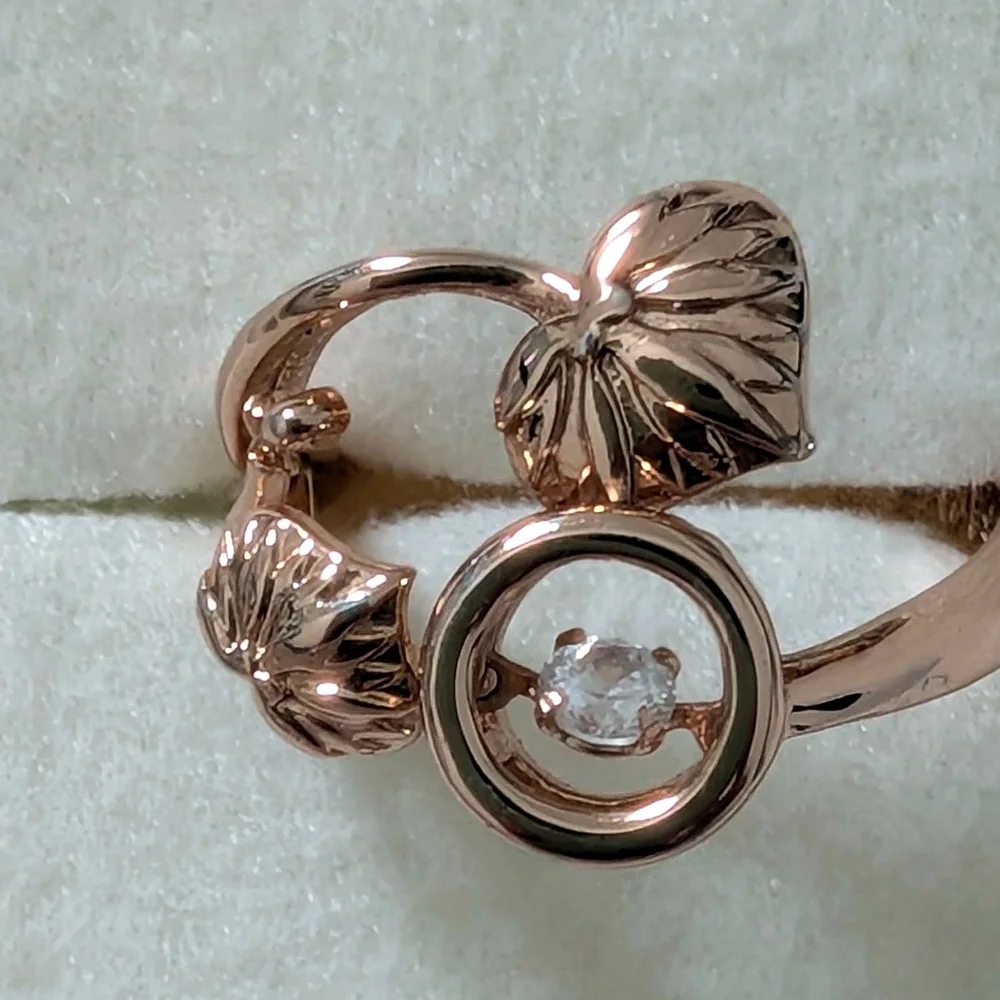
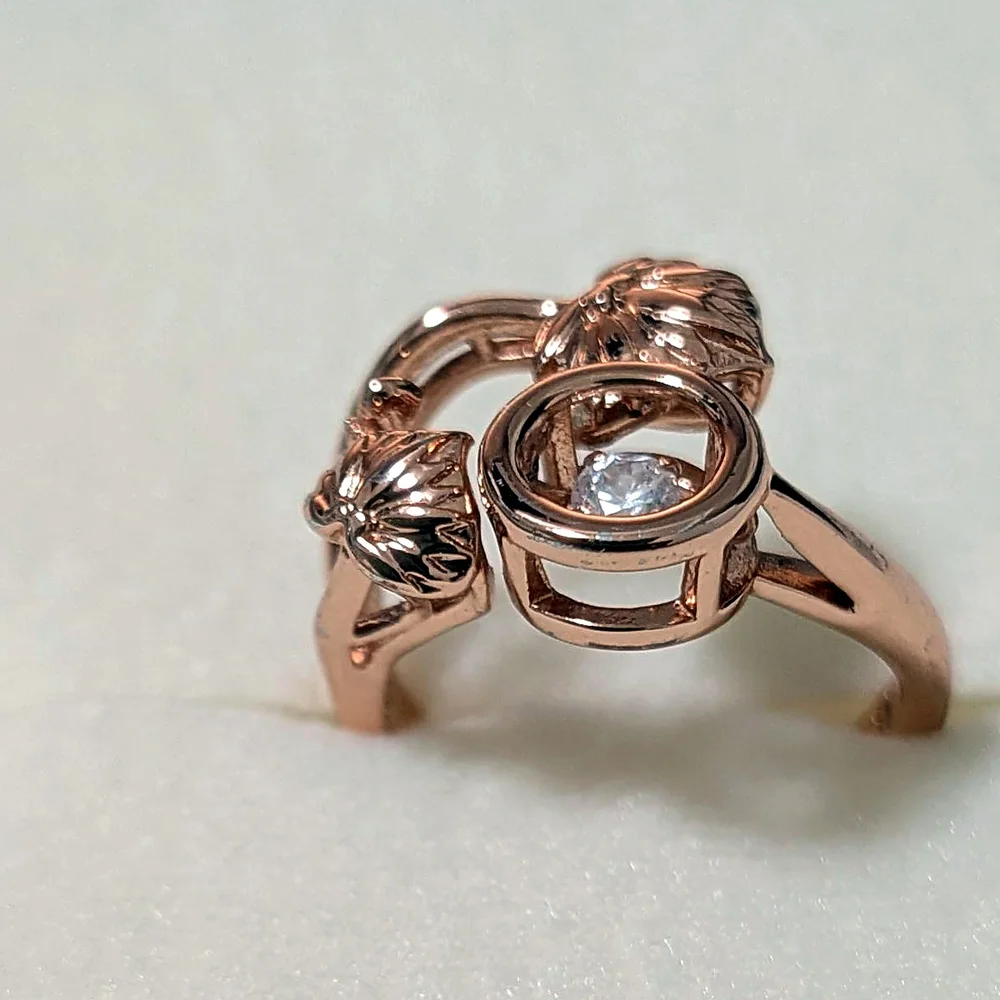
It is a ring-shaped charm modeled on futaba-aoi (double hollyhock), the shrine's crest. Some describe the two leaves nestled together as heart-shaped.
- Colors: gold, pink gold and silver
- Offering: 3,000 yen (this can change)
- Size: basically size 9 (Japanese sizing). It is an open-ring type, so it is said to be adjustable to a degree
- Material: described as brass with a coating
- Design: two double-hollyhock leaves and a small stone set inside a circle (the photo shows pink gold)
An omamori is something you keep on you. Even in ring form, treat it with care as a charm offered by the shrine rather than as simple jewelry.
Where can you get it?
It is said to be offered only at the shrine office next to Aioi-sha. It reportedly is not sold at other offices, such as the one near the Mitarashi pond, so head for Aioi-sha.
- The office is described as open about 9:00-16:30 (this may change by season or event).
- Mail-order, postal delivery and reserving are said not to be available.
- Because it is popular, it can sell out or be paused temporarily. Restocks are often announced on the shrine's official social media.
- Please check official posts first rather than phoning the shrine office about stock.
We do not recommend buying resale items.
Aioi-sha and the matchmaking visit
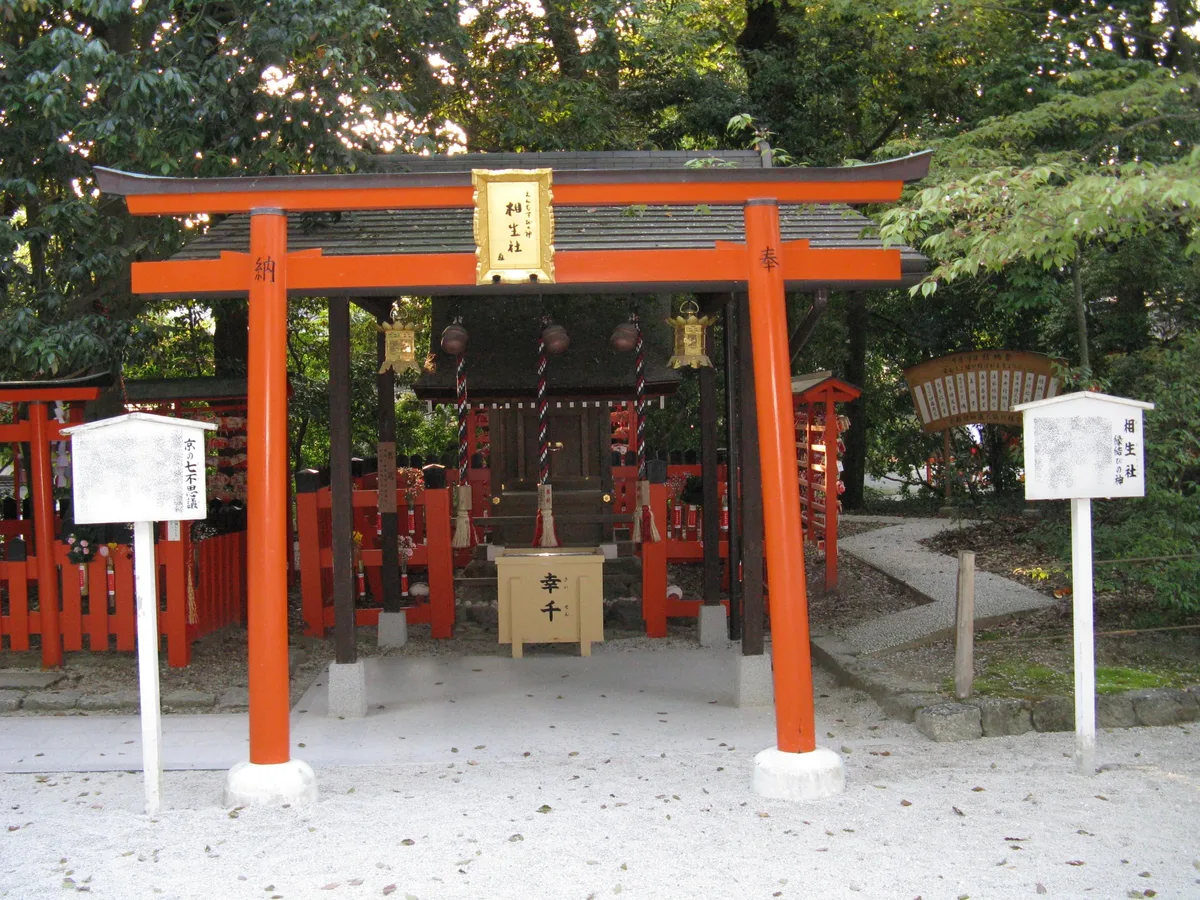
Aioi-sha is a matchmaking sub-shrine on the grounds. The deity is said to be Kamumusubi no Kami, and beside it stands the sacred tree Renri no Sakaki, two trunks joined into one.
The routine is introduced roughly as follows. The office staff can explain the details, so please confirm on site.
- Visit the main hall first.
- Receive a "Renri Enmusubi ema" at the office and write your wish.
- Tie the red and white cord and walk around Renri no Sakaki three times (the direction is said to differ for men and women).
- On the third round, hang the ema on the rack.
- Bow twice, clap twice and bow once in front of Aioi-sha.
"En" (connection) is said to cover not only romance but also ties with people, work and places.
About Shimogamo Shrine
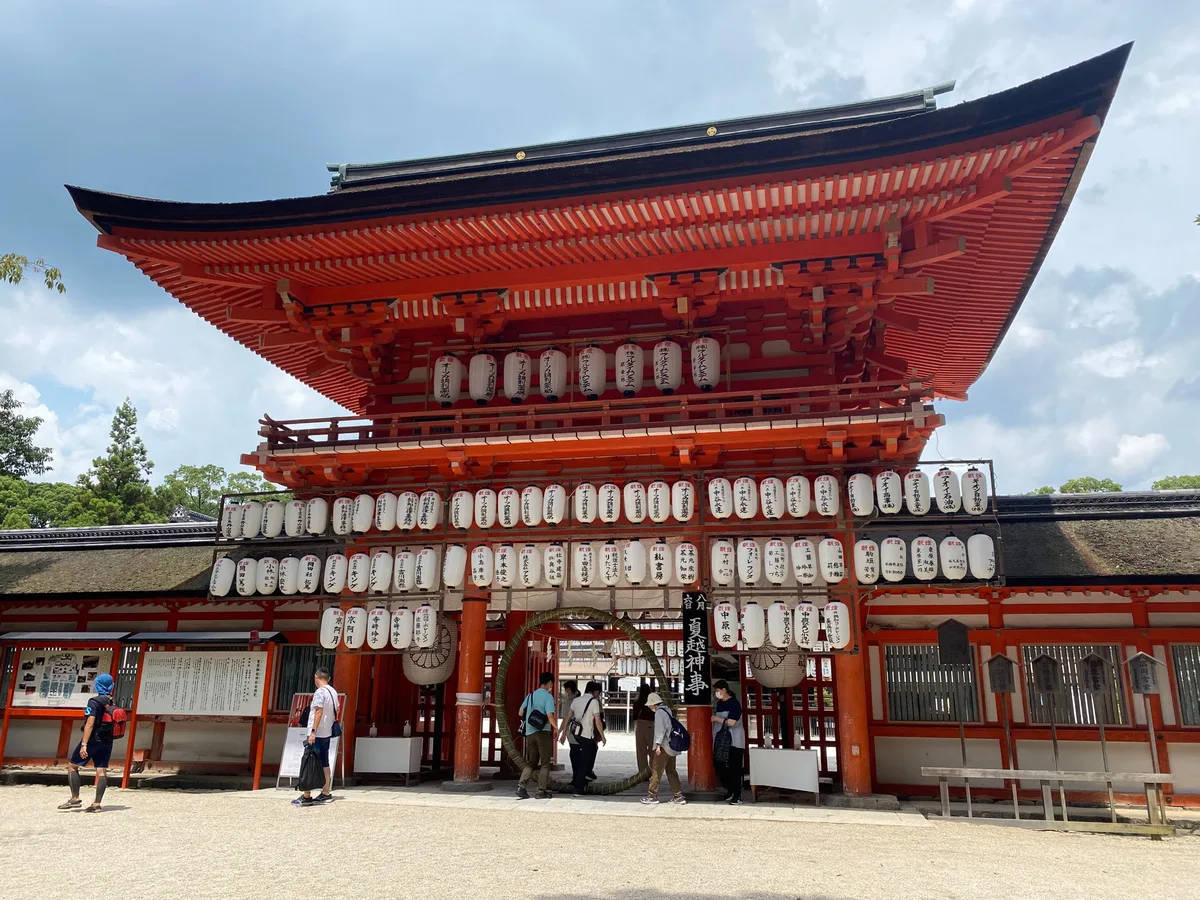
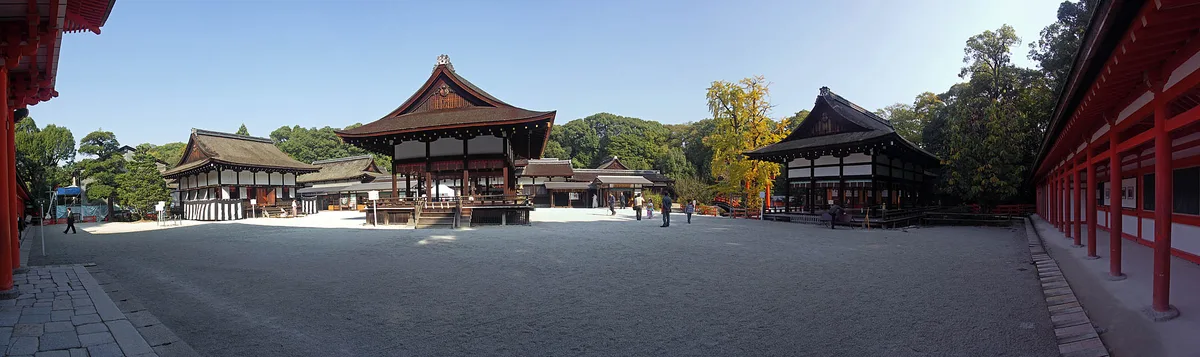
Its formal name is Kamomioya Shrine. Together with Kamigamo Shrine it is the ichinomiya of Yamashiro Province, and it is a UNESCO World Heritage Site (1994).
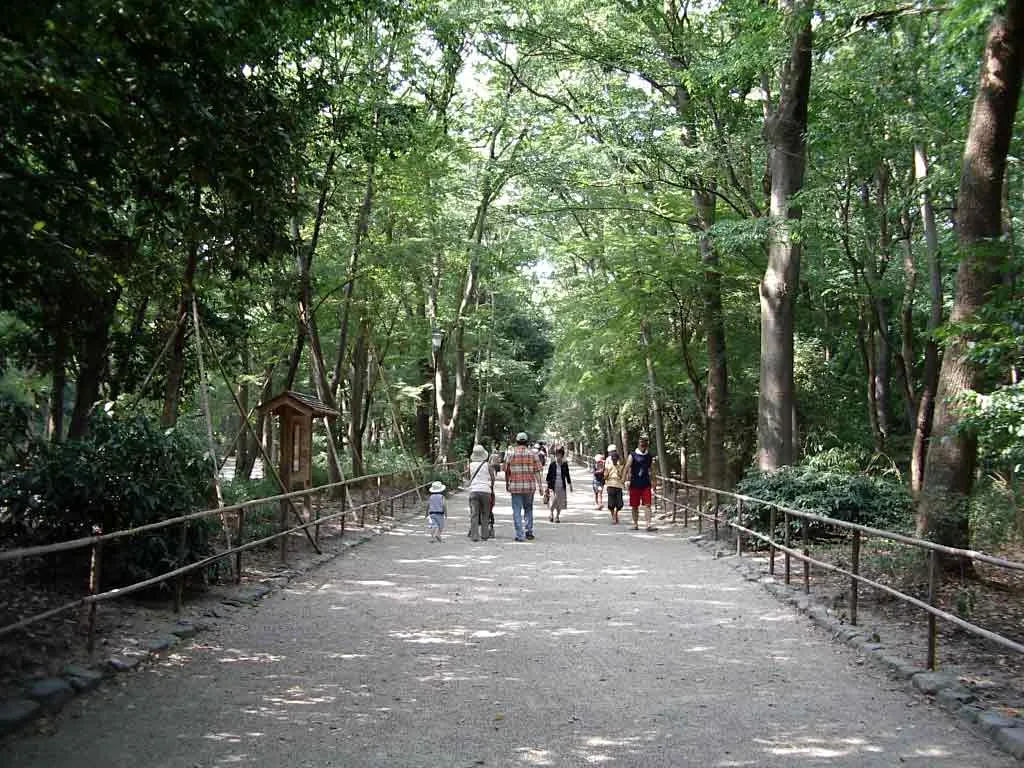
- Tadasu no Mori: an ancient forest lining the approach
- Kawai Shrine: dedicated to Tamayori-hime and revered as a protector of women
- Address: 59 Shimogamo Senkawa-cho, Sakyo Ward, Kyoto
- Hours: about 6:30-17:00 (free entry to the grounds)
The name is similar to Kamigamo Shrine, but Ai no Wa Mamori is offered at Shimogamo Shrine.
Before you visit
- Check the official site or social media for availability, price and hours before you go.
- If the size does not fit, a sample is said to be available at the office.
- Taking it off for bathing, water chores and hard exercise is recommended.
- Old charms are returned to the shrine with thanks.
- For general omamori tips, see our omamori guide; for etiquette, shrine visit basics.
- Another shrine known for protective charm rings is Samuhara Shrine.
Access
- Train: about 15 minutes on foot from Demachiyanagi Station (Keihan Main Line / Eizan Railway)
- Bus: Kyoto City Bus to "Shimogamo-jinja-mae" or "Tadasu-no-mori-mae", then about 3 minutes on foot
- Car: paid parking is available; public transport is best in busy seasons
Summary
- Ai no Wa Mamori is a ring-shaped charm modeled on the shrine's double-hollyhock crest.
- It is said to be offered only at the office next to Aioi-sha, for 3,000 yen.
- It can sell out, so check official social media first.
- Visiting the matchmaking shrine Aioi-sha as well is recommended.
This guide is based on the sources below. Please check the official Shimogamo Shrine site for the latest details.
Sources: BAILA, Jinja DEGO, tabi-mag, GLTJP
May your days shine as bright as the sun ☀️
Tags
この記事をシェアする
この記事が役に立ったら、SNSでシェアしていただけるととても嬉しいです☀️

Thanks so much for reading! I hope this article brought a little sunshine to your day! See you again soon!
Plan your trip
Please check the details before booking.
This section contains affiliate links.
You might also like
Omiwa Shrine Worship Guide
This comprehensive guide covers the history, divine blessings, Mount Miwa faith, key worship points, Sai Shrine, the Medicinal Well, sacred mountain ascent (Tohhai), recommended crystals, and surrounding attractions of Omiwa Shrine (1422 Miwa, Sakurai City, Nara Prefecture). It's an essential resource for visiting a sacred site that continues to preserve one of Japan's oldest forms of primitive worship.

Samuhara Shrine (Osaka): History, Protective Charm Rings and the Okayama Inner Shrine
A friendly guide to Samuhara Shrine in Itachibori, Osaka: the three creator deities worshipped as Samuhara Okami, the shrine's history, its protective charm rings, how to reach the Inner Shrine in Okayama, and what to know before visiting.

Pilgrimage and Good Luck
Kamado Shrine in Dazaifu and Senso-ji Temple in Tokyo are both known as pilgrimage sites for Demon Slayer fans. Sun-chan explains the good luck origins behind these two sacred sites, from sealing the demon gate and matchmaking to the guardian Wind and Thunder Gods.
Pilgrimage and Good Luck: Exploring the Sites Connected to Your Name.
Lake Suwa, Suwa Taisha Shrine, and Hida-Furukawa are said to be among the inspirations behind Your Name. Sun-chan explains the view at Kataware-doki, the teaching of Musubi, the kumihimo braiding craft, and the good luck rooted in these sacred sites.