
Pilgrimage and Good Luck
This article contains promotional content.
Kamado Shrine in Dazaifu and Senso-ji Temple in Tokyo are both known as pilgrimage sites for Demon Slayer fans. Sun-chan explains the good luck origins behind these two sacred sites, from sealing the demon gate and matchmaking to the guardian Wind and Thunder Gods.
Table of Contents (Tap to toggle)
Hello! It's Sun-chan from Lucky Sun Shine! ☀️
Demon Slayer (Kimetsu no Yaiba) is the hugely popular anime that became a social phenomenon all over the world. Many of you were probably completely drawn in by its moving, intense story and its cast of colorful characters, weren't you?
Actually, if you dig deep into the world and setting of the story, you'll find it's packed with something far beyond simple fiction: the wisdom of Japan's traditional faith and good fortune, passed down for over a thousand years!
This time, I'm picking out two spots: Homangu Kamado Shrine (Kamado Jinja) in Dazaifu, Fukuoka, which draws visitors from all over the world as a pilgrimage site for fans, and Senso-ji Temple in Asakusa, Tokyo, where the protagonist Tanjiro first confronted his archenemy.
Sun-chan will cheerfully and clearly give you the full rundown on why these places appear in the story, and why they're still considered some of the most powerful power spots today! ☀️
🌸 [Dazaifu, Fukuoka] Kamado Shrine: Sealing the Demon Gate and Tying Good Bonds, and the Sacred Mountain of Mountain Asceticism
Homangu Kamado Shrine, enshrined in Dazaifu City, Fukuoka Prefecture, sits at the foot of the sacred Mt. Homan (829 meters), and is a venerable old shrine with a history of over 1,350 years. This site, which draws many visitors from Japan and abroad as a pilgrimage spot for fans after its connection to the story became a popular topic, holds astonishingly powerful energy for purification and renewal.
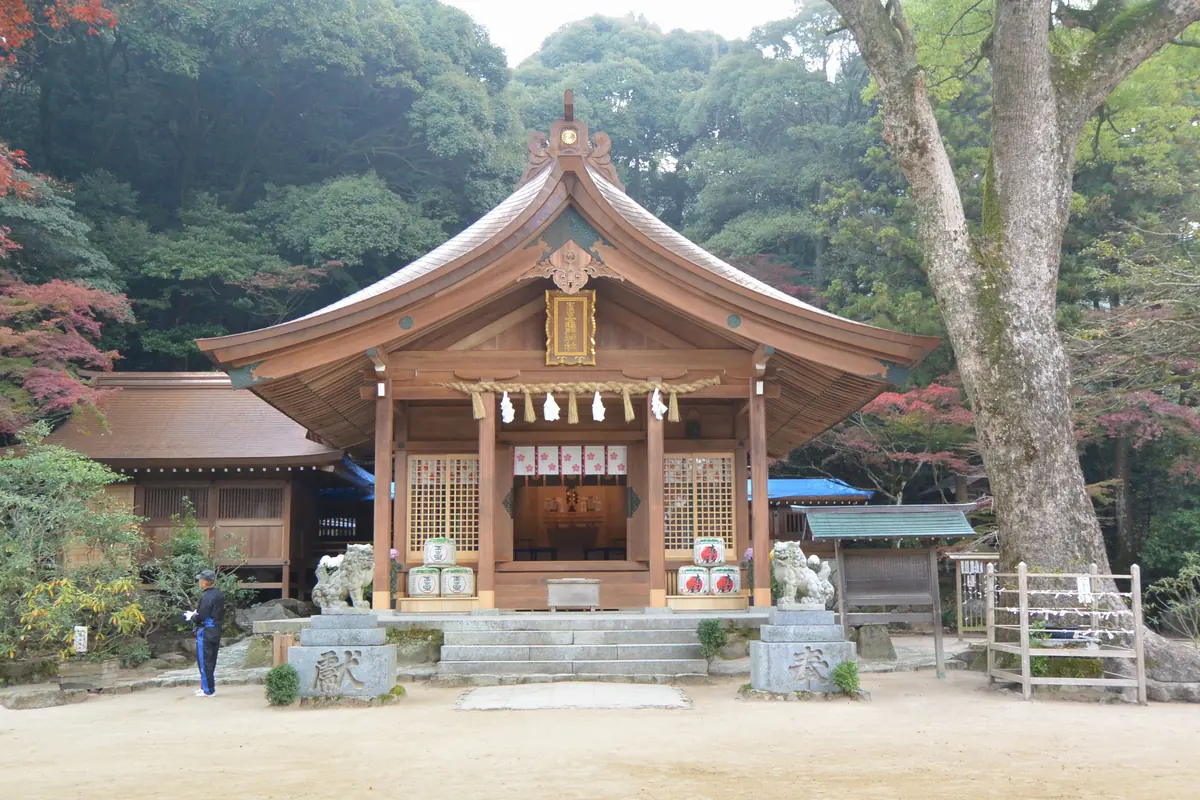
Homangu Kamado Shrine (Sealing the Demon Gate and Tamayori-hime-no-Mikoto)
- 【Features】: Famous as a scenic spot for cherry blossoms in spring and autumn leaves in fall, this is a pure, sacred shrine spread across both the foot of Mt. Homan (the lower shrine) and its summit (the upper shrine).
- 【Deep Background and Origins】: The shrine was founded during the reign of Emperor Tenmu (the latter half of the 7th century), when the Dazaifu government office was established, as a shrine for national protection, sealing off the "Kimon" (demon gate, the northeast direction)—an ominous direction through which threats and disasters from the continent could easily invade. The enshrined deity is Tamayori-hime-no-Mikoto. She has long been deeply revered as a "deity of matchmaking" who draws souls together, and is believed to hold tremendous divine power not only for romantic bonds between men and women, but for tying all kinds of good connections that improve your life—family, friends, business partners—as well as for "warding off bad directions and misfortune" by dispelling bad luck and directional disasters.
- 【Sun-chan's Top Pick Explanation】: The moment you pass through the torii gate, the clear wind blowing down from the mountain feels wonderful, and you can feel a refreshing sensation, as if the stagnation in your heart is being washed away! Since this is a place that firmly seals off the "Demon Gate, the entrance for misfortune" and invites in only good connections, it's the perfect power spot for when you want to change your environment or start a new challenge ☀️
- 【Official Info】: Homangu Kamado Shrine Official Website
The Good Fortune of the Ichimatsu Pattern, and Mt. Homan, the Sacred Mountain of Mountain Asceticism
- 【Features】: The green-and-black (or black-and-white) checkered "ichimatsu pattern" that is the trademark of the protagonist, Tanjiro Kamado.
- 【Deep Background and Origins】: Mt. Homan, where Kamado Shrine stands, was one of the leading sacred sites of "Shugendo," a form of mountain asceticism that fused mountain worship with Esoteric Buddhism and Taoism from the Heian period through the medieval era. The ichimatsu pattern is also considered an auspicious design in its own right: because its checkered shape continues on endlessly without ever breaking, it has long been seen as a symbol of "flourishing descendants," "lasting business prosperity," and "unbroken vitality."
- 【Sun-chan's Top Pick Explanation】: Looking at the pattern on the haori Tanjiro wears, it really does seem to overlap with the auspicious meaning the ichimatsu pattern naturally carries—"no matter what hardship you face, keep your life connected without a break, and keep tying hope to the future"! Try bringing the ichimatsu pattern into the items you carry with you, and share in a little of that unbroken strength and positive luck ☀️
- 【Reference Info】: Dazaifu Japan Heritage (Mt. Homan and Shugendo)
The Cherry-Blossom-Pink Marble Amulet Hall and the Musubi-no-Ito Thread
- 【Features】: An amulet hall built with cherry-blossom-pink natural marble, designed by the world-renowned interior designer Masamichi Katayama (Wonderwall), along with the red charm thread that visitors tie around their wrist or belongings.
- 【Deep Background and Origins】: Rebuilt to commemorate the shrine's 1,350th anniversary, this amulet hall is a space like a piece of sophisticated modern art, quite different from the traditional unpainted-wood shrine buildings you usually see. The viewing terrace features benches designed by the celebrated designer Jasper Morrison, offering a sweeping view of the Dazaifu townscape. Among the amulets offered here, the especially popular "Musubi-no-Ito" (Bonding Thread) is a red thread said to carry the powerful bonding energy of Tamayori-hime-no-Mikoto, believed to draw good connections to you when worn.
- 【Sun-chan's Top Pick Explanation】: The moment you step into the amulet hall, the light reflecting off the pale pink marble fills you with a sense of happiness, almost as if you're wrapped in cherry blossom petals! Tie the "Musubi-no-Ito" around your wrist or your favorite pouch, and let it steadily draw in wonderful connections and opportunities ☀️
- 【Official Info】: Homangu Kamado Shrine Official Website
🏮 [Asakusa, Tokyo] The Light and Shadow of the Taisho Romance Era! Senso-ji Temple's Protective Barrier and Night Visits
Next up, in complete contrast to the deep mountain nature of Dazaifu, is Asakusa, Tokyo, the dizzyingly fast-developing big city that shocked Tanjiro. Asakusa, the cutting-edge city of its time, is home to Tokyo's oldest sacred site, which has protected people from misfortune for well over a thousand years.
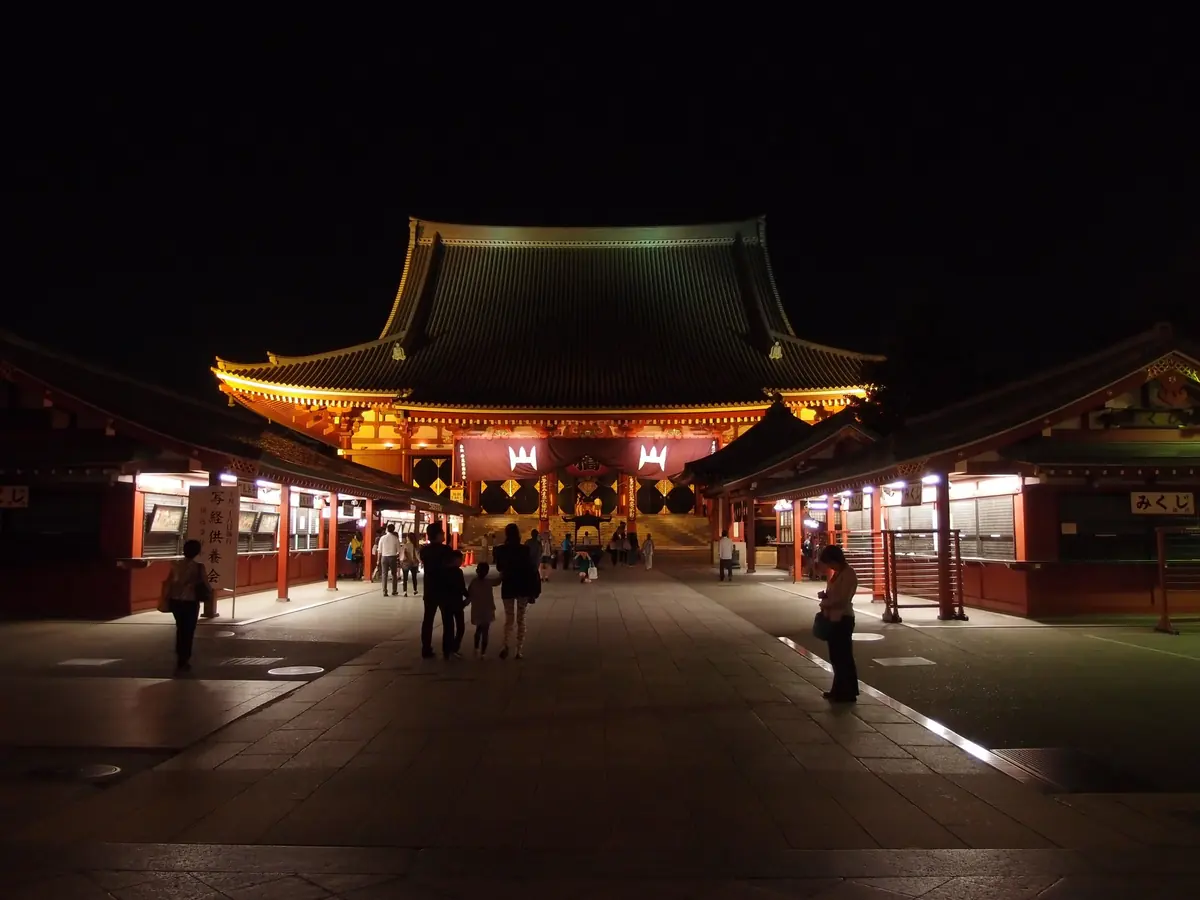
Senso-ji Temple's Kaminarimon Gate (The Guardian Barrier of the Wind and Thunder Gods)
- 【Features】: The great gate known worldwide as the face of Asakusa, hung with a giant red lantern weighing about 700 kilograms.
- 【Deep Background and Origins】: Senso-ji Temple's origins trace back to 628 AD (the 36th year of Empress Suiko's reign), when two fishermen brothers fishing in the Sumida River caught a golden statue of the Kannon (Avalokiteshvara) in their net, and it was then enshrined. On either side of the Kaminarimon Gate (officially named "Furaijinmon," the Wind and Thunder God Gate) that guards the main approach stand the fearsome-faced Wind God and Thunder God, who guard the Buddhist dharma. They form a powerful protective barrier against wind and water disasters, fires, and the intrusion of evil spirits.
- 【Sun-chan's Top Pick Explanation】: The lively Nakamise shopping street is fun during the day, but Sun-chan's top recommendation is visiting at night, after sunset! The temple is beautifully lit up until around 11 PM, and the grounds, so quiet compared to the daytime bustle, carry a crisp, sacred atmosphere. Looking up at the vermilion five-story pagoda and main hall as you press your hands together will leave you feeling refreshingly purified of your everyday worries and anxieties ☀️
- 【Official Info】: Senso-ji Temple Official Website
The Phantom Tower "Ryounkaku (Asakusa's Twelve Stories)" and Food Stall Culture
- 【Features】: Japan's first Western-style high-rise building (skyscraper), built in Asakusa in 1890, and the food stall culture that supported the energy of ordinary townspeople.
- 【Deep Background and Origins】: Built of red brick with 12 stories and Japan's first elevator, the Ryounkaku was a landmark symbolizing the modernization and Taisho-era romance of its time. It was beloved as a symbol of Asakusa until it collapsed in the Great Kanto Earthquake of 1923. The nighttime food stalls vividly depicted in the story (like the yamakake udon Tanjiro ordered) were a vital source of energy for ordinary townspeople working hard through the turbulent era of Japan's modernization.
- 【Sun-chan's Top Pick Explanation】: Letting your imagination wander back to the era when fashionable, modern people once filled these streets, while enjoying Asakusa's retro townscape and food, is also a wonderful way to boost your luck! Try feeling, on your own skin, the positive energy of the people who came before us, who lived powerfully and fearlessly through an era of change ☀️
- 【Official Info】: Asakusa Tourism Federation Official Website
☀️ In Closing
"Pilgrimage," visiting shrines and temples inspired by the world of an anime or story, is a wonderful modern form of a journey toward good fortune.
Cut off bad connections and misfortune at Kamado Shrine in Dazaifu and tie new, good bonds; touch the historic protective power of the big city at Senso-ji Temple in Tokyo. Just as the characters in the story faced their hardships head-on, if we make the warm power of the gods and buddhas our ally, we too should be able to positively overcome any wall in our way!
By the way, when you visit Kamado Shrine in Dazaifu, it's said that your luck gets an even bigger boost if you also make a "double visit" to Dazaifu Tenmangu Shrine, which enshrines the deity of scholarship and sincerity ☀️
Wishing that bright, powerful light of good fortune, just like the sun, shines down on all of you! That's all from Sun-chan at Lucky Sun Shine! ☀️
🌟 Related Articles You Might Also Like
- A Complete Guide to Kyushu Power Spot Shrines: Blessings, Access, and Model Courses
- A Complete Guide to Shrines for Matchmaking and Romance: Blessings, Visiting Tips, and Famous Shrines Nationwide
- Protection and Ward-Off-Evil Crystals: A Complete Guide to Meanings, Effects, and Combinations
- [Hiroo] Get "Miracle Survival Power" and a "Magical Ink Dragon" at Hiroo Inari Shrine
Tags
この記事をシェアする
この記事が役に立ったら、SNSでシェアしていただけるととても嬉しいです☀️

Thanks so much for reading! I hope this article brought a little sunshine to your day! See you again soon!
Plan Your VisitAd
This section contains affiliate links. See our disclosure.
Plan your trip
Please check the details before booking.
This section contains affiliate links.
You might also like
Pilgrimage and Good Luck: Exploring the Sites Connected to Your Name.
Lake Suwa, Suwa Taisha Shrine, and Hida-Furukawa are said to be among the inspirations behind Your Name. Sun-chan explains the view at Kataware-doki, the teaching of Musubi, the kumihimo braiding craft, and the good luck rooted in these sacred sites.

Omiwa Shrine Worship Guide
This comprehensive guide covers the history, divine blessings, Mount Miwa faith, key worship points, Sai Shrine, the Medicinal Well, sacred mountain ascent (Tohhai), recommended crystals, and surrounding attractions of Omiwa Shrine (1422 Miwa, Sakurai City, Nara Prefecture). It's an essential resource for visiting a sacred site that continues to preserve one of Japan's oldest forms of primitive worship.

Pilgrimage and Good Luck
Nikko Toshogu Shrine echoes the Chinese zodiac myth at the heart of Fruits Basket. Sun-chan explains the healing power found in the story of the Sleeping Cat and the eight life-stage carvings of the Three Wise Monkeys at the Sacred Stable.
Pilgrimage and Good Luck: Tracing the Sites Connected to Inuyasha
The Shikon Jewel and the priestess's warding arrows in Inuyasha echo Fushimi Inari's sacred jewel and Shinto's view of the soul, Ichirei Shikon. Sun-chan explains the good-luck hints found in these legends, together with Kuzunoha Inari and Hozan-ji.