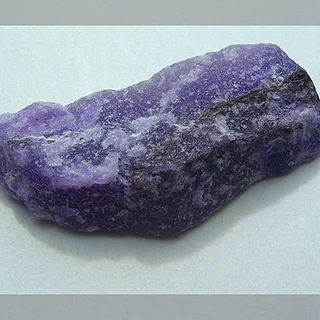

Sugilite Meaning, Symbolism, and Effects
A comprehensive guide to Sugilite's meaning, symbolism ('Purple Healing, Spirituality, and Protection from Negative Energy'), effects, who it's recommended for, compatible stones, purification methods, and FAQs.
Table of Contents (Tap to toggle)
Introduction
Sugilite is a relatively new purple mineral discovered in 1944 by Japanese geologist Ken-ichi Sugi on Iwagi Island, Ochi District, Ehime Prefecture (Seto Inland Sea), Japan. It was named "Sugilite" after its discoverer. This makes it a rare stone, as a mineral discovered in Japan later became one of the World's Three Great Healing Stones (alongside Larimar and Charoite), loved by people all over the world.
However, it only gained widespread recognition as a gemstone after large, deep purple deposits were discovered in the Wessels Mine, South Africa, in the 1970s. Japanese-sourced sugilite typically has a lighter color and is considered a rare specimen; the majority of sugilite on the market today comes from South Africa. Its long-standing support from healers and therapists worldwide as a "stone of deep healing" is also attributed to its purple hue, a color culturally associated with "nobility, spirituality, and sacredness" since ancient times.
Basic Information
| Item | Content |
|---|---|
| Stone Name | Sugilite |
| Mineral Species | Silicate Mineral (Cyclosilicate) |
| Primary Sources | South Africa, Japan (Setouchi), Canada, India |
| Mohs Hardness | 5.5 to 6.5 |
| Color | Deep purple to reddish-purple, pinkish-purple |
| Associated Chakras | 6th (Third Eye) / 7th (Crown) |
Symbolism and Meaning
Sugilite is said to be a stone that symbolizes "purple healing, spirituality, and protection from negative energy." Counted as one of the World's Three Great Healing Stones, it has been revered in the healing community, especially for its ability to offer "healing that reaches the depths of the heart" and for possessing "energies of love and compassion."
The color purple, known as "royal purple," was reserved for emperors in ancient Rome, and has symbolized suffering and redemption in Christianity, and wisdom and compassion in Buddhism. Sugilite's deep purple color carries on this symbolic tradition, sometimes described as a stone that embodies "sacredness on Earth."
Furthermore, its reputation in the global healing industry surged in the latter half of the 20th century after world-renowned healer Melody referred to Sugilite as an "emissary of love" in her writings. Many enthusiasts feel a sense of fateful connection in the very story of a stone named after a Japanese geologist being called a "stone of love" and circulated on the other side of the world.
Recommended for these people
- If you wish to heal past traumas or deep emotional wounds
- If you want to enhance your spirituality and intuition
- If you are working as a healer or therapist
- If you seek strong protection
- If you want to cultivate the ability to love others unconditionally
Reported Effects
Disclaimer: The "effects" of crystals are cultural and symbolic in nature. They are not medically or scientifically guaranteed.
- Deep Healing: Renowned as one of the World's Three Great Healing Stones, it is believed to support healing that reaches the "roots of the heart," not just the surface.
- Strong Protection from Negative Energy: The high-vibrational energy of purple is believed to act as a shield, repelling negativity.
- Enhanced Spirituality: Corresponding to the 6th and 7th chakras, it is said to deepen connection with the spiritual world.
- Love and Compassion: From its history of being called an "emissary of love," it is believed to foster unconditional love for others.
Examples of Use
- Wear as a Bracelet: Direct skin contact is believed to deepen your connection with the stone, providing continuous healing in daily life.
- Wear as a Pendant: Placing it near the 4th chakra is thought to deliver energy effectively, making it suitable for those who wish to cultivate compassion for themselves and others.
- Hold During Meditation: Its purple energy is said to interact with the 6th and 7th chakras, making it a good companion for meditation and yoga.
- Place on Your Desk or Beside Your Bed: Keeping it in your workspace or sleeping area is said to act as a "talisman," easing psychological pressure.
Compatible Combinations
| Combination | Expected Meaning |
|---|---|
| Sugilite and Amethyst | The ultimate spiritual duo of purple and purple. Enhances intuition and spiritual sensitivity. |
| Sugilite and Rose Quartz | Harmony of deep love and healing. Fosters the power of self-forgiveness. |
| Sugilite and Clear Quartz | Amplifies healing and stabilizes energy. |
| Sugilite and Charoite | Two of the Three Great Healing Stones. Promotes transformation and healing. |
| Sugilite and Larimar | The complete form of the Three Great Healing Stones. Ocean and purple healing. |
Purification Methods
Recommended Methods:
- Clear Quartz Crystal Chips
- White Sage
- Moonlight Bath
- Tuning Forks and Crystal Bowls (gentle purification)
Methods to Avoid:
- Prolonged direct sunlight (may cause purple color to fade)
- Salt baths (best avoided due to its relatively low Mohs hardness)
For detailed purification steps, please refer to the Complete Guide to Crystal Purification Methods.
Characteristics by Origin
| Origin | Characteristics |
|---|---|
| South Africa (Wessels Mine) | World-class quality. The primary source for large, dark purple specimens. |
| Japan (Setouchi, Iwagi Island) | The place of origin, but produces pale yellowish-green to light purple stones; not widely circulated for jewelry, but holds high documentary value. |
| Canada | Relatively pale-colored crystals. |
| India | A recently discovered source. |
Price Range
The following are typical price ranges for commercially available Sugilite (as of 2026, for A to AA grade items).
| Form | Price Range |
|---|---|
| Bracelet (approx. 8mm beads) | ¥6,000〜¥30,000 |
| Tumbled Stone and Chips (50g) | ¥3,000〜¥10,000 |
| Small Pendant Top | ¥8,000〜¥50,000 |
South African specimens are considered the highest quality and rarest. Prices vary with color intensity.
Prices fluctuate significantly depending on origin, grade, and size. It's recommended to compare options from several stores, checking for authenticity certificates, transparency, and color intensity before making a choice.
How to Spot Fakes and Synthetics
- Natural stones naturally exhibit color variations, subtle inclusions, and small fissures.
- If the transparency or color saturation is too uniform, it might be glass, a synthetic stone, or a dyed stone.
- Since Sugilite is rare and expensive, dyed agate or glass are sometimes sold as "Sugilite."
- Purchasing with an authenticity certificate and from a reputable specialty store offers peace of mind. For more details, refer to How to Spot Fake and Synthetic Crystals.
Frequently Asked Questions (FAQ)
Q1. Why is Sugilite so expensive? A. It is attributed to the limited dark purple veins in South Africa's Wessels Mine and the naturally low yield. It is said that supply cannot keep up with demand, leading to a yearly increase in its market price.
Q2. What is the difference between Sugilite and Amethyst? A. Amethyst is a type of quartz (silicon dioxide) with a translucent purple color, while Sugilite is an opaque to semi-translucent deep purple, making them entirely different minerals. Symbolically, Amethyst is associated with "mental stability and intuition," whereas Sugilite is known for "deep healing and spirituality," indicating distinct properties.
Q3. Is it okay for non-healers to own Sugilite? A. Absolutely, it's considered fine! "Healing stone" doesn't mean it's exclusively for healers, but rather refers to a "stone believed to possess strong healing properties." It is widely cherished as a talisman for daily stress relief.
Q4. Should I choose a lighter or darker colored Sugilite? A. Generally, darker colors are highly valued and more expensive, but for beginners, starting with a lighter lavender hue is also recommended. It is said to offer easy visual healing effects as well.
Q5. Can I use salt for purification? A. With a Mohs hardness of 5.5 to 6.5, which is relatively low, prolonged salt baths may damage the surface luster. Therefore, purification using clear quartz crystal chips or sage is recommended.
Editor's Note
Sugilite embodies a fated journey: a stone discovered in Japan, yet called a "stone of love" on the other side of the world. It's a presence that gently comforts wounded hearts—a stone with quiet strength that can serve as a cherished talisman for a long time.
Related Articles You Might Like
- Amethyst | February Birthstone: Meanings and Effects of the Purple Quartz
- Charoite | The Stone of Transformation and Purple Healing
- Larimar | The Blue Healing Stone of the Caribbean Sea
- Rose Quartz | The Quintessential Stone of Love and Self-Love
- Complete Guide to Crystal Purification Methods
Summary
- Sugilite is a crystal symbolizing "purple healing, spirituality, and protection from negative energy."
- Discovered in 1944 by Japanese geologist Ken-ichi Sugi, it is counted as one of the World's Three Great Healing Stones.
- Its primary source is the Wessels Mine in South Africa. Its value varies significantly with color intensity.
- Purification with clear quartz crystal chips and white sage is recommended. Avoiding prolonged direct sunlight is advisable.
Sugilite is a stone you can build a connection with, reminding you of "purple healing" every time you wear it.
Tags
この記事をシェアする
この記事が役に立ったら、SNSでシェアしていただけるととても嬉しいです☀️

Thanks so much for reading! I hope this article brought a little sunshine to your day! See you again soon!
You might also like
Seraphinite: Meaning, Stone Lore, and Effects
A comprehensive guide to Seraphinite, covering its meaning, stone lore ('Angels, High-Vibration Healing, Spirituality'), effects, who it's recommended for, compatible stones, and purification methods. Discover the fundamentals and practical uses of this 'High-Vibration Healing Stone' that carries angelic feathers, all on this single page.
Apatite: Meaning, Stone Lore, and Effects
A comprehensive guide to Apatite: Its meaning, stone lore ('Communication, Academics, Goal Achievement'), effects, who it's recommended for, compatible stones, and purification methods. Discover the basics and practical uses of this 'Blue Guiding Stone' that helps you achieve your goals, all on one page.

How to Properly Wear Crystals
It's believed that the meaning of crystals changes depending on whether you wear them on your left or right hand. This beginner's guide provides a complete explanation of how to properly wear bracelets, pendants, rings, and earrings, how to align them with chakras, where to place them in your home, and even when not to wear them.

Moonstone Meaning, Stone Properties, and Effects
A comprehensive guide to moonstone's properties, history, lore surrounding femininity, intuition, and new moons, ideal pairings, mineral data, and FAQs. This is your go-to resource for incorporating this milky white stone, revered as the embodiment of the moon from ancient India to Rome, into your life.