

Pietersite Meaning, Stone Properties, and Effects
A comprehensive guide to Pietersite, covering its stone properties 'adaptability to change, calmness in the storm, and awakening intuition,' its unique characteristics as a stone containing fibrous amphibole, how its chatoyancy (cat's eye effect) manifests, its purported effects, compatible stones, care methods, and frequently asked questions.
Table of Contents (Tap to toggle)
Introduction
Known as the "Tempest Stone," Pietersite is an exceptionally unique crystal that combines complex patterns resembling swirling storm clouds and the shimmering chatoyancy (cat's eye effect). It is gaining passionate attention in the modern healing world as a protective stone for periods of transformation, acting as an amulet for "the power to navigate life's storms" and "maintaining calmness amidst drastic change."
This article provides a thorough overview, from the origins of its stone properties and mineralogical characteristics to the differences from Tiger's Eye and Hawk's Eye, its purported effects, care methods, and frequently asked questions. It's structured to serve as a comprehensive reference guide for anyone seeking "adaptability during life's transitions and calmness in the storm."
Table of Contents
- Basic Information and Mineral Data
- Stone Properties and Historical/Cultural Background
- Purported Effects
- How to Use for Adapting to Change and Maintaining Calmness
- Compatible Combinations
- Cleansing Methods and Care
- Identifying Natural and Similar Stones
- Frequently Asked Questions (FAQ)
- Editor's Note
- Editorial Team's View
- Related Articles You Might Enjoy
Basic Information and Mineral Data
| Item | Content |
|---|---|
| Stone Name | Pietersite |
| Alternative Names | Tempest Stone, Storm Stone |
| Mineral Species | An aggregate of quartz containing fibrous amphiboles (such as riebeckite and crocidolite) |
| Crystal System | Trigonal (quartz portion) |
| Main Localities | Namibia (original discovery site), China |
| Mohs Hardness | 6.5 to 7 |
| Specific Gravity | 2.65 to 2.85 |
| Refractive Index | 1.544 to 1.553 |
| Colors | Swirling mixtures of blue, golden-brown, reddish-brown, and gray |
Pietersite, like Tiger's Eye and Hawk's Eye, is a type of stone where fibrous amphiboles (such as crocidolite) are embedded within quartz. While Tiger's Eye creates its tiger-stripe chatoyancy because its fibers are aligned neatly in one direction, Pietersite creates swirling patterns reminiscent of storm clouds due to its fibers running in multiple directions and intricately interwoven.
Chatoyancy (cat's eye effect) is also observed in Pietersite, with dynamic beauty as golden-brown, blue, and reddish-brown stripes appear to move with changes in light angle, which is a significant appeal as a gemstone. Compared to Tiger's Eye, Pietersite exhibits more complex color variations and multiple color bands coexist within a single stone, giving it a distinctive presence where no two are exactly alike.
Discovered and named in 1962 by a gem hunter named Sid Pieters in Namibia, it is a relatively new stone, but its unique appearance quickly gained popularity in the healing world. With a Mohs hardness of 6.5 to 7, it is durable enough for daily wear and easy to handle as jewelry.
Stone Properties and Historical/Cultural Background
Pietersite's stone properties include "adaptability to change, calmness in the storm, awakening intuition, and courage."
In 1962, the Namibian gem hunter Sid Pieters discovered this stone, reportedly telling his son, "This is a once-in-a-lifetime discovery." It was named "Pietersite" in his honor. After its discovery, its unique swirling patterns were likened to "storm clouds," leading to the widely adopted alternative name, "Tempest Stone."
Similar minerals were also discovered in China (Henan Province) in the 1990s, and today, Namibian-sourced (original) and Chinese-sourced are the primary sources of circulation. Namibian Pietersite tends to have stronger blue to navy-blue hues, while Chinese Pietersite primarily features golden-brown to reddish-brown colors.
In the context of the New Age movement and modern spirituality, it is positioned as "a stone that helps maintain one's inner balance amidst the storms of life." It is widely chosen as an amulet for periods when intense change needs to be navigated, such as divorce, career changes, moving, or business transitions. "The storm will pass, and I, in the midst of it, remain unchanged" – it has rapidly become popular as a stone supporting such contemporary emotional resilience.
Source: Mineralogical data on crocidolite-containing quartz from GIA (Gemological Institute of America), and resources from AGTA (American Gem Trade Association).
Recommended for people who:
- Are in the midst of a life storm and wish to maintain their inner balance.
- Need support to overcome intense changes (divorce, career changes, loss).
- Want to cultivate intuition and foresight.
- Seek a deeper, "upgraded" version of Tiger's Eye.
Purported Effects
Note: The "effects" of crystals are cultural and symbolic in nature. They are not medically or scientifically guaranteed, and individual experiences may vary.
- The Power to Navigate Change — As an amulet to "maintain inner balance" even during tempestuous periods of fluctuation.
- Calmness in the Storm — Said to support calm judgment even when surroundings are chaotic.
- Awakening Intuition — Its complex swirling patterns symbolize a perspective that allows one to "see things from multiple angles."
- Courage and Decision-Making — Believed to inspire the courage to "take the next step" without fearing change.
- Discerning Truth — Part of the lineage of "truth-discerning stones," alongside Tiger's Eye.
Regardless of whether one believes in these traditional "effects," gazing at the patterns resembling swirling storm clouds can be a unique experience that visualizes the feeling of being in the midst of one's own life's turbulence. The visual of "multiple colors coexisting within a single stone" itself serves as a symbol that "even in chaotic situations, everything coexists," making it not only a protective charm but also a visually appealing addition to daily life.
How to Use for Adapting to Change and Maintaining Calmness
- Carry as an amulet during "life's turning points." A lightweight method of carrying a tumbled stone in your pocket. For days anticipating a divorce, career change, move, or major decision. As a symbol to "support oneself in the midst of the storm."
- Wear on the right ring finger or right wrist. The right hand is said to correspond to the energy of "action, decision, and expression," making it a traditional position for manifesting Pietersite's "adaptability to change."
- Place on your desk or in your study. A traditional way to use it by placing it on a desk during periods of "complex decision-making." For business owners, leaders, and creative professionals handling multiple projects, it can support a "holistic perspective."
- Wear as a bracelet on the left wrist (for reception and intuition). The left side is said to correspond to "receiving" energy. For periods when you wish to attract intuition and foresight.
- As a commemorative piece of jewelry for important life milestones. Many wearers acquire it as a commemorative piece for milestones in their 30s, 40s, or 50s, or during moments when a chapter of life changes. It serves as "a stone that symbolizes one's period of transformation."
Compatible Combinations
| Combination | Expected Meaning |
|---|---|
| Pietersite and Tiger's Eye | A sibling pair of truth-discerning stones. Dual support for decision-making. |
| Pietersite and Alexandrite | Stones of change. The ultimate duo for life's transitional periods. |
| Pietersite and Labradorite | Enhances intuition and spirituality, sharpens foresight. |
| Pietersite and Obsidian | Stones reflecting essence, double enhancement of truth and intuition. |
| Pietersite and Clear Quartz | Purification and amplification. Quartz harmonizes Pietersite's complex energy. |
It is said that increasing the number of combinations too much can disperse the energy of each stone. Pietersite is a unique and self-contained stone with complex swirling patterns, so simply pairing it with one or two other stones is a style that tends to last.
Cleansing Methods and Care
Pietersite has a Mohs hardness of 6.5 to 7, making it durable enough for daily wear and compatible with many cleansing methods.
- Placing it on a quartz cluster or in tumbled clear quartz chips: A standard overnight cleansing method.
- Passing it through white sage smoke: 1 to 2 minutes is sufficient.
- Moon bathing: Place it by a window 3 days before or after a full moon.
- Running water: Short rinses with lukewarm water are acceptable, then wipe dry immediately.
- Sound bathing with a tuning fork or crystal tuner: Effective if it does not come into contact with metal.
Cleaning methods to avoid:
- Burying it in coarse salt for extended periods (can cause discoloration of metal settings or plating).
- Prolonged operation of ultrasonic cleaners (can potentially cause the fibrous amphiboles to detach).
- Strong impacts (due to its fibrous structure, it can chip in certain directions).
- Prolonged exposure to direct sunlight (blue fibers it contains risk fading).
For daily care, gently wipe it with a soft cloth. If sweat or sebum accumulates, quickly rinse it with lukewarm water and wipe dry immediately. To maintain its chatoyancy, a monthly cleaning routine to prevent sebum buildup will help preserve its luster for a long time.
Identifying Natural and Similar Stones
- Natural Pietersite is characterized by complex swirling patterns of multiple colors (blue, golden-brown, reddish-brown). Its chatoyancy (cat's eye effect) can be observed as light angles change.
- Difference from Tiger's Eye: Tiger's Eye has neat, striped patterns with fibers aligned in one direction, while Pietersite has swirling patterns where fibers intersect in multiple directions. Pietersite is more complex and dynamic.
- Difference from Hawk's Eye (Blue Tiger's Eye): Hawk's Eye is a monochromatic blue Tiger's Eye, whereas Pietersite contains multiple colors like blue and golden-brown.
- Dyed stones: Other quartz varieties dyed to resemble Pietersite exist. Discernible by the naturalness of its coloring and the genuine feel of its chatoyancy.
- Glass imitations: There are also glass imitations that mimic the swirling patterns. However, the dynamic beauty of chatoyancy cannot be replicated in glass.
- Choosing one with a gemological certificate is the most reliable way.
Differences between "Namibian-sourced" and "Chinese-sourced": Namibian-sourced is a premium product with strong blue to navy-blue hues (the original), while Chinese-sourced primarily features golden-brown to reddish-brown hues and is more affordable. Both are authentic Pietersite, but Namibian-sourced tends to have higher collector value.
Frequently Asked Questions (FAQ)
Q1. How many years can Pietersite be worn?
A. With a Mohs hardness of 6.5 to 7, it's durable enough for daily wear, possessing a resilience that can be passed down through generations. While the platinum and gold settings may show wear after 10 to 20 years, reworking and repolishing of the setting periodically will allow the stone itself to be enjoyed semi-permanently.
Q2. Is it okay to wear it in the bath, pool, or during sports?
A. Short baths are acceptable, but chlorine in pools and sulfur in hot springs can discolor the metal settings. During sports, impacts can cause cracks along the fiber direction, so it's best to make a habit of removing it to ensure its longevity. To maintain its chatoyancy, prolonged contact with sweat and sebum should be avoided.
Q3. Which is stronger for "decision-making" between Pietersite and Tiger's Eye?
A. Both are spoken of as "truth-discerning stones" and "stones of decision-making," but they are said to have different characteristics:
- Tiger's Eye: Neatly aligned fibers in one direction. Represents "decision-making focused on a single goal."
- Pietersite: Fibers intersecting in multiple directions. Represents "decision-making that surveys complex situations." The correct approach is to use them according to your purpose: Tiger's Eye for "simple decisions," and Pietersite for "decisions during complex periods of change."
Q4. Which should I choose, Namibian-sourced or Chinese-sourced?
A. It depends on your purpose and budget:
- Namibian-sourced (original locality): A premium product with strong blue to navy-blue hues. High collector value, starting from tens of thousands of yen per carat.
- Chinese-sourced: Primarily features golden-brown to reddish-brown hues. More affordable and ideal for daily wear, starting from a few thousand yen per carat. It's an option to start with Chinese-sourced for your "first stone" and then choose Namibian-sourced for a "life milestone commemoration" – this offers a gradual way to enjoy it.
Q5. Is the name "Tempest Stone" for Pietersite ominous?
A. It is used with the positive connotation that "storms pass, and one remains unchanged within the storm," so it is not ominous. Rather, it is chosen as an amulet for periods of transformation, symbolizing "the power to overcome life's storms."
Q6. What if my Pietersite accessory gets chipped?
A. In the world of crystals, there's a tradition of viewing it as having "taken one's place" or "sacrificed itself." While Pietersite can chip along its fiber direction, it's often possible to recut it by polishing. So, first, consult the store where you bought it or a reliable jewelry repair shop. Many enthusiasts accept it as "a small sacrifice to overcome the storm."
Editor's Note
For me, the administrator, Pietersite was "a stone I encountered amidst a tempest in my life." In my late 30s, when multiple major changes (career transition, family changes, relocation) converged, I was first drawn to its name "Tempest Stone" and its swirling patterns at a specialty shop. The moment I thought, "This perfectly fits my current situation," still remains vivid in my memory.
When I actually wore it in my daily life, it wasn't that "the changes subsided." However, I feel that "the perspective to objectively observe myself in the midst of change" has gradually developed each time I hold Pietersite. "A stone that dances in the storm" – that phrase feels like the closest description of this mysterious presence.
Pietersite is less of a "flashy stone" and more of "a stone of dynamic depth." Its beauty is not the orderly elegance of Tiger's Eye, but rather a beauty that finds order within chaos, a rare existence that deeply resonates with today's rapidly changing times.
Editorial Team's View: Its Value as a "Companion During Periods of Change"
A key point to note when choosing Pietersite is not to oversimplify it as an "upgraded version of Tiger's Eye." In reality, the most authentic way to engage with it is to embrace it as a distinct gemstone with its own characteristics.
| Evaluation Factor | Importance |
|---|---|
| Color Variation | ◎ Most Important. Is there a beautiful mixture of multiple colors? |
| Chatoyancy Strength | ◎ Is the shimmering movement in changing light clearly visible? |
| Swirling Pattern Complexity | ○ The more complex and dynamic the pattern, the more characteristic of Pietersite. |
| Origin (Namibia vs. China) | ○ Namibian-sourced is premium, Chinese-sourced is affordable. |
| Size | △ Depends on usage. From tumbled stones to large rings. |
In other words—
- ❌ Do not oversimplify it as an "upgraded version of Tiger's Eye" (it's a distinct stone with different characteristics).
- ✅ Emphasize its value as a "companion during periods of change."
- ✅ Its intrinsic charm lies in its "multiple colors x swirling patterns x chatoyancy."
Common Misconceptions
- ❌ "Pietersite is just a different color of Tiger's Eye" → ✅ It's a distinct stone with different characteristics. The fiber orientation is crucially different.
- ❌ "Tempest Stone = ominous" → ✅ It's a symbol of "the power to navigate storms." Rather, it carries a positive meaning.
- ❌ "Chinese-sourced is fake" → ✅ It is authentic Pietersite. Only the color and price range differ from Namibian-sourced.
A word from Sun-chan☀️
Thank you for choosing Pietersite!🌪️
This little one is a stone that supports your inner balance in the midst of life's storms. Even in the midst of raging changes, it will remind you, "This storm will pass, and you remain unchanged" ✨
It's not flashy. But within its swirling patterns lies the power to accept, "This is my life, including all its complex situations." As your companion through the storm, I'll always be by your side 💛
Related Articles You Might Enjoy
- Tiger's Eye Meaning and Effects — A sibling pair of truth-discerning stones, with decision-making power from orderly fibers.
- Alexandrite Meaning and Effects — Stones of change, the ultimate duo for life's transitional periods.
- Labradorite Meaning and Effects — Enhances intuition and spirituality, sharpens foresight.
- Obsidian Meaning and Effects — A mirror of truth that reflects essence.
- Clear Quartz Meaning and Effects — The versatile stone of purification to combine with Pietersite.
- Crystals for Career Change Luck — Comparing Pietersite's positioning in the chapter of change.
- How to Properly Wear Crystals — How to use left and right, and where to maximize effects.
Summary
- Pietersite is quartz containing fibrous amphibole, symbolizing "adaptability to change, calmness in the storm, and awakening intuition."
- It is a relatively new stone, discovered in Namibia in 1962, and is known by the alternative name "Tempest Stone."
- It's like a swirling version of Tiger's Eye — its fibers intersect in multiple directions, creating complex and dynamic beauty.
- Many cleansing methods are suitable (only prolonged coarse salt exposure and strong impacts should be avoided). A routine to maintain its chatoyancy is important.
- Since individual experiences of its effects vary, it's recommended to approach it casually, purely as an "amulet."
It's a rare companion for periods of transformation, helping everyone living in today's rapidly changing world to maintain their "inner balance" amidst life's storms.
Tags
この記事をシェアする
この記事が役に立ったら、SNSでシェアしていただけるととても嬉しいです☀️

Thanks so much for reading! I hope this article brought a little sunshine to your day! See you again soon!
You might also like
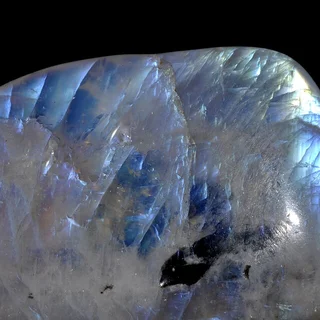
Moonstone Meaning, Stone Properties, and Effects
A comprehensive guide to moonstone's properties, history, lore surrounding femininity, intuition, and new moons, ideal pairings, mineral data, and FAQs. This is your go-to resource for incorporating this milky white stone, revered as the embodiment of the moon from ancient India to Rome, into your life.
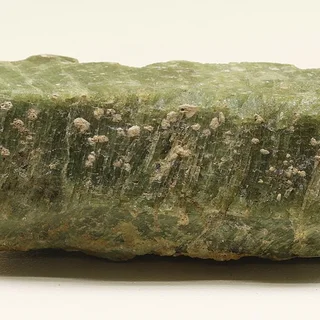

Apatite: Meaning, Stone Lore, and Effects
A comprehensive guide to Apatite: Its meaning, stone lore ('Communication, Academics, Goal Achievement'), effects, who it's recommended for, compatible stones, and purification methods. Discover the basics and practical uses of this 'Blue Guiding Stone' that helps you achieve your goals, all on one page.

How to Properly Wear Crystals
It's believed that the meaning of crystals changes depending on whether you wear them on your left or right hand. This beginner's guide provides a complete explanation of how to properly wear bracelets, pendants, rings, and earrings, how to align them with chakras, where to place them in your home, and even when not to wear them.
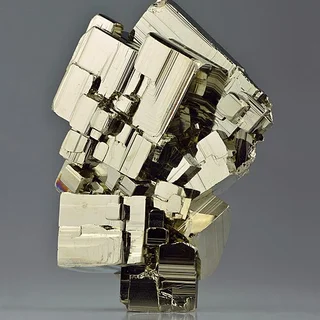

Pyrite (Iron Pyrite): Meaning, Stone Language, and Effects
A comprehensive guide to Pyrite (Iron Pyrite), covering its meaning, 'stone language' (financial luck, willpower, and warding off evil), effects, who it's recommended for, compatible stones, and purification methods. Discover the essentials and practical applications of this symbol of prosperity, famously known as 'Fool's Gold,' all in one place.