
A Hidden Oasis Between Skyscrapers
This article contains promotional content.
Koami Shrine in Tokyo's Nihonbashi, known for 'strong luck and protection.' Learn its history and the traditions of washing money.
Table of Contents (Tap to toggle)
Hi everyone! It's Sun-chan from Lucky Sun Shine!
You all work so hard every day, don't you? Ever feel like you want a change of luck, or wish you had the strength to overcome any hardship that comes your way?
Today I want to introduce you to Koami Shrine, tucked away in the heart of Tokyo's Nihonbashi financial district. Just a 5-minute walk from Ningyocho Station, surrounded by towering office buildings and securities firms, this tiny shrine suddenly appears right in the middle of the financial district.
Its grounds cover barely 20 tsubo (about 66 square meters)! Squeezed between two buildings, it feels like time itself stands still the moment you step inside, wrapped in a strange, warm calm.
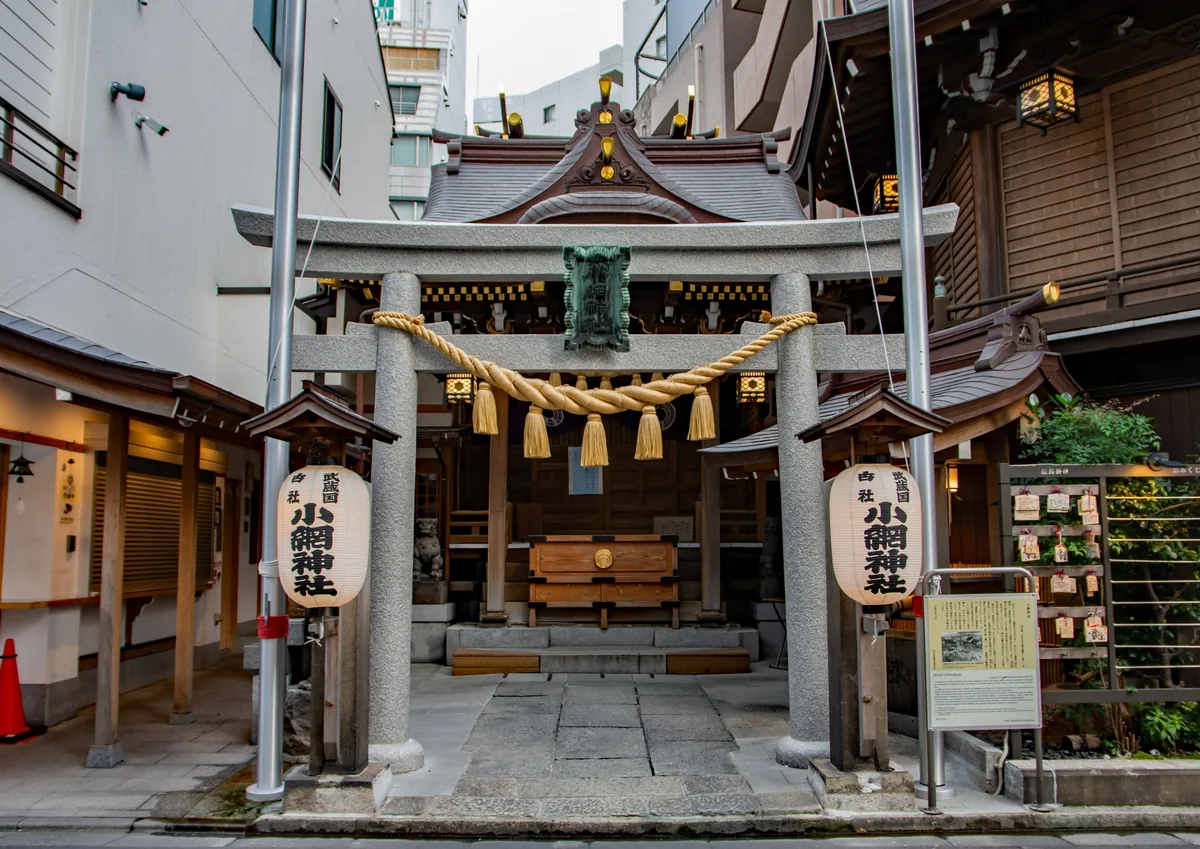
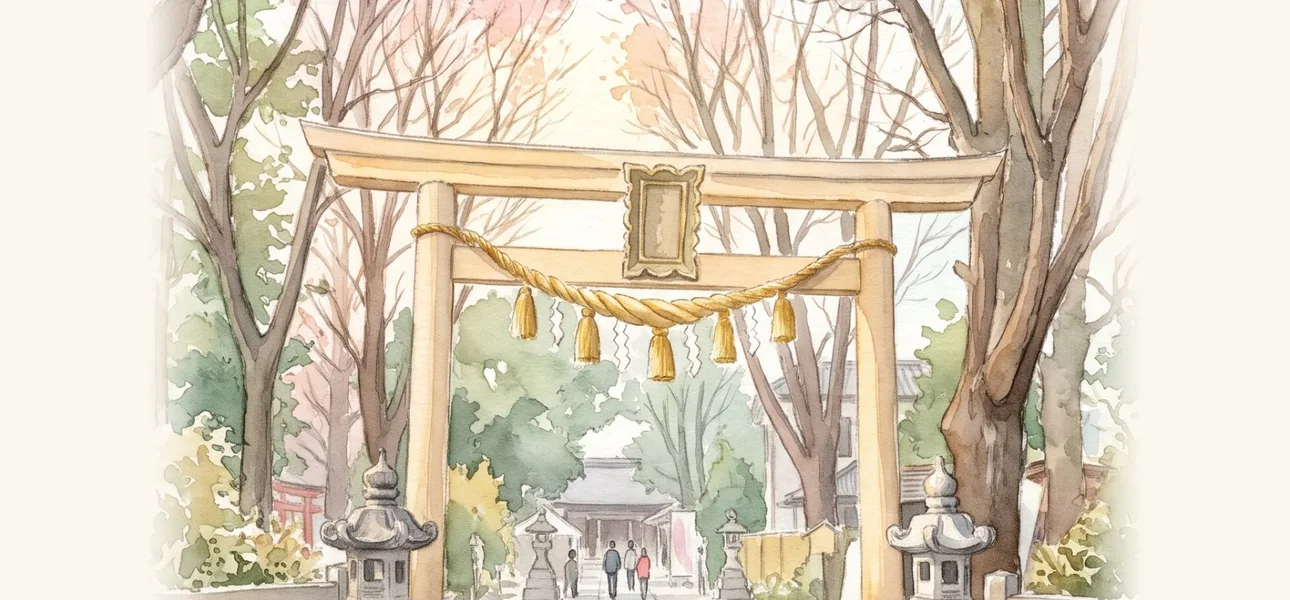
From the front, a blue-green plaque hangs at the center of the stone torii and a thick shimenawa rope sweeps across it in a wide arc. Paper lanterns reading "Koami Shrine" stand on both sides, with a rack of ema plaques and an information board to the right — the air is so calm you would never guess the shrine is squeezed between buildings ☀️ The offering box and the shrine building can be seen beyond.
Why has such a warm, historic sanctuary survived right in the middle of a modern metropolis? The answer lies in an incredible survival story that has earned this shrine its reputation as one of Japan's most powerful spiritual sites.
Today, Sun-chan is going to walk you through its deep history and highlights!
1. The Miraculous Legend of Protection That Survived Every Disaster
Lucky Charms and the All-Zelkova-Wood Main Hall — Absolute Protective Power That Overcomes Any Crisis
- What makes it special? Koami Shrine is beloved as a shrine of "strong luck and protection from misfortune" thanks to three historic miracles.
- The Great Kanto Earthquake miracle: During the 1923 earthquake, the head priest carried the shrine's sacred object to the nearby Shin-Ohashi Bridge and prayed. While surrounding bridges collapsed, Shin-Ohashi alone remained standing, saving the lives of the many people who had fled there.
- The WWII miracle: During the war, soldiers who received a departure blessing and charm from Koami Shrine before heading to the battlefield are recorded to have all returned home safely.
- The Tokyo air raids miracle: Even as the surrounding neighborhood burned during the 1945 Tokyo air raids, the beautiful all-zelkova-wood main hall and kagura stage, built in 1929, survived completely unscathed.
- Where does this power come from? The shrine's history stretches back roughly 1,000 years to the Heian period. In 1466, when a plague swept through the area, enshrining the deity of Inari brought the outbreak to an immediate end. A deep, ongoing wish to protect the local community from disaster has run through the shrine's history ever since, and it has proven its power by protecting both people and its buildings through earthquake after earthquake, war after war. That track record is exactly why it's still so deeply trusted today.
- Sun-chan's recommendation: I wholeheartedly recommend this shrine to anyone facing a major life challenge, or feeling anxious about an unlucky year or a big change in their life. No matter how fierce the storm, this shrine's warm, gentle light will protect you and give you the courage to keep moving forward.
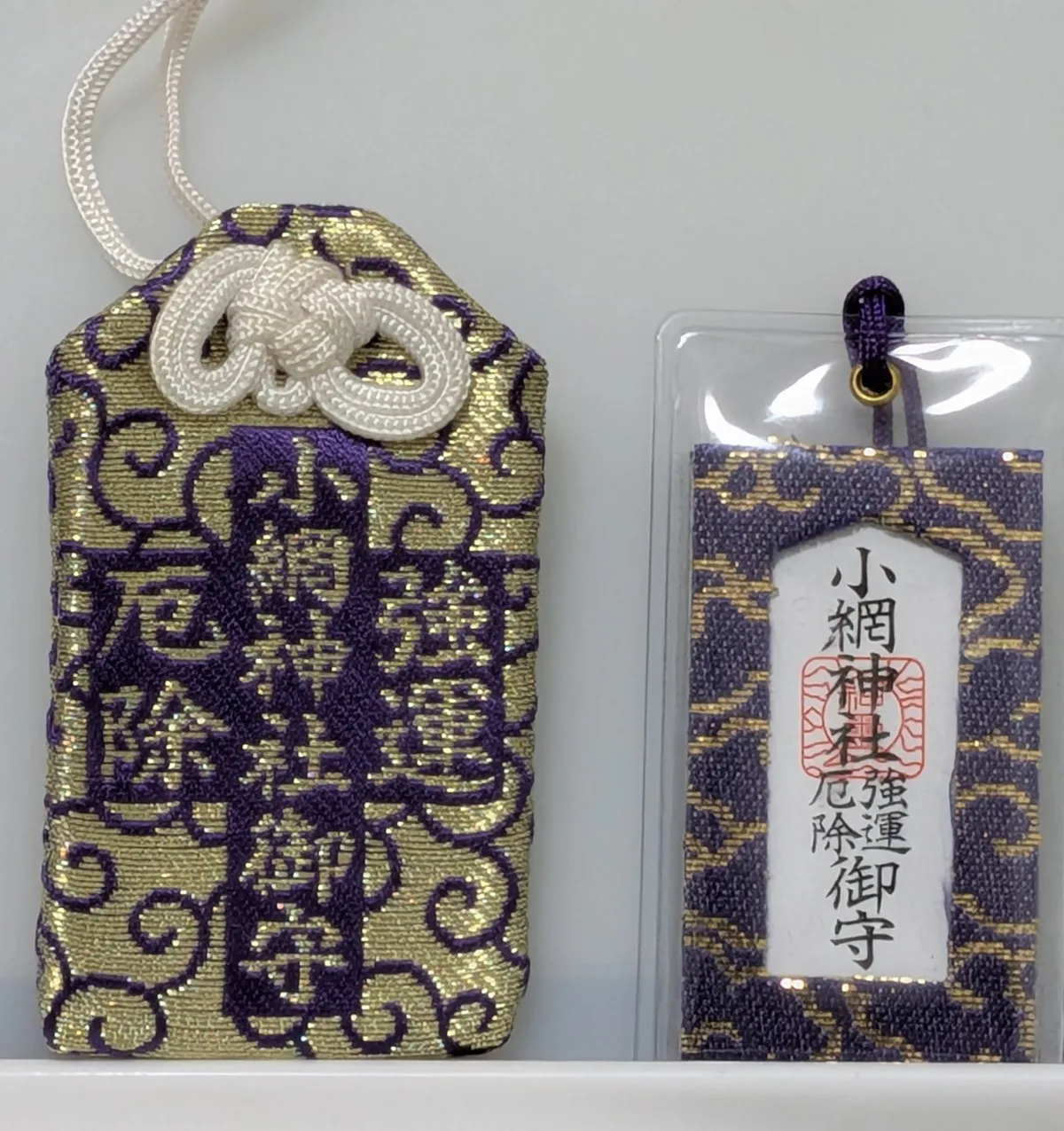
The pouch-style amulet is woven in purple with gold thread, and the card type on the right uses the same colors. Types and availability can change, so check at the amulet office when you visit.
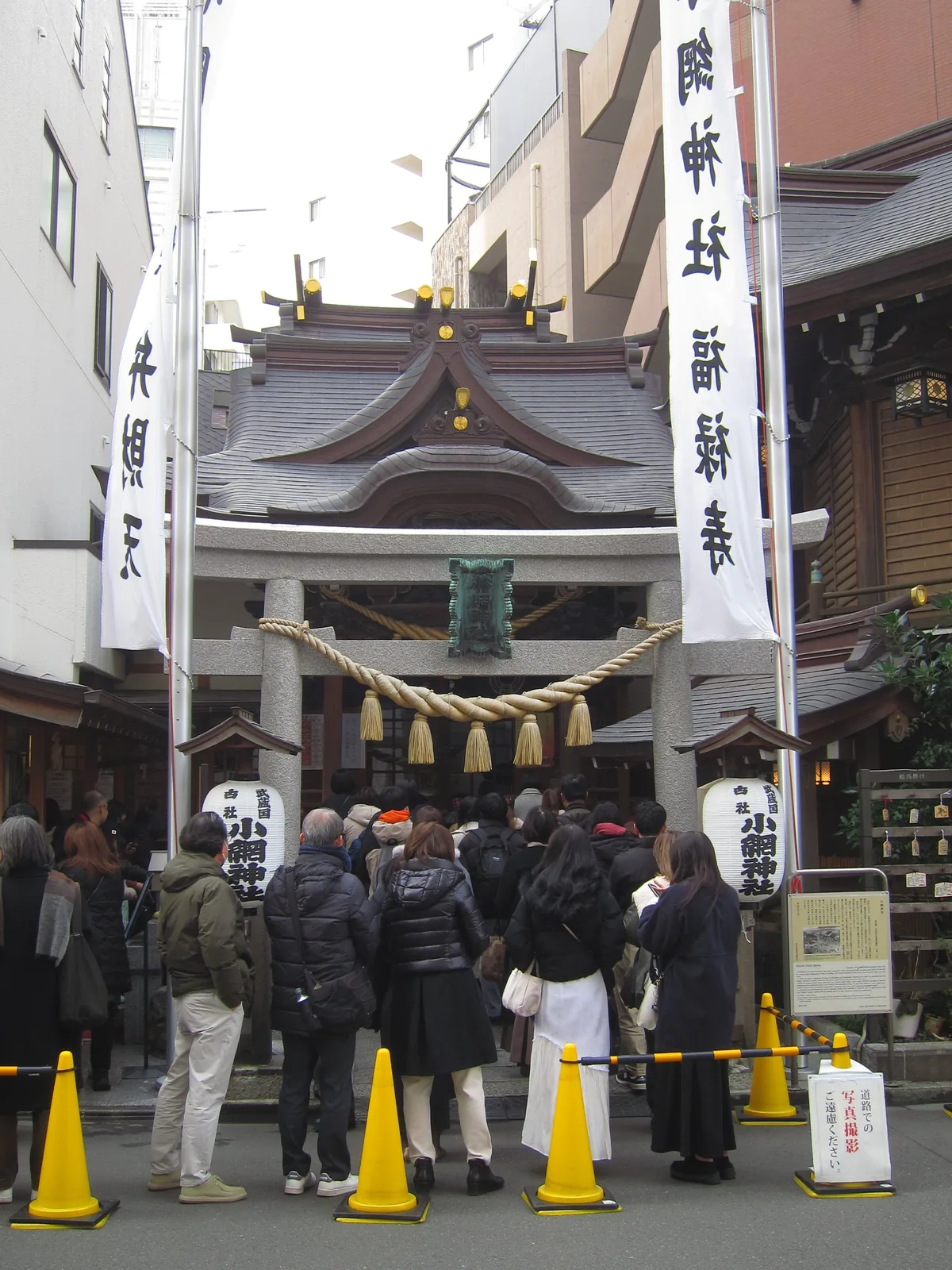
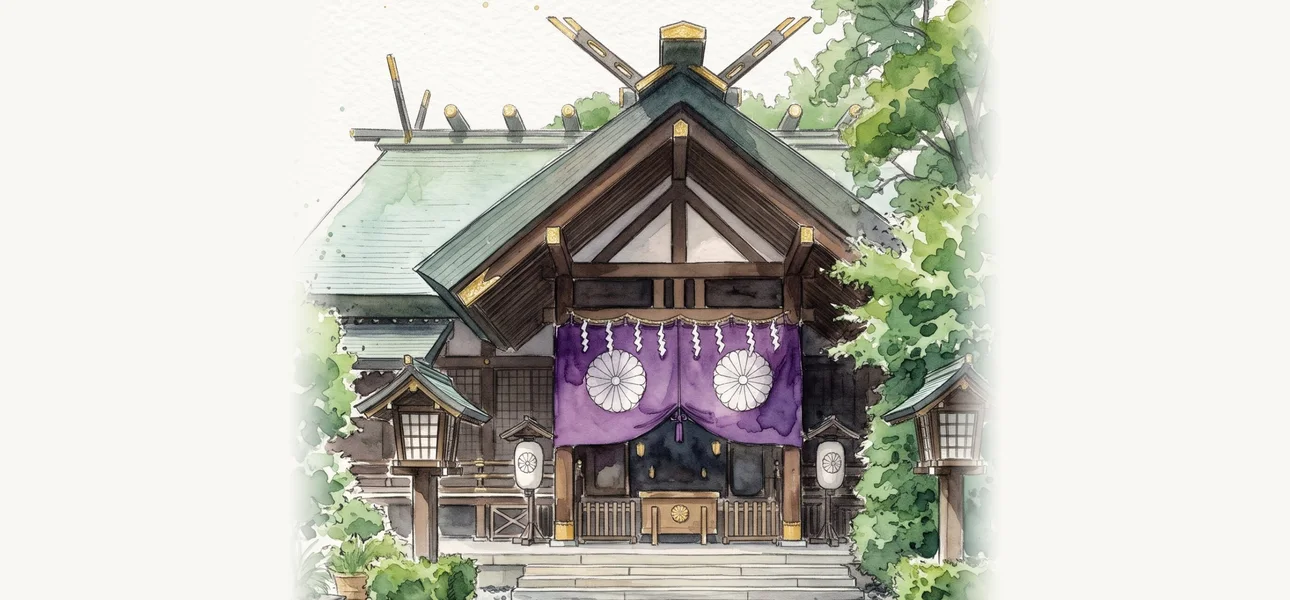
Looking up from in front of the torii, you can see gold ornaments glinting at the tips of the layered roofs — a small building with a surprisingly strong presence ✨ A blue-green plaque hangs at the center of the torii, and a line of worshippers waiting in front shows how beloved this shrine is.
2. Where Finance Meets Faith: The Tokyo Money-Washing Benten
The Tokyo Money-Washing Benten and Its Sacred Well — An Oasis for Cleansing Money with Gratitude
- What makes it special? At the "money-washing well" on the grounds, you can place coins — or even real 10,000-yen notes! — in a bamboo basket and rinse them in the pure water. Money washed here is called "seed money," and keeping it safely in your wallet is said to attract new wealth and abundance.
- Where does this power come from? The shrine enshrines Ichikishima-hime-no-kami, better known as Benzaiten, goddess of wealth and the arts. Washing money isn't just about making more of it — it carries a deeper meaning: cleansing away the tiredness and attachment that build up as money circulates through the world, and restoring it to its original, pure energy of abundance. Because the shrine sits right next to Nihonbashi Kabutocho, Tokyo's financial district, many securities professionals, businesspeople, and executives stop by on their lunch break to center themselves and circulate their money with a spirit of gratitude.
- Sun-chan's recommendation: Perfect for anyone hoping to boost their money luck, wanting a more positive mindset at work, or simply wanting to say thank you to the money that comes their way. Gently washing your money tends to leave your mind feeling just as refreshed and clear.
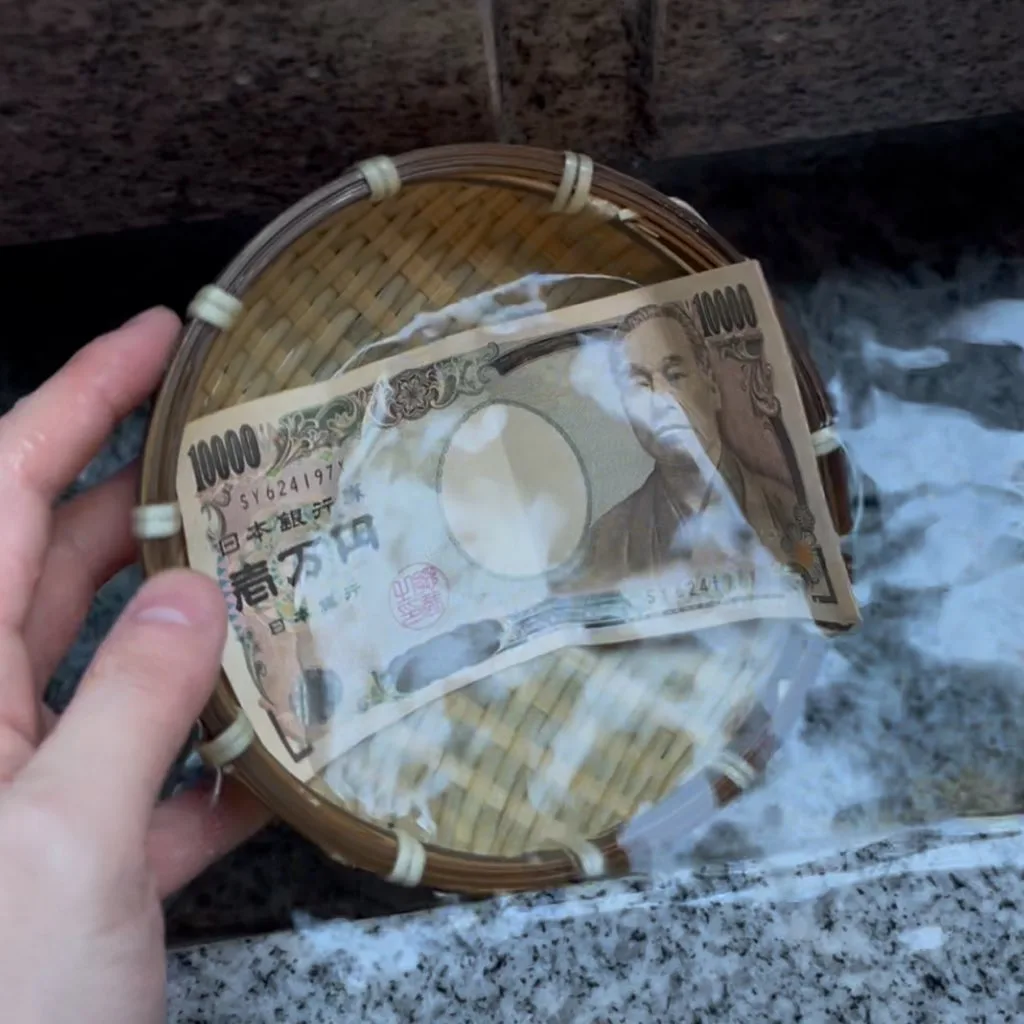
This gives you a feel for zeniarai, rinsing money in water. Follow the shrine's own guidance for how it is done and what you may wash.
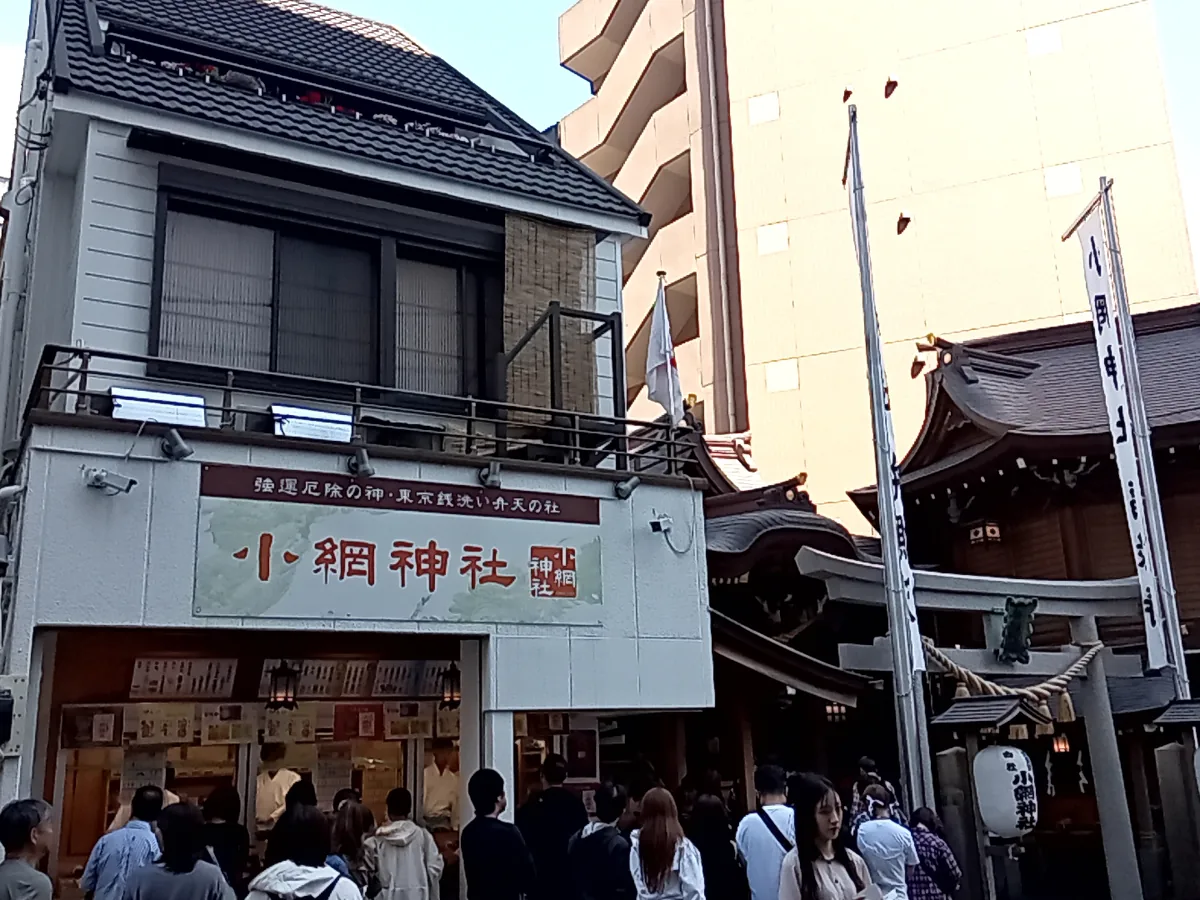
The sign above the amulet office, which faces the street, reads "Shrine of strong luck and protection, Tokyo Money-Washing Benten." Notices about the charms line the windows, and visitors were gathered in front. The torii peeks out at the right — a scene that is very Nihonbashi, with the city streets and the shrine side by side 💛
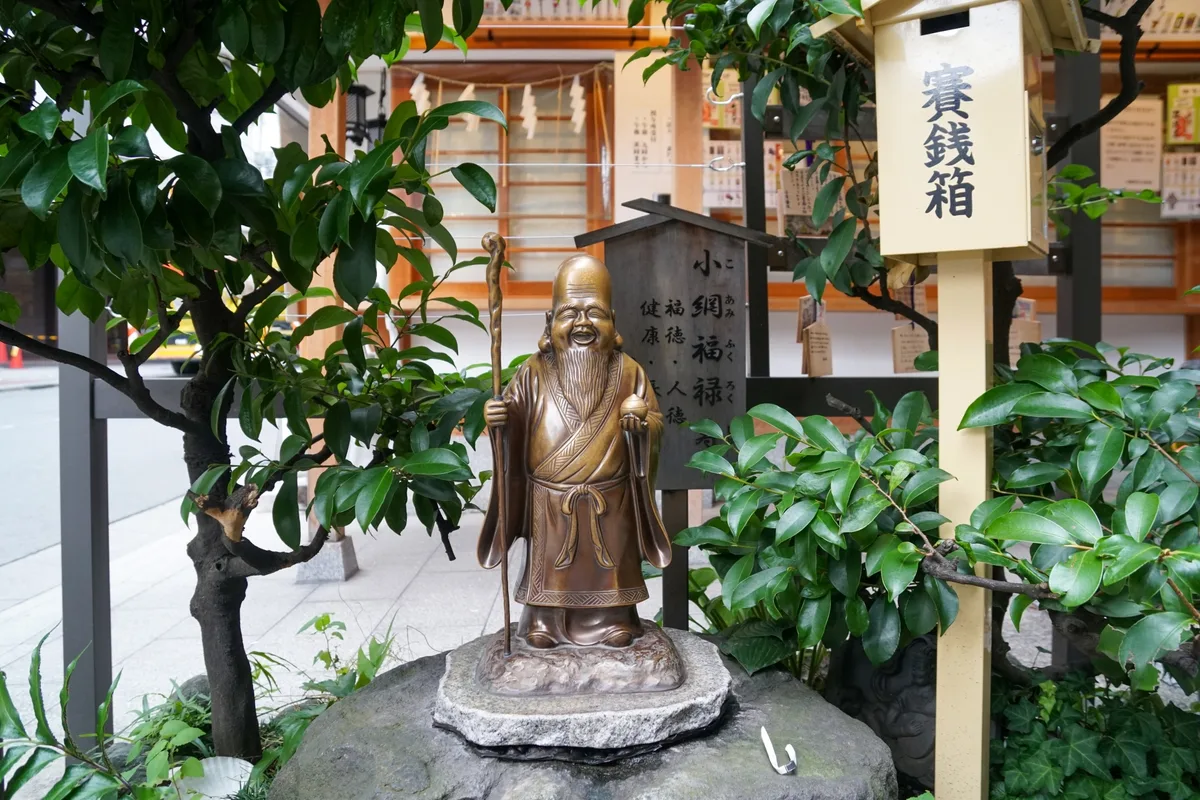
A statue of Fukurokuju, one of the Seven Lucky Gods, also stands in the grounds, holding a staff. The sign beside it reads "Koami Fukurokuju," and his smiling face is a warm sight. It sits in a leafy corner that hardly feels like it is between office buildings.
3. Adorable Charms and Delicate Carvings Worth Seeing
Mayudama Omikuji and the Ascending & Descending Dragon Carvings — Craftsmanship and a Bond That Lasts
- What makes it special? On the grounds you'll find "mayudama omikuji" — fortune slips tucked inside real silkworm cocoons, in soft shades of white, pink, and yellow that are simply adorable. Look up at the main hall and you'll also see stunning wood carvings of an ascending dragon and a descending dragon, crafted by a master artisan in 1929 — breathtaking in their detail.
- Where does this power come from? The cocoon used for the mayudama omikuji is made from a single, beautiful strand of silk thread — symbolizing the wish that your connection with the divine will be as fine, strong, and long-lasting as that thread. Even within its small grounds, the shrine has carefully preserved Japanese traditional craftsmanship and a spirit of gratitude, which is how these carvings and its unusual pentagonal kagura stage have survived to this day.
- Sun-chan's recommendation: Hugely popular with anyone hoping for a warm, meaningful connection, or anyone who just wants a peaceful escape from a busy day. The moment you hold one, you can feel the warmth of nature and the artisan's care.
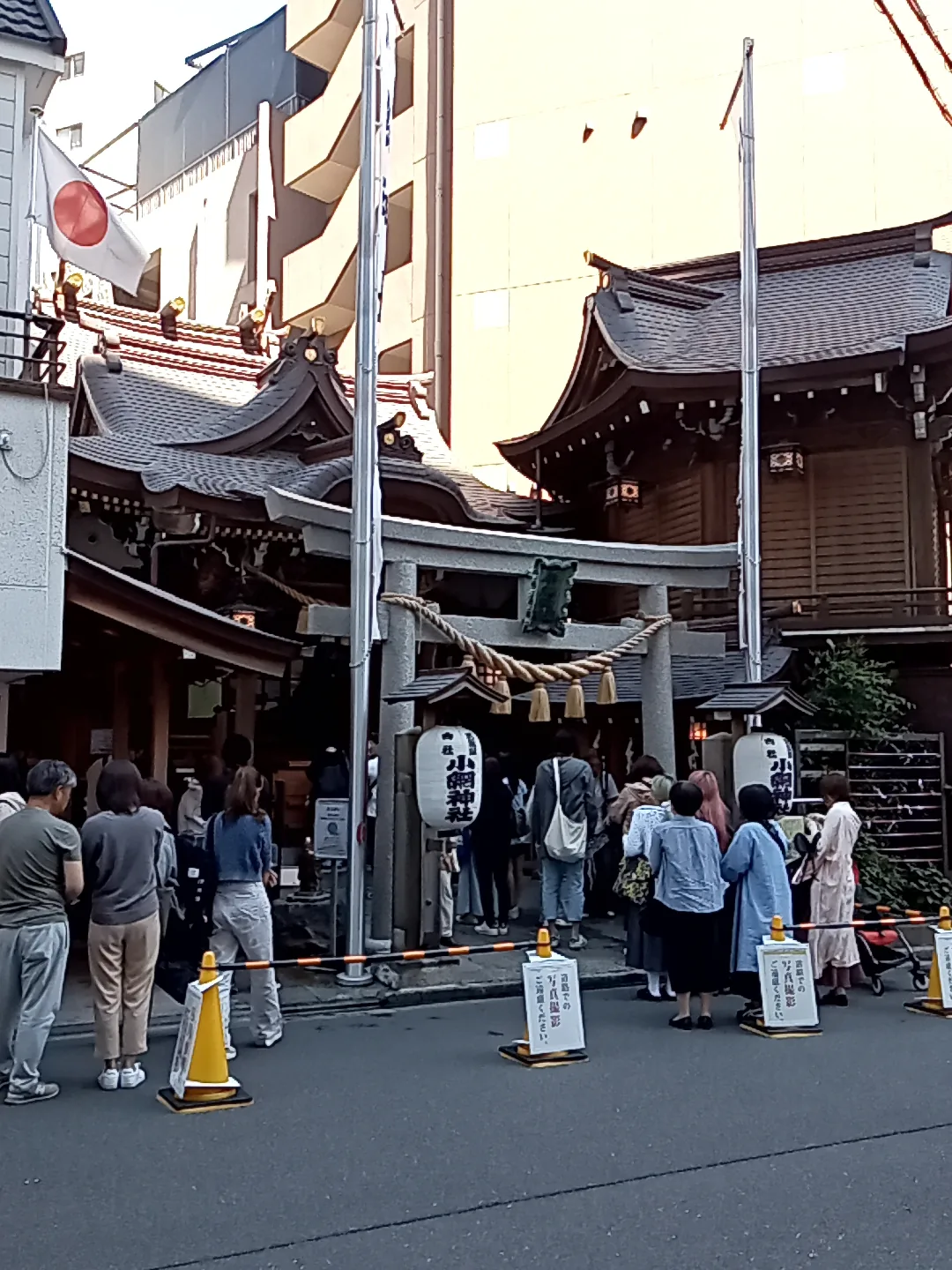
As in this photo, a line can form in front of the torii when many visitors arrive. Cones and signs are set out on the road, and the signs ask visitors not to take photos on the road (道路での写真撮影ご遠慮ください). Please follow the signs and be mindful of those around you so everyone can pray in peace ⛩️
In Closing
Koami Shrine is a true oasis, packed into the middle of a bustling city — full of the strength that has carried it through every hardship, and the gentle warmth that puts visitors' hearts and finances at ease.
Whether you're working hard in business or navigating everyday struggles, this shrine's power will wrap around you and reassure you that everything will be okay.
Whenever you're feeling a little worn out, or ready to take a new step forward, come visit Koami Shrine in Nihonbashi. Its warm, sunlight-like power is sure to brighten your everyday life.
Wishing everyone a day filled with happiness! This was Sun-chan, signing off!
Tags
この記事をシェアする
この記事が役に立ったら、SNSでシェアしていただけるととても嬉しいです☀️

Thanks so much for reading! I hope this article brought a little sunshine to your day! See you again soon!
Plan Your VisitAd
This section contains affiliate links. See our disclosure.
Plan your trip
Please check the details before booking.
This section contains affiliate links.
You might also like
Omiwa Shrine Worship Guide
This comprehensive guide covers the history, divine blessings, Mount Miwa faith, key worship points, Sai Shrine, the Medicinal Well, sacred mountain ascent (Tohhai), recommended crystals, and surrounding attractions of Omiwa Shrine (1422 Miwa, Sakurai City, Nara Prefecture). It's an essential resource for visiting a sacred site that continues to preserve one of Japan's oldest forms of primitive worship.
Tokyo Daijingu Shrine Guide: Tokyo's Ise Shrine for Love and Matchmaking
A visitor's guide to Tokyo Daijingu in Iidabashi, Tokyo: its history, deities, why it is known as the first shrine in Japan to hold a Shinto wedding, matchmaking charms and fortunes, tips for avoiding crowds, and access.
Tokyo's Most Powerful Money Luck Shrine: Hebikubo Shrine
Hebikubo Shrine in Shinagawa, Tokyo, is home to a White Snake deity that sheds its skin and is reborn, and a Dragon God that ascends to the heavens. Sun-chan explains its highlights, including the snake-petting stone and the money-washing ritual, and its blessings for wealth and career success.

Kanto's Power Spot Shrines
Discover carefully selected power spot shrines in the Kanto region. This guide compares the enshrined deities, benefits, highlights, access, and visiting tips for major shrines like Meiji Jingu (Tokyo), Enoshima Shrine (Kanagawa), and Mitsumine Shrine (Saitama) all on one page. Your essential guide for day trips and weekend tours of Kanto's renowned shrines.