
Yakushima Pilgrimage Guide
This article contains promotional content.
A comprehensive guide to Yakushima Island (Yakushima Town, Kumage District, Kagoshima Prefecture), covering its geology, World Natural Heritage status, Jomon Sugi, Shiratani Unsuikyo, Yaku Shrine, Mount Miyanoura, the 'Princess Mononoke' inspiration, Yakusugi Land, pilgrimage tips, access, recommended crystals, and FAQs.
Table of Contents (Tap to toggle)
Introduction
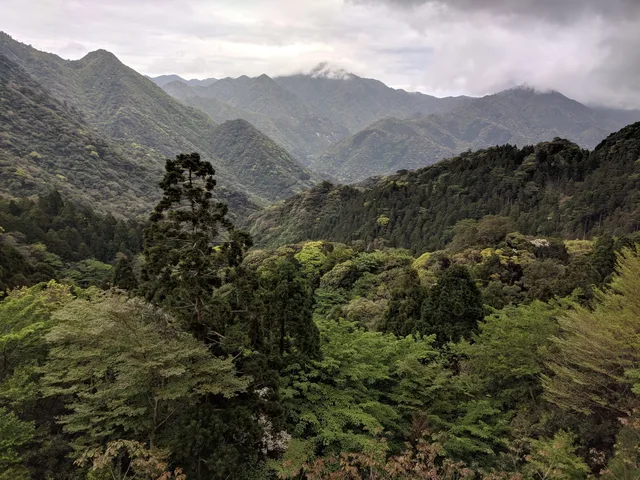
Yakushima is an island with a circumference of approximately 132 km, floating in the East China Sea, about 60 km south of the Kyushu mainland. At its center stands Mount Miyanoura (1,936m above sea level), Kyushu's highest peak, and it is known as the "Ocean Alps" due to its vertical distribution of vegetation, ranging from subtropical to subarctic zones. From the Jomon Sugi, said to be 7,200 years old, to the moss-covered primeval forest of Shiratani Unsuikyo (the real-world inspiration for the film Princess Mononoke), and Nagata Inaka Beach where sea turtles lay their eggs—the entire island is one of the ultimate natural power spots. It was registered as Japan's first World Natural Heritage site in 1993. This article comprehensively covers its geology, World Heritage status, Jomon Sugi, Shiratani Unsuikyo, Yaku Shrine, FAQs, and a postscript on a single page.
Table of Contents
- Basic Information and Data
- Yakushima's Nature and World Natural Heritage
- Spiritual Benefits
- About Jomon Sugi
- Shiratani Unsuikyo and Princess Mononoke's Forest
- Yaku Shrine (Yakushima's Oldest Shrine)
- Yakusugi Land and Kigen Sugi
- Key Pilgrimage Tips
- Access
- Recommended Crystals
- Nearby Spots You Might Want to Visit
- Recommended Seasons and Times
- Unique Yakushima Etiquette
- Frequently Asked Questions (FAQ)
- A Word from Sun-chan
- Related Articles You Might Also Like
Basic Information and Data
| Item | Content |
|---|---|
| Official Name | Yakushima |
| Location | Yakushima Town, Kumage District, Kagoshima Prefecture |
| Type | Nature, Sacred Site |
| Area | Approx. 504 km² |
| Highest Peak | Mount Miyanoura (1,936m above sea level, Kyushu's highest peak) |
| World Natural Heritage | 1993 (Japan's first) |
| Main Shrine | Yaku Shrine (Miyanoura, Yakushima Town) |
| Official Website | https://yakushima-info.com |
Yakushima's Nature and World Natural Heritage
In December 1993, Yakushima was registered as Japan's first World Natural Heritage site, alongside Shirakami-Sanchi. The reasons for its registration are its valuable ecosystem, with vegetation vertically distributed from subtropical to subarctic zones, and its primeval forests of Yakusugi (Yakushima cedars) that are thousands of years old.
It is one of Japan's rainiest regions, famously described by Fumiko Hayashi as "having rain 35 days a month," with annual precipitation reaching about 8,000 mm in mountainous areas. This abundant water has nurtured the Yakusugi and the moss-covered primeval forests. Yakusugi refers to Japanese cedars over 1,000 years old; those younger are distinguished as "kosugi" (young cedars).
Spiritual Benefits
- Purification and mental and physical reset (from the energy of the primeval forest)
- Restoration of vitality (from the energy of the millennia-old Yakusugi)
- Longevity and good health
- Creativity and artistic inspiration (from the world of Princess Mononoke)
- New beginnings and determination
About Jomon Sugi
The symbol of Yakushima, "Jomon Sugi," is one of Japan's largest Yakusugi cedars, estimated to be 2,170 to 7,200 years old (with various theories). This giant tree, with a trunk circumference of 16.4 meters and a height of 25.3 meters, has become a symbol of Yakushima tourism since its discovery in 1966.
The trail to Jomon Sugi is a serious trekking route, covering approximately 22 km round trip from Arakawa Trailhead and taking about 10 hours. It is divided into a first half along an old railway track and a second half with a steep ascent, with departure around 5 AM being standard. For beginners, the accompaniment of a mountain guide is highly recommended. There are private car restrictions (March to November), so bus use from Yakusugi Nature Museum and other locations is essential.
Shiratani Unsuikyo and Princess Mononoke's Forest
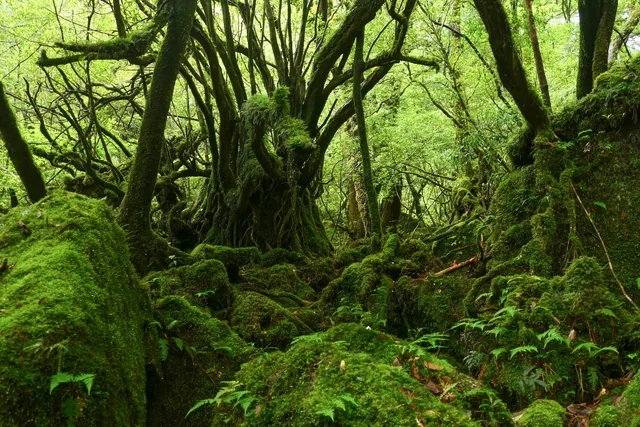
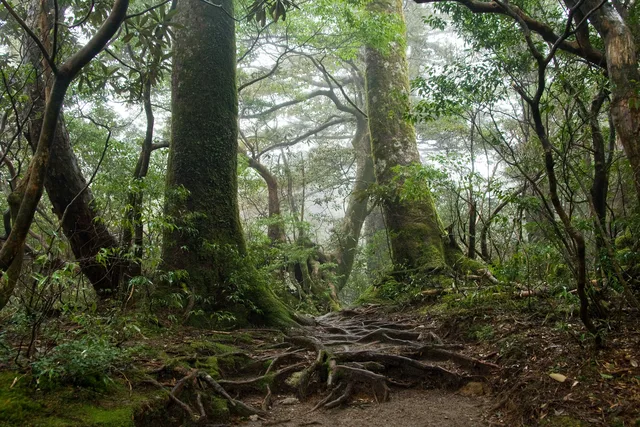
Shiratani Unsuikyo is a valley about a 30-minute drive from Miyanoura. It is a primeval forest of moss-covered woods and giant trees, with the highlight being "Mononoke's Forest" (Moss-covered Forest), which served as the inspiration for the world of the film Princess Mononoke.
It doesn't require the same level of physical fitness as Jomon Sugi, and offers multiple routes such as the Yayoi Sugi Course (approx. 2 hours), Bugyo Sugi Course (approx. 4 hours), and Taikoiwa Course (approx. 5 hours), making it an ideal spot for beginners to experience Yakushima, enjoyable for everyone from novices to experienced hikers. Even on rainy days, the moss shines even more beautifully, offering a different kind of charm.
Yaku Shrine (Yakushima's Oldest Shrine)
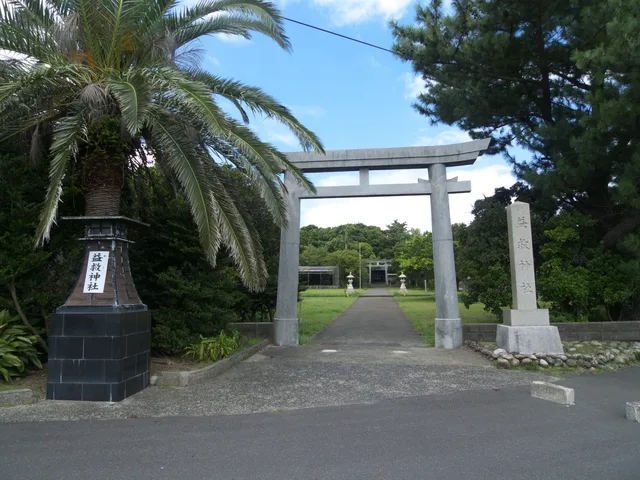
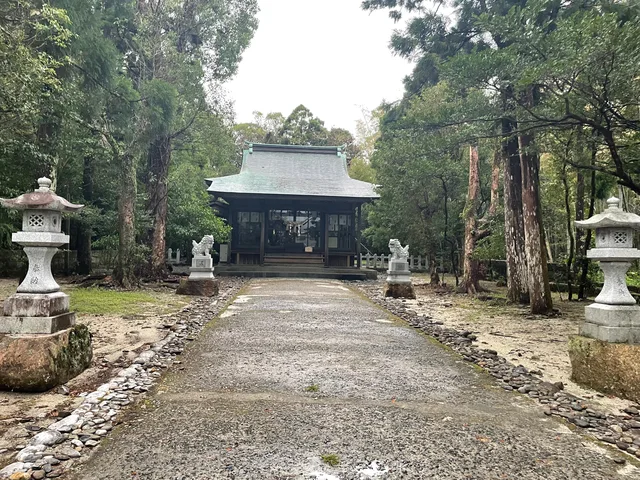
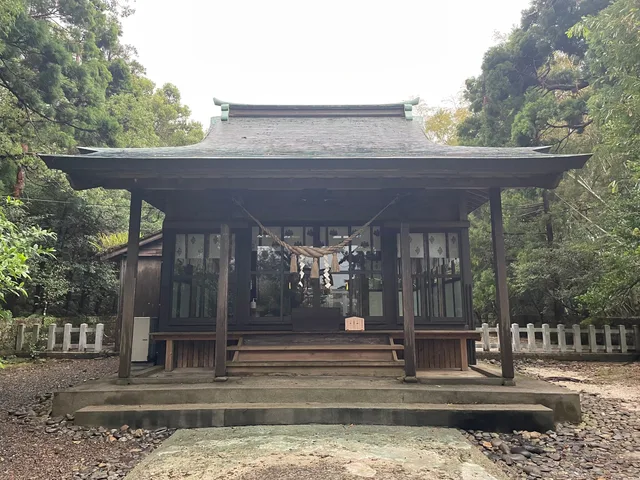
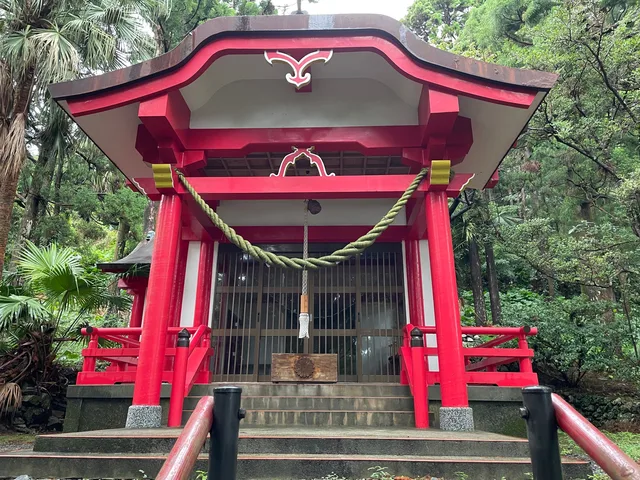
Located in Miyanoura, Yakushima, "Yaku Shrine" is the island's guardian shrine (sōchinju). It is known as the "southernmost Shikinaisha (shrine listed in the Engishiki Jinmyocho) in Japan," and its enshrined deities include Amatsuhiko Hohodemi no Mikoto and other mythological gods.
Many visitors stop here before exploring Yakushima to pray for safe travels and a successful pilgrimage, and it has long been deeply revered as the island's spiritual pillar.
Yakusugi Land and Kigen Sugi
Yakusugi Land is an area where you can view Yakusugi cedars accessible by car. It's a natural recreation forest at an altitude of about 1,000m, with courses of varying difficulty (30-minute, 50-minute, 80-minute, and 150-minute options), making it a popular spot where you can experience Yakusugi even without full climbing gear.
Nearby, "Kigen Sugi" is a giant tree estimated to be 3,000 years old, and it's located right next to the road, making it accessible to everyone. It offers a precious "giant tree experience" for those who cannot undertake the hike to Jomon Sugi.
Key Pilgrimage Tips
- Jomon Sugi trekking requires essential gear and physical fitness; a guide is recommended.
- Shiratani Unsuikyo can be experienced in half a day, ideal for beginners to Yakushima.
- Report your arrival on the island and pray for safety at Yaku Shrine.
- As it's a rainy island, rain gear and a waterproof backpack cover are essential.
- Walk with the mindset of "borrowing from nature" (take everything you brought with you back).
- Absolutely do not step on Yakusugi roots, and avoid trampling on moss.
Access
From Kagoshima Mainland:
- High-speed ferry Toppy (Kagoshima Port → Miyanoura Port and Anbo Port) approx. 2 hours
- Ferry Yakushima 2 (Kagoshima Port → Miyanoura Port) approx. 4 hours
- Airplane (Kagoshima Airport → Yakushima Airport) approx. 40 minutes
Island Transportation: Rental cars and taxis are standard. Buses are infrequent and inconvenient for sightseeing.
Parking: Parking is available at major tourist spots. Private car restrictions are in place for a long period (March to November) at the Jomon Sugi trailhead (Arakawa Trailhead), so using the shuttle bus from Yakusugi Nature Museum is generally required.
Recommended Crystals
Here are some stones said to resonate easily with the energy of the sacred site when brought to Yakushima for your pilgrimage.
| Stone | Reason for Affinity |
|---|---|
| Amber | Resonates with ancient life energy, connecting to the timeline of Yakusugi |
| Aventurine | Forest bathing energy, green healing |
| Clear Quartz | Purifies and amplifies natural energy |
| Moss Agate | Symbol of moss and forest, harmony with nature |
Nearby Spots You Might Want to Visit
- Shiratani Unsuikyo — Mononoke's Forest and moss-covered primeval forest
- Yakusugi Land and Kigen Sugi — Yakusugi accessible by car
- Oko-no-Taki Waterfall — One of Japan's Top 100 Waterfalls, with an 88m drop
- Nagata Inaka Beach — Japan's largest sea turtle nesting site (May to July)
- Hirauchi Kaichu Onsen — A seaside open-air hot spring accessible only at low tide
Recommended Seasons and Times
The fresh green season from April to June and autumn in October and November are relatively easy for hiking. The rainy season (mid-June to July) and typhoon season (August to September) often make hiking difficult. In winter, there is snow in the mountainous areas, and traverses like Mount Miyanoura require snow mountain equipment. If you want to see sea turtle egg-laying, visit from May to July; for hatching, late July to September.
Unique Yakushima Etiquette
- At Yaku Shrine and other shrines, follow the two bows, two claps, one bow ritual.
- Absolutely do not step on Yakusugi roots (to protect the bark).
- Do not trample on moss or vegetation, and stay on marked trails.
- Take all your trash with you (to protect the natural heritage).
- Do not feed wild animals (Yakushima deer and Yakushima macaques).
- Carry a portable toilet and use it only in designated areas (Jomon Sugi trail).
If you're unsure about basic shrine etiquette, please also refer to our Complete Guide to Shrine Visits.
Frequently Asked Questions (FAQ)
Q1. Can beginners hike to Jomon Sugi?
A. It's a long-distance trek of approximately 11 km one-way and 10 hours round-trip, requiring sufficient physical fitness and gear regardless of prior hiking experience. For beginners, the accompaniment of a mountain guide is highly recommended. Departing around 5 AM is standard, and a headlamp is essential.
Q2. Is Shiratani Unsuikyo worth visiting on its own?
A. Yes, absolutely! The moss-covered forest scenery encapsulates the essence of Yakushima, and if you want to experience the world of Princess Mononoke, Shiratani Unsuikyo is the perfect choice. The Bugyo Sugi Course (approx. 4 hours) is an easy-to-walk trail for beginners, visiting Yayoi Sugi and Sanbon-ashi Sugi (Three-legged Cedar).
Q3. What about rain precautions?
A. Yakushima is extremely rainy, famously described as having "rain 35 days a month." Be sure to bring full-fledged rain gear like Gore-Tex, a waterproof backpack cover, change of clothes, and quick-drying base layers. Even on rainy days, the moss looks beautiful, offering a different kind of charm.
Q4. What is the cost for a Jomon Sugi trekking guide?
A. The average cost is 20,000 to 25,000 yen per person (as of 2026). Prices vary for small-group guides and early morning departure plans. Choose a reputable guide service like "YNAC (Yakushima Nature Activities Center)" from a booking site.
Q5. Can I see sea turtle egg-laying?
A. Egg-laying can be observed at Nagata Inaka Beach from mid-May to July. Observation tours require advance reservations through the Nagata Sea Turtle Conservation Council. Flash photography is strictly prohibited; observe quietly from the designated distance.
A Word from Sun-chan
Yakushima is an island where everyone who visits says, "My sense of time changed here." Standing before the millennia-old Yakusugi, one's own lifespan feels incredibly short, and at the same time, the preciousness of "being able to stand here right now" gradually sinks in. Rain, moss, giant trees, and the sea—each has an overwhelming presence, offering visitors a time for reset. It's an island you'd want to visit at least once in your life—no, an island you'd want to visit again and again!
Related Articles You Might Also Like
- Complete Guide to Shrine Visits — Etiquette, manners, and pilgrimage methods for different wishes
- Kirishima Jingu Shrine Pilgrimage Guide — A sacred site of mythology in the same Kagoshima Prefecture
- Takachiho Gorge Pilgrimage Guide — A power spot of mythology and nature
- Amber: Meaning and Effects — Symbol of ancient life
Summary
- Yakushima is Japan's first World Natural Heritage site (1993), known as the Ocean Alps.
- Jomon Sugi is thousands of years old, requiring a serious 11 km one-way trek.
- Shiratani Unsuikyo is the model for Princess Mononoke, a moss-covered primeval forest.
- Yaku Shrine is Yakushima's oldest shrine, the southernmost Shikinaisha in Japan.
- A sacred site where abundant rain, hiking gear, and nature conservation etiquette are essential.
When you seek a major reset in life, or desire creative inspiration, the power of Yakushima's ancient cedars and primeval forests will surely embrace you across millennia.
Tags
この記事をシェアする
この記事が役に立ったら、SNSでシェアしていただけるととても嬉しいです☀️

Thanks so much for reading! I hope this article brought a little sunshine to your day! See you again soon!
Plan Your VisitAd
This section contains affiliate links. See our disclosure.
Plan your trip
Please check the details before booking.
This section contains affiliate links.
You might also like
Omiwa Shrine Worship Guide
This comprehensive guide covers the history, divine blessings, Mount Miwa faith, key worship points, Sai Shrine, the Medicinal Well, sacred mountain ascent (Tohhai), recommended crystals, and surrounding attractions of Omiwa Shrine (1422 Miwa, Sakurai City, Nara Prefecture). It's an essential resource for visiting a sacred site that continues to preserve one of Japan's oldest forms of primitive worship.
Kasuga Taisha Shrine Visiting Guide
A comprehensive guide to Kasuga Taisha Shrine (160 Kasuganocho, Nara City, Nara Prefecture), covering its history, blessings, visiting tips, Meoto Daikokusha Shrine, Mantoro Lantern Festival, sacred deer, recommended crystals, and nearby attractions. This is your essential guide for visiting a World Heritage site and a cultural asset of ancient Nara.
Kirishima Jingu Pilgrimage Guide
A comprehensive guide to Kirishima Jingu (Kirishima City, Kagoshima Prefecture), covering its history, Ninigi-no-Mikoto, the Tenson Korin myth, the vermilion National Treasure shrine, Sakamoto Ryoma's honeymoon, Mt. Takachiho trailhead, key visiting points, access, recommended crystals, nearby attractions, and FAQs.

Ise Grand Shrine Pilgrimage Guide
This comprehensive guide covers the history, blessings, official pilgrimage order (Geku to Naiku), nearby power spots, model itineraries, etiquette, and recommended crystals for Ise Grand Shrine, revered as 'Japan's Chief Guardian Deity.' It's an easy-to-understand, essential guide for first-time visitors.