
8 More Temple-Gate Sweets to Eat After Your Prayer (Part 2): A Guide to Japan's Shrine and Temple Treats
Hato sablé at Tsurugaoka Hachimangu, ningyo-yaki at Senso-ji, tengu-yaki on Mount Takao, mitarashi dango at Shimogamo, kiyome mochi at Atsuta Jingu, itokiri mochi at Taga Taisha, kibi dango at Kibitsu Shrine and kyu-man at Kotohira-gu. Stories, wishes and flavors for each.
Table of Contents (Tap to toggle)
Introduction
In Part 1 we paired five shrines with the sweets to eat after praying. Part 2 adds eight more temple-gate treats from across Japan, from the pigeon-shaped biscuits of Kamakura and the ningyo-yaki of Asakusa to a tengu-faced cake on Mount Takao and the blue-and-red striped mochi of Taga. Each one is tied to a deity, a legend, or a wish.
Many of these are easy to bring home, so they also make good souvenirs for visitors from abroad.
Table of Contents
- The 8 Sweets at a Glance
- 1. Hato Sablé (Tsurugaoka Hachimangu, Kamakura)
- 2. Ningyo-yaki (Senso-ji, Tokyo)
- 3. Tengu-yaki (Takao-san Yakuo-in, Tokyo)
- 4. Mitarashi Dango (Shimogamo Shrine, Kyoto)
- 5. Kiyome Mochi (Atsuta Jingu, Nagoya)
- 6. Itokiri Mochi (Taga Taisha, Shiga)
- 7. Kibi Dango (Kibitsu Shrine, Okayama)
- 8. Kyu-man (Kotohira-gu, Kagawa)
- Tips for Pairing Prayer and Sweets
- Frequently Asked Questions (FAQ)
- Related Articles You Might Enjoy
The 8 Sweets at a Glance
| Sweet | Shrine or temple | Wish it is paired with |
|---|---|---|
| Hato Sablé | Tsurugaoka Hachimangu (Kanagawa) | Victory, good luck |
| Ningyo-yaki | Senso-ji (Tokyo) | Household safety, good luck (Kannon) |
| Tengu-yaki | Takao-san Yakuo-in (Tokyo) | Warding off evil |
| Mitarashi Dango | Shimogamo Shrine (Kyoto) | Warding off misfortune, good health |
| Kiyome Mochi | Atsuta Jingu (Aichi) | Purification, a thriving household business |
| Itokiri Mochi | Taga Taisha (Shiga) | Long life, love and good connections |
| Kibi Dango | Kibitsu Shrine (Okayama) | Courage, victory (Momotaro legend) |
| Kyu-man | Kotohira-gu (Kagawa) | Safe travels, relief from tired legs |
The wishes above are traditional associations and local stories, offered as a guide for pairing, not a guarantee of results.
1. Hato Sablé (Tsurugaoka Hachimangu, Kamakura)
Tsurugaoka Hachimangu is Kamakura's best-known shrine, and many visitors leave with a box of pigeon-shaped biscuits.
The story: Toshimaya's founder is said to have been so impressed by a Western biscuit given to him by a foreigner that he spent years trying to recreate it. He was devoted to Hachiman, the deity of the shrine. The character for "eight" (八) on the plaque of the main hall is a design made by combining pigeons, and pigeons on the grounds were beloved by children. That is said to be how the "pigeon sablé" got its name and shape.
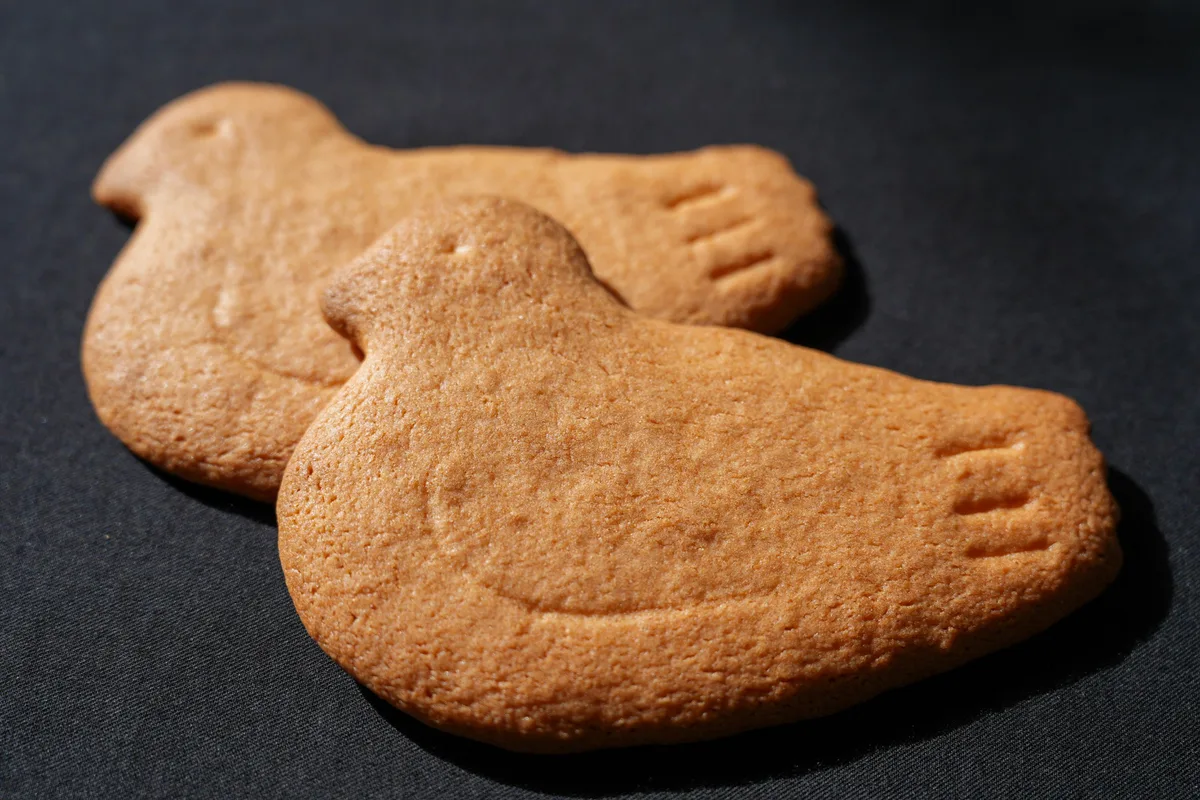
How it tastes: A crisp, buttery biscuit. The cute pigeon shape makes it a pleasure to look at even after you get home.
A note: Hachiman is widely regarded as a deity of victory, so it is a fitting treat to bring back before an important exam or match.
2. Ningyo-yaki (Senso-ji, Tokyo)
Senso-ji in Asakusa enshrines Kannon, the bodhisattva of compassion. Shops on and around the grounds sell freshly baked ningyo-yaki, a staple souvenir for visitors.
The story: Ningyo-yaki is said to have originated in Ningyocho in Tokyo's Nihonbashi district. As the name ("doll cake") suggests, it is baked in the shapes of faces, bodies and animals. The long-established Asakusa shop Kimuraya Ningyoyaki Honpo is described as dating back to the early Meiji era.
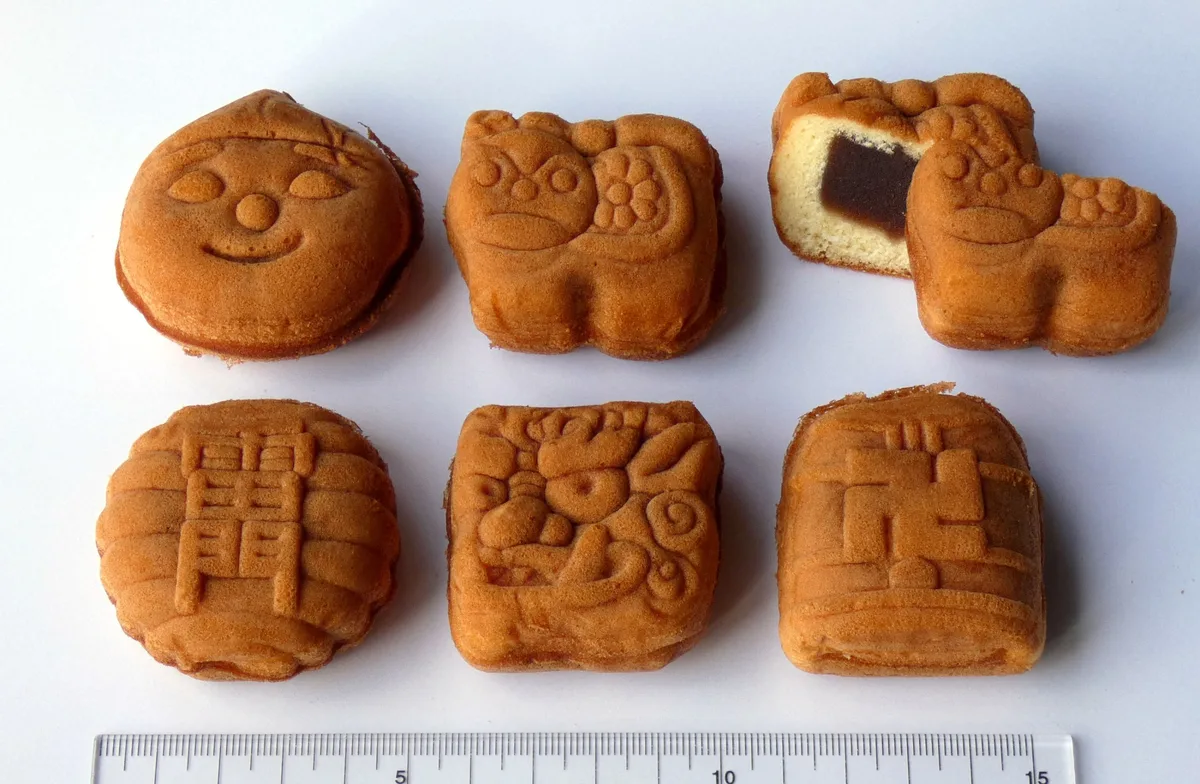
How it tastes: A simple cake with sweet bean filling, baked in a mold. At Kimuraya the molds are a pigeon, a lantern, the thunder god and a five-story pagoda, and watching them baked at the shopfront is part of the fun. The photo shows ningyo-yaki from the long-established Tokiwado.
A note: With so many cute shapes, it is a perfect keepsake of your visit.
3. Tengu-yaki (Takao-san Yakuo-in, Tokyo)
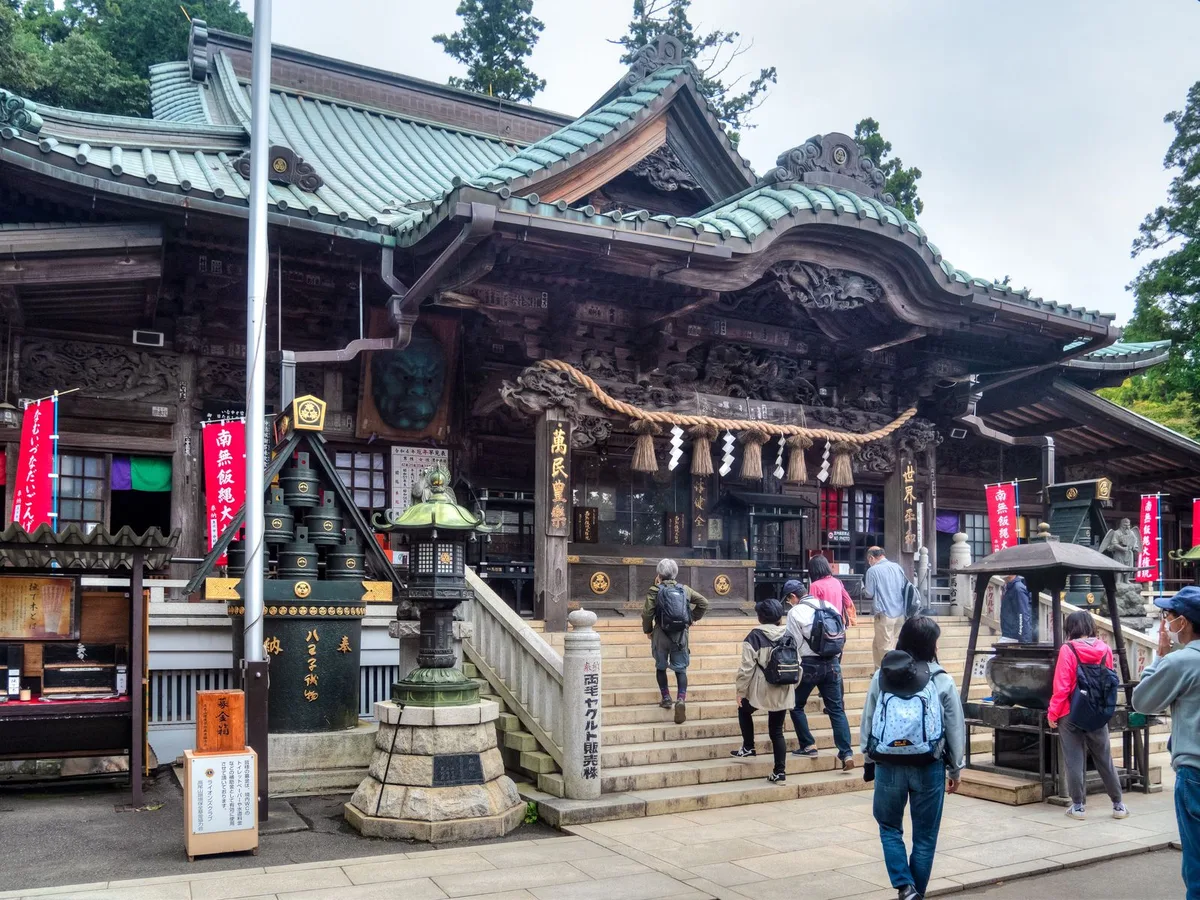
Mount Takao is a sacred mountain near Tokyo. At Yakuo-in, the attendants of the deity Iizuna Gongen are said to be tengu, long-nosed or crow-faced mountain spirits, and a crow tengu statue stands in front of the temple's main shrine.
What is it? A grilled cake pressed in a tengu-face mold, a bit like taiyaki. The crisp outside and chewy inside hold sweet black soybean paste made with Hokkaido beans. It is reported to be sold basically only at Takaosan Sumika, next to Takaosan Station on the cable car.
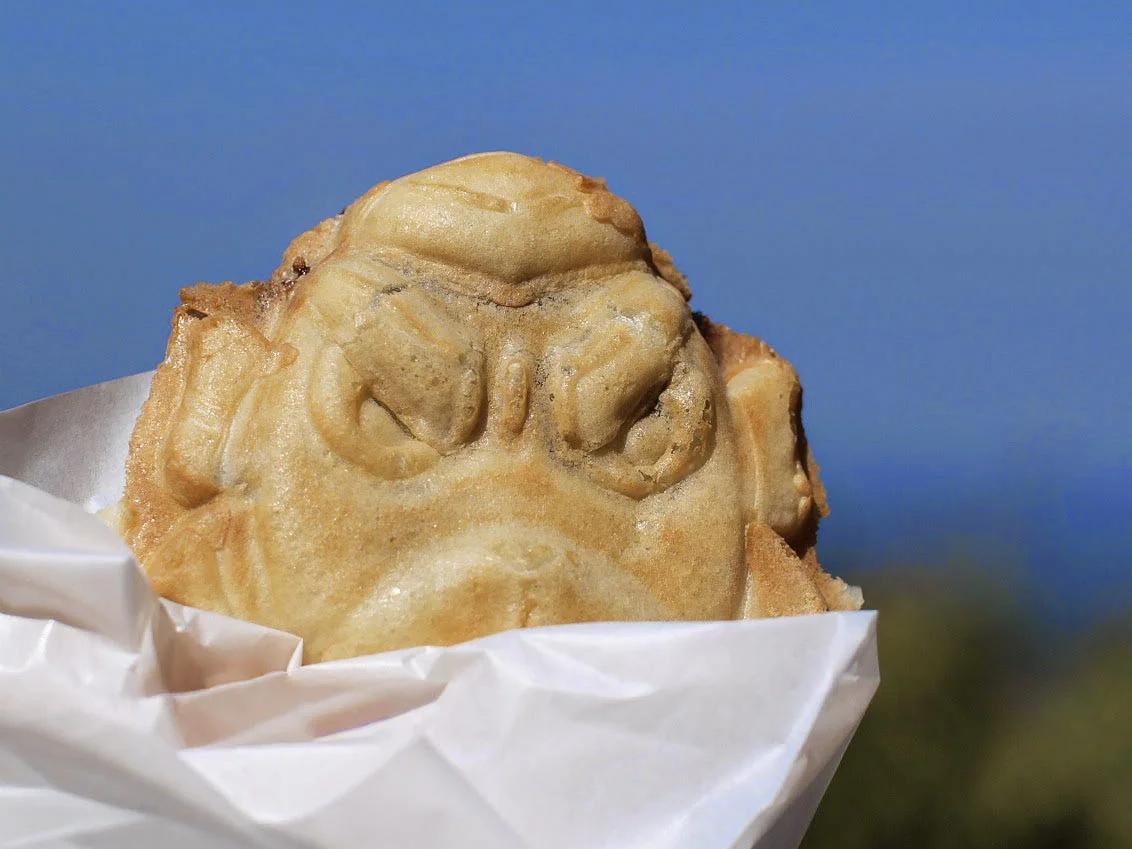
A note: The crow tengu is said to have the power to cut away evil. Take a bite of its face while you imagine your own bad luck falling away.
4. Mitarashi Dango (Shimogamo Shrine, Kyoto)
In front of the World Heritage-listed Shimogamo Shrine stands Kamo Mitarashi Tea House, regarded as the birthplace of mitarashi dango.
The story: In the Kamakura period, at the shrine's Mitarashi Festival, dumplings shaped like the bubbles rising in the sacred Mitarashi pond are said to have been offered to the deity. The tea house itself was founded in 1922.
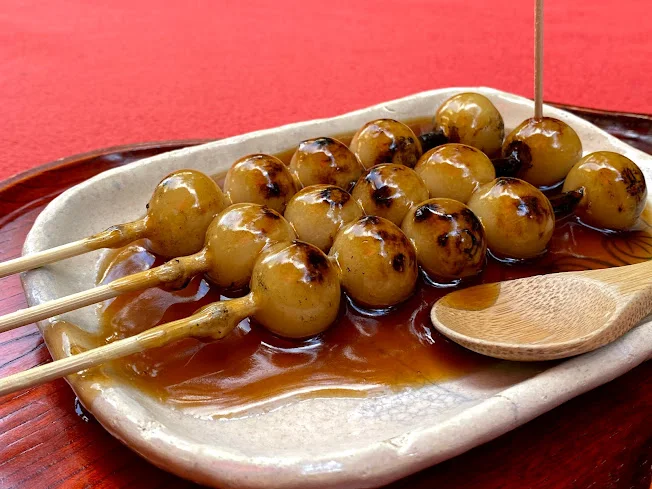
How it tastes: Grilled dumplings coated in a sweet soy glaze. Each skewer holds five, with the first set slightly apart from the rest. The five are said to represent the five parts of the human body, with the meaning of warding off misfortune.
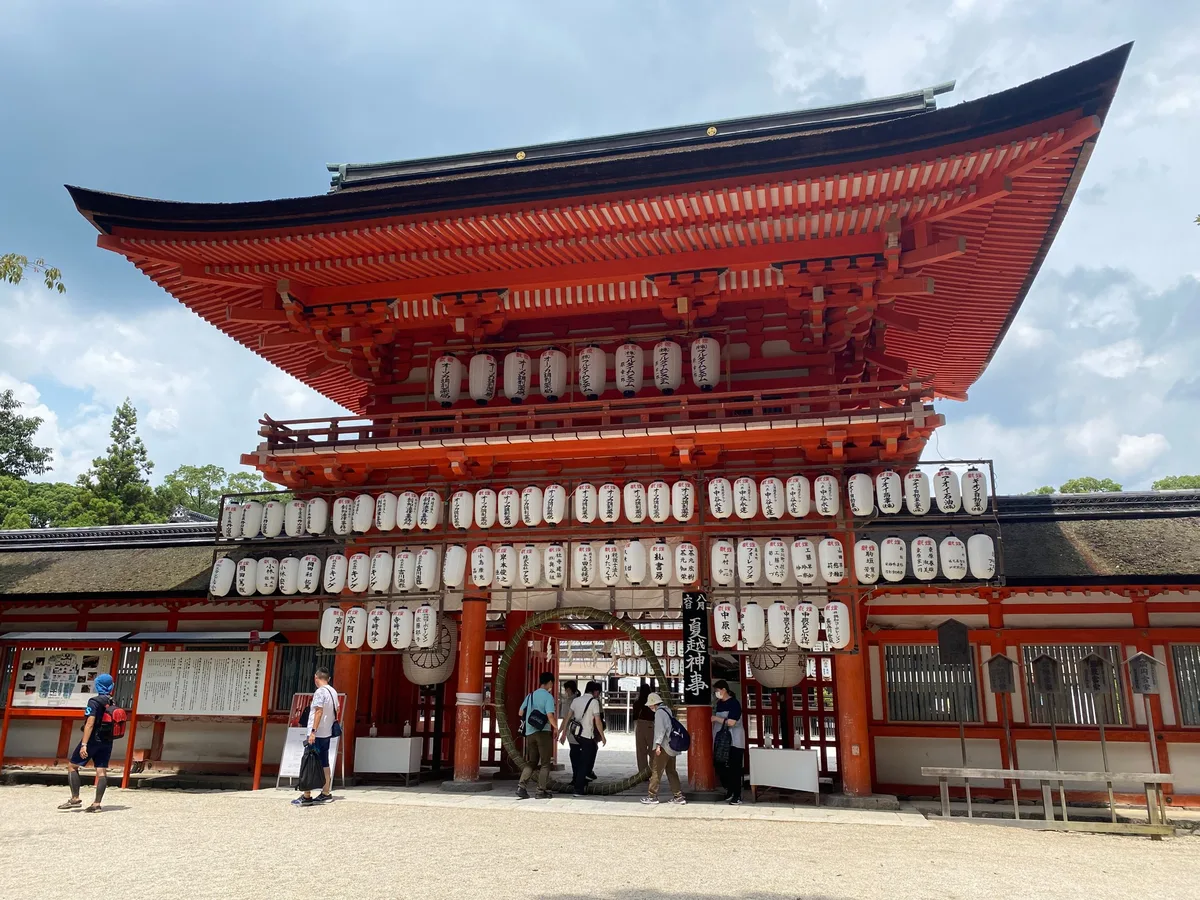
Best way to enjoy it: Sit down at the tea house after your visit with a cup of tea. The sweet-salty glaze tastes especially good after a walk through the green grounds.
5. Kiyome Mochi (Atsuta Jingu, Nagoya)
Atsuta Jingu enshrines the sacred sword Kusanagi, one of Japan's Three Sacred Treasures. Its classic Nagoya souvenir is kiyome mochi.
The story: Around 1785, in the middle of the Edo period, a "Kiyome Chaya" (purification tea house) was set up at Atsuta Jingu. Visitors rested over tea there and straightened themselves before praying at the shrine. The mochi was named after that tea house.
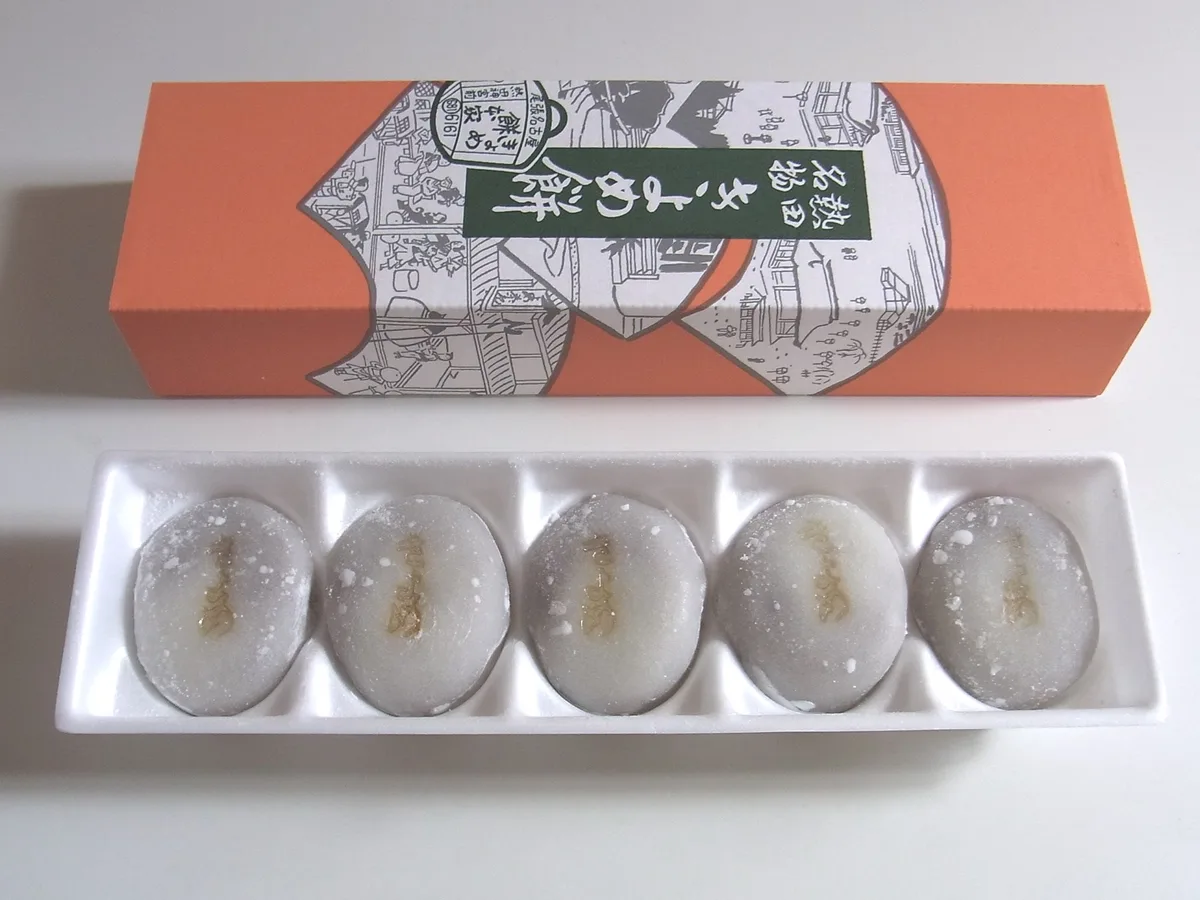
How it tastes: Smooth red bean paste wrapped in soft habutae mochi, stamped with the word "kiyome". Elegantly sweet, with a chestnut version too.
A note: True to its name, it is a good pick for a day when you want to feel cleansed after your visit.
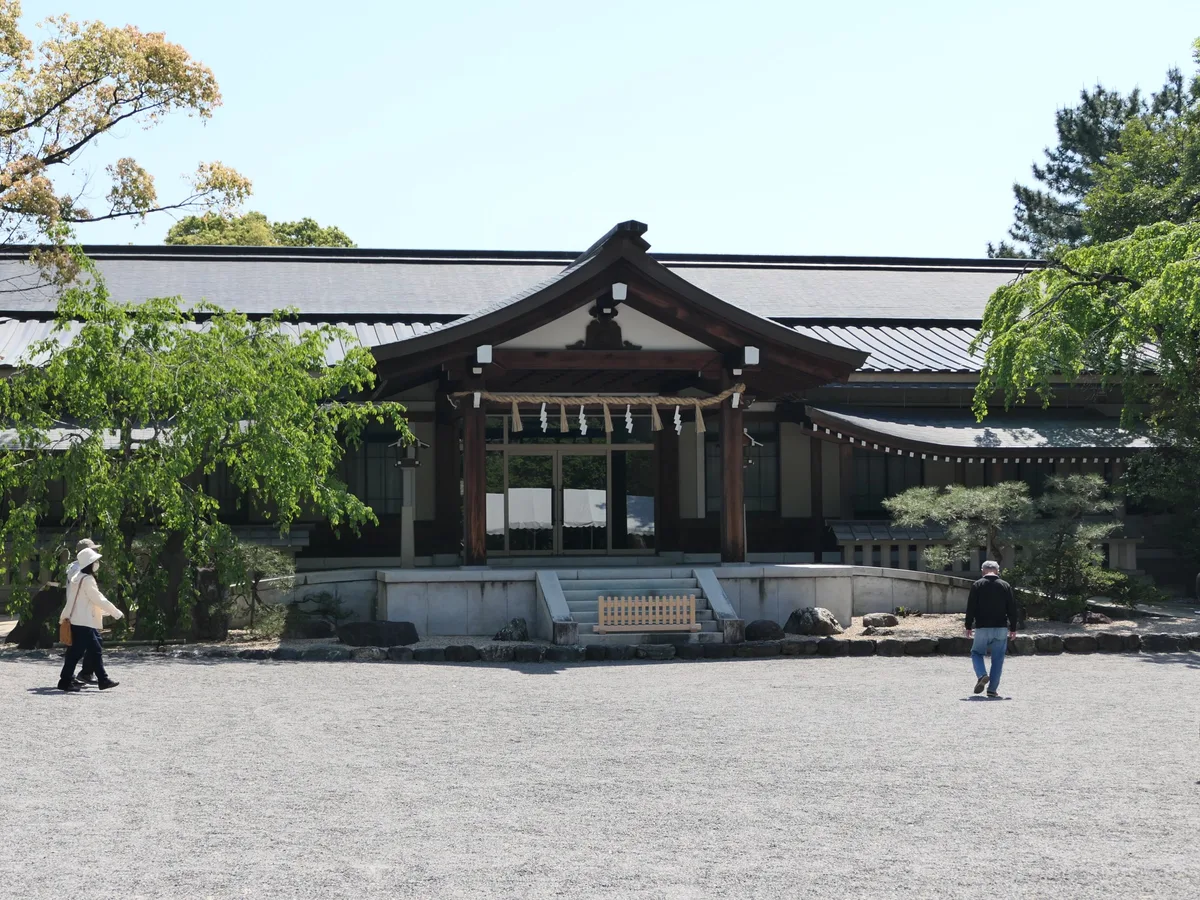
6. Itokiri Mochi (Taga Taisha, Shiga)
Taga Taisha, lovingly called "Otaga-san" by locals, is revered for long life, matchmaking and warding off misfortune. Confectioners around the shrine sell its signature itokiri mochi.
What makes it special: Small, springy mochi filled with smooth red bean paste of moderate sweetness. Thin blue and pink (red) lines make it charming, and it is introduced as being rooted in a technique of cutting mochi with thread.
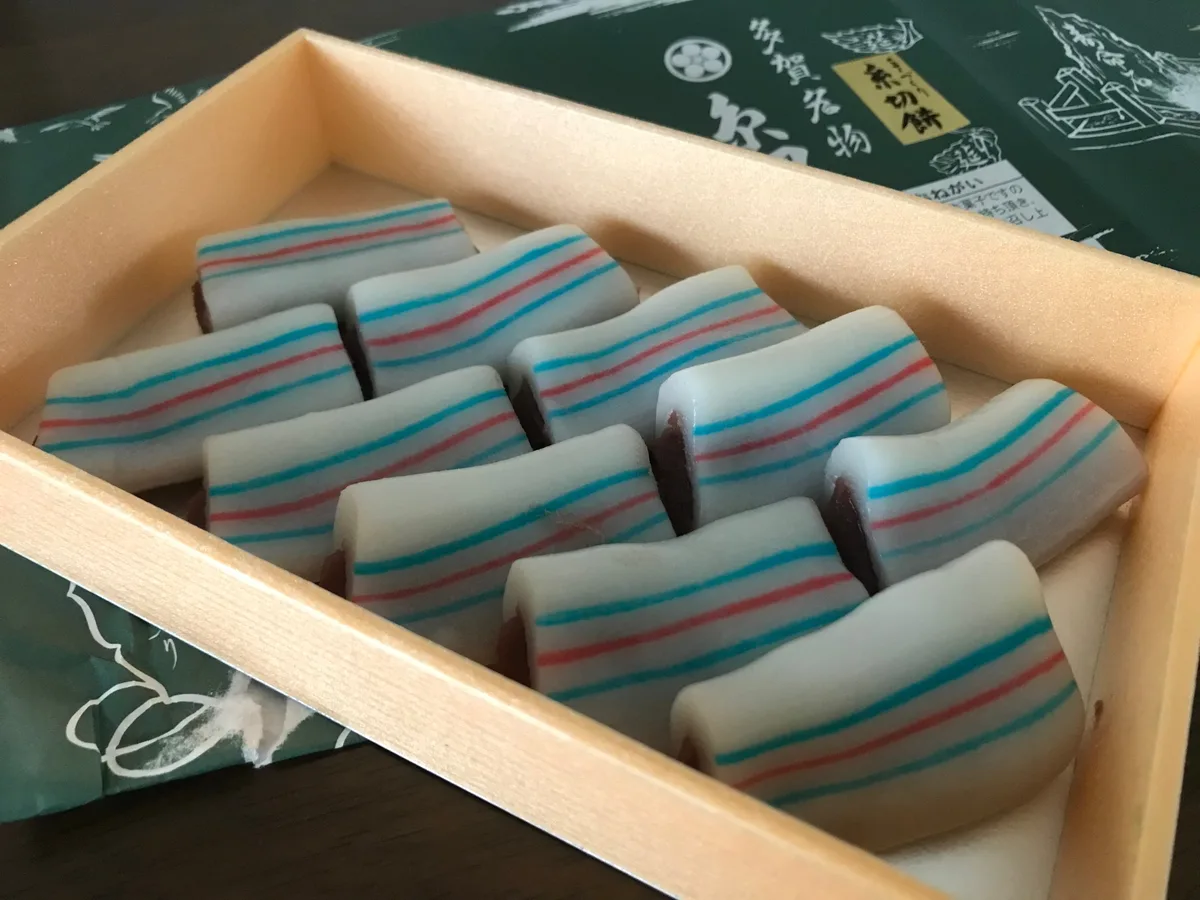
A note: Enjoy it with tea after praying for a long life or a good match. The beautiful cross-section also photographs wonderfully.
7. Kibi Dango (Kibitsu Shrine, Okayama)
Kibitsu Shrine in Okayama is said to be the setting of the tale of subduing the ogre Ura, the prototype of the Momotaro legend. Its main deity, Okibitsuhiko no Mikoto, is said to have defeated the Ura clan, and that story is considered the root of Momotaro.
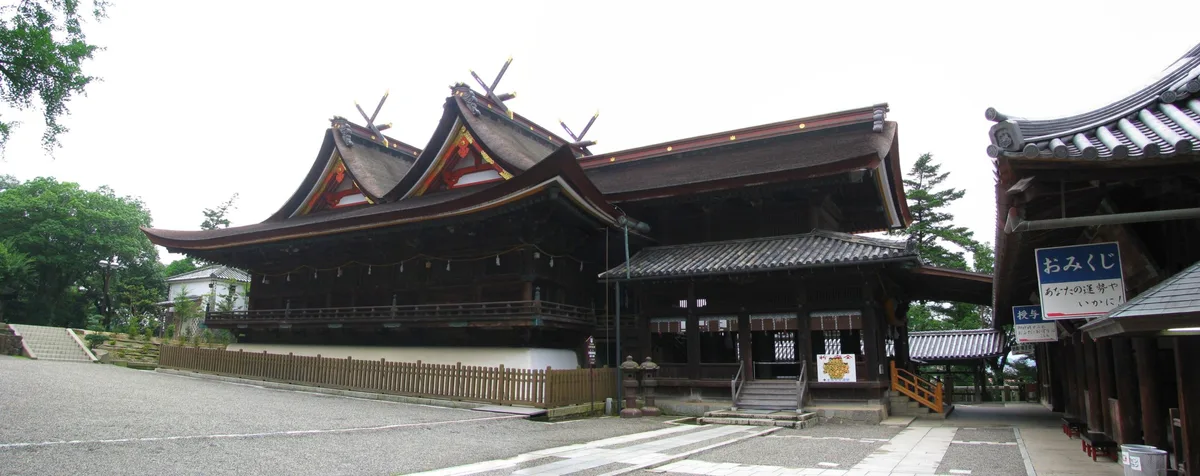
Highlights: The main hall and worship hall are National Treasures. Their unusual double-gabled shape is called "hiyoku irimoya-zukuri" (Kibitsu-zukuri) and is said to exist nowhere else in Japan. A pine-lined approach about 450 meters long leads from the station.
The story: Kibi dango began as dumplings made from millet flour. By the Edo and Meiji periods, a soft gyuhi made from glutinous rice, flavored with millet flour, had become almost the same recipe as today's, and its long shelf life made it popular as a travel companion and souvenir.
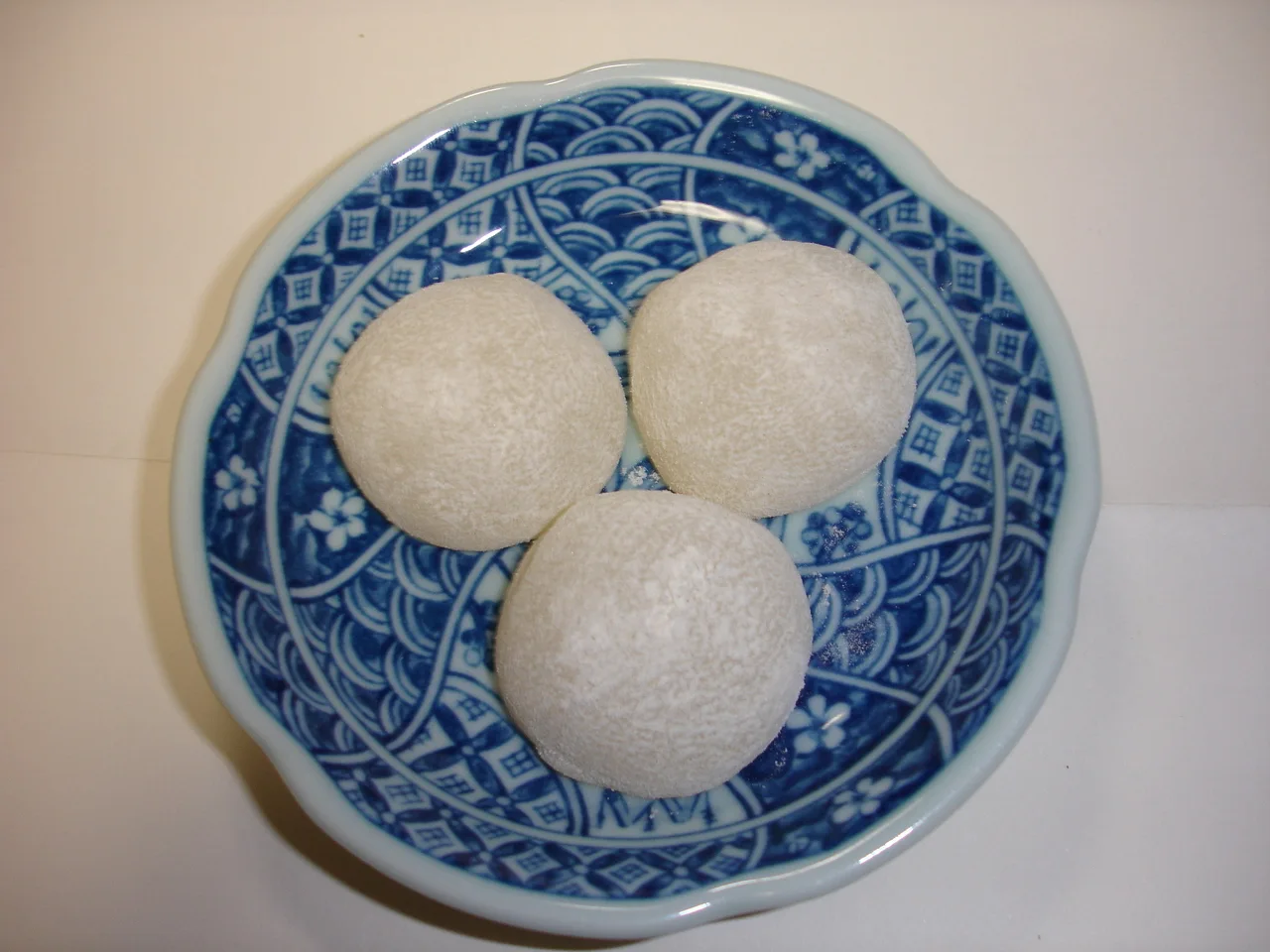
How it tastes: Soft and gently sweet. You can also find Okayama-style versions made with white peach or muscat grapes.
8. Kyu-man (Kotohira-gu, Kagawa)
Kotohira-gu, lovingly called "Konpira-san," is famous for its long flight of stone steps. On the approach stands Kyu-man Honpo Ishidan-ya.
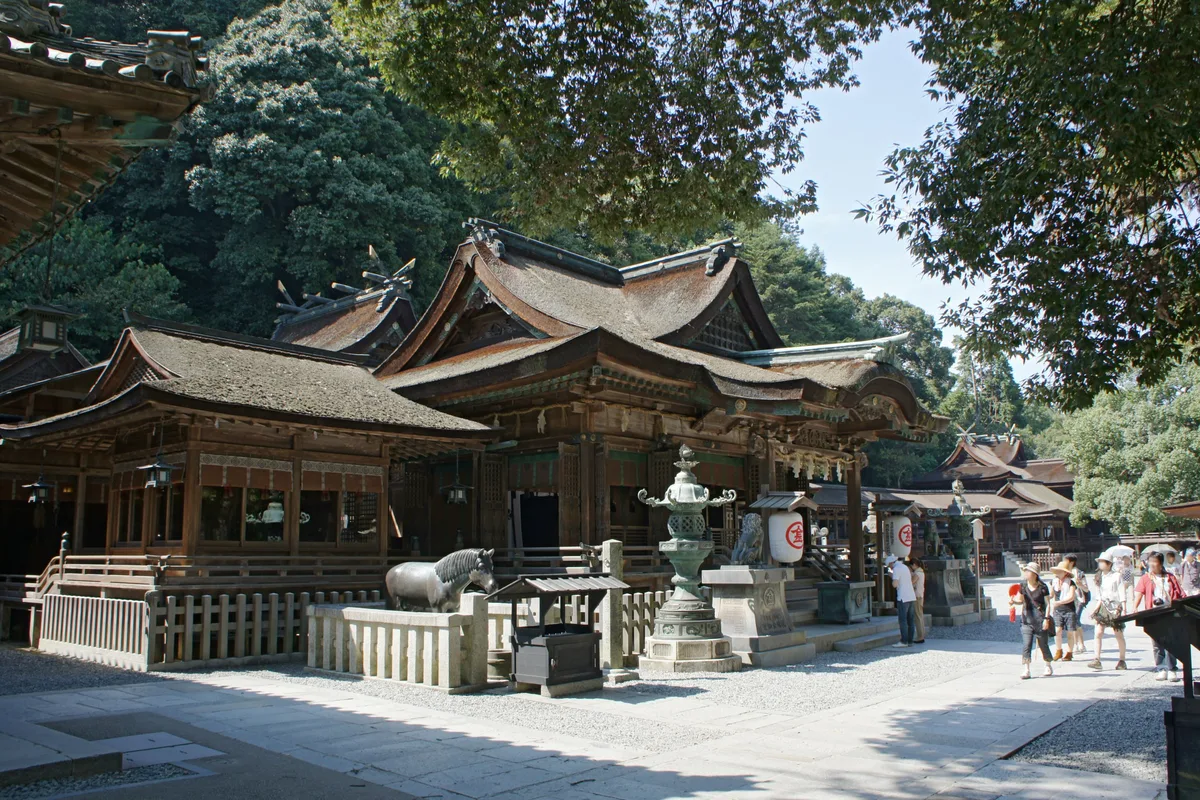
The story: The shop began as an inn for pilgrims to Konpira. As the story goes, a maid placed gentle moxa on a handsome guest and it became known as "a sweet moxa that really works." When the inn became a confectioner, it named its manju, shaped like a small mound of moxa, "kyu-man."
How it tastes: A lightly sweet manju made with fine egg-yolk bean paste. It has a reputation for easing the fatigue of the climb, and you can rest inside the shop.
A note: It is 785 steps to the main shrine. Eat one before you climb or as a reward afterward.
Tips for Pairing Prayer and Sweets
- Pray first, eat after. Finish your visit, then enjoy the sweet as a quiet thank-you.
- Eat outside the grounds. Avoid eating inside; sit at a shop or rest area on the approach.
- Check shelf life for souvenirs. Many fresh sweets keep only a few days, so look at the date when you buy.
- Check where it is sold. Some, like tengu-yaki, are sold in only one place.
- Avoid peak hours. Weekend lunchtime lines are long; mornings are easier.
Frequently Asked Questions (FAQ)
Q1. Can I eat on the grounds?
A. Rules vary, but it is safest to avoid eating on the grounds and to enjoy sweets at shops or rest areas along the approach.
Q2. Can I visit all eight places on one trip?
A. They are spread across Kanagawa, Tokyo, Kyoto, Aichi, Shiga, Okayama and Kagawa. In the Kanto region you can combine Kamakura, Asakusa and Mount Takao, but we suggest one or two places per trip overall.
Q3. Where can I buy tengu-yaki?
A. It is reported to be sold at Takaosan Sumika, next to Takaosan Station on the cable car. Check opening hours and availability before you go.
Q4. Which ones make good souvenirs?
A. Hato sablé and kibi dango are known for keeping well, but it varies by product and shop, so please check the date when you buy.
Related Articles You Might Enjoy
- Shrine Sweets, Part 1: Umegae mochi, aburi mochi, akafuku, momiji manju and Izumo zenzai
- The Complete Guide to Visiting a Shrine: etiquette, manners and prayer tips by wish
Summary
- Hato sablé is Kamakura's classic souvenir, named for the pigeons tied to Hachiman
- Ningyo-yaki is a staple Senso-ji souvenir said to have started in Ningyocho
- Tengu-yaki is a one-place treat shaped like Mount Takao's tengu
- Mitarashi dango is a protective dumpling said to trace back to Shimogamo's Mitarashi Festival
- Kiyome mochi is named after Atsuta Jingu's "purification tea house"
- Itokiri mochi suits prayers for long life and love at "Otaga-san"
- Kibi dango is the souvenir of Kibitsu Shrine, home of the Momotaro legend
- Kyu-man is a sweet moxa to soothe your legs on the stone steps
A small bite after prayer deepens the memory of a trip. On your next outing, look for the temple-gate sweet that matches your wish.
Tags
この記事をシェアする
この記事が役に立ったら、SNSでシェアしていただけるととても嬉しいです☀️

Thanks so much for reading! I hope this article brought a little sunshine to your day! See you again soon!
You might also like

5 Shrine Sweets to Enjoy After Your Prayer: A Guide to Japan's Temple-Gate Treats
Pair five famous shrines with the sweet to eat after you pray: umegae mochi at Dazaifu Tenmangu, aburi mochi at Imamiya Shrine, akafuku at Ise Grand Shrine, momiji manju on Miyajima and zenzai at Izumo Taisha. Stories, flavors and tips for each.
Omiwa Shrine Worship Guide
This comprehensive guide covers the history, divine blessings, Mount Miwa faith, key worship points, Sai Shrine, the Medicinal Well, sacred mountain ascent (Tohhai), recommended crystals, and surrounding attractions of Omiwa Shrine (1422 Miwa, Sakurai City, Nara Prefecture). It's an essential resource for visiting a sacred site that continues to preserve one of Japan's oldest forms of primitive worship.

Pilgrimage and Good Luck
Nikko Toshogu Shrine echoes the Chinese zodiac myth at the heart of Fruits Basket. Sun-chan explains the healing power found in the story of the Sleeping Cat and the eight life-stage carvings of the Three Wise Monkeys at the Sacred Stable.

Pilgrimage and Good Luck: Tracing the Sites Connected to Inuyasha
The Shikon Jewel and the priestess's warding arrows in Inuyasha echo Fushimi Inari's sacred jewel and Shinto's view of the soul, Ichirei Shikon. Sun-chan explains the good-luck hints found in these legends, together with Kuzunoha Inari and Hozan-ji.