
Kamidana: History and How to Enshrine a Home Shinto Altar
This article contains promotional content.
When did Japanese homes start keeping a kamidana? A friendly guide to its history, where and which way to place it, how to arrange ofuda talismans (Jingu Taima, local shrine, favorite shrine), daily offerings and worship.
Table of Contents (Tap to toggle)
Hello, this is Sun-chan from Lucky Sun Shine ☀️
Have you ever wondered how to enshrine a kamidana properly? A kamidana is a small shelf-shrine that welcomes the kami into a Japanese home. This guide covers its history, where to put it, how to arrange the talismans, and the basic offerings.
What is a kamidana?
In Shinto, the kami are not thought of as always being in one place; they are welcomed when they are enshrined. For that reason, it is believed that ancient Japan had no kamidana.
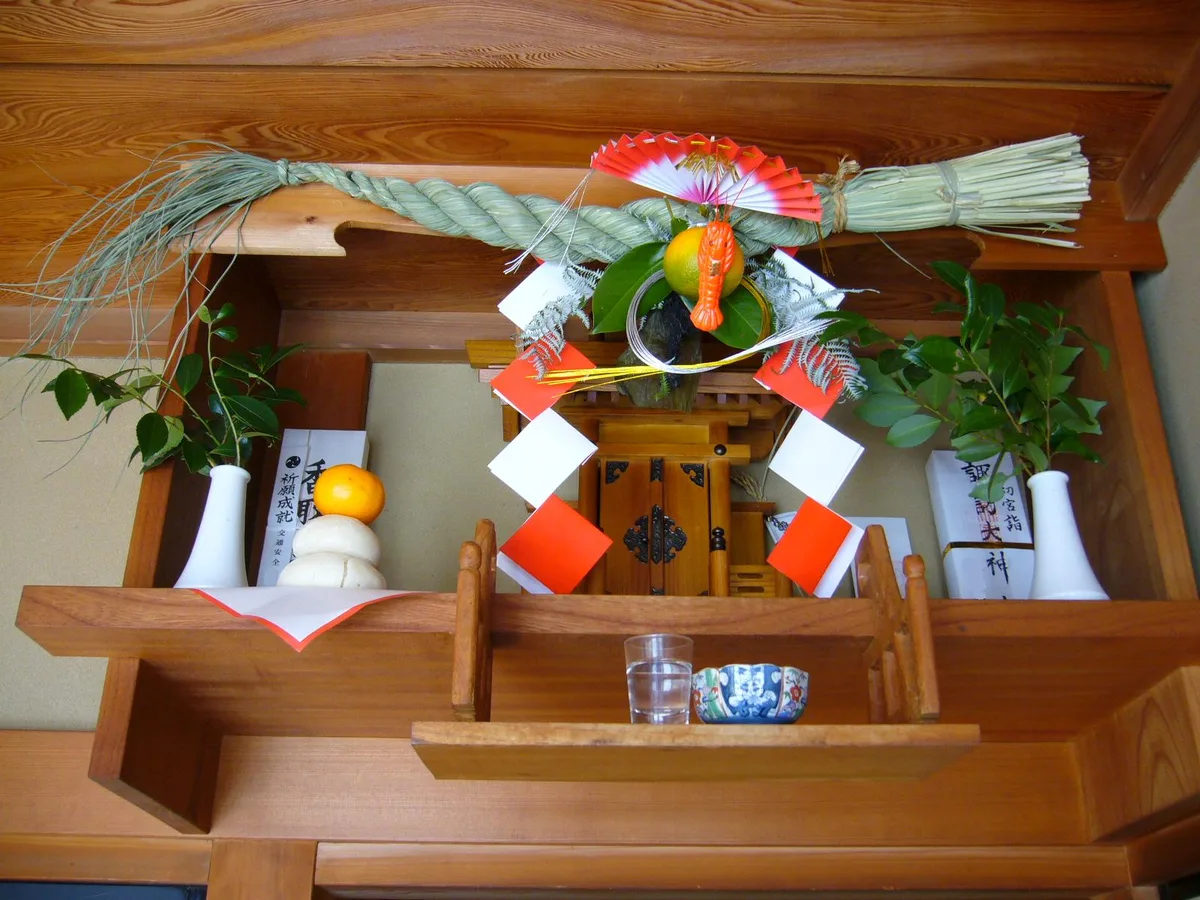
History
- Around the Kamakura to Muromachi periods, priests of the Ise Shrines (called oshi) are said to have traveled the country distributing shrine talismans.
- In the Edo period, pilgrimages to Ise became a huge boom. The oshi devised the "Daijingu-dana," and the custom of enshrining Ise talismans at home spread and took root among ordinary people.
So the household kamidana is said to have spread along with devotion to Ise from the mid-Edo period. See our Ise Jingu guide too.
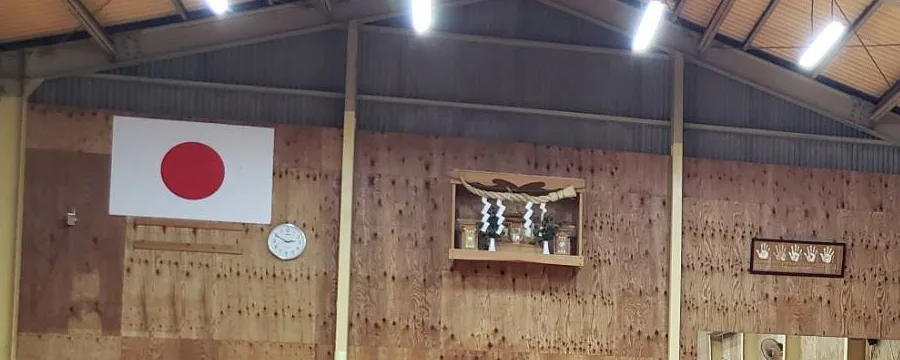
Where and which way to place it
Generally, the following are considered good:
- Direction: facing south or east
- Height: above eye level
- Environment: bright, clean, with sunlight and airflow, and easy to worship at every day
- Places to avoid: back-to-back with a toilet, above a busy doorway, or facing a Buddhist altar in the same room
- In a two-story house: the upper floor is preferred
- On top of a chest of drawers: lay down white cloth or white paper first
When enshrining one for the first time, it is said to be good to ask your local shrine (ujigami) to perform a purification ceremony.
How to enshrine the talismans (ofuda)
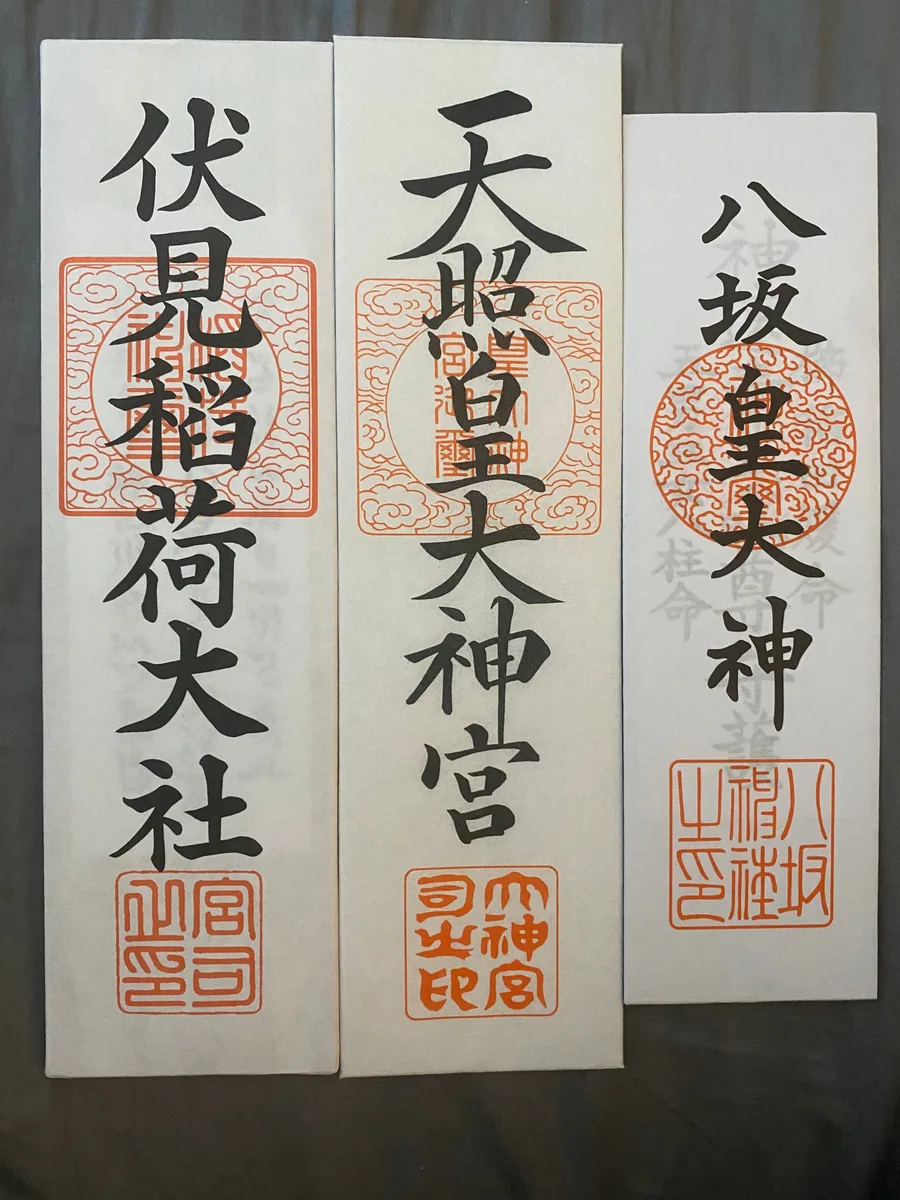
A kamidana usually holds three kinds of ofuda:
- Jingu Taima: the talisman of Ise Jingu (Kotai Jingu), distributed through local shrines. It is customary to renew it at the start of the year.
- Ujigami ofuda: the talisman of your local shrine.
- Favorite-shrine ofuda: from a shrine you personally revere.
The arrangement depends on the shrine's doors:
- Three doors: Jingu Taima in the center, ujigami on the right, favorite shrine on the left (as you face it)
- One door: stack them front to back in this order: Jingu Taima, ujigami, favorite shrine
Customs can differ by shrine, so if you are unsure, ask your local shrine.
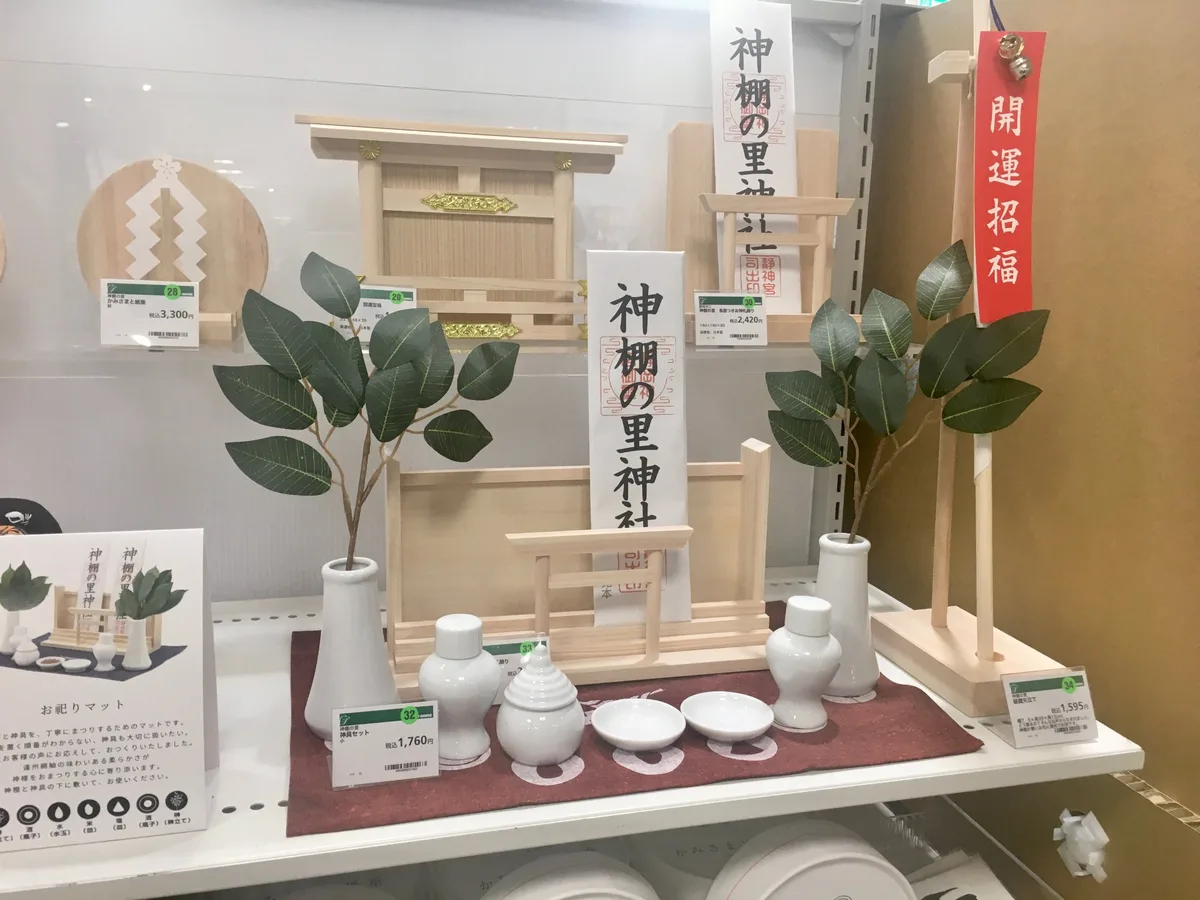
Basic offerings
- Basics: rice, sake, salt, and water
- Replacement: rice, salt and water every morning; sakaki branches twice a month (around the 1st and 15th)
- One example of layout: water, rice, salt from left to right
- Often avoided: meat, dairy, and onion-family vegetables (this varies by region and deity)
- Otsagari: after the offering, the food is received with gratitude
For sake, see Why sake and shrines are so closely linked.
Daily worship
As at a shrine, two bows, two claps, one bow is the general form. After changing the offerings in the morning, place your hands together in gratitude. For shrine etiquette, see our shrine visit basics.
If you have no space for one
There are compact, modern wall-mounted kamidana. Some people also lay white paper on a high shelf and stand the ofuda on it. For where to place omamori, see our omamori guide.
Year-end cleaning and returning old ofuda
At year's end, it is common to clean the kamidana and welcome new ofuda. Old ofuda are returned to a shrine's collection point for old talismans.
Kamidana items
PR This article contains affiliate links. As an Amazon Associate I earn from qualifying purchases.
Summary
- The home kamidana is said to have spread among ordinary people from the mid-Edo period, together with devotion to Ise.
- The basic placement is facing south or east, above eye level.
- Jingu Taima goes in the center, ujigami on the right, favorite shrine on the left.
- Customs vary by region and shrine, so ask your local shrine if unsure.
May your days shine as bright as the sun ☀️
Tags
この記事をシェアする
この記事が役に立ったら、SNSでシェアしていただけるととても嬉しいです☀️

Thanks so much for reading! I hope this article brought a little sunshine to your day! See you again soon!
You might also like

Moon Phases and Crystals
A comprehensive guide on how to work with crystals according to the moon's phases.
Sake and Shinto Shrines: Why They Are So Closely Linked
Why is sake offered at Shinto shrines? A friendly guide to omiki, the shrines of sake-brewing deities (Omiwa, Matsunoo, Umenomiya), the kuchikamizake of 'Your Name', kagami-biraki barrel opening, and a Fushimi sake-district walk after your shrine visit.
The Ultimate Guide to Lucky Habits
This comprehensive guide covers everything from daily morning and evening lucky routines and seasonal fortune-boosting actions, to Feng Shui living, the principles of Kotodama, and the Law of Attraction.
7 Crystals for Your Bedroom
Your bedroom, where you spend a third of your day, is a charging station for your luck and energy.