
Chichibu Shrine Visiting Guide: The Chained Dragon, Three Monkeys and the Chichibu Night Festival
A friendly guide to Chichibu Shrine (Chichibu City, Saitama): its history, enshrined deities and blessings, the Gongen-zukuri halls said to be donated by Tokugawa Ieyasu, highlights of the main hall carvings such as the Chained Dragon and the Three Energetic Monkeys, the Chichibu Night Festival, access, nearby spots and FAQ.
Table of Contents (Tap to toggle)
Introduction
Chichibu Shrine stands in the town center of Chichibu City, Saitama, as the chief guardian shrine of the Chichibu region. Together with Mitsumine Shrine and Hodosan Shrine it is counted as one of the Three Shrines of Chichibu, and it is known for the vividly colored carvings of its main hall and the Chichibu Night Festival, inscribed on UNESCO's Intangible Cultural Heritage list.
Because it is within walking distance of the station, it is an easy first stop in Chichibu. This article covers its history, deities and blessings, the carving highlights, the festival, access and nearby spots.
Table of Contents
- Basic Information
- History and Origins
- Blessings
- Highlights of the Grounds
- Main Hall Carvings
- Chichibu Night Festival
- Visiting Tips
- Access
- Nearby Spots
- Basic Visiting Manners
- FAQ
- Related Articles
- Summary
Basic Information
| Item | Details |
|---|---|
| Name | Chichibu Shrine (Chichibu Jinja) |
| Address | 1-3 Bamba-cho, Chichibu City, Saitama Prefecture |
| Deities | Yagokoro Omoikane no Mikoto, Chichibuhiko no Mikoto, Ame-no-Minakanushi no Kami, Prince Chichibu Yasuhito (the "Four Deities") |
| Founded | Said to date from the reign of Emperor Sujin (marked its 2,100th anniversary in 2014) |
| Halls | Gongen-zukuri, said to have been donated by Tokugawa Ieyasu in 1592 |
| Main event | Annual festival, the Chichibu Night Festival (December 2-3) |
| Phone | 0494-22-0262 |
History and Origins
According to tradition, the shrine began when Chichibuhiko no Mikoto, governor of the ancient Chichibu region, enshrined his ancestral deity Yagokoro Omoikane no Mikoto, in the reign of Emperor Sujin. In 2014 it marked 2,100 years since its founding.
In the medieval period, devotion to the Buddhist Myoken Bosatsu was incorporated, and the shrine was for a time called "Myoken-gu." After the separation of Shinto and Buddhism in the Meiji era, Myoken was replaced by Ame-no-Minakanushi no Kami, and Prince Chichibu Yasuhito was later enshrined, forming today's four deities.
The present halls are said to have been donated by Tokugawa Ieyasu in 1592. They are Gongen-zukuri, with the main hall, offering hall and worship hall combined in one structure, and renovation work is said to have been completed in September 2024. For more on this style, see How to Tell Shrine Architecture Styles Apart.
Blessings
Chichibu Shrine is said to bring the following blessings.
- Academic success and exam passing (Omoikane is regarded as a deity of wisdom)
- Business prosperity
- Good relationships
- Family safety and safe childbirth
- Protection from misfortune and from directional ill luck
- Traffic safety and long, healthy life
Highlights of the Grounds
Although it is in the middle of town, the shrine feels calm once you pass the torii. Let us follow the route from the entrance to the halls.
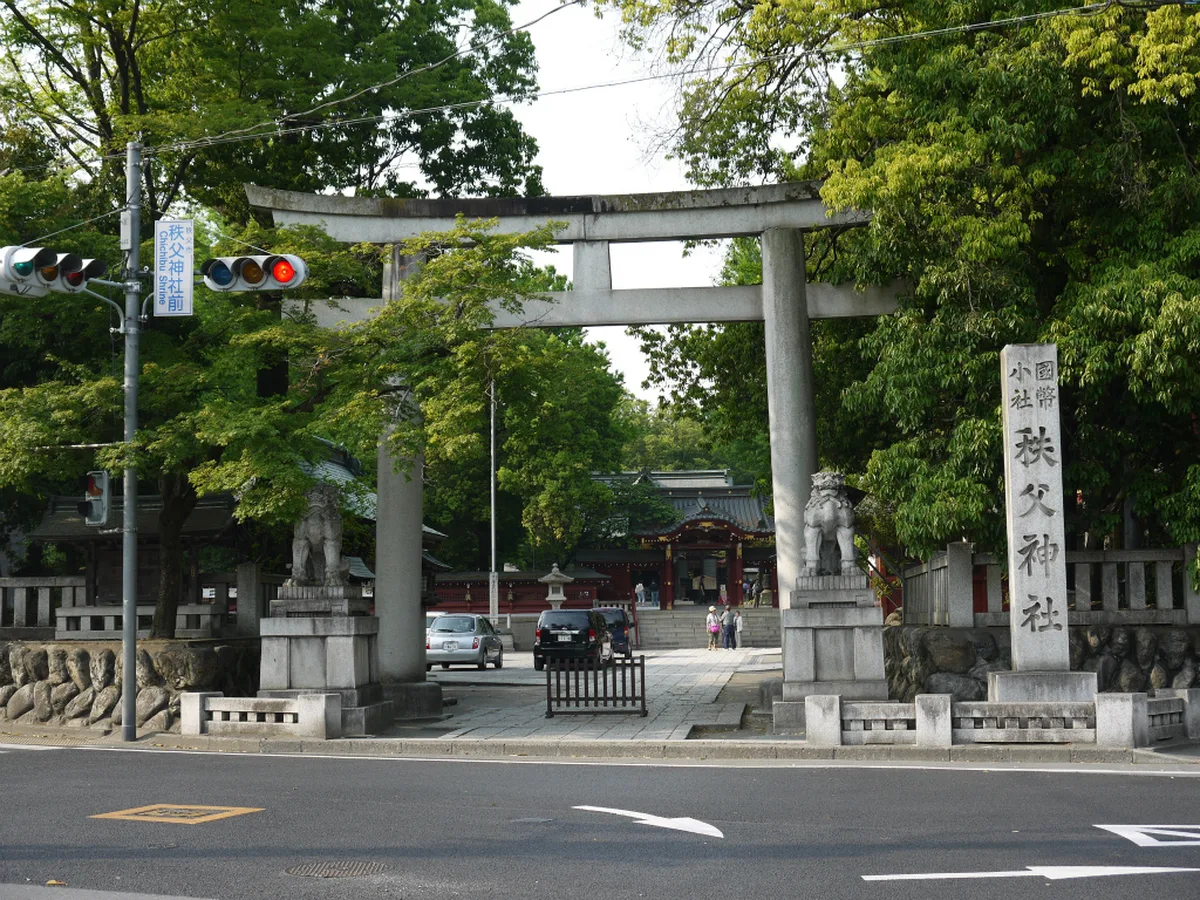
Komainu guardians stand on either side of the torii, and even though the entrance faces a street, the change into the shrine grounds is clearly felt.
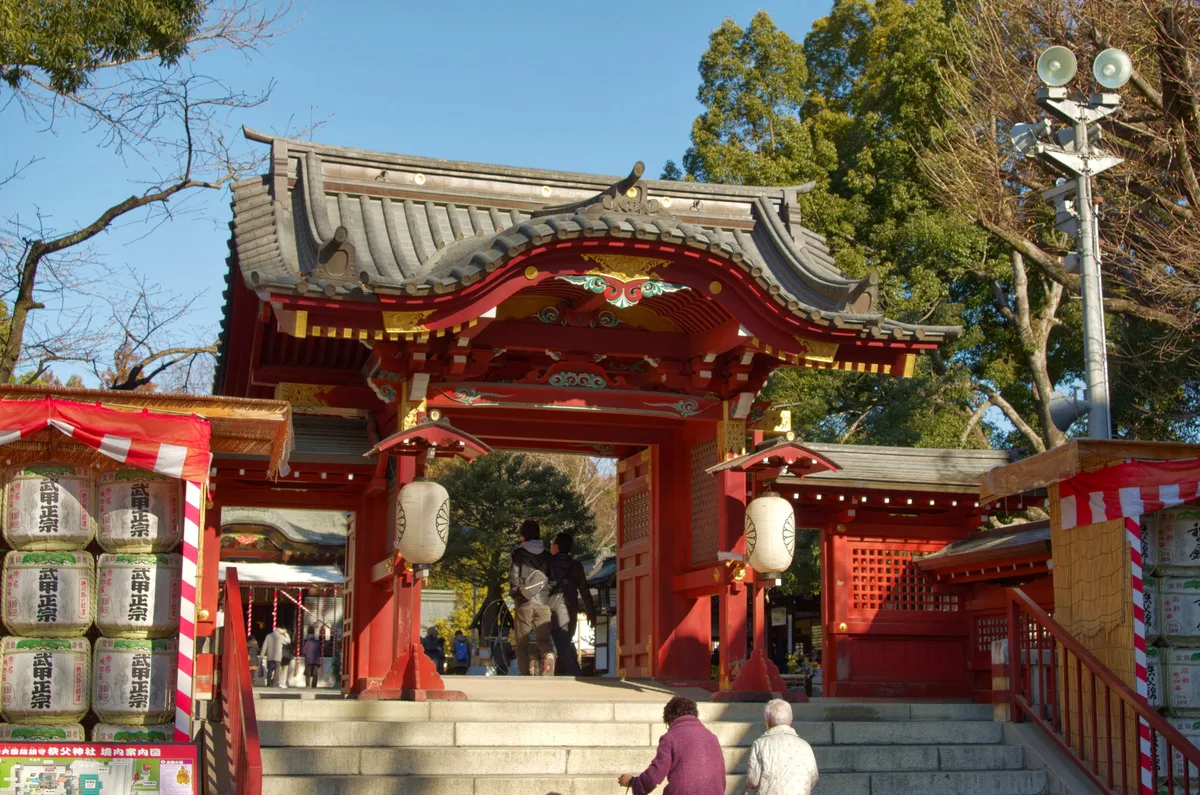
Beyond the vermilion gate, the Haiden comes into view. The curved roof and gold ornaments stand out against the blue sky.
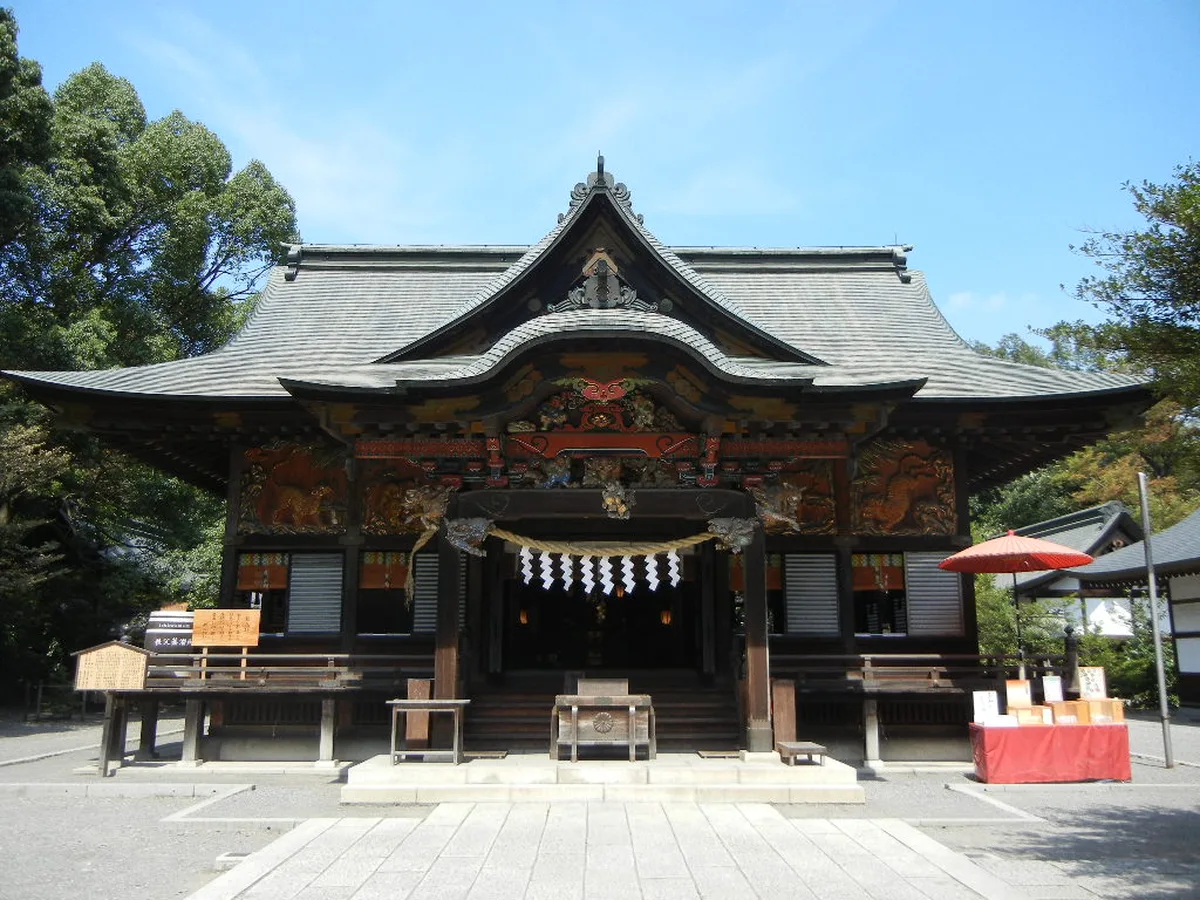
The Haiden is the front of the combined Gongen-zukuri structure that includes the main hall and offering hall. Begin here by offering your thanks.
Main Hall Carvings
The great appeal of Chichibu Shrine is the richly colored carvings that surround the main hall. Some are said to be the work of the master carver Hidari Jingoro, and each side has a different theme. Walk once around the hall and match each direction with its name.
- Tiger of Fertility and Child-Rearing (front)
- Three Energetic Monkeys (west side)
- Owl of the Pole Star (north side)
- Chained Dragon (east side)
The Tiger of Fertility and Child-Rearing
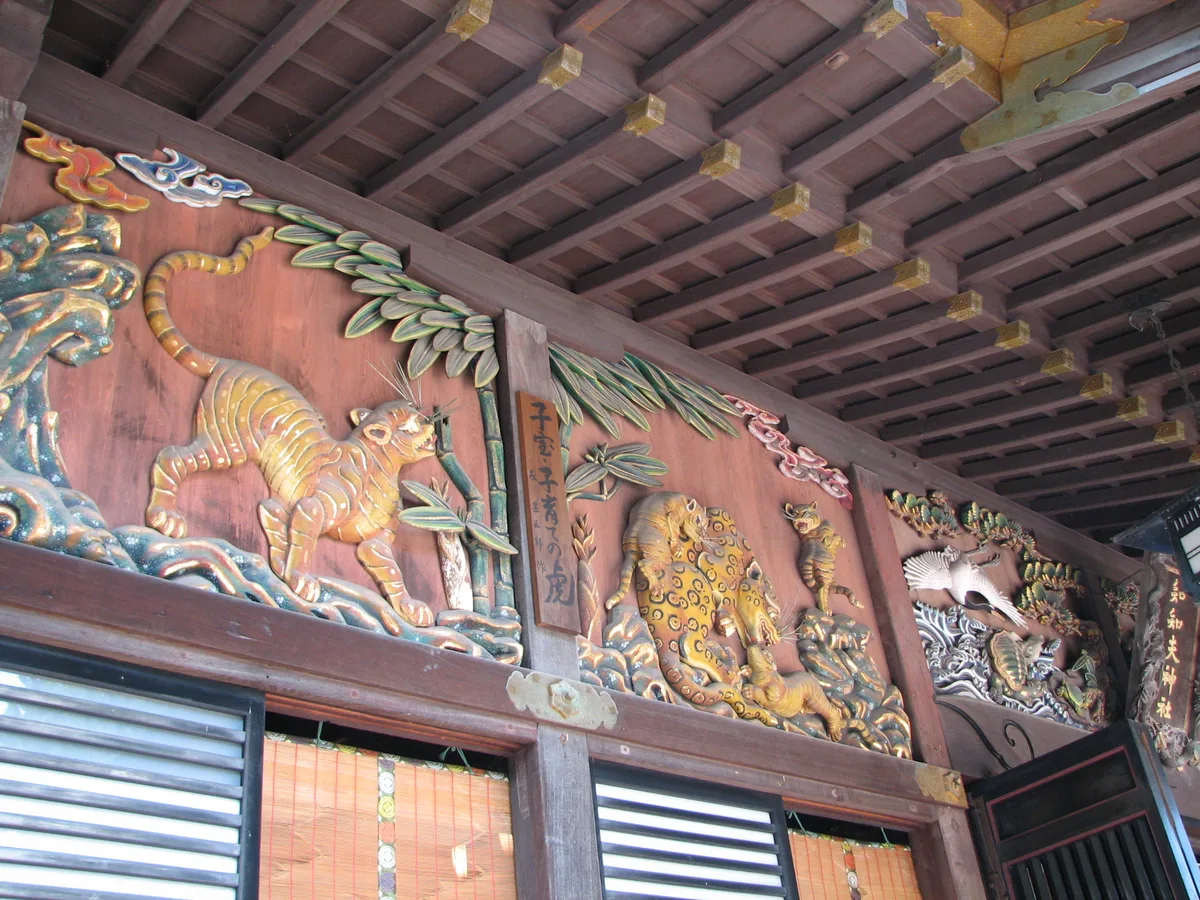
Said to be the work of Hidari Jingoro, this is the signature carving on the front of the main hall. It is also said to relate to Tokugawa Ieyasu being born in a tiger year, on a tiger day and at the hour of the tiger, and it has long been regarded as a symbol of conceiving and raising children. The parent on the right is carved with leopard-like spots, and one theory holds that this is because tigers were little known at the time and a leopard served as the model.
The Chained Dragon
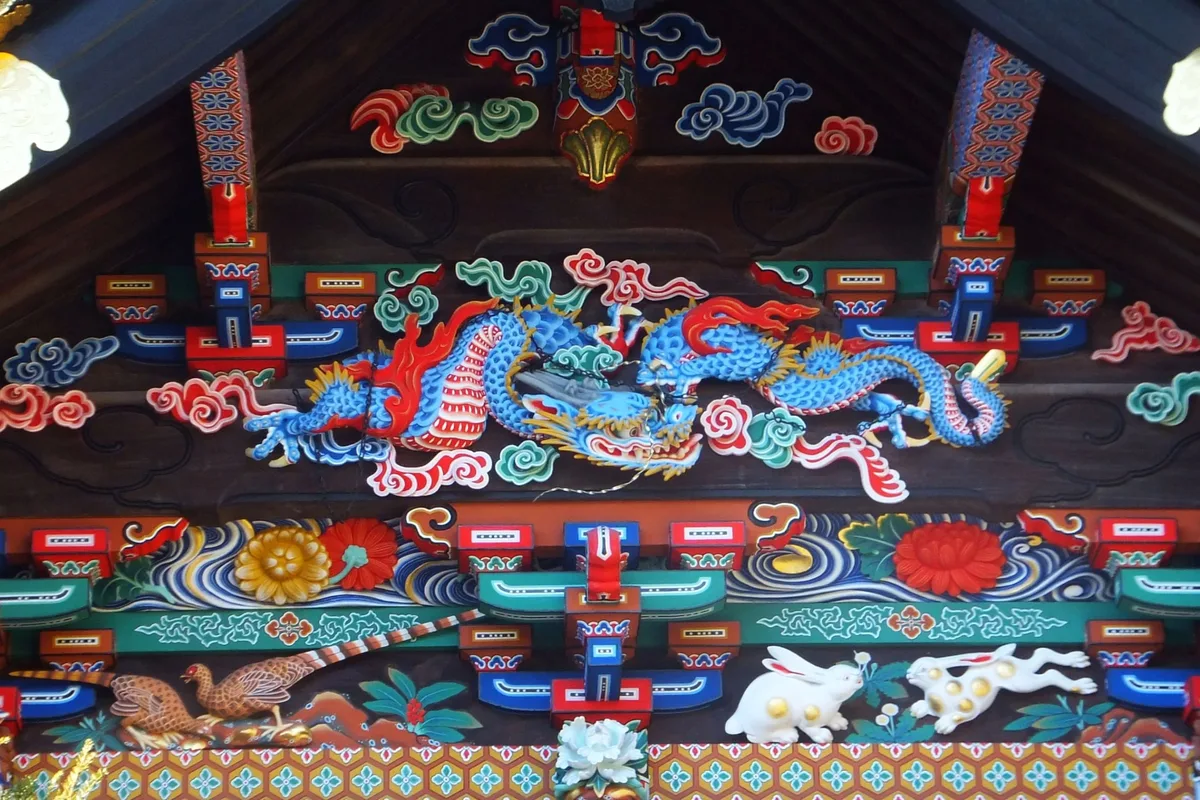
It is called the "Chained Dragon" because the dragon is bound by a chain. A legend tells that whenever a dragon living in the nearby Amagaike pond rampaged, puddles appeared beneath this carving, and that after the dragon was chained, it no longer appeared.
The Three Energetic Monkeys
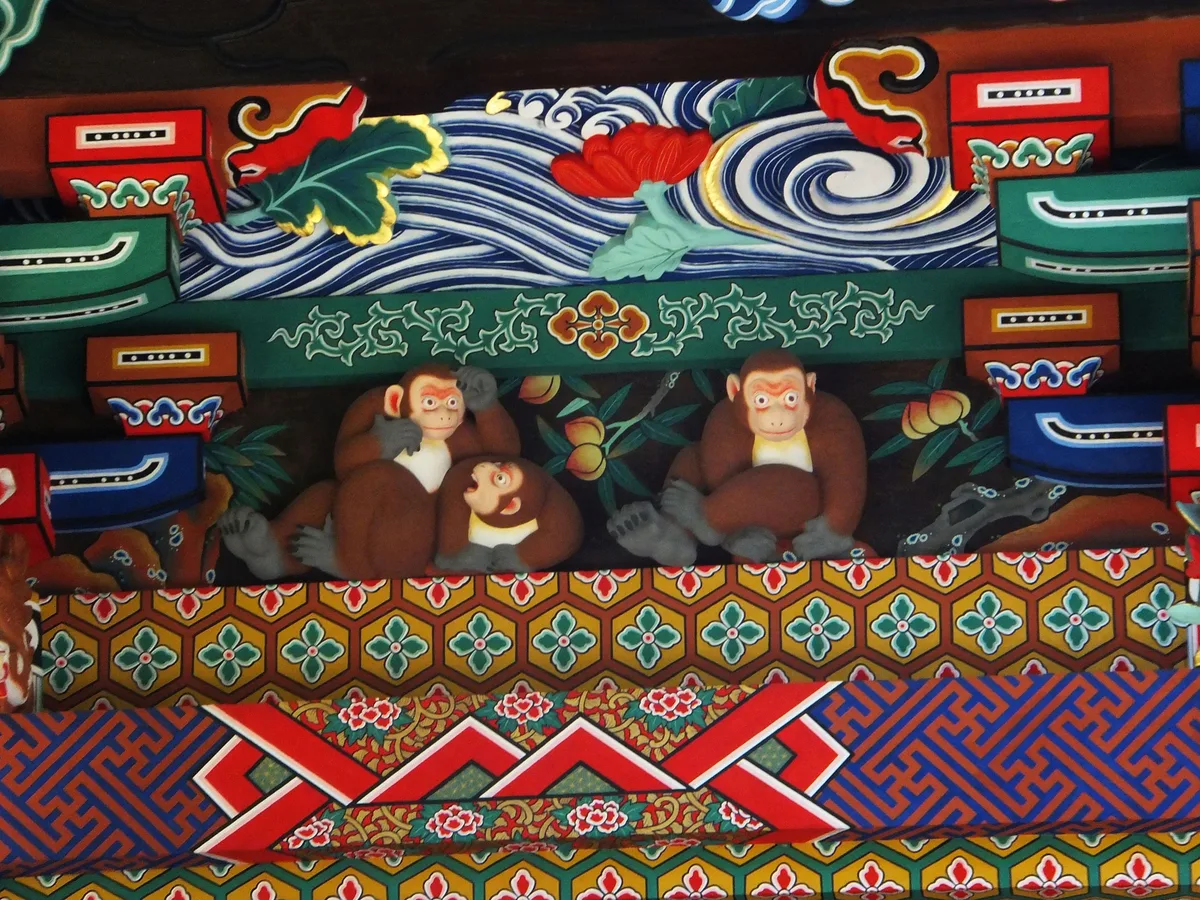
Unlike the familiar "see no evil, hear no evil, speak no evil" monkeys, these are carved in a relaxed, lively manner. Some read them as "look well, listen well, speak well," and they make for an uplifting carving.
The Owl of the Pole Star
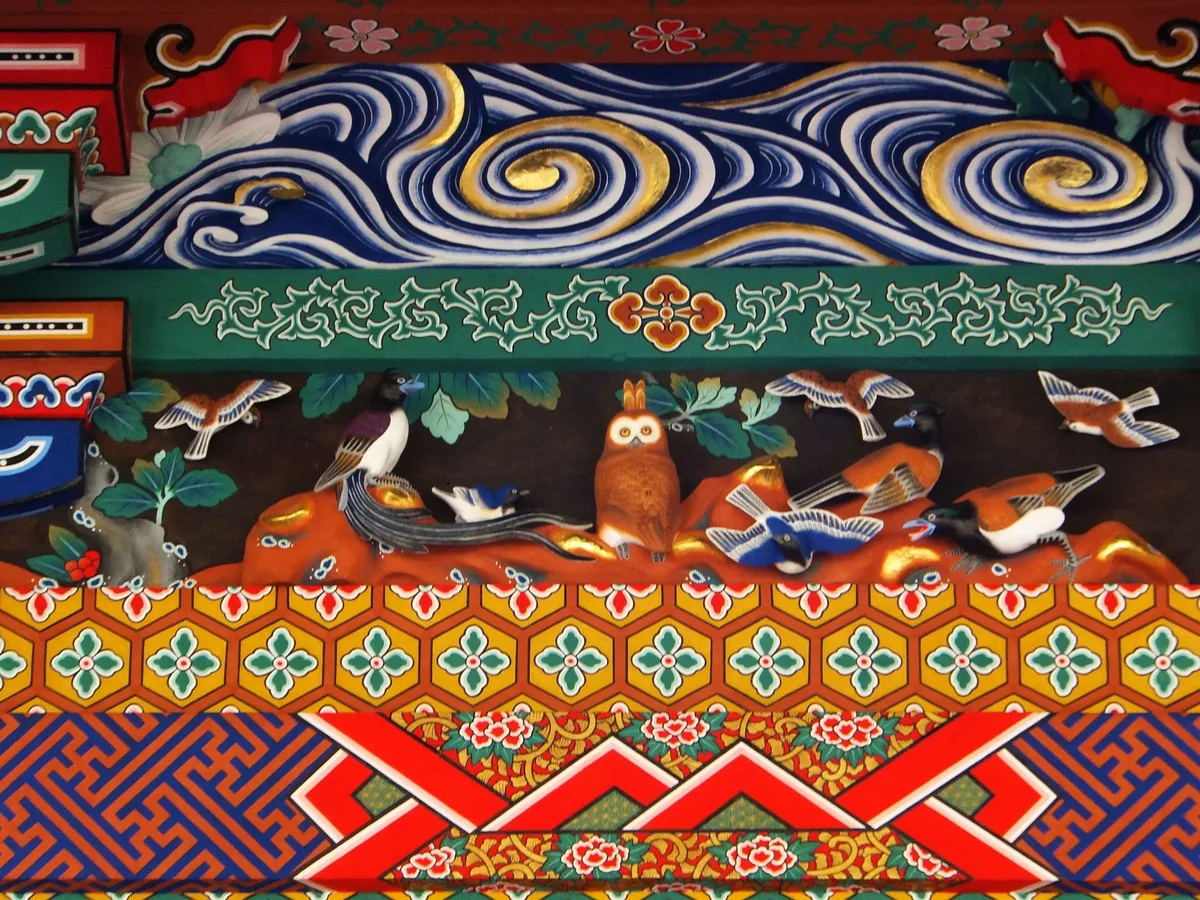
"Hokushin" means the North Star. The owl is said to face the main hall with its body while its head turns due north, and it is closely tied to Myoken worship, the veneration of the North Star and Big Dipper.
Chichibu Night Festival
The shrine's annual festival is the Chichibu Night Festival, held every year on December 2 and 3. It is counted among Japan's three great float festivals, alongside Kyoto's Gion Festival and Takayama's festival, and the float events and kagura of the Chichibu festival are inscribed on UNESCO's Intangible Cultural Heritage list.
The highlight is the night of December 3. Six floats, both canopy floats and stage floats, are pulled through the city to follow the procession of the deity toward the Otabisho, and fireworks light the winter sky. Because it becomes extremely crowded, allow plenty of time.
Visiting Tips
- After praying at the Haiden, walk once around the main hall to see the carvings
- It is easier to find them by matching direction and name
- Plan on about 30 minutes to 1 hour for worship and viewing the carvings
- Goshuin fees and reception hours can change, so check the official website beforehand
- On the festival days (December 2-3), the grounds and surroundings are very crowded
Access
By train: about 3 minutes on foot from Chichibu Station (Chichibu Railway), or about 15 minutes on foot from Seibu-Chichibu Station (Seibu Chichibu Line).
By car: about 40 minutes from Hanazono IC on the Kan-etsu Expressway (depending on traffic).
Parking: free parking for worshippers is available (about 30 spaces).
Nearby Spots to Visit
- Mitsumine Shrine — One of the Three Shrines of Chichibu, high in the mountains at about 1,100 m and known for Oin-sama wolf worship
- Hodosan Shrine — One of the Three Shrines of Chichibu, in Nagatoro
- Nagatoro Gorge — Famous for river rafting
- Waraji Katsudon — A Chichibu local specialty, good for lunch after your visit
If you combine it with Mitsumine Shrine, visiting Chichibu Shrine in town first and then heading up to the mountain shrine is an easy order to follow.
Basic Visiting Manners
- Bow once before passing through the torii
- Walk along the edge of the approach, as the center is the deity's path
- Purify at the temizuya: left hand, right hand, mouth, left hand, then the ladle
- Bow twice, clap twice, bow once
- Look at the carvings quietly, so as not to disturb other visitors
If you are unsure about the basics, see our Complete Guide to Shrine Visiting Basics.
FAQ
Q. What are the highlights of Chichibu Shrine?
The carvings around the main hall (the Chained Dragon, Three Energetic Monkeys, Owl of the Pole Star and the Tiger of Fertility and Child-Rearing) and the December Chichibu Night Festival are the best known.
Q. How long does a visit take?
Plan on about 30 minutes to 1 hour for worship and a walk around the main hall carvings.
Q. What are the Three Shrines of Chichibu?
This is the collective name for Chichibu Shrine, Mitsumine Shrine and Hodosan Shrine. Many people visit them together.
Q. Can I take photos?
Photography rules can differ by time and place. Please follow posted notices and the official website, and avoid disturbing other visitors.
Related Articles You Might Enjoy
- Mitsumine Shrine Visiting Guide — Another of the Three Shrines of Chichibu, the mountain of the wolf
- How to Tell Shrine Architecture Styles Apart — Gongen-zukuri and other honden styles
- Complete Guide to Shrine Visiting Basics — Etiquette, manners and prayers by wish
Summary
- Chichibu Shrine is the chief guardian shrine of the Chichibu region and one of the Three Shrines of Chichibu
- Its halls are Gongen-zukuri, said to have been donated by Tokugawa Ieyasu
- The Chained Dragon, Three Energetic Monkeys and Owl of the Pole Star are the carving highlights
- The Chichibu Night Festival on December 2-3 is on UNESCO's Intangible Cultural Heritage list
- It is only about 3 minutes on foot from Chichibu Station
Searching for the carvings as you walk around the main hall is a pleasure unique to Chichibu Shrine. On your next trip to Chichibu, be sure to look up at its colorful carvings.
Tags
この記事をシェアする
この記事が役に立ったら、SNSでシェアしていただけるととても嬉しいです☀️

Thanks so much for reading! I hope this article brought a little sunshine to your day! See you again soon!
You might also like
Omiwa Shrine Worship Guide
This comprehensive guide covers the history, divine blessings, Mount Miwa faith, key worship points, Sai Shrine, the Medicinal Well, sacred mountain ascent (Tohhai), recommended crystals, and surrounding attractions of Omiwa Shrine (1422 Miwa, Sakurai City, Nara Prefecture). It's an essential resource for visiting a sacred site that continues to preserve one of Japan's oldest forms of primitive worship.
Kanto's Power Spot Shrines
Discover carefully selected power spot shrines in the Kanto region. This guide compares the enshrined deities, benefits, highlights, access, and visiting tips for major shrines like Meiji Jingu (Tokyo), Enoshima Shrine (Kanagawa), and Mitsumine Shrine (Saitama) all on one page. Your essential guide for day trips and weekend tours of Kanto's renowned shrines.
Ise Grand Shrine Pilgrimage Guide
This comprehensive guide covers the history, blessings, official pilgrimage order (Geku to Naiku), nearby power spots, model itineraries, etiquette, and recommended crystals for Ise Grand Shrine, revered as 'Japan's Chief Guardian Deity.' It's an easy-to-understand, essential guide for first-time visitors.
How to Tell Shrine Architecture Styles Apart: Shinmei-zukuri, Taisha-zukuri, Nagare-zukuri and More
A friendly guide to the honden styles of Japanese shrines: Shinmei-zukuri, Taisha-zukuri, Sumiyoshi-zukuri, Nagare-zukuri, Kasuga-zukuri, Hachiman-zukuri, Gongen-zukuri and Sengen-zukuri. Learn how to tell them apart by entrance and roof, what chigi and katsuogi mean, the materials used, and the idea of rebuilding.